.webp)
Furniture returns are different from every other ecommerce return. The products are large, heavy, and expensive to ship. A returned sofa can cost $150-300 in reverse shipping alone, often more than the original outbound delivery. Damage during transit is common. And the return rate, while lower than fashion or electronics at 5-15%, carries a cost-per-return that makes each one significant.
For furniture brands and retailers, the challenge is not return volume. It is return cost. Every furniture return involves logistics decisions, damage assessment, and a financial calculation about whether the product is worth bringing back at all.
This guide covers how furniture brands can build a returns and warranty claims process that controls costs, recovers value, and keeps customers coming back.
- Furniture return rates sit at 5-15%, but the cost per return is 3-10x higher than standard parcel returns due to size, weight, and fragility.
- Remote assessment (photo + video from the customer) avoids unnecessary physical returns in 30-50% of cases.
- Partial refunds, discounts, and keep-the-item resolutions are often more cost-effective than reverse shipping for cosmetic issues.
- Claimlane handles the full furniture claims lifecycle: self-service intake with guided photo capture, AI-powered assessment, remote resolution options, and supplier recovery.
Why Furniture Returns Are Expensive
The economics of furniture returns are fundamentally different from standard ecommerce returns. Here is what makes them costly:
Reverse Logistics for Large Items
Shipping a sofa, dining table, or wardrobe back to a warehouse requires specialized carriers, scheduled pickups, and often white-glove service. The cost ranges from $100 to $500 per return depending on the item size and distance.
For comparison, a fashion return might cost $5-10 in reverse shipping. The per-unit cost difference means furniture brands cannot absorb returns at scale without a structured process.
Damage During Return Transit
Furniture products are vulnerable to transit damage. A product that left the customer's home in acceptable condition might arrive at the warehouse with new scratches, dents, or structural damage from the return journey. This damage reduces resale value and can turn a returned product into a write-off.
High Restocking Costs
Returned furniture needs inspection, cleaning, repackaging, and often repair before it can be resold. The labor and material costs for restocking a sofa are significantly higher than for a pair of shoes.
Long Return Windows
Many furniture brands offer 30-100 day return windows because customers need time to evaluate furniture in their homes. This extended window increases the chance of wear, stains, and minor damage that complicates the return.
Common Furniture Return and Claim Types
| Claim Type | Typical Cause | Best Resolution | Return Needed? |
|---|---|---|---|
| Shipping damage | Transit impact, packaging | Replacement or partial refund | Usually no |
| Color/finish mismatch | Screen vs reality | Return or discount | Sometimes |
| Size does not fit | Measurement error | Return (customer pays) | Yes |
| Structural defect | Manufacturing flaw | Replacement or repair | Depends |
| Material defect | Fabric, leather, wood | Warranty replacement/repair | Rarely |
| Assembly issue | Missing/broken parts | Spare parts shipment | No |
| Changed mind | Style preference | Return + restocking fee | Yes |
Remote Assessment: Avoiding Unnecessary Returns
The single most impactful process improvement for furniture returns is remote assessment. Instead of accepting every return and paying for reverse shipping, the brand first collects photos and descriptions to determine whether a physical return is necessary.
How Remote Assessment Works
- Customer submits a claim through the self-service portal with photos of the issue
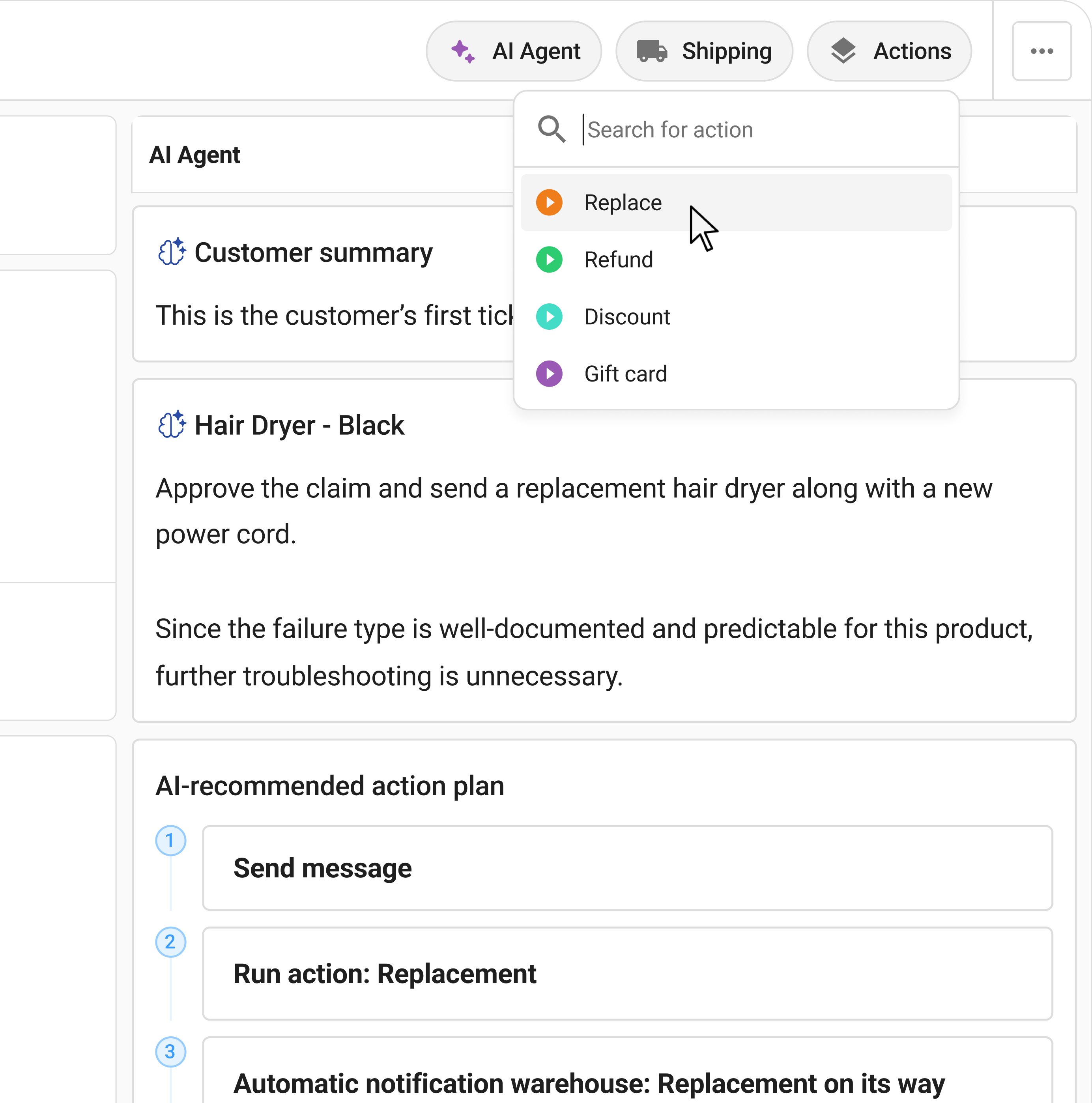
- Claimlane's AI Agent analyzes the images to classify the defect type and severity
- Based on the assessment, the system recommends a resolution:
- Minor cosmetic issue: Partial refund or discount (no return)
- Missing/broken part: Spare part shipment (no return)
- Structural defect: Replacement shipped, customer keeps or donates the original
- Major issue requiring inspection: Physical return authorized with carrier scheduling
For furniture brands, 30-50% of claims can be resolved without a physical return. This saves $100-300 per avoided return in reverse logistics costs.
Photo Requirements for Furniture Claims
Furniture claims require more visual evidence than standard returns:
- Overview shot showing the full product in context
- Close-up of the specific damage or defect
- Measurement reference (ruler or tape measure next to the issue) for dimensional problems
- Packaging photos if the damage is transit-related (important for carrier claims)
Claimlane's self-service portal guides customers through these photo requirements with on-screen instructions, reducing the back-and-forth that slows down resolution.
Warranty Claims for Furniture
Furniture warranty periods are typically longer than other categories:
- Structural frame: 5-10 years (sometimes lifetime)
- Upholstery/fabric: 1-3 years
- Mechanisms (recliners, adjustable beds): 2-5 years
- Mattresses: 5-10 years
- Outdoor furniture: 2-5 years (frame), 1-2 years (cushions)
These extended warranties mean claims can arrive years after purchase. The claims process needs to validate warranty status, assess the defect, and determine whether repair, replacement, or spare parts is the right resolution.
Claimlane's workflow engine applies product-specific warranty rules automatically. A claim on a sofa frame (covered for 10 years) is handled differently from a claim on the same sofa's fabric (covered for 2 years), even though it is the same product.
For repair-vs-replace decisions, furniture often favors repair. Sending a technician or shipping a replacement part costs far less than replacing an entire sofa.
Supplier Recovery for Furniture Defects
Furniture brands work with manufacturers who should bear the cost of manufacturing defects. But without structured claims data, recovering these costs from suppliers is difficult.
Claimlane's forward-to-supplier feature sends the full claim (photos, defect description, warranty status) to the responsible supplier. The supplier reviews and resolves within the same platform.
This structured approach enables:
- Defect-level cost recovery from specific suppliers
- Supplier quality scoring based on actual claim data
- Identification of batch-level quality issues before they generate more claims
- Supplier chargebacks supported by photographic evidence
Reducing Furniture Return Rates
While furniture return rates are already lower than most categories, each return is expensive enough that even small reductions have significant financial impact.
Better Product Visualization
The most common reason for furniture returns is "it looks different in person." Brands that invest in AR room visualization, multiple angle photos, fabric/material swatches, and customer-submitted photos see lower return rates.
Detailed Dimensions and Fit Guides
Publishing exact dimensions, including packaging dimensions, doorway requirements, and assembly space needed, prevents the "it doesn't fit" returns that require full reverse logistics.
Improved Packaging
Shipping damage is the most preventable category of furniture claims. Better corner protection, internal bracing, and "this side up" indicators reduce damaged-in-transit claims significantly.
Customer Communication During Delivery
Proactive delivery notifications, assembly instructions sent before arrival, and a clear process for reporting issues at delivery reduce post-delivery claims and confusion.
The Keep-the-Item Strategy
For lower-value furniture items or items with minor cosmetic defects, the most cost-effective resolution is often a partial refund with the customer keeping the item. When the reverse shipping cost exceeds the residual value of the returned product, bringing it back makes no financial sense.
This is common for:
- Items under $100 with minor cosmetic issues
- Products damaged in transit where the damage is functional but cosmetic
- Situations where the return would cost more than the product's resale value
Claimlane's workflow engine can automate this decision based on product value, defect type, and shipping cost estimates.
Furniture-Specific Analytics
Furniture brands should track these metrics to optimize their returns process:
- Cost per return (including reverse shipping, inspection, restocking)
- Remote resolution rate (percentage of claims resolved without physical return)
- Damage rate by carrier (identifies shipping partners causing the most damage)
- Defect rate by supplier and product line
- Time from claim submission to resolution
- Customer satisfaction post-claim (NPS or CSAT)
Claimlane's analytics dashboard provides these views, with breakdowns by product, supplier, and carrier. For details on which events to track, see the guide on returns analytics events.
EU Consumer Rights for Furniture Returns
Under EU consumer law, online furniture purchases come with a 14-day right of withdrawal. The customer can return the product for any reason within 14 days of delivery. However, the customer may be responsible for the return shipping costs if the brand's terms clearly state this.
For warranty claims, the EU provides a minimum 2-year warranty (the "legal guarantee of conformity"). If a defect appears within the first year, it is presumed to have existed at delivery unless the seller proves otherwise. After the first year, the burden shifts to the consumer.
The EU Right to Repair directive (effective July 2026) will also affect furniture brands selling certain product categories, requiring repair to be offered as an option before replacement.
Brands selling across EU borders need claims processes that comply with these rules automatically. Claimlane's workflow engine applies country-specific rules based on the customer's location.
Self-Service for Furniture Claims
Furniture claims have historically been handled by email or phone, which creates long resolution times and inconsistent outcomes. A self-service portal designed for furniture claims needs:
- Guided photo capture with specific angles requested for the product type
- Order data auto-population from the ecommerce platform via integrations
- Defect category selection relevant to furniture (shipping damage, material, structural, assembly, cosmetic)
- Delivery date capture for warranty validation
- Multi-language support for brands selling across markets
Claimlane's portal supports all of these and can be branded to match the retailer's website. When integrated with the ecommerce platform, the customer's order history is pre-loaded, so they only need to select the product, describe the issue, and upload photos.
The Claimlane Approach to Furniture Returns
Claimlane is built for the complexity of furniture returns and warranty claims:
- Remote-first assessment with AI photo analysis to avoid unnecessary physical returns
- Keep-the-item workflows for cases where reverse shipping costs exceed product value
- Extended warranty management with product-specific rules for frames, fabrics, and mechanisms
- Supplier forwarding for manufacturer defect recovery
- Carrier damage tracking to identify and address shipping damage patterns
- Automated status emails to keep customers informed during longer furniture claim cycles
For furniture-specific use cases, see the furniture industry page.
Claimlane is rated 4.8/5 on G2.