.webp)
Why serial number tracking matters now
The serial is the unit-level identity. Every other system, ERP, WMS, CRM, claims, talks about products at the SKU level. Only the serial talks about the specific unit. For brands handling warranty, returns, recalls, and supplier chargebacks, that distinction decides whether the case team has the right data when it counts.
This piece covers what serial number tracking software does in 2026, the four core use cases, where it sits in the stack, the evaluation checklist for buyers, and the common pitfalls. For broader context, serialized product defect tracking covers the defect-detection use case in more depth, and the in-batch piece on warranty claim form templates (Article 1) covers the intake side where serials get captured.
DR
- Serial number tracking software ties every unit sold to its case history: warranty status, claim count, repair record, supplier mapping.
- The four core use cases are warranty validation, anti-counterfeit, recall scope, and supplier accountability.
- The software belongs alongside ERP, WMS, and the claims platform. Without integration, the serial data sits in silos and the value drops.
- Brands using Claimlane capture, validate, and apply serials at intake, with case history, defect mapping, and supplier handoff in the same record.
What serial number tracking software does
At its base, serial number tracking software stores a record per unit. Each record carries the product SKU, the serial, the batch or lot, the manufacturing data, the sale data, the registration data, and the case history.
Capture
Serials get captured at three points: manufacturing, sale, and customer registration. Brands running warranty registration at point of purchase fold all three into one record.
Validation
Every time a serial appears in a case, the software validates it against the master record. Invalid serials route to a verification lane. Valid serials pull the full unit history.
Application
The serial drives every downstream call: warranty period, supplier mapping, recall scope, recovery routing. Without it, the claims team works blind.
Core use case 1: warranty validation
When a customer files a claim, the serial answers four questions. Is the unit real? Is it in warranty? Has it been claimed before? Which supplier owns the components?
Without the serial, every claim runs through manual receipt checks. With the serial, the claim file pre-populates from the unit record. The warranty management software piece covers the platform side, and the 4 pillars of a warranty claims software covers the operational layers.
Claimlane's warranty registration product captures serials at point of registration and ties them to the customer record. The case team sees the full unit history when the claim lands.
Core use case 2: anti-counterfeit
Counterfeit units claim warranty under real brand records. The fraud sits in the serial. A fake unit either carries no serial, a duplicate serial, or a serial outside the brand's issued range.
Serial tracking software catches each pattern. The in-batch piece on warranty fraud explained (Article 2) covers the fraud detection layer, and AI image recognition for warranty claims covers the visual checks that pair with serial validation.
Brands selling premium categories with high counterfeit risk (electronics, accessories, sporting goods) see counterfeit claims drop fast under serial-validated intake.
Core use case 3: recall scope
When a defective batch surfaces, the brand needs to know which units are affected and which customers own them. Without serial tracking, the recall scope is the entire SKU. With serial tracking, the recall scope is the affected batch range, often a fraction of total SKU volume.
The product recall management piece covers the recall workflow, and product recalls retail and ecommerce covers the cross-channel side. Brands with good serial data run targeted recalls. Brands without serial data run blanket recalls and absorb the extra cost.
Core use case 4: supplier accountability
A single unit often carries components from three or four suppliers. When the unit fails, the case team needs to route the defect to the right supplier. The serial maps to the component, and the component maps to the supplier.
The pattern is covered in supplier chargebacks recovering warranty costs, supplier management for ecommerce, and supplier recovery how to get credit notes faster. The in-batch piece on AI supplier management (Article 5) covers the AI scoring layer that sits on top of serial-mapped supplier data.
Where serial tracking sits in the tech stack
Serial tracking software does not live alone. It connects to ERP for the SKU master, WMS for warehouse data, CRM for the customer record, and the claims platform for the case file.
Integration with ERP
The ERP holds the SKU and supplier master. The serial record needs to pull both. The ERP handle warranty claims piece covers the ERP angle in detail, and ERP returns integrations covers the bidirectional flow.
Common ERPs in the brand stack include NetSuite, Business Central, Dynamics 365, and SAP. The Dynamics 365 warranty management, NetSuite warranty and repairs management, and SAP return order processing pieces cover each platform specifically.
Integration with WMS
When returns arrive, the WMS scans the serial against the case record. If the serial does not match, the unit holds for verification. This single check stops the return-swap fraud pattern covered in the in-batch piece on warranty fraud.
The warehouse module piece and best warehouse management software piece cover the WMS side. Brands handling repair workflows also need the serial to drive the field service management software routing.
Integration with claims systems
The claims platform is where the serial pays off. At intake, the customer enters the serial. The platform validates it, pulls the unit history, applies the warranty rule, and routes the case. This is the pattern Claimlane runs on every claim.
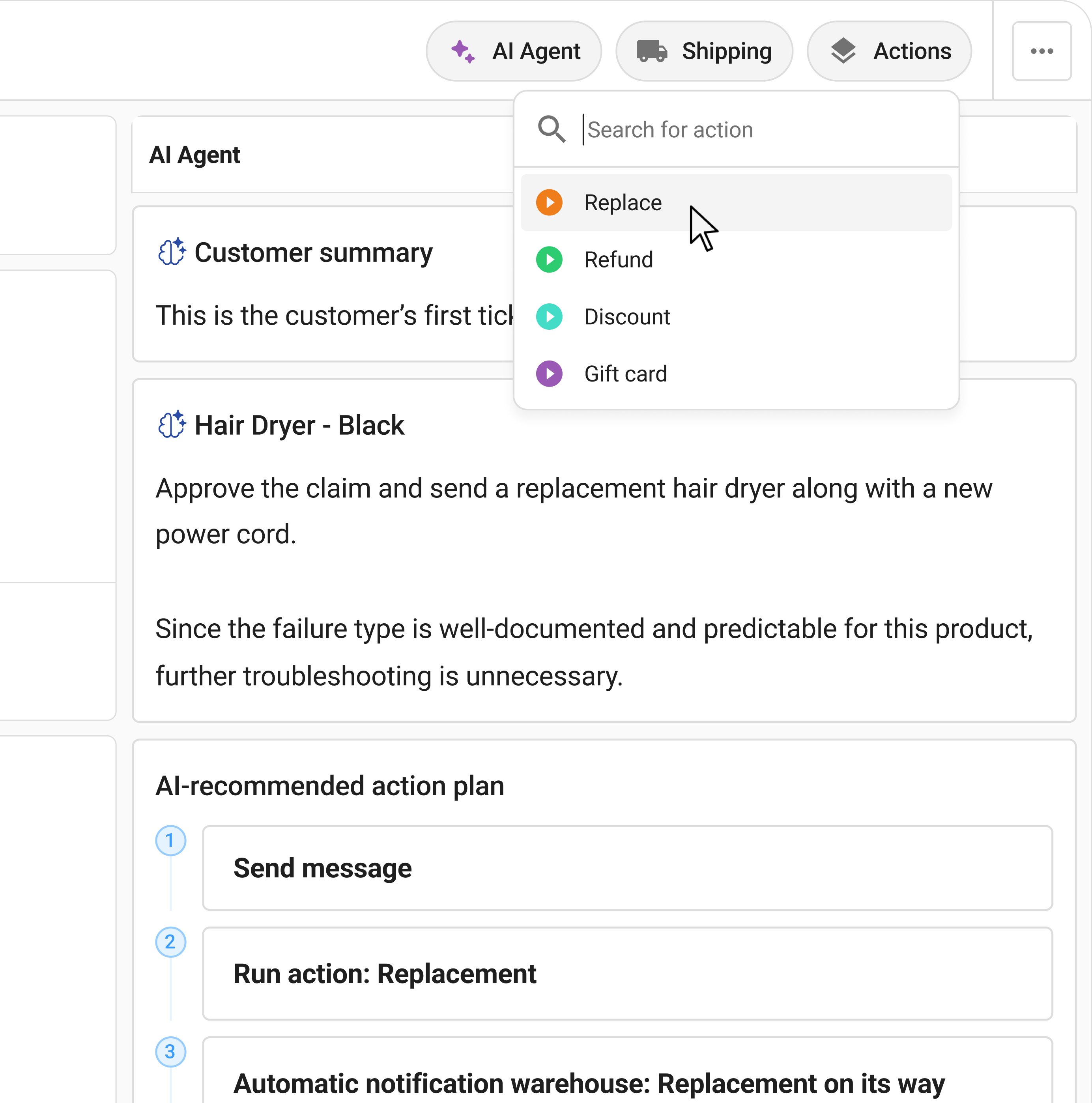
The self-service portal handles intake. Claimlane's AI Agent, the first AI agent purpose-built for warranty claims and returns, reads the serial and the evidence together. Forward-to-supplier routes the case to the right supplier based on the component mapping. The analytics product reports on serial-level defect patterns.
Customer storySerials at intake removed the back-and-forth on every repair case. The team knows the unit history, the supplier mapping, and the right repair lane before they open the case.— Black Diamond, outdoor and climbing gear brand (case study)
Evaluation checklist for buyers
Nine questions cover the main scoring areas.
Coverage
Does the software handle batch and lot, not just serial? Some categories (apparel, food, components) work at batch level. Electronics work at serial level. Mixed catalogues need both.
Capture method
Does the software support QR, barcode, NFC, and manual entry? Modern brands run multiple capture paths depending on category and channel.
Integration depth
Does the software push and pull data with the ERP, WMS, CRM, and claims platform? Or does it run as a standalone database?
Validation logic
Does the software validate serial format, range, and authorised channel at entry?
Case history
Does the unit record carry the full case history (claims, repairs, replacements)?
Reporting
Does the software produce defect rate by serial range, batch, supplier, and channel?
API and developer access
Is there an API for downstream systems? Webhook events for new claims, new repairs, new registrations?
Security and compliance
Is the serial data encrypted, access-controlled, and GDPR-compliant?
Pricing model
Unit-volume pricing or platform-based? Most brands hit the unit-volume model and want to know the cap.
Common pitfalls
Four patterns appear in most failed implementations.
Pitfall 1: No capture path at sale
The brand captures the serial at manufacturing and at registration, but not at sale. Customers who do not register cannot be linked to the unit, which kills the warranty validation use case.
Pitfall 2: Serial-only, no batch
Apparel and food brands need batch tracking, not unit-level serial. Treating every unit as serialised inflates the database and slows the case system.
Pitfall 3: Standalone database
The serial sits in its own system, disconnected from ERP, WMS, and claims. The case team has to log in to a separate tool to look up the unit history, which kills the speed advantage.
Pitfall 4: No registration link
Without customer registration, the brand has serials but no owners. The marketing and recall use cases break completely. The warranty registration why brands need it and when does warranty registration make sense to offer pieces cover the registration angle.
AI in serial number tracking
AI extends serial tracking software in three places.
Image-based serial capture
AI vision reads serial labels from photos, even when the label is blurry, partially obscured, or photographed at an angle. Reduces manual entry friction at intake.
Component identification
When the customer cannot find the serial, AI identifies the unit and the components from the photo. The right supplier mapping still routes correctly. The in-batch piece on AI customer service automation for aftersales (Article 4) covers the AI intake layer.
Defect prediction
AI scores units by serial range against the brand's defect history. Predictive flags surface units in the field that are likely to fail next, which feeds predictive warranty analytics.
The AI warranty claims automation, AI returns management, and AI predictive spare parts inventory pieces cover the broader AI layer that sits on top of serial-tracked data.
Industry view: serial tracking and the regulatory direction in 2026
The regulatory direction in the EU is pushing serial tracking into more categories. The Digital Product Passport (DPP) framework under EU regulation is moving electronics, batteries, and textiles toward unit-level traceability through 2027 to 2030. Brands selling into the EU are already building the data infrastructure ahead of the deadline.
The GPSR rules and EU right to repair directives pair with DPP to push the same direction. Brands that already run serial-level tracking for warranty have most of the DPP groundwork done.
Best warranty management software and warranty tracking software cover the adjacent platform categories. The warranty analytics product quality piece covers the analytics that serial tracking enables.
Frequently asked questions
Conclusion
Serial number tracking software is the unit-level layer that everything else depends on. Warranty validation, anti-counterfeit, recall scope, and supplier accountability all run off the serial. Brands that get this right run targeted recalls, catch counterfeit at intake, recover supplier costs faster, and prepare for DPP compliance ahead of the deadline.
To see how Claimlane handles serial capture, validation, and case routing on one platform, book a demo or watch the live setup on the interactive demo.