.webp)
What is a 3PL?
A 3PL (third-party logistics) provider is a company that handles logistics operations on behalf of a brand. The 3PL stores inventory, picks and packs orders, ships them to customers, and increasingly, processes returns. The abbreviation 3PL stands for "third-party logistics" and is sometimes written as 3PLs (plural) or third-party logistics provider.
What does a 3PL do?
Stores brand inventory in their facilities, often across multiple regions for faster shipping.
Picks, packs, and ships orders to customers based on data from the brand's ecommerce platform.
Receives, inspects, grades, and restocks or disposes of returned products. The reverse logistics piece.
Tracks stock levels, manages reorders, and provides real-time visibility through the warehouse management system (WMS).
Examples of 3PLs
The largest 3PLs include ShipBob, Deliverr, Red Stag Fulfillment, ShipMonk, Rakuten Super Logistics, and ShipHero in the US. In Europe, common providers include Bleckmann, Huboo, Byrd, and Salesupply. Many regional 3PLs also serve specific markets or product categories.
3PL benefits and advantages
Brands work with 3PLs for a few key reasons:
- Lower fixed costs (no warehouse leases, equipment, or staff to manage)
- Faster shipping through distributed warehouse networks
- Operational expertise the brand doesn't have to build internally
- Capacity that scales with sales volume
- Geographic reach into markets where the brand doesn't have its own infrastructure
Now, with that context, here's how 3PL returns processing actually works.
What Is 3PL Returns Management?
3PL returns management is when a third-party logistics provider handles the reverse logistics process on behalf of an ecommerce brand. Instead of the brand receiving, inspecting, and processing returned products in-house, the 3PL does it from their warehouse.
For brands that already use a 3PL for fulfilment, adding returns to the arrangement makes operational sense. This is especially true in 3PL retail and ecommerce setups where return volumes are high and predictable. A solid 3PL strategy treats returns as a strategic operation, not an afterthought.
But returns are fundamentally different from outbound fulfillment. Shipping an order is predictable: pick the item, pack it, label it, ship it. Processing a return is messy: receive the package, open it, inspect the product, decide if it's resellable, restock or dispose of it, update inventory, and trigger the refund. Not every 3PL handles this well.
How 3PL Returns Processing Works
The typical 3PL returns workflow looks like this.
Step 1: Customer initiates a return
The customer requests a return through the brand's return portal or customer service. The brand (or its returns software) generates a return label and provides shipping instructions.
Step 2: Return arrives at the 3PL warehouse
The customer ships the product back. It arrives at the 3PL's facility and enters the receiving queue.
Step 3: Receiving and identification
Warehouse staff scan the return, match it to the original order, and log it in the warehouse management system (WMS). If the return doesn't have a tracking link to the original order, manual identification is required, which slows everything down.
Step 4: Inspection and grading
Staff inspect the returned product and grade its condition:
Unopened, original packaging intact. Goes back to sellable inventory and resells as new.
Opened but unused or lightly used. Resells as open-box or refurbished at a discount.
Visible defects, missing parts, significant wear. May be salvageable for parts, often disposed.
Broken, contaminated, or missing critical components. Recycle or discard.
The grading criteria should be defined by the brand, not the 3PL. If the 3PL uses its own standards without brand input, the results are unpredictable.
Step 5: Disposition
Based on the grade, the item follows one of several paths:
- Restock: Grade A and B items go back into sellable inventory.
- Refurbish: Items that need cleaning, repackaging, or minor repair before resale.
- Liquidate: Sell to a liquidation company at a steep discount.
- Donate: Send to a donation partner.
- Dispose: Recycle or discard.
Step 6: Inventory and refund update
The WMS updates inventory counts based on the disposition. The brand's returns or order management system triggers the customer refund based on the inspection results.
What to Look For in a Returns-Capable 3PL
Not all 3PLs offer returns processing, and among those that do, the quality varies significantly. Here's what to evaluate.

Dedicated returns processing area
Returns should be processed in a separate area from outbound fulfillment. Mixing the two creates confusion, inventory errors, and delays. Ask the 3PL if they have a dedicated returns station with inspection tables, photography equipment (for documenting conditions), and quarantine zones for damaged goods.
Clear inspection and grading protocols
The 3PL should follow the brand's grading criteria, not generic standards. A fashion brand's definition of "resellable" is different from an electronics brand's. Get the grading protocol in writing and audit it regularly.
Integration with the brand's returns system
The 3PL management system (typically a WMS) needs to connect to the brand's returns management platform so that return status, inspection results, and refund triggers flow automatically. A modern 3PL system integrates with ecommerce platforms, ERPs, and dedicated claims tools rather than operating as a standalone silo.
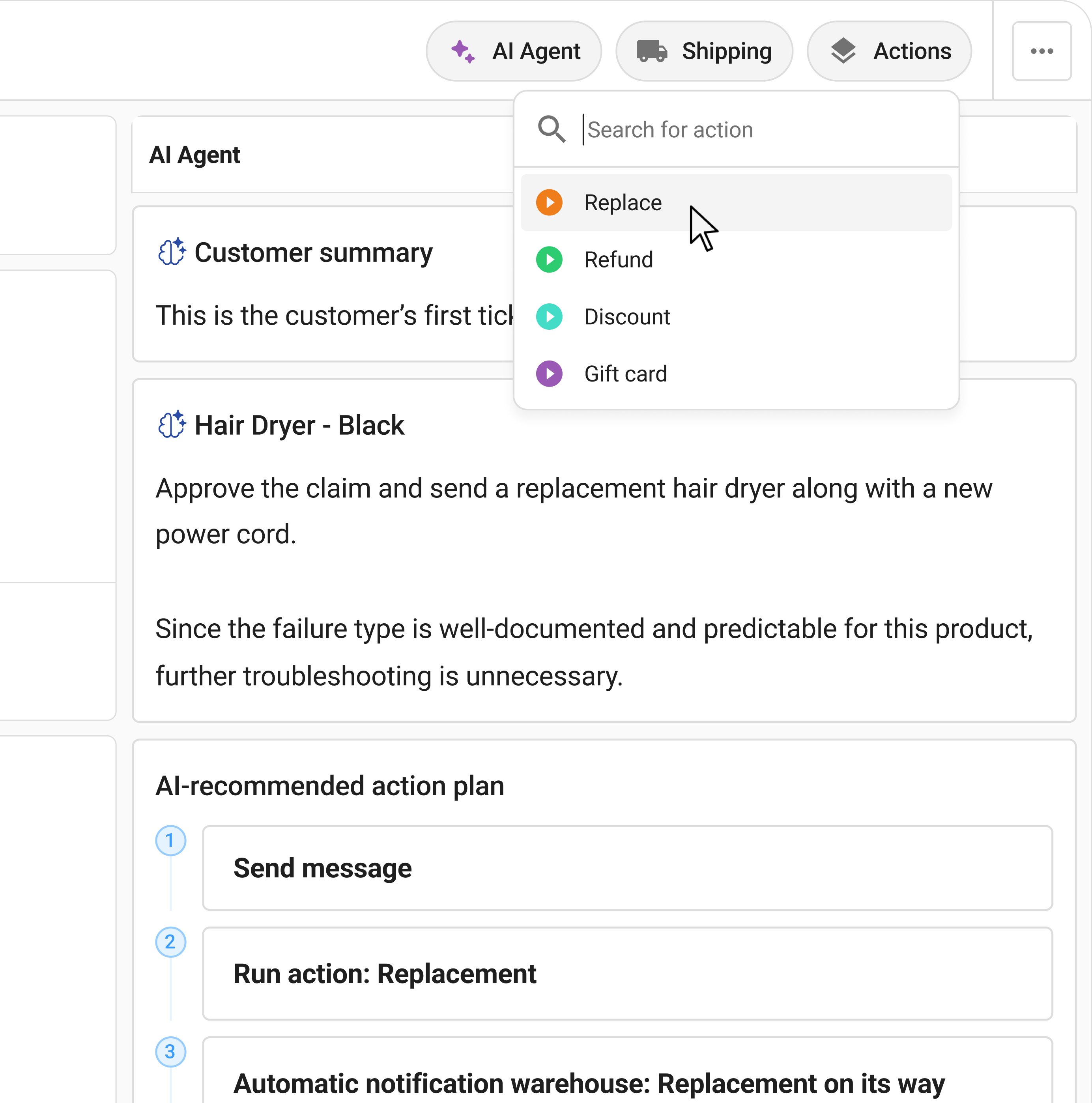
Platforms like Claimlane integrate with 3PL warehouse systems and ecommerce platforms, creating a connected workflow where the customer submits a return through the self-service portal, the 3PL processes the physical return, and the refund is triggered based on the inspection results.
Reporting and visibility
The brand needs visibility into:
- How many returns were received today, this week, this month
- Inspection results and grading breakdown
- Restock vs. dispose ratios
- Average processing time from receipt to completion
- Exception cases (items that couldn't be identified, disputes, damaged returns)
If the 3PL can't provide this data, the brand is flying blind.
Scalability during peak periods
Return volumes spike after peak sales periods (post-holiday, post-Black Friday). The 3PL needs surge capacity for returns processing, not just outbound fulfillment. Ask about staffing plans and processing SLAs during peak return windows (January is typically the highest-volume return month).
Common 3PL Returns Problems
Brands that outsource returns to a 3PL often encounter the same set of issues.
Slow processing times
The most common complaint. Returns sit in the receiving queue for days or weeks before they're inspected. The customer is waiting for a refund. The brand is fielding "where's my refund?" tickets. The 3PL prioritizes outbound orders over inbound returns.
Solution: Set explicit SLAs for return processing time (e.g., returns must be inspected and graded within 48 hours of receipt). Include penalties for SLA violations in the contract.
Inaccurate grading
The 3PL restocks items that should have been flagged as damaged. Or disposes of items that were perfectly sellable. Inaccurate grading costs the brand money either way: restocking damaged goods leads to customer complaints, and disposing of sellable goods is pure loss.
Solution: Conduct regular audits. Have the 3PL photograph every returned item during inspection. Review a sample of grading decisions monthly.
Lost returns
Returns arrive at the 3PL return warehouse but aren't scanned in, aren't matched to orders, or physically go missing.
Solution: Require the 3PL to scan every return at the dock door on arrival, before it enters the inspection queue. The scan should link to the RMA or return authorization number.
Poor communication on exceptions
Some returns don't fit neatly into the standard process: items from the wrong brand, items with no order match, items that appear fraudulent. If the 3PL doesn't have a clear exception handling process, these items pile up in a corner and never get resolved.
Solution: Define an exception escalation path. Items that can't be identified or processed within a set timeframe should be flagged and escalated to the brand with photos and details.
No warranty or claims integration
Most 3PLs handle returns (customer wants a refund) but don't handle warranty claims (customer reports a defect). Warranty claims require product inspection against warranty terms, not just a condition grade. Brands that need both workflows often find that the 3PL handles returns but the warranty claims process needs a separate system.
3PL Returns vs. In-House Returns Processing
The choice between outsourcing returns to a 3PL and handling them in-house depends on volume, complexity, and control requirements.
Many brands use a hybrid model: the 3PL handles standard returns (restock or dispose), while the brand handles warranty claims, repairs, and complex cases in-house or through a dedicated claims platform.
How 3PL Reverse Logistics Fits Into the Bigger Picture
What is 3PL reverse logistics? 3PL reverse logistics refers to the process of moving products from the customer back through the supply chain, handled by a third-party logistics provider. It's the operational mirror of standard fulfilment: instead of products flowing from warehouse to customer, they flow from customer back to warehouse for inspection, grading, and disposition.
The full reverse logistics operation includes:
- Customer-facing returns process: How customers initiate returns, what self-service options they have, what communications they receive.
- Physical returns processing: What the 3PL handles: receiving, inspecting, grading, restocking, disposing.
- Claims and warranty management: Evaluating defect claims, applying warranty rules, coordinating repairs and replacements.
- Data and analytics: Tracking return rates, reasons, costs, and product quality patterns.
The 3PL typically handles the physical piece. The brand (or its returns platform) handles the customer-facing and data pieces. Claimlane sits in the middle, connecting the customer-facing claims process with the physical 3PL workflow and providing the analytics layer that makes the data actionable.
How to Set Up 3PL Returns Management
Here's a practical checklist for brands implementing returns processing with a 3PL.
1. Define grading criteria
Create a grading rubric specific to the brand's products. Include photos of acceptable vs. unacceptable conditions for each grade level. Train 3PL staff on the criteria.
2. Set SLAs
Define processing time expectations:
- Time from receipt to inspection: 24 to 48 hours
- Time from inspection to inventory update: same day
- Time from inspection to refund trigger: same day
3. Integrate systems
Connect the 3PL's WMS to the brand's returns management platform and ecommerce system. Return status should update in real time so customer service can answer questions without calling the warehouse.
4. Establish reporting
Agree on a weekly reporting cadence that includes: returns received, grading breakdown, restock rate, exception count, and average processing time.
5. Plan for exceptions
Define what happens with unidentifiable items, suspected fraud, warranty claims, and items that need the brand's input before a disposition decision.
6. Audit regularly
Visit the 3PL's returns area quarterly. Review a random sample of grading decisions. Compare the 3PL's data to the brand's returns data to catch discrepancies.
Brands like Davidsen and Konges Sløjd have found that combining a dedicated claims platform with their fulfillment partners creates a more reliable returns operation, with better data quality and faster resolution times.