.webp)
Happy Returns is best known for its in person return drop off network and “no box, no label” experience. Many ecommerce brands choose it to reduce friction for customers and consolidate return shipping costs.
As brands grow, however, reliance on physical drop off locations, limited warranty workflows, and less control over complex return logic can make it reasonable to explore alternatives that support more advanced operations.
Happy Returns and consumer return-network platforms: how the category works
Happy Returns belongs to a specific corner of the returns market: consumer-facing return networks. These services focus on the customer's side of the return, the drop-off, the pickup, the boxless experience. They're often confused with brand-side returns software, but they solve a different problem.
Two categories sit inside "consumer return networks":
Drop-off networks. Physical locations where customers bring returns without a box or label. Happy Returns runs the largest US drop-off network (9,000+ locations through Return Bars). In the UK, Doddle and InPost operate similar networks. In Canada, Return Bear partners with shops and parcel locker providers.
Pickup services. Customers pay a fee and a courier picks the return up from home. Return Queen runs this model in the UK, available in select cities. The brand pays nothing because Return Queen charges the consumer directly. Similar consumer-pay pickup services exist in other regions but coverage is narrow.
The brand-side software that powers these networks is a separate category. Happy Returns offers both: the physical Return Bar network and a SaaS layer that lets retailers configure their portal, eligibility rules, and refund processing. Other platforms (Claimlane, Loop, Narvar, AfterShip Returns) handle the software layer but don't run physical networks. Some brands pair a software platform with a network: Claimlane for the workflow plus Happy Returns or Doddle for the drop-off layer.
The right choice depends on whether the priority is consumer convenience (drop-off network), brand-side workflow flexibility (returns software), or both.
TL;DR – The best Happy Returns alternatives:
Claimlane ✨ Best overall alternative for flexible returns, warranties, and repairs
ReturnGO – Best for automated refunds and exchanges
Loop Returns – Best for Shopify-native fashion brands
AfterShip Returns – Best for global, multi-carrier operations
Narvar – Best for post-purchase communication
ReverseLogix – Best for enterprise reverse logistics
ReturnBear – Best for cross-border ecommerce returns
Why teams look for Happy Returns alternatives
Happy Returns is not a bad platform. In fact, it solves one specific problem very well: physical drop off convenience.
But there are important considerations before committing.
1. Heavy reliance on physical infrastructure
Happy Returns is strongest when customers use in person drop off locations. For digital-first brands or international sellers, this model can become limiting.
2. Limited warranty and repair workflows
Happy Returns focuses primarily on standard ecommerce returns. Brands handling repairs, warranty claims, or technical diagnostics often need more configurable workflows.
3. Less operational control
Because Happy Returns integrates logistics and physical handling, brands may have less flexibility over internal processes, approvals, or case handling rules.
4. Enterprise-leaning pricing
Pricing is typically custom and volume-based. For mid-sized brands, this can create unpredictability as return volume grows.
Happy Returns is excellent when physical convenience is the main priority. But if you need flexible digital workflows, structured warranty management, or deeper automation, alternatives may fit better.
| Platform | Category | Physical drop-off network | Warranty + repairs | Pricing model | Best for |
|---|---|---|---|---|---|
| Happy Returns | Drop-off network + software | Yes (9,000+ US Return Bars) | No | Custom (volume-based) | US brands prioritizing box-free customer drop-offs |
| Claimlane | Returns + warranty software | No (integrates with carriers and networks) | Yes (full workflow + AI Agent + spare parts) | $800/month + scale | Brands managing returns, warranty, and repairs in one system |
| Loop Returns | Returns software (Shopify) | No | No | From $155/month + volume | Shopify DTC apparel and fashion brands |
| Narvar | Post-purchase CX software | Concierge drop-off network (US) | No | Enterprise (~$20K+/yr) | Enterprise retailers prioritizing CX |
| AfterShip Returns | Returns software | No | No | From ~$11/month | Multi-carrier global brands |
| Return Queen | Consumer pickup service (UK) | N/A (home pickup model) | No | Consumer pays per pickup | UK shoppers wanting at-home return pickup |
| ReverseLogix | Enterprise RMS software | No | Yes (modules) | Enterprise (custom) | Enterprise reverse logistics with ERP integration |
The table mixes two categories on purpose: brand-side returns software (Claimlane, Loop, AfterShip, Narvar, ReverseLogix) and consumer-facing return services (Happy Returns drop-off network, Return Queen pickup model). They solve different parts of the problem and most brands end up pairing one of each.
The best Happy Returns alternatives in 2026
Happy Returns works well when in person drop off experiences are central to your customer strategy.
However, if you need:
- Configurable workflows
- Warranty and repair support
- More automation and control
- Multi-channel or international flexibility
Then the platforms below are worth evaluating. 👇
1. Claimlane
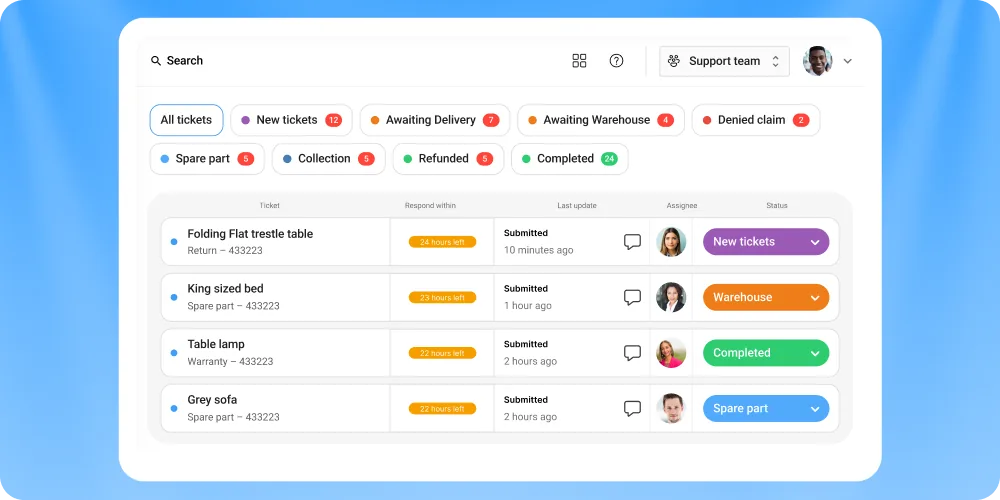
Claimlane is a modern returns and warranty platform built for brands that need structure and flexibility beyond simple drop offs.
It combines returns, warranty claims, and repair management in one unified system.
Top features
- Configurable return, warranty, and repair workflows
- Branded self service portals
- Custom forms and dynamic eligibility logic
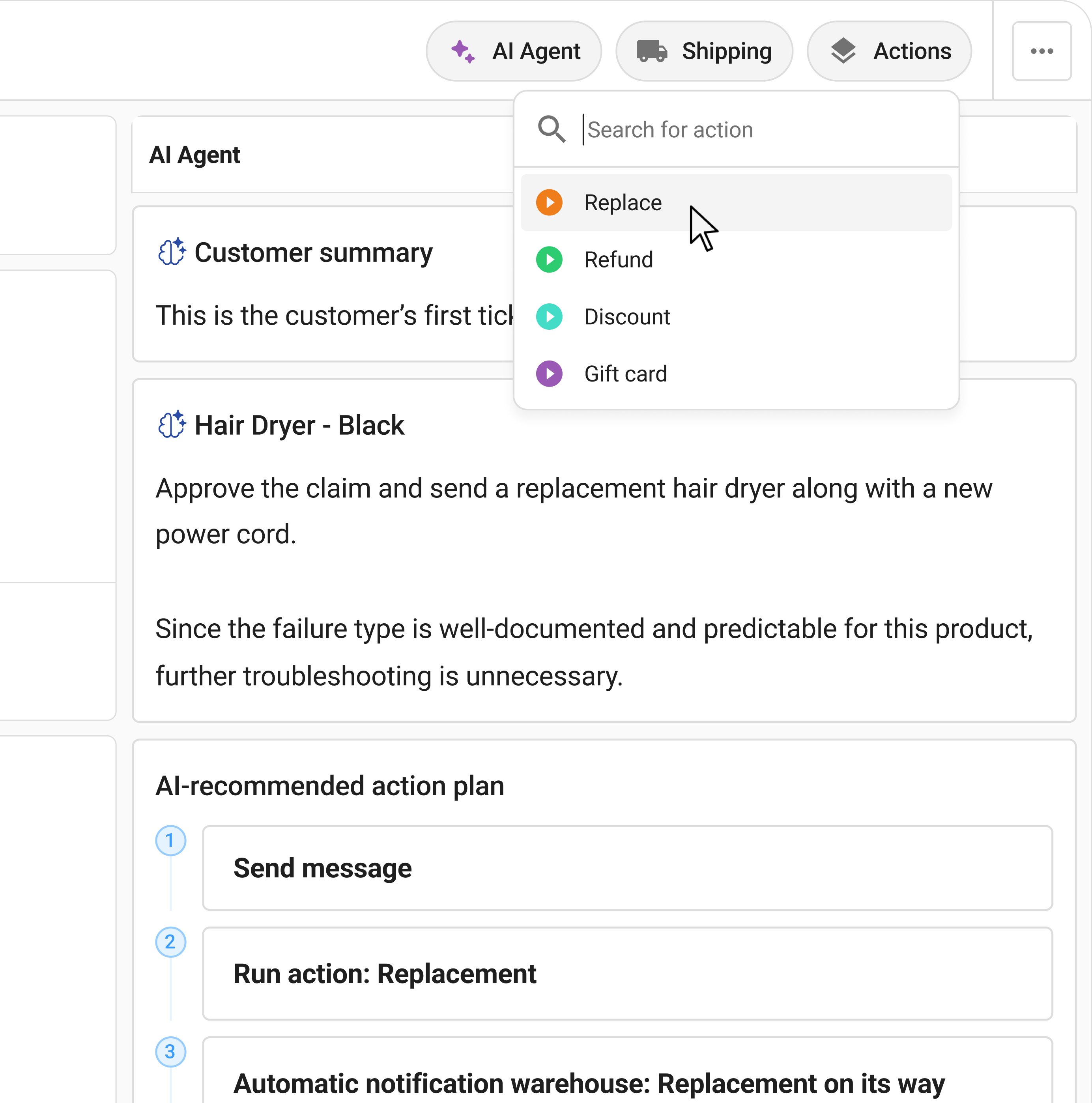
- AI Agents that help resolve complex tickets
- Central inbox for all customer and partner cases
- Automated approvals and routing
- One click integrations with Shopify, Magento, Klaviyo, and major carriers
- Analytics and root cause tracking
How it’s better than Happy Returns
Happy Returns focuses on physical convenience.
Claimlane focuses on operational control and flexibility.
If you need to manage complex aftersales workflows, warranty claims, B2B cases, or repair approvals, Claimlane provides far more configurability while still being easy to implement.
Pricing
Starts from $800 per month with unlimited users.
2. ReturnGO
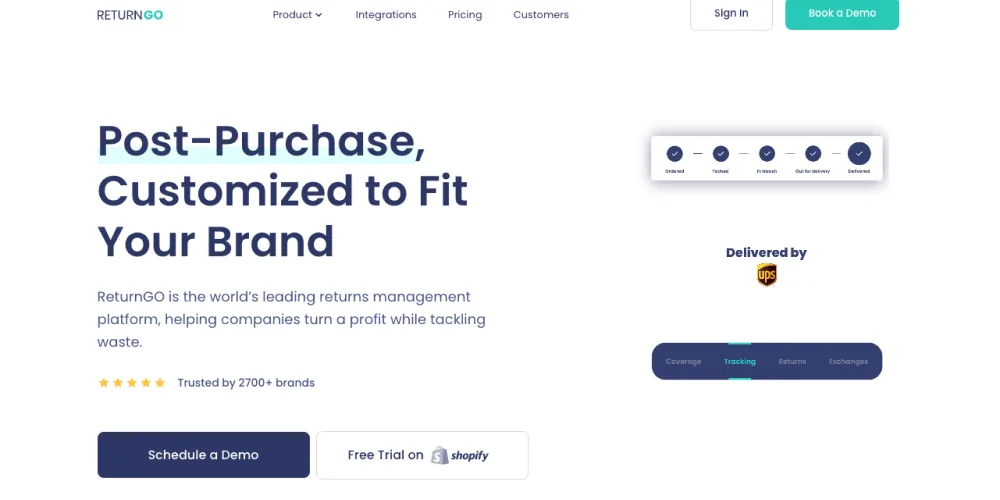
ReturnGO is built for DTC brands that want automated refunds and exchange logic.
Top features
- Branded return portals
- Refund and store credit automation
- Rule-based return eligibility
- Shipping label integrations
- Shopify and 3PL integrations
How it’s better than Happy Returns
ReturnGO provides more digital workflow control and refund automation for brands prioritizing ecommerce over physical drop off networks.
Pricing
Starts from $147 per month.
3. Loop Returns
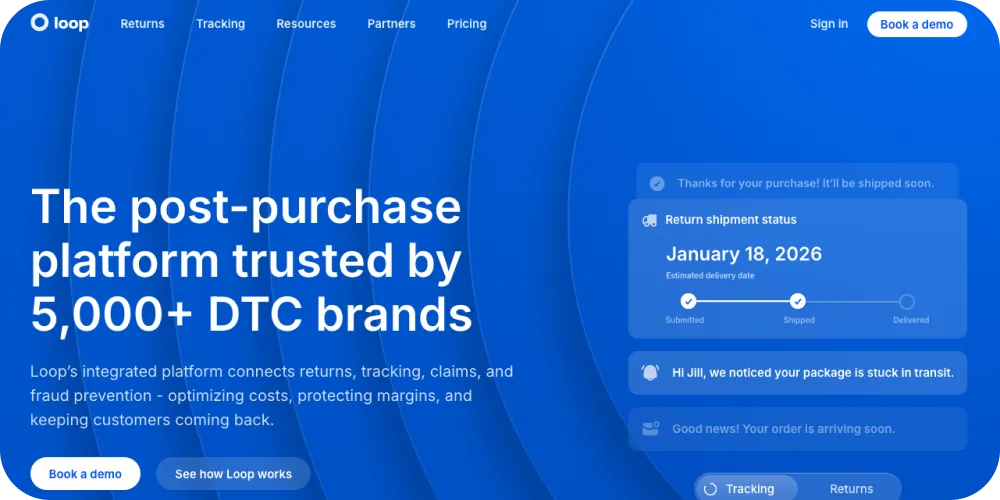
Loop Returns is a strong Shopify-native solution for fashion and apparel brands.
Top features
- Shopify-first integration
- Branded portals
- Exchange-first workflows
- Store credit automation
- Subscription integrations
How it’s better than Happy Returns
Loop emphasizes ecommerce experience and Shopify optimization, while Happy Returns emphasizes physical drop off convenience.
Pricing
Usage-based pricing.
4. AfterShip Returns
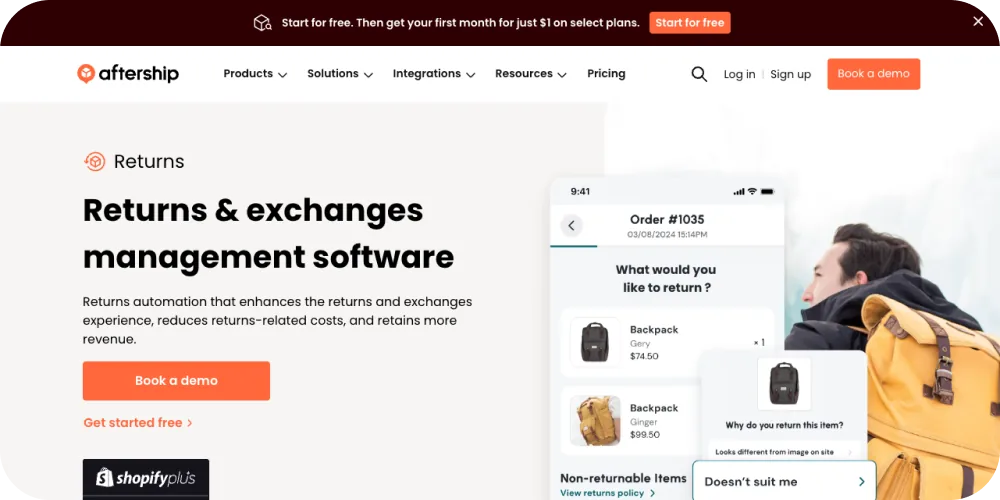
AfterShip Returns supports global brands managing returns across multiple carriers and regions.
Top features
- Multi-language portals
- Carrier integrations
- Rule-based approvals
- Fraud prevention tools
- Returns analytics
How it’s better than Happy Returns
AfterShip scales better internationally and gives brands more visibility across distributed logistics networks.
Pricing
Volume-based pricing.
5. Narvar
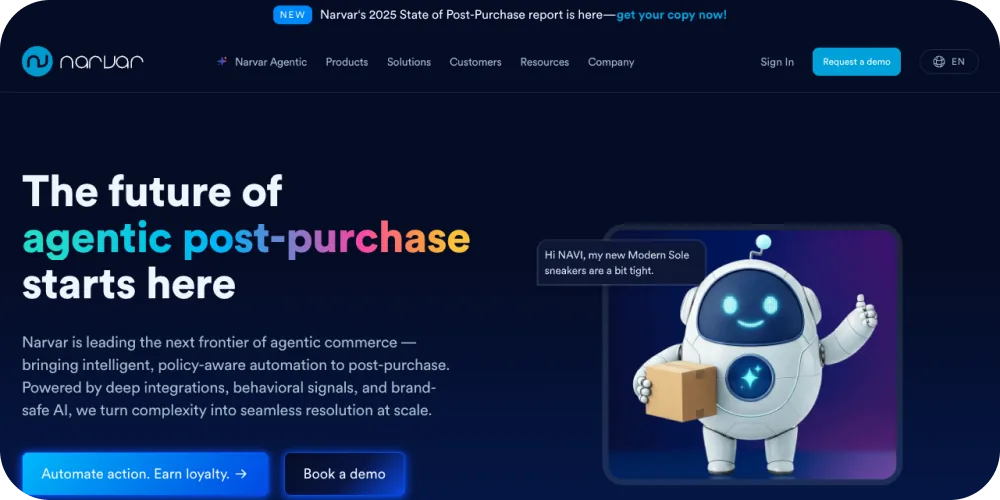
Narvar focuses on post-purchase communication and branded tracking.
Top features
- Branded return tracking pages
- Proactive notifications
- Carrier integrations
- Customer experience tools
- Enterprise support
How it’s better than Happy Returns
Narvar improves customer communication and post-purchase visibility rather than physical logistics execution.
Pricing
Enterprise pricing on request.
6. ReverseLogix
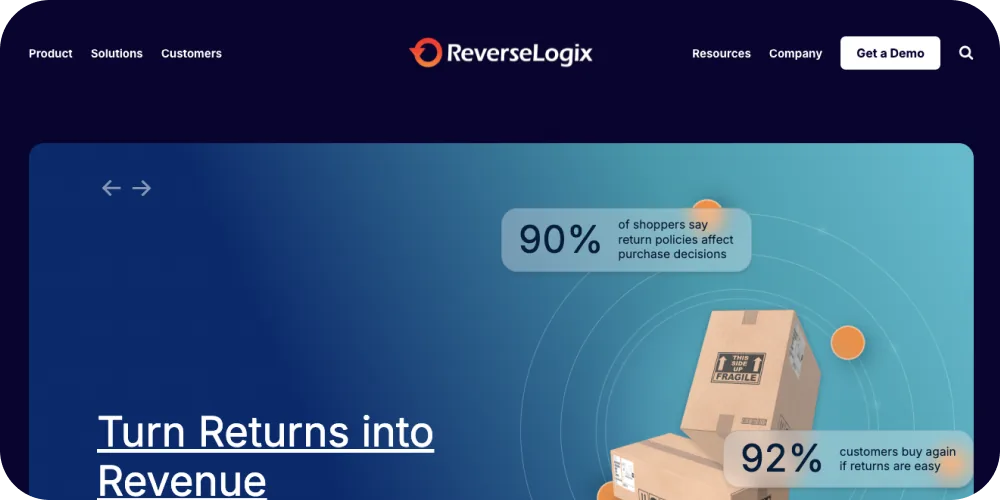
ReverseLogix is designed for large scale reverse logistics operations.
Top features
- Warehouse workflows
- Disposition management
- Repair and refurbishment logic
- Enterprise integrations
- Compliance controls
How it’s better than Happy Returns
ReverseLogix handles complex reverse logistics operations that extend beyond simple ecommerce returns.
Pricing
Enterprise pricing.

7. ReturnBear
ReturnBear focuses on cross-border ecommerce returns and consolidated shipping.
Top features
- International returns handling
- Cross-border consolidation
- Ecommerce integrations
- Returns analytics
How it’s better than Happy Returns
ReturnBear helps international ecommerce brands manage cross-border returns more efficiently than location-based drop off networks.
Pricing
Custom pricing.
Related platforms: Return Queen and consumer return services
Beyond brand-side software, a separate category of platforms targets the consumer directly. They don't sell to retailers; they sell to shoppers who want returns handled for them. Brands often hear about these tools because customers ask for them by name.
Return Queen
Return Queen is a UK-based consumer service that handles returns on behalf of shoppers. The customer schedules a pickup, Return Queen collects the parcel from their home, and returns it to the retailer through their preferred carrier. The consumer pays a small fee per return. Brands don't pay anything and don't need to integrate.
Best for: UK shoppers who don't want to deal with packaging or drop-offs themselves.
What it does not do: Provide returns software to retailers. There's no portal for brands, no analytics, no eligibility rules.
How it compares to Happy Returns: Different model. Happy Returns runs a physical drop-off network paid for by retailers. Return Queen runs a home pickup service paid for by consumers.
Other consumer return networks worth knowing
Doddle: UK-based drop-off network partnered with parcel shops and stations. Used by retailers and by aggregator platforms.
Bringly: Netherlands-based delivery and returns network with pickup options.
InPost: parcel locker network across the UK, Poland, France, Italy, and other European markets. Increasingly the default for box-free returns in Europe.
These networks are infrastructure, not software. Brands typically reach them through their returns platform's carrier integrations, not by integrating directly.
Conclusion
Happy Returns is a strong option when physical drop off convenience is your top priority.
But as brands grow, many require:
- More workflow flexibility
- Structured warranty and repair management
- Better analytics and automation
- Greater operational control
For brands looking for a scalable, configurable platform that handles returns, warranties, and repairs in one system, Claimlane stands out as the strongest alternative in 2026.
Claimlane is used and loved by brands such as Black Diamond, Tonies, and Hummel.
Loop Returns is one of the most popular Shopify returns apps. Check out the best Loop Returns alternatives if you're evaluating the market.
If you're a Shopify brand looking at returns tools, ReturnLogic is another common option. Here are the best ReturnLogic alternatives to compare.
For brands where shipping and delivery experience matter as much as returns, here are the best Sorted alternatives in 2026.
FAQ: Happy Returns and consumer return-network platforms
What is Happy Returns?
Happy Returns is a consumer return-network platform owned by PayPal. It runs a US drop-off network of 9,000+ Return Bars where customers bring returns without a box or label. The platform also offers a software layer for retailers to configure portals, eligibility rules, and refund processing. Aggregated return shipping from drop-off locations reduces per-return cost.
What is Return Queen and how does it work?
Return Queen is a UK-based consumer return service. Shoppers schedule a pickup, Return Queen collects the parcel from their home, and returns it to the retailer through the carrier the retailer specified. The customer pays a per-pickup fee. Brands don't pay anything and don't need to integrate Return Queen with their returns system. The model targets shoppers who want returns handled for them rather than dealing with packaging and drop-offs.
Is Return Queen available outside the UK?
Return Queen primarily operates in the UK. Similar consumer-pay pickup services exist in other regions but coverage is fragmented. Bringly serves the Netherlands. Various local courier-based pickup services operate elsewhere in Europe. There is no single global equivalent yet.
What are the best Happy Returns alternatives in 2026?
Depending on the priority:
- Claimlane. Best for brands managing returns plus warranty plus repairs in one system, with AI-assisted claim triage.
- Loop Returns. Best for Shopify DTC apparel and fashion brands focused on exchange-first returns.
- ReturnGO. Best for brands wanting flexible return policy rules across Shopify, WooCommerce, BigCommerce.
- AfterShip Returns. Best for multi-carrier global brands needing wide carrier coverage.
- Narvar. Best for enterprise retailers prioritizing post-purchase CX, with its own concierge drop-off network in the US.
- ReverseLogix. Best for enterprise reverse logistics with ERP integration.
- ReturnBear. Best for cross-border ecommerce returns, with a Canada-focused drop-off network.
What's the difference between a consumer return service like Return Queen and a brand returns platform like Claimlane?
Return Queen sells to shoppers. The customer pays a fee and Return Queen handles the parcel collection and return on their behalf. Brands don't need to do anything. Claimlane sells to retailers. The brand uses Claimlane to run the returns and warranty operation: portal, rules, refunds, exchanges, repair workflows, supplier recovery. Different audiences, different problems, different pricing models.
Which Happy Returns alternative offers warranty claims and repairs?
Most Happy Returns alternatives (Loop, AfterShip Returns, Narvar, ReturnGO, ReturnBear) do not cover warranty claims or repair workflows. The platforms built for that are Claimlane (returns plus warranty plus repairs plus spare parts in one) and ReverseLogix (enterprise modules for warranty and repair). For most mid-market and DTC brands, Claimlane is the practical choice.
How much does Happy Returns cost?
Happy Returns uses custom volume-based pricing rather than a published per-month rate. Pricing scales with return volume and the mix of physical drop-off vs ship-back returns. Most contracts are annual. For mid-market brands evaluating budget, alternatives like Claimlane ($800/month entry), Loop Returns ($155/month + volume), AfterShip Returns (from $11/month), and ReturnGO (from $147/month) offer more predictable pricing.
Can I combine Happy Returns with another returns platform?
Yes. Many brands use Happy Returns purely as the physical drop-off network and run a separate platform for the returns workflow. Common pattern: Claimlane handles the customer-facing portal, the warranty intake, and the operational workflow, while Happy Returns provides the box-free drop-off option for customers who want it. The same logic applies for pairing AfterShip Returns or Loop with a drop-off network.