
.webp)
Most ecommerce brands spend 80% of their marketing budget getting customers to click "buy" and almost nothing on what happens after. The post-purchase phase, from order confirmation to delivery to returns, is where customer loyalty is actually built or destroyed. Retention in 2026 is a behavior design problem, not a campaign problem. A study from Forbes found that treating retention as a system rather than a series of isolated campaigns is what separates brands that grow from those that churn.
The numbers make the case clearly. Acquiring a new customer costs 5-7x more than retaining an existing one. Post-purchase interactions, including WISMO queries, return requests, and warranty claims, generate 60-70% of all support tickets. Getting these moments right determines whether a first-time buyer becomes a repeat customer.
- • Post-purchase experience generates the majority of support volume and has more impact on retention than pre-purchase marketing.
- • Order tracking, returns, exchanges, and warranty claims are the four pillars of post-purchase ops.
- • Automating routine workflows cuts support costs 40-60% while improving satisfaction.
- • Claimlane automates warranty claims and returns with AI image analysis and rule-based resolution.
Why Post-Purchase Is the Most Underinvested Phase
Ecommerce brands obsess over conversion rate optimization, ad spend efficiency, and checkout flow design. These matter. But once a customer has paid, most brands hand off the experience to shipping carriers, generic tracking pages, and reactive support teams.
This creates a gap. The customer just trusted the brand with their money. What happens next, the confirmation email, the tracking updates, the delivery experience, and how problems are handled, shapes their entire perception of the brand.
A study from Shopify confirmed that post-purchase communications are one of the strongest drivers of long-term retail growth. When brands engage customers after checkout, they reduce anxiety, build trust, and improve the odds of repeat revenue.
The Four Pillars of Post-Purchase Experience
1. Order Tracking and Delivery Updates
WISMO ("Where is my order?") queries represent 30-40% of all ecommerce support tickets. Every WISMO ticket is a failure of proactive communication.
Brands that send automated shipping updates via email and SMS, with branded tracking pages rather than carrier URLs, reduce WISMO tickets by 50-80%. The tracking page itself becomes a marketing touchpoint: product recommendations, review requests, and loyalty program reminders can all live on a page customers visit multiple times per order.
2. Returns and Exchanges
Returns are not a cost center. They are a customer experience moment. The return rate in ecommerce averages 20-30%, and how a brand handles returns directly impacts whether the customer buys again.
A frictionless return process that offers instant exchanges, store credit, or hassle-free refunds can retain 20-30% of revenue that would otherwise be lost. Brands using exchange-first flows through self-service portals see significantly higher retention rates compared to brands that process refunds by default.
3. Warranty Claims
Warranty claims are the most complex post-purchase interaction. They involve evidence collection (photos, videos), policy verification, product-specific rules, supplier agreements, and multi-step resolution workflows. This is where general customer service tools break down and purpose-built solutions like Claimlane's AI Agent take over.
Claimlane is the first AI agent purpose-built for warranty claims and returns. It analyzes product images, applies warranty rules per product and supplier, and recommends or auto-approves resolutions. Brands using Claimlane report up to 77% faster resolution times.
4. Post-Purchase Communication
The gap between a customer's first purchase and their second is where most brands lose people. A proper post-purchase email sequence fills this gap with intentional touchpoints: thank-you emails, product education, review requests, complementary product suggestions, and restock reminders.
The Post-Purchase Ops Flywheel
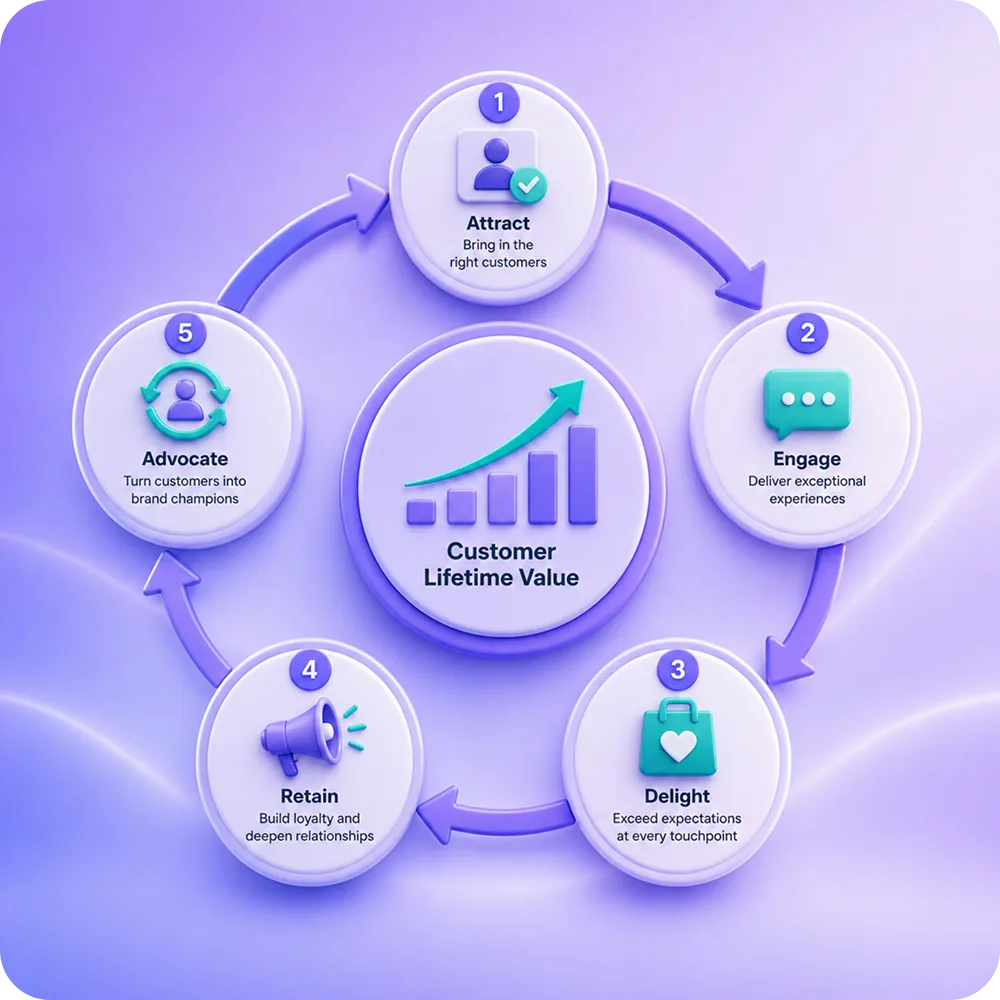
Loop Returns describes this as the "ops flywheel": fewer issues lead to faster resolution, which builds higher trust, ultimately resulting in a higher repurchase rate. When post-purchase operations work well, they create a self-reinforcing cycle:
- Proactive communication reduces the number of support tickets.
- Automated resolution handles routine requests instantly.
- Fast, fair handling of complex cases (returns, warranty claims) builds trust.
- Trust drives repeat purchases, which increases lifetime value.
- Higher LTV justifies investment in even better post-purchase experience.
Mapping the Digital Customer Experience After Checkout
The digital customer experience doesn't end at the checkout confirmation page. It extends across every touchpoint until the customer either repurchases or churns. Here is what each stage looks like when done well:
Order Confirmation (Minutes After Purchase)
The confirmation email sets the tone. Beyond the receipt, include expected delivery timeline, what to do if something goes wrong, and a clear path to support. This single email reduces "did my order go through?" queries significantly.
Shipping and Tracking (Days 1-7)
Branded tracking pages with real-time carrier data replace the need for customers to contact support. SMS notifications at key milestones (shipped, out for delivery, delivered) keep the customer informed without requiring them to check manually.
Delivery and Unboxing (Day of Delivery)
The unboxing moment is a brand experience. Include clear setup instructions, QR codes linking to product guides, and information about warranty registration. Brands that capture warranty registration at unboxing have higher engagement rates for future communications.
First Use and Engagement (Days 1-14)
Product education emails help customers get the most from their purchase. Care instructions, usage tips, and inspiration content reduce the chance of returns driven by misunderstanding rather than actual product issues.
Issue Resolution (When Problems Occur)
When something goes wrong, speed and fairness determine the outcome. A self-service portal where customers can submit claims with photos and receive instant decisions is the gold standard. Claimlane's AI Agent handles this by analyzing evidence and applying rules automatically.
Re-engagement and Repurchase (Days 30-90)
Review requests, loyalty rewards, and personalized product recommendations based on purchase history bring customers back. The quality of the post-purchase experience directly impacts whether these messages feel welcome or annoying.
Customer Engagement Strategy for Post-Purchase
A customer engagement strategy that ignores post-purchase is incomplete. Here are the tactics that drive results:
Exchange-First Return Policies
Instead of defaulting to refunds, offer exchanges as the primary option. Customers who exchange are 2-3x more likely to become repeat buyers compared to customers who receive refunds. Tools like Claimlane's self-service portal make exchange flows as easy as refund flows for the customer.
Proactive Issue Detection
Predictive analytics can identify products with higher-than-normal complaint rates before they become widespread problems. Brands that catch quality issues early can proactively reach out to affected customers, turning a potential negative experience into a positive one.
Loyalty Through Service, Not Discounts
Discount-driven loyalty programs attract deal seekers, not loyal customers. Service-driven loyalty, where customers stay because they trust the brand to handle problems fairly, produces more durable retention. After-sales service quality is the strongest predictor of repeat purchase behavior.
Feedback Loops That Close
Collecting customer feedback is only valuable if it leads to action. Connect feedback from returns and warranty claims to product development, supplier conversations, and policy updates. Claimlane's analytics dashboard surfaces patterns across claims to identify root causes.
How Claimlane Powers the Post-Purchase Experience
Claimlane sits at the center of post-purchase operations for ecommerce brands. Here is how it fits into each pillar:
Returns Automation
Claimlane's self-service portal lets customers initiate returns without contacting support. The portal guides them through eligibility checks, collects photos when needed, and processes the return automatically based on configurable rules.
Warranty Claims
The AI Agent analyzes product images, checks warranty coverage per product and supplier, and recommends or auto-approves resolutions. For complex cases, it routes to human agents with full context and a recommendation.
Supplier Forwarding
When a warranty claim falls under a supplier's responsibility, Claimlane's supplier forwarding compiles the evidence and routes the claim to the correct supplier with all documentation attached.
Analytics
Claimlane's analytics surfaces patterns across returns and warranty claims: which products generate the most issues, which suppliers have the highest claim rates, and where operational bottlenecks exist.
Black Diamond, a premium outdoor and sporting goods brand, used Claimlane to centralize their warranty claims process across multiple product categories and suppliers. The result was a standardized workflow that reduced resolution time and improved consistency.
Measuring Post-Purchase Customer Experience
The right metrics tell the full story:
Customer Satisfaction (CSAT) After Resolution
Measure satisfaction specifically after returns, exchanges, and warranty claim resolutions. A high overall CSAT can mask poor post-purchase scores.
First Contact Resolution Rate
What percentage of post-purchase issues are resolved in a single interaction? AI-powered tools like Claimlane push this toward 80-90% for warranty claims by providing instant decisions.
Repeat Purchase Rate After Returns
Track whether customers who go through the return process come back. If they don't, the return experience is failing as a retention touchpoint.
Time to Resolution
How long from issue report to resolution? For warranty claims, this can range from minutes (with AI automation) to weeks (with manual processes). Every day of delay increases the chance of a chargeback or negative review.
Net Promoter Score (NPS) Segmented by Experience
Segment NPS by customers who had a post-purchase issue vs those who didn't. The gap reveals how much the post-purchase experience is helping or hurting overall brand perception.
Building a Post-Purchase Tech Stack
A complete post-purchase tech stack typically includes:
| Category | Function | Example Tools |
|---|---|---|
| Order tracking | Branded tracking pages, proactive notifications | AfterShip, Malomo, Narvar |
| Returns & exchanges | Self-service returns, exchange-first flows | Claimlane, Loop Returns |
| Warranty claims | AI-powered claims analysis, auto-resolution | Claimlane (purpose-built) |
| Refund automation | Rule-based refund processing | Claimlane, Riskified |
| Post-purchase email | Drip sequences, review requests | Klaviyo, Omnisend |
| Customer feedback | Reviews, NPS, surveys | Yotpo, Trustpilot |
| Analytics | Returns data, claims patterns | Claimlane Analytics |
Common Post-Purchase Experience Mistakes
Treating Returns as a Cost Center
Returns are a retention opportunity. Every return processed quickly and fairly is a chance to keep the customer. Brands that bury their return policy or make the process difficult lose customers permanently.
Manual Warranty Processing
Manual warranty claim processing doesn't scale. At 50 claims per month, a support agent can manage. At 500, it requires a team. At 5,000, it requires a system. Automating claims management with tools like Claimlane is the only way to maintain quality as volume grows.
Ignoring Return Reasons
Every return has a reason. Brands that track and analyze return reasons find patterns: sizing issues suggest better size guides, defect clusters suggest supplier quality problems, and "changed my mind" returns suggest a mismatch between marketing and reality.
Siloed Support Data
When returns data sits in one system, warranty claims in another, and customer feedback in a third, no one can see the full picture. Unified analytics across all post-purchase interactions reveals insights that siloed data hides.
Post-Purchase Experience by Industry
Electronics and Consumer Tech
High average order values and complex warranty terms make post-purchase critical. Customers expect detailed troubleshooting support and fast warranty resolution. MaxGaming handles 30,000+ SKUs across 200+ brands using Claimlane for warranty claims.
Fashion and Apparel
Return rates of 30-40% are standard. Exchange-first flows and virtual try-on tools reduce returns while keeping customers engaged. Post-purchase communication around care instructions extends product life and reduces "not as expected" returns.
Furniture and Home Goods
Delivery logistics are complex, and damage in transit is common. Furniture brands need photo-based damage assessment workflows that can determine whether to send a replacement, schedule a repair, or offer a partial refund.
Outdoor and Sporting Goods
Product durability expectations are high. Warranty claims often involve nuanced assessment of "wear and tear" vs manufacturing defects. Outdoor brands benefit from AI-powered image analysis that can distinguish between normal use and warranty-covered issues.
Baby and Nursery
Safety concerns make fast warranty resolution critical. Parents expect immediate action on product safety issues. Baby brands need automated workflows that prioritize safety-related claims.
The Role of AI in Post-Purchase Experience
Automated Claim Resolution
AI agents analyze photos and videos to assess damage, verify warranty coverage, and recommend resolutions. This reduces resolution time from days to minutes and ensures consistent application of policies.
Predictive Quality Insights
By analyzing patterns across returns and warranty claims, AI identifies products with emerging quality issues before they become widespread. This allows brands to address supplier issues proactively.
Personalized Resolution Paths
AI can tailor resolution offers based on customer value, purchase history, and claim complexity. A loyal customer with a borderline claim might receive a more generous resolution, protecting the relationship while maintaining policy integrity.
Automated Supplier Communication
When claims fall under supplier responsibility, AI can compile the evidence, format it according to supplier requirements, and route it through automated forwarding workflows.