.webp)
What returns disposition means
Returns disposition is the decision about what happens to a product after it comes back. Restock it as new, refurbish it, resell it through a recommerce channel, liquidate it in bulk, or donate and recycle it. Every returned item gets one of those outcomes, and the outcome decides how much value the brand keeps.
Most brands treat disposition as an afterthought. The item comes back, a warehouse worker makes a quick call, and the value leaks out one item at a time. That is a costly habit. With online return rates sitting high and total retail returns now measured in the hundreds of billions, the disposition decision is where returns margin is kept or lost. This guide covers the five disposition paths, how grading drives the decision, the 2026 benchmarks, and where AI changes the work. For the wider picture, the ecommerce returns guide and the reverse logistics overview sit next to this one.
- Returns disposition is the decision to restock, refurbish, resell, liquidate, or donate each returned item.
- A disposition engine routes each item by condition grade, product category, and resale value instead of a quick warehouse guess.
- 2026 benchmarks point to 50 to 65 percent of returns going back as new, with decision time dropping from minutes to seconds per item.
- Claimlane's AI Agent reads the return evidence and applies the disposition rules, and Claimlane analytics shows where recovered value is leaking.
Why disposition is where returns margin is won or lost
A return has two cost stages. The first is the refund and the reverse shipping. The second is what happens to the item afterward. Brands obsess over the first and ignore the second, which is backwards, because the second stage is where the recovery happens.
An item restocked as new keeps almost its full value. The same item dumped into a liquidation pallet keeps a fraction of it. The gap between those two outcomes, multiplied across every return, is large. The hidden costs of returns and claims mostly hide in disposition, and returns-adjusted profitability only looks right when the disposition value is counted properly.
The problem with a manual call is not that the worker is careless. It is that one person cannot hold resale value, repair cost, stock position, and channel options in their head for every item. So they default to the safe, fast choice, which is rarely the most valuable one.
The five disposition paths
Every returned item ends up on one of five paths. A good disposition process knows the trade-off of each.
The paths sit in value order. Restock keeps the most, donate and recycle keep the least in cash but recover materials and goodwill. The aim of a disposition engine is to push each item to the highest path it genuinely qualifies for, which is the same logic the five Rs of reverse logistics describe.
Returns grading: the input that drives disposition
Disposition cannot happen without a condition grade. Grading is the inspection step that turns a returned item into a data point the engine can route.
A common scale runs from Grade A to Grade D. The grade combines the physical condition of the item with whether the original packaging came back, since packaging often decides whether an item can go back as new.
| Grade | Condition | Typical disposition |
|---|---|---|
| A: Like new | Unused, original packaging intact | Restock as new |
| B: Good | Minor issues or packaging missing | Refurbish, or resell as open-box |
| C: Fair | Significant wear or faults | Recommerce, parts, or liquidate |
| D: Damaged | Non-functional or unsellable | Recycle, or dispose |
Grading consistency is the weak point. Two inspectors grading the same item differently send it to two different paths, which is why return processing needs clear condition codes. A quality issue reporting tool for returns captures the grade in a structured way, so the disposition engine gets a clean input.
How a disposition engine makes the decision
A disposition engine is a rules system. It takes the grade, the product category, the resale value, and the current stock position, and it returns one outcome.
The logic is mostly a decision tree. A Grade A item with packaging goes to restock. A Grade B item goes to refurbish if the repair cost is low relative to the resale value, and to liquidation if the item is cheap enough that a repair is not worth the labour. A Grade C item of real value can be sold for parts, while a low-value Grade C item is liquidated. A Grade D item is recycled where materials can be recovered.
The value of an engine over a person is consistency and speed. Every item is judged the same way, and the decision happens in seconds. The reverse logistics software platforms that run this logic make disposition a defined step rather than a guess.
Where AI changes returns disposition
A rules engine is good. AI makes the input to the rules far better.
The hardest part of disposition is the grade. A human inspector is slow and inconsistent. This is where Claimlane's AI Agent, the first AI agent purpose-built for warranty claims and returns, changes the work. It reads the photos and videos submitted with the return, identifies the product, and assesses the condition from the evidence. AI image recognition for warranty claims applies the same way to returns: the model sees the scuff, the missing part, or the intact packaging and turns it into a grade.
With a reliable grade, the rest follows. AI returns management applies the disposition rules automatically, and AI reverse logistics optimization routes the item to the right destination. The decision that took a person three to five minutes drops to seconds, and it is the same decision every time.
Restock as new: the highest-value path
Restock is the path every brand wants. The item goes straight back to sellable inventory and keeps almost its full value.
The gate is condition and packaging. A Grade A item with intact packaging restocks cleanly. The same item without its box may still be sellable, but as open-box rather than new. This is why packaging instructions on the return matter: a customer who returns the item in its original box keeps it on the restock path.
Speed matters too. An item that sits in a returns area for weeks can miss its selling season, which drops its value even though its condition never changed. An efficient returns management system and good return management software get graded items back on the shelf fast.
Refurbish and recommerce: recovering value from imperfect returns
Most returns are not Grade A. They are Grade B or C, which means restock as new is off the table. Refurbish and recommerce are how a brand recovers value from those.
Refurbish means a light repair that brings the item back to a sellable standard. The decision is a simple comparison: if the repair cost is well below the resale value, refurbish. If a spare part is needed, the spare parts supply has to be in place for refurbishment to work.
Recommerce means reselling the item in its current state, as open-box or used, often through a dedicated channel. Recommerce in 2026 is one of the fastest-growing parts of retail, and a brand that resells its own returns captures that value instead of handing it to a liquidator.
Liquidate and donate: the last-resort paths
Liquidation and donation are the bottom of the value order, but they are not failures. They clear items that genuinely cannot be sold through the brand's own channels.
Liquidation sells items in bulk to a third party at a low price. It fits low-value Grade C items where the labour to refurbish or list them costs more than they would return. The reverse logistics companies for ecommerce often handle this stage.
Donation and recycling apply to Grade D items. They recover materials and, in the donation case, goodwill. They also reduce the environmental cost of returns, which is real: the environmental impact of customer claims and returns is a growing concern, and disposal to landfill is the worst outcome for both margin and footprint.
2026 benchmarks for returns disposition
The figures below are a fair read of where returns disposition sits in 2026. They are estimates, since disposition data varies widely by category.
The restock figure is the one to watch. A brand restocking only a third of its returns as new is leaking value somewhere in grading, packaging, or speed. Predictive returns analytics helps a brand see that gap and trace it to a cause.
Disposition data as a feedback loop
Disposition is not just an outflow. It is one of the richest data sources a brand has.
If a product keeps coming back at Grade C, the product has a quality or a fit problem. If items keep losing the restock path because packaging is missing, the unboxing experience or the return instructions need work. Tracking the right returns analytics events turns disposition outcomes into a signal.
Claimlane analytics reports disposition by SKU, supplier, and grade, which connects returns disposition to warranty analytics and product quality. Read alongside the other returns and warranty KPIs, disposition data tells the brand which products to fix at the source, so fewer items reach disposition at all.
How Claimlane supports returns disposition
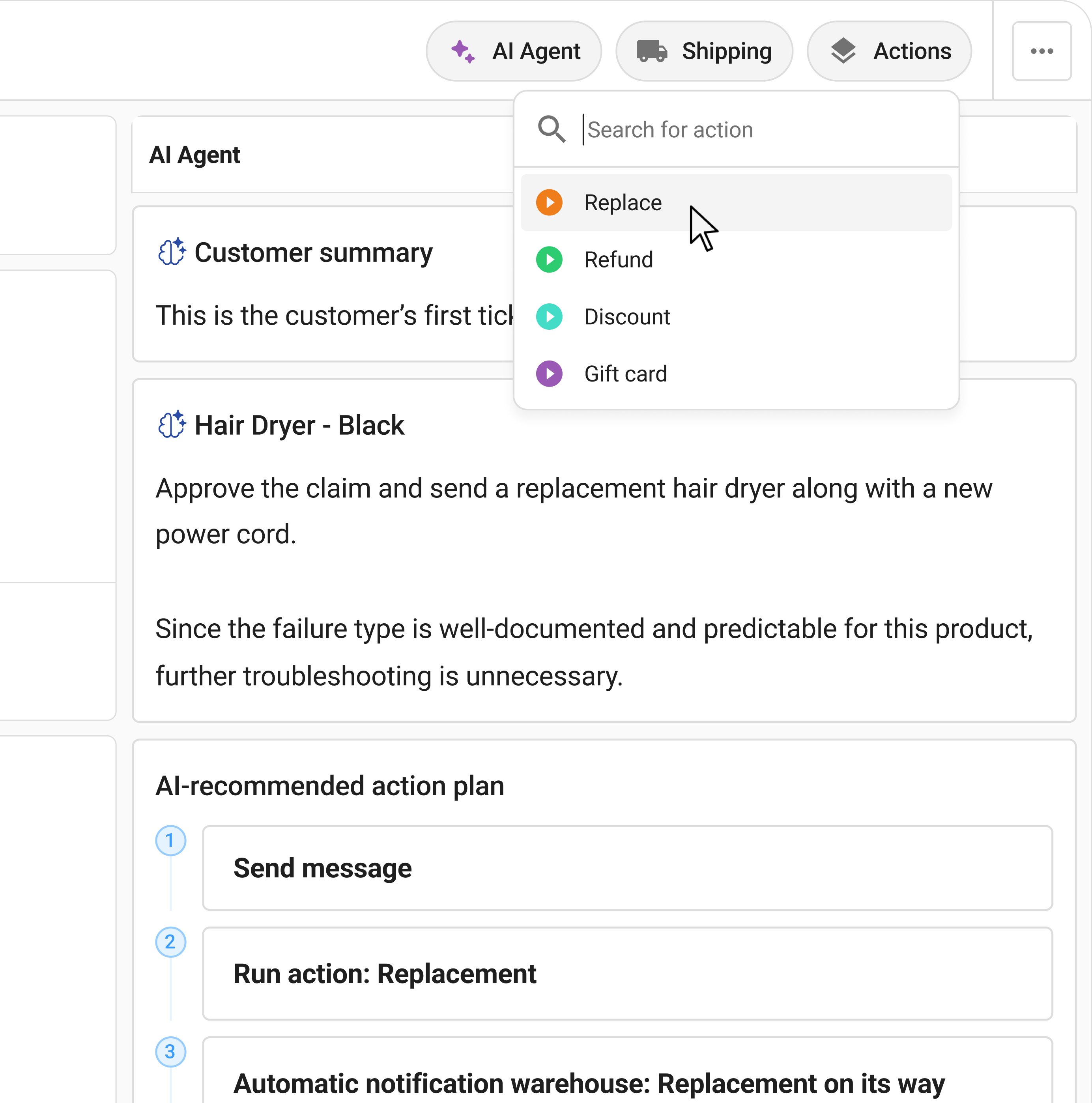
Claimlane handles the post-purchase case from intake to outcome on one platform. A return comes in through the portal with photos and the order data, the AI Agent reads the evidence and assigns a grade, and the workflow applies the disposition rule for that product and grade.
That structure makes disposition consistent and fast. The same returns automation that runs the customer-facing return runs the disposition decision behind it, and structured customer service workflows for returns keep every item on a defined path. When a returned item points to a supplier fault, forwarding the case to the supplier recovers that cost too. Claimlane is rated 4.8 out of 5 on G2 by brands running returns and disposition this way.
"Claimlane enables us to centralize all our post-purchase operations. Instead of juggling multiple tools, everything from ticket intake to supplier collaboration is handled in one place."Simone Andersen, Customer Service Director, Coolshop (case study)
The value-recovery payoff shows in the field. The outdoor brand GrejFreak saw a return on the platform almost immediately, and the fashion brand Mads Nørgaard strengthened customer satisfaction by handling returns and claims in a structured way rather than ad hoc.
Frequently asked questions
For teams comparing tools, the best returns analytics software guide covers how disposition reporting fits the wider returns stack.
Conclusion
Returns disposition is the quiet stage where returns margin is decided. Restock keeps the value, liquidation keeps a fraction of it, and the difference across thousands of items is large. A manual call at the inspection bench cannot weigh resale value, repair cost, and stock position fast enough to get it right.
An AI-assisted disposition engine can. It produces a consistent grade from the return evidence, applies the disposition rules in seconds, routes each item to the highest path it qualifies for, and feeds the outcome data back so the brand can fix the products that keep coming back.
To see how Claimlane's AI Agent grades returns and runs the disposition decision, book a demo.