.webp)
Most ecommerce brands know their gross margin. Fewer know their margin after returns. Even fewer know their margin after returns, warranty claims, repairs, and all the hidden after-sales costs that chip away at profit one transaction at a time.
Returns-adjusted profitability is the metric that closes this gap. It takes the standard profit calculation and subtracts every cost associated with getting a product back, inspecting it, restocking or disposing of it, and keeping the customer from churning in the process.
This article breaks down how to calculate it, why it matters more than ever, and what to do with the numbers once they're visible.
Why Standard Margins Lie
A product with a 60% gross margin looks healthy on paper. But if 25% of orders get returned, and each return costs $12-18 to process (shipping, labor, restocking, quality check), that margin drops fast.

Here's a simplified example:
- Product price: $80
- COGS: $32 (60% gross margin)
- Gross profit per sale: $48
- Return rate: 25%
- Average return processing cost: $15
- Returns cost per 100 sales: 25 returns x $15 = $375
- Refunds per 100 sales: 25 x $80 = $2,000
- Adjusted revenue per 100 sales: (100 x $80) - $2,000 = $6,000
- Adjusted profit per 100 sales: $6,000 - (100 x $32) - $375 = $2,425
- Returns-adjusted margin: 40.4% (vs. 60% gross margin)
That's a 20-point drop. And this example doesn't include warranty claims, repair costs, or the customer acquisition cost wasted on purchases that end in returns.
The Full Cost of Returns
Calculating returns-adjusted profitability requires accounting for every cost in the return lifecycle. Most brands track refund amounts. Fewer track the operational costs that come with them.
Direct Costs
- Return shipping. Whether the brand pays for return labels or deducts from the refund, shipping is a real cost. For heavier or bulky items like furniture, return shipping alone can exceed 20% of the product price.
- Restocking labor. Receiving, inspecting, repackaging, and returning items to inventory takes warehouse time.
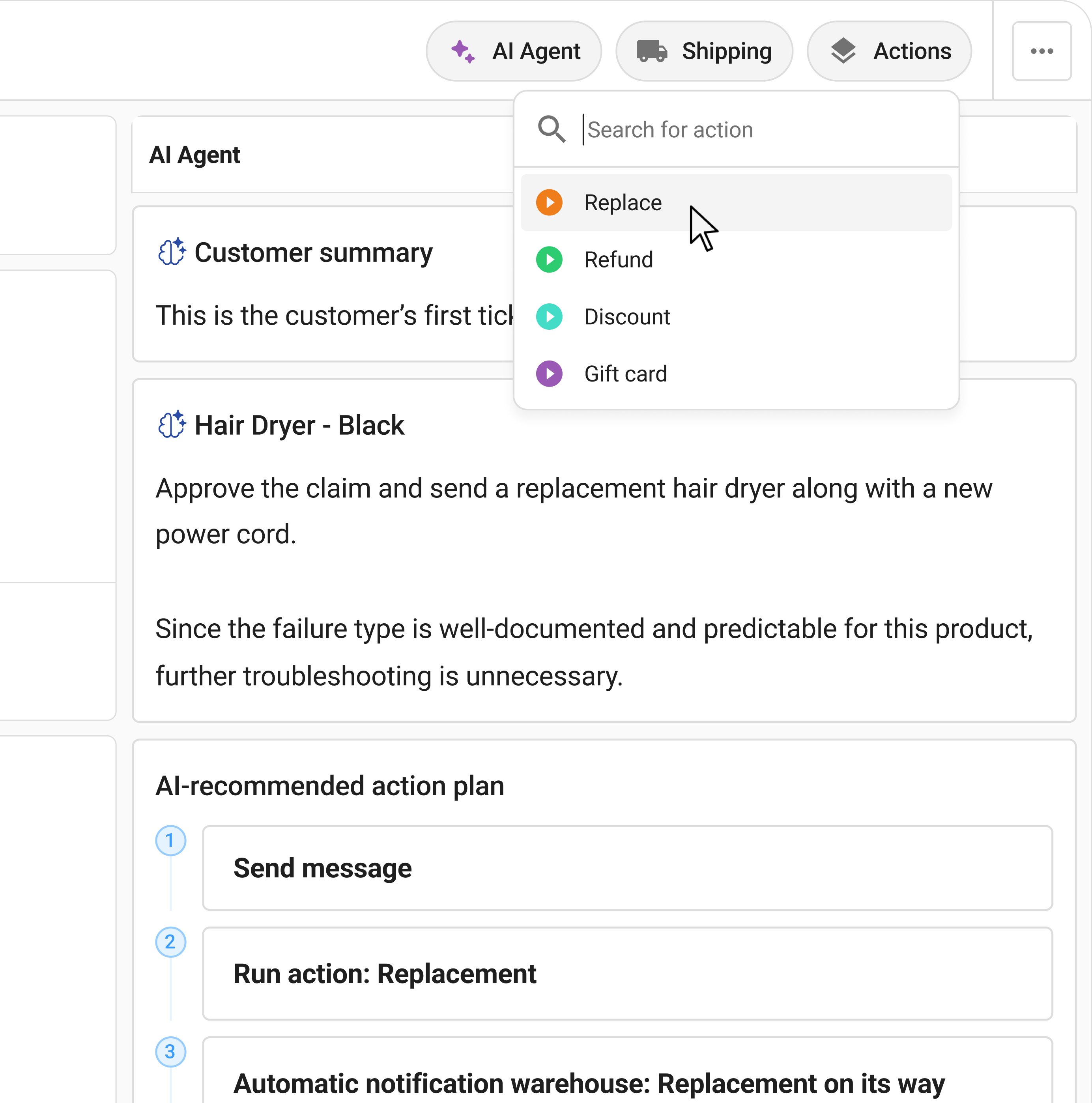
- Quality inspection. For warranty claims and defective products, someone needs to assess whether the item can be resold, repaired, or must be disposed of. Claimlane's AI Agent, the first AI agent purpose-built for warranty claims and returns, automates this by analyzing product images and applying warranty rules per product and supplier.
- Refund processing fees. Payment processors typically don't refund their transaction fee when a refund is issued.
- Packaging waste. Return packaging is often different from outbound, and damaged packaging means the item can't be resold as new.
Indirect Costs
- Customer acquisition cost (CAC) waste. If a customer buys, returns, and never comes back, the entire CAC is lost. Even partial returns reduce LTV.
- Inventory holding costs. Returns in transit or in the inspection queue aren't generating revenue. The longer the processing time, the higher the holding cost.
- Write-offs. Not everything that comes back can be resold. Damaged items, opened electronics, and hygiene products often go to waste or liquidation at a fraction of the original price.
- Support costs. Every return generates at least one support interaction. Complex warranty claims can require multiple exchanges before resolution.
- Hidden costs that don't show up in standard reporting: staff overtime during peak return periods, increased error rates, and the opportunity cost of warehouse space used for returns instead of outbound fulfillment.
Warranty and Repair Costs
For brands with product warranties, the cost structure extends further:
- Repair labor and parts. Repairing a product costs less than replacing it, but still has a real cost.
- Spare parts inventory. Maintaining stock of replacement parts ties up capital.
- Supplier recovery time. Filing claims with suppliers for defective products through supplier forwarding takes time, and recovery rates vary. Some brands recover 60-80% of costs; others recover far less.
- Replacement product costs. When a warranty claim results in a full replacement, the brand ships another unit at cost.
How to Calculate Returns-Adjusted Profitability
The Formula
Returns-adjusted profit = Revenue - COGS - Return costs - Warranty/repair costs - Associated overhead
Or, expressed as a margin:
Returns-adjusted margin = (Adjusted revenue - Total costs) / Adjusted revenue x 100
Where:
- Adjusted revenue = Gross revenue - Refund amount
- Total costs = COGS + Return processing costs + Warranty costs + Support costs
Step-by-Step Calculation
Step 1: Gather baseline data
- Gross revenue
- Number of orders
- COGS
- Return rate (units and revenue)
- Warranty claim rate
Step 2: Calculate return processing costs
- Average cost per return (shipping + labor + inspection + restocking)
- Total return processing cost = Number of returns x Average cost per return
Step 3: Calculate warranty costs
- Average cost per warranty claim (repair, replacement, spare parts, support time)
- Total warranty cost = Number of claims x Average cost per claim
- Minus supplier recovery amount
Step 4: Add associated overhead
- Proportional customer service cost for returns and claims
- Proportional warehouse cost for returns processing
- Write-off and liquidation losses
Step 5: Calculate adjusted profitability
- Subtract all costs from adjusted revenue
- Express as a percentage for comparison across products and time periods
Tracking the Right Data
The hardest part isn't the formula. It's getting accurate data for each cost component. Most brands have return volume data but lack granular cost tracking.
Returns analytics platforms track claim volumes, resolution types, processing times, and supplier recovery rates. Combined with warehouse cost data and support ticket metrics, this gives a complete picture.
Returns-Adjusted Profitability by Product
Aggregate numbers hide the real story. The most actionable insights come from calculating returns-adjusted profitability at the product or category level.
Why Product-Level Matters
Consider two products:
Same price, same gross margin. But Product B's high return rate and warranty claim rate mean it's nearly 20 percentage points less profitable in reality. Without returns-adjusted profitability, these products look identical on the P&L.
What Product-Level Data Reveals
- Which products to promote. High-margin, low-return products deserve more ad spend.
- Which products to fix. High-return products might have sizing issues, misleading descriptions, or quality problems.
- Which suppliers to renegotiate with. If a supplier's products have high defect rates, the warranty costs should factor into supplier scorecards.
- Which products to discontinue. Some products look profitable until return and warranty costs are factored in.
Returns-Adjusted Profitability by Channel
Different sales channels have different return profiles. Marketplace sales typically have higher return rates than direct-to-consumer sales. B2B channels might have lower return rates but higher per-claim costs due to bulk orders.
Channel Comparison Framework
For each sales channel, track:
- Revenue and order volume
- Return rate (units and dollar value)
- Average return processing cost
- Warranty claim rate
- Customer lifetime value
- Channel-specific fees (marketplace commissions, etc.)
This reveals which channels are truly profitable after all costs, not just which generate the most revenue.
How to Improve Returns-Adjusted Margins
Reduce Return Rates
The most impactful lever. Even a 2-3% reduction in return rates can significantly improve adjusted margins.
- Better product descriptions and photos. Most returns happen because the product didn't match expectations. Accurate sizing guides, multiple angles, and honest descriptions reduce mismatches.
- Warranty registration. Collecting registration data at purchase helps brands communicate proactively about product care, reducing avoidable warranty claims.
- Customer feedback analysis. Use returns analytics to identify which return reasons are most common and address the root causes.
Reduce Processing Costs
- Self-service returns portal. Reduces support ticket volume by letting customers initiate returns independently with structured data.
- Automated claim routing. Workflow automation routes claims to the right team or resolution without manual triage.
- AI-powered defect assessment. Instead of manual inspection for every warranty claim, Claimlane's AI Agent analyzes photos and videos to assess damage and recommend resolutions. MaxGaming resolved complex RMA cases 77% faster using this approach.
Improve Supplier Recovery
For defective products, recovering costs from suppliers is critical to returns-adjusted profitability.
- Structured claim documentation. Forwarding claims to suppliers with complete photo evidence, product details, and defect descriptions increases approval rates.
- Defect pattern analysis. Analytics on supplier performance give brands data to renegotiate supplier agreements or switch suppliers.
- Recovery rate tracking. Monitor what percentage of defective product costs are recovered from each supplier over time.
Convert Returns to Exchanges
Exchanges retain revenue. Instead of a full refund, the customer gets a different size, color, or product. Each exchange avoided is a return saved from the profitability perspective.
- Offer instant exchange options during the return process.
- Provide store credit incentives (e.g., 10% bonus credit for choosing store credit over refund).
- Make exchanges frictionless. If the exchange process is harder than the return process, customers will choose the refund.
Building a Returns-Adjusted Profitability Dashboard
The goal is a dashboard that shows profitability at multiple levels: company, channel, category, product, and supplier.

Key Metrics to Include
- Returns-adjusted margin (%) at company, category, and product level
- Cost per return broken down by component (shipping, labor, inspection, write-off)
- Return rate trends by product and channel over time
- Warranty claim rate and average claim cost
- Supplier recovery rate and amount recovered
- Exchange vs. refund ratio
- Net promoter score / customer satisfaction post-return (to connect return experience to retention)
Data Sources
- Ecommerce platform (Shopify, WooCommerce, etc.): Revenue, orders, return volumes
- Returns/warranty platform (Claimlane): Claim types, resolution outcomes, processing times, supplier data
- Warehouse/3PL: Inspection costs, restocking labor, write-offs
- Finance/ERP: Refund amounts, shipping costs, payment processing fees
- Customer service platform: Support time per return, ticket volume
Brands like Coolshop use integrated analytics to track claim patterns across their product range. GrejFreak achieved ROI almost immediately by identifying which product categories were driving disproportionate warranty costs.
Industry Benchmarks
Returns-adjusted profitability varies widely by industry:
- Apparel: Gross margins of 50-65%, but return rates of 20-40% can drop adjusted margins to 25-35%.
- Electronics: Lower return rates (8-15%) but higher per-claim costs for warranty repairs. Adjusted margins often 5-10 points below gross.
- Furniture: Very high return shipping costs. A 47-day average return cycle means inventory holding costs are significant.
- Baby products: Moderate return rates but strict safety standards mean more claims get replaced rather than resold. Brands like Luksusbaby and Babysam focus on fast, reliable claims processing.
- Outdoor and sporting goods: Warranty claims are common due to product usage conditions. Brands like Black Diamond need efficient repair workflows to maintain margins.