
Ask a brand what worries them about letting AI decide refunds, and the answer is always fraud. What if it approves a scam. It is the wrong fear, or at least the smaller one.
The more common failure runs the other way. An automated system tuned to look tough on fraud starts denying and delaying honest customers, flagging a normal return as suspicious, holding a refund for a real fault. A false decline does not show up on a fraud report. It shows up as a customer who never comes back. The scary AI is not the one that approves a bad refund. It is the one that denies a good one and calls it a win.
This is written for omnichannel D2C brands running refunds at volume, where both errors are expensive and the volume makes manual review impossible. The AI returns management overview and refund policy best practices guide frame the decision this sits inside.
What AI refund decisioning actually decides
The decision is more than fraud or not fraud. It is whether the claim is in policy, whether the evidence supports it, and which resolution fits, all at once. The AI RMA automation piece and AI claims triage guide cover the routing that decisioning depends on.
The two ways an automated refund decision goes wrong
Every automated refund decision has two failure modes, and they pull in opposite directions. A false approval pays out a claim it should have denied, a fraud or a policy breach. A false decline blocks a claim it should have paid, an honest customer with a real return.
Most tools optimise only for the first, because it is the one that gets measured. The return fraud prevention guide, wardrobing return fraud breakdown, and first-party fraud in ecommerce piece cover the real fraud worth catching, so the system does not have to over-block to find it.
The false-decline cost the SERP ignores
The cost of a false decline is hidden but large. A wrongly denied customer does not file a complaint the brand can log. They stop buying, tell a few people, and leave a review, and the lifetime value walks out with them.
Weighed against the refund the brand saved, the trade is usually bad. Denying a genuine forty-dollar return to a repeat customer worth hundreds over time is a loss disguised as a save. The friendly fraud piece and return fraud in ecommerce guide cover the line between abuse and honest disputes, and store credit versus refund and exchange-first revenue retention cover resolutions that keep the customer without a flat denial.
Guardrails are the product
Because the false-decline risk is real, the guardrails are not a safety wrapper on the AI, they are the thing that makes it usable. Speed is easy. Being fast and fair at the same time is the whole job, and the guardrails are how.
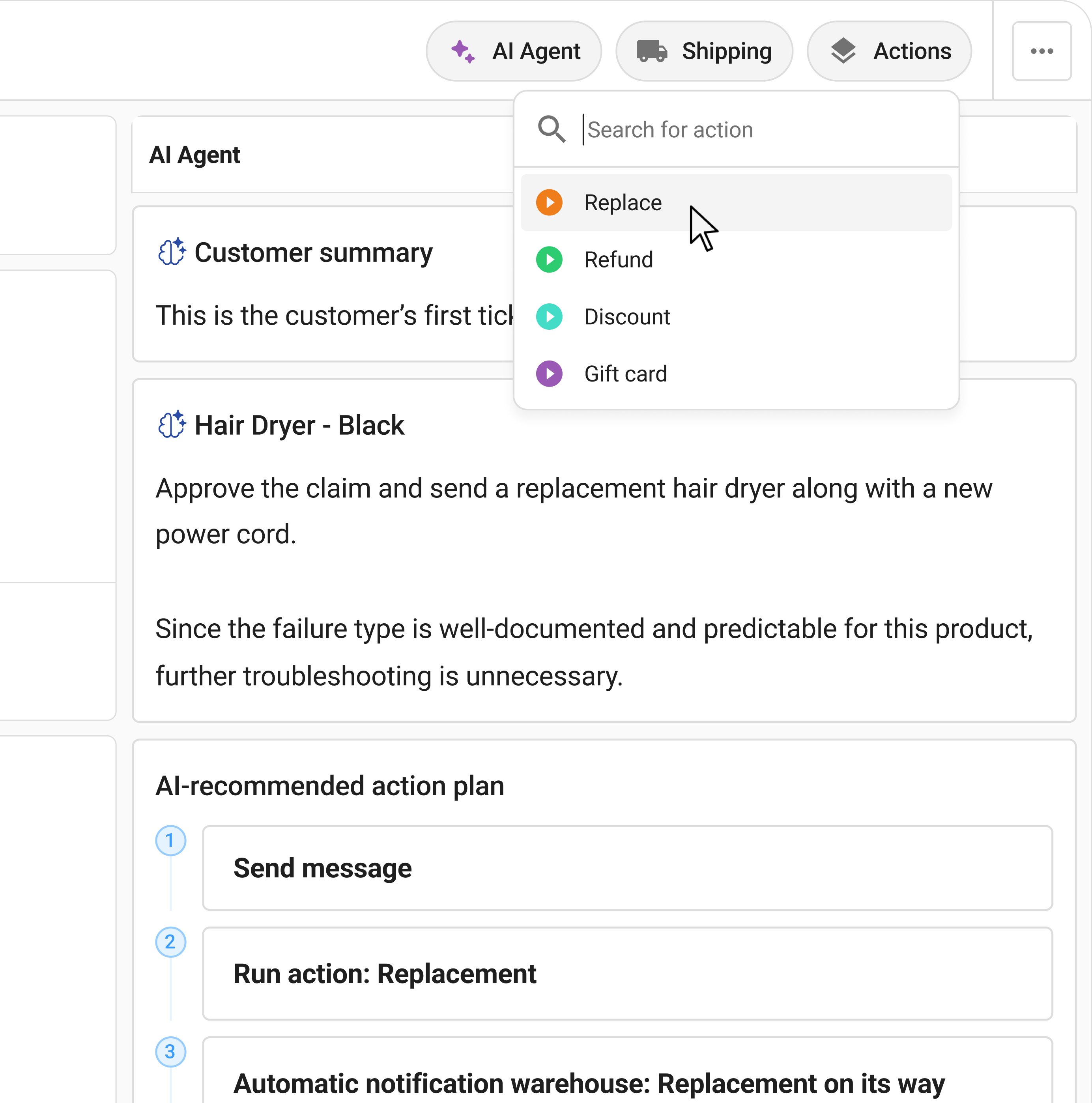
Claimlane's AI Agent, the first AI agent purpose-built for warranty claims and returns, reads the claim and its evidence, applies the brand's rules per product and supplier, and recommends or auto-approves a resolution, while the guardrails decide where it acts alone and where it hands off. The AI customer service automation and AI ticket deflection guides cover the support side of the same balance. Claimlane's AI Agent makes the recommendation, and its integrations post the resolution across the brand's systems.
What AI should decide alone, and what it should not
The practical line is about cost and clarity. Low-value, clearly in-policy, well-evidenced claims are safe to auto-approve, because the cost of a rare mistake is small and speed matters most. High-value, ambiguous, or denial-bound claims should route to a person.
That split is where two-tier positioning shows. A simple returns app like Loop, or a tracking layer like Narvar or AfterShip, automates the easy, in-policy refund and the status email. The harder decisioning, evidence-weighted approvals, denials that need a fair audit trail, warranty and repair claims mixed in, is a different job, closer to what Claimlane runs. The customer service workflows for returns piece and automatic status emails guide cover the parts that automate cleanly.
Keeping the decision fair and auditable
A refund decision a customer disputes has to be explainable. That is why the audit trail matters as much as the decision: which rule applied, what evidence was read, what the AI recommended, and who signed off. Without it, a denial is just a shrug the customer cannot argue with.
Auditability also protects the brand. When a regulator, a chargeback, or a customer challenges a decision, the record shows it was consistent and rule-based, not arbitrary. The AI returns management guide covers the operational side, and the ecommerce returns and return management system pages cover where the decisioning runs.
Claimlane holds a 4.8/5 rating on G2.
Where AI refund decisioning fits
AI refund decisioning fits brands past the volume where every claim can get a human eye, but not so trusting that they let a black box deny customers unchecked. The right setup automates the clear calls, routes the hard ones, and logs all of them.
Run that way, the AI is faster than a team and fairer than a rushed agent, because it applies the same rules every time and escalates what it should. Run without guardrails, it is a fast way to lose good customers.
FAQ
The question is not how fast the AI decides. It is what happens when it is about to say no. A refund system worth trusting is judged on its denials, not its approvals. Where should the line sit between auto-approve and human review? See how the AI Agent handles the call.