.webp)
What Is Return Fraud?
Return fraud is any attempt to exploit a retailer's return policy for financial gain. It ranges from returning stolen merchandise for a refund to filing false claims about products that were never damaged or never received.
Return fraud costs U.S. retailers an estimated $101 billion in 2023, according to the National Retail Federation. That number has grown every year since, and ecommerce brands are increasingly targeted because online return processes involve less face-to-face verification.
For ecommerce brands, return fraud isn't just a financial problem. It distorts return rate data, increases processing costs, and can lead to overly restrictive policies that punish honest customers.
Types of Return Fraud
Return fraud comes in many forms. Some are organized and deliberate. Others are casual and opportunistic. All of them cost money.
Wardrobing
Buy, use once, return as unused. Common in fashion and electronics.
Empty Box Returns
Ship back empty or substitute-filled boxes instead of the original product.
Chargeback Fraud
Keep the product, file a bank dispute claiming unauthorized transaction.
Price Switching
Swap labels between cheap and expensive items, return the cheaper one for more.
Receipt Fraud
Use fake or stolen receipts/order numbers to file returns.
Serial Returning
Habitually buy and return 80%+ of purchases, gaming promotions.
Wardrobing (wear and return)
Wardrobing is when a customer buys an item, uses it once (wears a dress to an event, uses a camera for a weekend trip), and returns it as if it were unused. It's one of the most common forms of return abuse, especially in fashion and electronics.
The challenge: the product often looks fine on inspection. Brands combat wardrobing with tamper-evident tags, hygiene seals, and inspection protocols that check for signs of use.
Receipt fraud
Using a fake, altered, or stolen receipt to return merchandise. In ecommerce, this translates to manipulating order confirmations or using someone else's order number to file a return.
Empty box returns
The customer ships back an empty box or a box filled with a substitute item (rocks, old clothes, random products) instead of the original product. The fraud succeeds when warehouse staff process returns in bulk without individual inspection.
Price switching
Buying a lower-priced item, swapping the label or packaging with a higher-priced item, and returning the cheaper product in the expensive packaging for a higher refund.
Stolen merchandise returns
Returning products that were shoplifted or purchased with stolen credit cards. This is more common in brick-and-mortar retail, but ecommerce brands see it when stolen goods are returned through online portals using fabricated order information.
Bracketing gone wrong
Bracketing (buying multiple sizes or colors with the intent to return most of them) is technically legitimate behavior. It becomes fraud when the customer keeps all items but claims some were "never received" or "arrived damaged" to get partial refunds without actually returning anything. What bracketing is in ecommerce and how brands handle it. Claimlane's self-service portal collects photos, videos, and serial numbers as part of the claims submission process, creating an evidence trail for every claim.
Chargeback fraud (friendly fraud)
The customer receives the product, keeps it, and files a chargeback with their bank claiming the transaction was unauthorized or the product never arrived. This is sometimes called "friendly fraud" because the customer appears to be a legitimate buyer.
Friendly fraud accounts for an estimated 60% to 80% of all chargebacks, according to Chargebacks911. It's particularly damaging because the brand loses the product, the revenue, and pays a chargeback fee (typically $20 to $100 per incident). How payment reversals and chargebacks work in detail.
For a detailed comparison of chargebacks and standard refunds, see the section below on chargeback vs. refund.
Serial returning
Serial returners are customers who habitually buy and return large volumes of products. While not always fraudulent (some serial returners are just indecisive shoppers), patterns like returning 80% or more of purchases, consistently claiming items are defective, or timing returns to maximize promotional discounts cross the line into abuse.
The Real Cost of Return Fraud
The direct cost of a fraudulent return is the refund amount. But the true cost is much higher.
Annual return fraud losses for US retailers (NRF, 2023)
Of all returns estimated to be fraudulent
Of all chargebacks are friendly fraud
Average cost to process a single return
Product loss
When a customer keeps the product and receives a refund (through friendly fraud or false "not received" claims), the brand loses both the product and the revenue. For a $100 item with 40% margin, that's a $100 loss, not a $40 loss.
Processing costs
Every return, fraudulent or not, costs money to process. Return shipping, warehouse labor, inspection time, customer service contacts, and restocking all add up. The average cost to process a return is $10 to $20 for a typical ecommerce order.
Chargeback fees
Chargeback fraud adds bank-imposed fees on top of the refund. Typical chargeback fees range from $20 to $100 per incident. High chargeback rates can also trigger penalties from payment processors, including higher transaction fees or account termination.
Inventory distortion
Fraudulent returns create phantom inventory. Products that were "returned" but never actually sent back appear in the system as available stock. This causes fulfillment errors, overselling, and inaccurate financial reporting.
Policy tightening that hurts good customers
Brands that experience significant fraud often respond by making return policies more restrictive. Shorter return windows, mandatory receipts, no-refund policies. These measures reduce fraud but also reduce customer satisfaction and conversion rates for the honest majority.
Chargeback vs. Refund: Understanding the Difference
This distinction matters because chargebacks and refunds have very different impacts on the business.
| Aspect | Refund | Chargeback |
|---|---|---|
| Initiated by | The merchant (voluntarily) | The customer's bank |
| Process | Customer requests return, merchant approves | Customer disputes with bank, bank reverses payment |
| Merchant fees | None (just processing costs) | $20 to $100 per chargeback |
| Product returned? | Usually yes | Usually no |
| Impact on account | None | High ratios trigger penalties |
| Dispute process | Between merchant and customer | Bank decides; merchant submits evidence |
| Timeline | Days | Weeks to months |
The key difference: refunds are under the merchant's control. Chargebacks are not. When a customer files a chargeback, the bank makes the decision, and the merchant has limited ability to contest it.
How to Detect Return Fraud
Detection starts with data. Brands that track return behavior at the customer level can spot patterns that indicate fraud.
Monitor return rates by customer
A customer who returns 70% of purchases over six months is either a serial returner or a fraud risk. Flag accounts with return rates significantly above the category average.
Track "not received" and "damaged" claim rates
If a disproportionate number of claims come from a small group of customers, that's a signal. Legitimate damage claims should be distributed roughly evenly across the customer base.
Compare product weight on return shipments
For higher-value items, comparing the outbound package weight to the return package weight can catch empty box fraud. If a laptop was shipped at 6.5 lbs and the return weighs 1.2 lbs, something is wrong.
Analyze refund timing patterns
Fraudulent returners often file claims within a very specific window (often right at the end of the return period or immediately after delivery). Unusual timing patterns across multiple orders from the same customer or address warrant investigation.
Use photo and video evidence
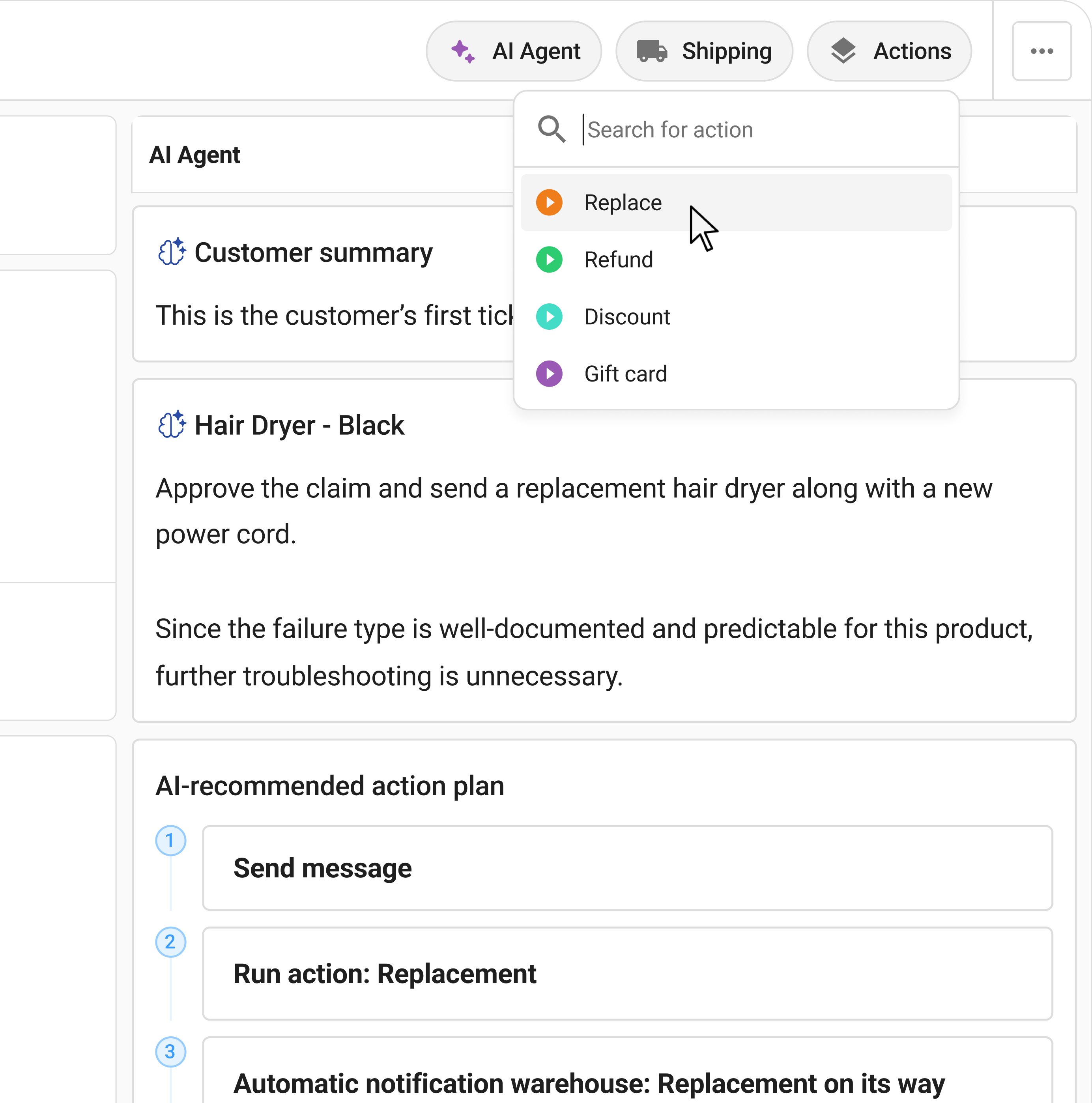
Requiring customers to submit photos or videos of damaged products before approving a return claim deters fraudulent damage claims. Most honest customers are happy to provide evidence. Fraudsters often abandon the claim when asked for proof. Claimlane's self-service portal collects photos, videos, and serial numbers as part of the claims submission process, creating an evidence trail for every claim. The AI agent can analyse product images and apply warranty and return rules automatically, catching inconsistencies that manual review might miss.
How to Prevent Return Fraud
Prevention is a combination of policy, process, and technology.
Write a clear, enforceable return policy
Vague policies invite abuse. Specify return windows, condition requirements, proof-of-purchase rules, and any restocking fees. Make the policy visible on product pages, at checkout, and in order confirmations. A well-written return policy protects the brand legally and sets clear boundaries.
Require proof of purchase for all returns
Link every return to a verified order. This prevents stolen merchandise returns and makes it harder to fabricate claims. Online return portals that require customers to log in and select the order they're returning solve this automatically.
Implement tiered return policies
Not all customers deserve the same return experience. First-time buyers with a clean history get the most generous terms. Customers flagged for high return rates or suspicious claims get shorter windows, mandatory inspection, or no free return shipping.
Add photo evidence requirements for damage claims
As mentioned above, asking for photos drastically reduces false damage claims. It also speeds up legitimate claims because the support team can assess the damage without waiting for the product to arrive.
Use anti-fraud technology
Dedicated return fraud detection tools analyze customer behavior, cross-reference data points (shipping addresses, payment methods, device fingerprints), and score return requests for fraud risk. High-risk returns can be flagged for manual review.
Build a returns management workflow
The best defense against fraud is a well-structured returns process. When every return is tracked, every claim is documented, and every refund follows a standardized workflow, it's much harder for fraud to slip through.
Claimlane helps ecommerce brands automate their returns and claims workflow. The platform collects evidence, applies policy rules, and routes claims through approval workflows. The AI agent can analyze product images and apply warranty and return rules automatically, catching inconsistencies that manual review might miss.
Return Fraud Statistics That Matter in 2026
- $101 billion in return fraud losses for U.S. retailers in 2023 (NRF). The number is projected to exceed $115 billion by 2026.
- 13.7% of all returns are estimated to be fraudulent (NRF Return Fraud Survey).
- 60% to 80% of all chargebacks are friendly fraud (Chargebacks911).
- Wardrobing affects an estimated 30% of fashion retailers.
- Serial returners represent 5% to 10% of a typical brand's customer base but account for 30% to 40% of all returns.
These numbers highlight why return fraud prevention is no longer optional for ecommerce brands operating at scale.
How Return Fraud Differs by Industry
Fashion and apparel
Highest risk for wardrobing. Customers wear items and return them, especially around events (weddings, holidays, photo shoots). Tamper-evident tags and hygiene seals help but don't eliminate the problem.
Electronics
Highest risk for empty box fraud and price switching. High product values make each incident expensive. Serial number tracking and weight verification on returns are essential.
Health and beauty
Products that are opened or partially used can't be resold. Fraud often involves claiming a product "didn't work" or caused a reaction to get a refund while keeping the product. Photo evidence requirements help filter legitimate complaints from abuse.
Home and furniture
Damage claims are common and often legitimate (shipping damage is frequent for large items). The challenge is separating real damage claims from exaggerated or fabricated ones. Detailed photo evidence and structured damage claim workflows are critical.
Building a Return Fraud Prevention Strategy
Here's a practical framework for ecommerce brands that want to get serious about return fraud prevention.
Audit current return data
Pull 12 months of returns. Find anomalies in rates by customer, category, and reason.
Define fraud vs abuse vs legitimate
Set clear definitions so the team handles each type consistently.
Implement technology solutions
Connect return portal to customer data. Flag high-risk returns for manual review.
Train the team
Clear inspection guidelines for warehouse. Scripts for support agents on suspected fraud.
Monitor and adjust
Review fraud data quarterly. Update detection rules as tactics evolve.
Step 1: Audit current return data
Pull return data for the past 12 months. Calculate return rates by customer, by product category, and by return reason. Look for anomalies: customers with unusually high return rates, spikes in "not received" claims, or products with disproportionate damage claims.
Step 2: Define what constitutes fraud vs. abuse vs. legitimate behavior
Not all high-return customers are fraudsters. Set clear definitions:
- Fraud: Deliberate deception (empty boxes, fake claims, chargeback fraud)
- Abuse: Exploiting policies in ways they weren't intended (wardrobing, excessive bracketing)
- Legitimate: Normal returns within policy terms
Step 3: Implement technology solutions
Connect the return portal to customer data. Flag high-risk returns for manual review. Require photo evidence for damage claims. Track return patterns over time.
Step 4: Train the team
Warehouse staff processing returns need clear guidelines on inspection. Support agents need scripts for handling suspected fraud. The goal is consistency, not confrontation.
Step 5: Monitor and adjust
Return fraud tactics evolve. Review fraud data quarterly, adjust policies and detection rules, and stay current on new fraud trends. Platforms like Claimlane provide analytics on claim patterns that help brands spot emerging fraud trends before they become systemic. Platforms like Claimlane provide analytics on claim patterns that help brands spot emerging fraud trends before they become systemic.
For brands looking to build a structured returns workflow that catches fraud while protecting honest customers, book a Claimlane demo to see how the platform handles evidence collection, policy automation, and AI-powered fraud detection in one workflow.