.webp)
Bracketing is when online shoppers buy multiple versions of the same product, try them at home, keep the one they like, and return the rest. It's the digital version of grabbing three sizes off the rack and heading to the fitting room.
The difference? In a store, those items go straight back on the shelf. Online, they trigger return shipping, inspection, repackaging, and restocking. And it's happening at scale. According to Zigzag Global's research, 43% of UK consumers were bracketing in 2024, with 69% of Gen Z shoppers admitting to over-ordering on sizes and colors.
For brands and retailers managing ecommerce returns, bracketing is one of the biggest drivers of return volume. Understanding why it happens and what to do about it is critical for protecting margins.
How Bracketing Works

The typical bracketing scenario looks like this:
- A shopper finds a jacket they like but isn't sure about the size.
- They order it in small, medium, and large.
- The retailer ships all three.
- The shopper tries them on, keeps the medium, and initiates returns for the other two.
- The retailer processes two return shipments, inspects the items, and restocks them.
The shopper gets a fitting room experience. The retailer absorbs the cost of fulfilling and processing two extra orders that were never going to result in a sale.
Bracketing isn't limited to sizing. Shoppers also bracket by color ("I'll get it in black and navy, decide at home"), by style (three similar dresses for one event), or even by brand (two competing products to compare side by side).
Why Shoppers Bracket
Inconsistent sizing across brands
A medium in one brand fits like a small in another. Without standardized sizing, shoppers have learned that ordering one size is a gamble. Bracketing is a rational response to an irrational sizing system.
This is especially common in fashion and footwear, where return rates for clothing reach 25% and sizing is the number one reason for returns.
Free returns remove the risk
When returns are free, bracketing has zero cost to the shopper. Business Insider reports that bracketing is "especially prevalent when retailers offer free shipping and free returns because customers deem the practice low risk."
The calculus is simple: if returning is free and easy, there's no reason not to order multiple options.
Poor product information online
Small product photos, missing measurements, inconsistent size charts, and lack of customer fit data all push shoppers toward bracketing. When the product page doesn't answer "will this fit me?", the shopper answers the question by ordering multiple sizes.
Brands that invest in detailed product content, including fit guides, customer reviews with size context, and warranty registration data that captures sizing preferences, see lower bracketing rates.
Try-before-you-buy culture
Services like Amazon's Try Before You Buy and Klarna's pay-later options have normalized the idea of ordering now and deciding later. Shoppers, particularly younger ones, have been conditioned to treat their living room as a dressing room.
The Real Cost of Bracketing

Bracketing isn't just an inconvenience. It has measurable financial, operational, and environmental consequences.
Financial impact
Every bracketed return involves:
- Return shipping costs (paid by the retailer if returns are free)
- Warehouse labor for receiving, inspecting, and restocking
- Depreciation on items that can't be resold as new
- Refund processing and payment gateway fees
IMRG research notes that in the fashion industry, one in three online purchases is returned, and return rates for bracketed orders are even higher. At scale, the processing cost per return can range from $10 to $30 depending on the product category and logistics setup.
For a retailer shipping 10,000 orders per month with a 30% return rate and half of those returns driven by bracketing, the annual cost of bracketing-related returns alone can reach six figures.
Operational impact
Bracketing creates inventory chaos. Products stuck in the returns pipeline are unavailable for sale to other customers. IMRG describes this as products "locked in limbo", creating stock shortages, demand forecasting errors, and missed sales opportunities.
For brands using analytics to track claim patterns and inventory, bracketing adds noise to the data. High return volumes from bracketing can mask genuine product quality issues that need attention.
Environmental impact
Every bracketed return generates additional carbon emissions from shipping, packaging waste, and in some cases, product disposal. Not all returned items make it back to the shelf. Damaged packaging, minor wear from trying on, or seasonal timing can push returns into clearance or liquidation channels.
The environmental cost of returns is becoming a bigger concern as consumers and regulators pay more attention to sustainability in retail.
Bracketing vs. Wardrobing vs. Return Fraud

These three behaviors are related but different, and the response to each should be different too.
| Behavior | What It Is | Intent | Typical Response |
|---|---|---|---|
| Bracketing | Ordering multiple sizes/colors, keeping one, returning the rest | Genuine uncertainty | Better product info, sizing tools |
| Wardrobing | Buying, wearing once, returning | Intentional temporary use | Tag placement, condition policies |
| Return fraud | Returning stolen/swapped items | Financial gain through deception | Fraud detection, policy enforcement |
Bracketing is the most common of the three and the hardest to address because the shopper's intent is legitimate. They want to find the right product. The goal isn't to eliminate bracketing entirely but to reduce unnecessary instances of it.
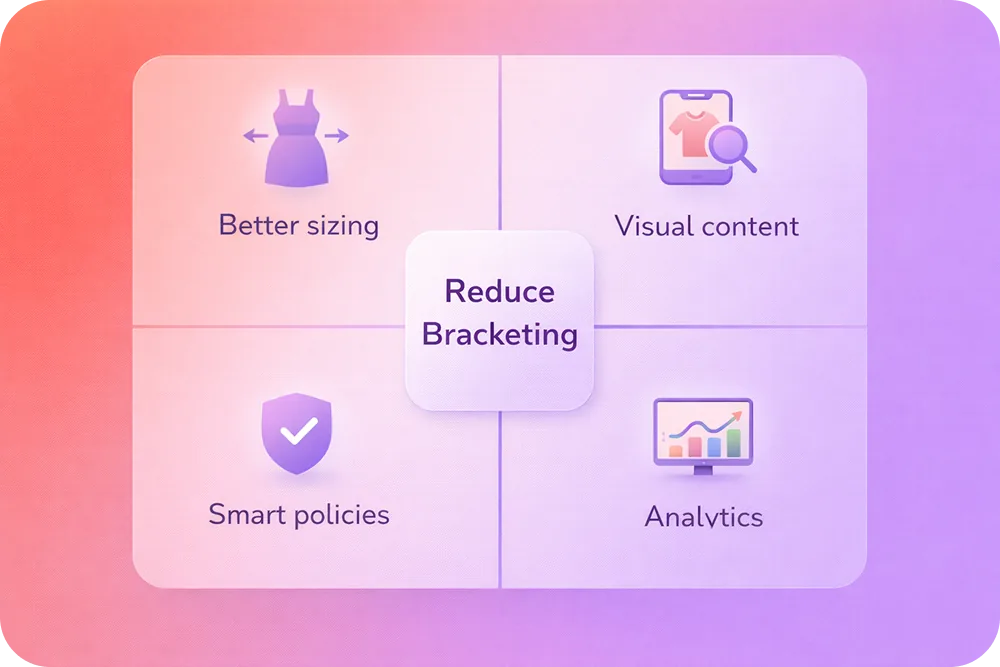
How to Reduce Bracketing Without Alienating Customers
Improve size and fit information
The single most effective way to reduce bracketing is to give shoppers confidence in their first choice.
- Detailed size charts with measurements in both inches and centimeters
- Fit notes ("runs small," "true to size," "order one size up")
- Customer reviews that include height, weight, and size purchased
- AI-powered fit recommendation tools that learn from purchase and return data
Brands that integrate customer feedback data from returns with product page content can identify which products have the highest bracketing rates and fix the information gap.
Use high-quality visual content
Product photos from one angle on a white background aren't enough. Shoppers bracket partly because they can't visualize how a product will look in real life.
Better approaches:
- Multiple angles and close-up detail shots
- Video showing the product in use or on different body types
- User-generated content from real customers
- Augmented reality try-on features (increasingly common in eyewear and furniture)
Introduce smart return policies
Fully free returns encourage bracketing. Fully paid returns drive customers away. The middle ground is a tiered approach:
- Free returns on first exchanges to encourage getting the right size rather than a refund
- Nominal return fees ($3 to $5) that are waived for store credit
- Reduced return windows for categories with high bracketing rates
- Loyalty program perks that reward low-return customers with free returns
The goal is to add just enough friction to make shoppers think twice about ordering four sizes, without punishing customers who occasionally need to make a legitimate return.
For more on building return policies that balance flexibility and cost, see this guide on optimizing your returns process.
Flag and manage serial bracketers
Not all customers bracket equally. Some do it occasionally. Others do it on every order. Returns analytics can identify patterns:
- Customers who consistently order 3+ sizes of the same item
- Accounts with return rates above 60%
- Repeat behavior across multiple product categories
Once serial bracketers are identified, brands can take targeted action: personalized size recommendations, adjusted return policies for high-return accounts, or proactive outreach offering fit guidance.
Offer try-before-you-buy programs (on your terms)
If customers are going to bracket anyway, some brands are choosing to own the experience rather than fight it. Structured try-before-you-buy programs:
- Set clear expectations about how many items can be tried
- Include prepaid return packaging
- Only charge for items kept
- Track try-on data to improve recommendations over time
This turns an unmanaged behavior into a controlled, data-generating program that actually reduces overall return costs because the logistics are designed for it from the start.
How Technology Helps Manage Bracketing
AI-powered claims and returns management
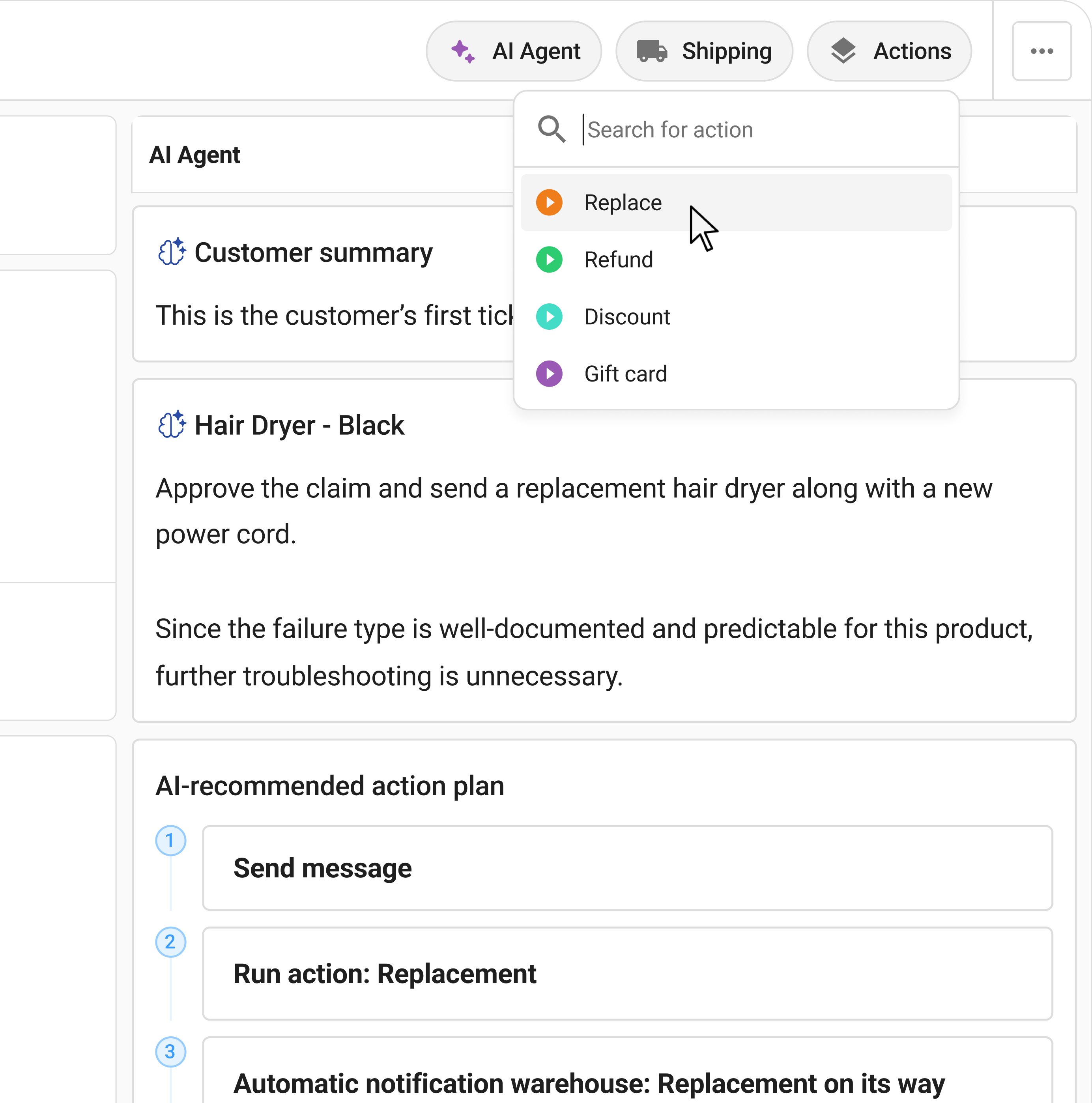
Claimlane's AI Agent, the first AI agent purpose-built for warranty claims and returns, can process returns from bracketed orders quickly by analyzing submitted photos, validating return eligibility, and routing claims through automated workflows. This reduces the per-return handling cost that makes bracketing so expensive.
For brands dealing with high return volumes from bracketing, automation is the difference between returns being a manageable operational cost and returns being a margin killer.
Returns analytics and pattern detection
Dedicated returns analytics platforms can segment returns by reason code, product category, and customer behavior. This makes it possible to:
- Identify which products have the highest bracketing rates
- Pinpoint sizing inconsistencies that drive over-ordering
- Measure the financial impact of bracketing on specific SKUs
- Track whether interventions (better size charts, policy changes) are actually reducing bracketing
Self-service return portals
A self-service claims portal speeds up the returns process for bracketed orders. Instead of emailing customer support, shoppers can initiate returns instantly, select their return reason, and generate a shipping label. Structured return reasons in the portal also generate valuable data about why items are being returned, which helps distinguish bracketing from other return types.
Bracketing by Industry
Bracketing rates vary significantly across product categories.
Fashion and apparel
The highest bracketing category by far. Inconsistent sizing, subjective fit preferences, and the inability to try on clothes online make fashion the epicenter of bracketing. Clothing return rates average 25%, with bracketing accounting for a significant share.
Footwear
Shoe sizing is notoriously inconsistent across brands, and width variations add another dimension of uncertainty. Shoppers commonly order two or three sizes, particularly for brands they haven't bought before.
Furniture and home goods
Bracketing is less common in furniture (higher price points and more complex returns) but does occur with smaller items like cushions, throws, and decorative pieces where color matching is the concern. Brands handling furniture returns face unique logistics challenges that make bracketing particularly costly.
Electronics
Bracketing in electronics usually takes the form of comparison shopping: ordering two similar products (two pairs of headphones, two phone cases) to compare quality and return the loser. Return rates in consumer electronics average around 10%, lower than fashion but still significant.
Baby and nursery
Parents bracket nursery products because safety and fit matter more than aesthetics. Car seat adapters, stroller accessories, and baby carriers often require trying multiple options to find the right match.
The Future of Bracketing
Virtual try-on and AR will reduce it
As augmented reality and virtual try-on technology matures, shoppers will be able to see how a product looks and fits before ordering. This directly attacks the root cause of bracketing for fashion and footwear.
AI-powered sizing recommendations will improve
Machine learning models trained on purchase and return data are getting better at predicting the right size for individual shoppers. When a product page says "based on your previous purchases, we recommend a medium," shoppers have less reason to order three sizes.
Return policies will get smarter
Static return policies (30 days, free returns for everyone) will give way to dynamic policies that adjust based on customer history, product category, and return behavior. High-value, low-return customers might get extended free returns. Serial bracketers might see adjusted terms.
Sustainability pressure will add friction
As environmental impact reporting becomes more common and regulations like GPSR put more responsibility on brands, the hidden carbon cost of bracketing will become harder to ignore. Brands will face increasing pressure to reduce unnecessary returns, not just for cost reasons but for sustainability commitments.