A brand with messy return data usually reaches for the same fix. Add more reason codes. Go from eight options to twenty, add a few sub-reasons, roll it out. Six months later the data is worse, because now a third of returns are tagged "other" and the rest are mis-picked by customers rushing through a drop-down.
The problem was never too few codes. A drop-down of twelve reasons is not analytics, it is a shrug with options. The customer wrote the real reason in the free-text box the brand never reads. The fix is a taxonomy, a structured hierarchy of reasons, kept clean by an AI that classifies the free text and photos into it.
This is written for supplier-recovery brands and retailers with many SKUs and suppliers, where the point of a return reason is not a chart, it is knowing which product and which supplier caused the cost. The returns reason codes guide is the starting point, and why customers return products covers the underlying drivers a taxonomy has to capture.
Why flat reason codes fail at scale
A flat list has two failure modes, and both get worse as a catalogue grows. Too few codes and everything collapses into broad buckets that hide the real cause. Too many and customers pick the first plausible one or default to "other," so precision drops.
Either way the data cannot answer the question that matters, which is why a specific product keeps coming back. A flat code says "defective." It does not say the seam fails on one style from one supplier. The cost of poor quality in ecommerce piece and warranty analytics for product quality guide show why that missing specificity is expensive.
What a return and claim reason taxonomy is
The shift is from a label to a path. A path can roll up for a board report and drill down for a supplier conversation, from the same data. The returns data in product descriptions piece and predictive returns analytics guide cover what clean, structured reasons make possible downstream.
Designing the hierarchy
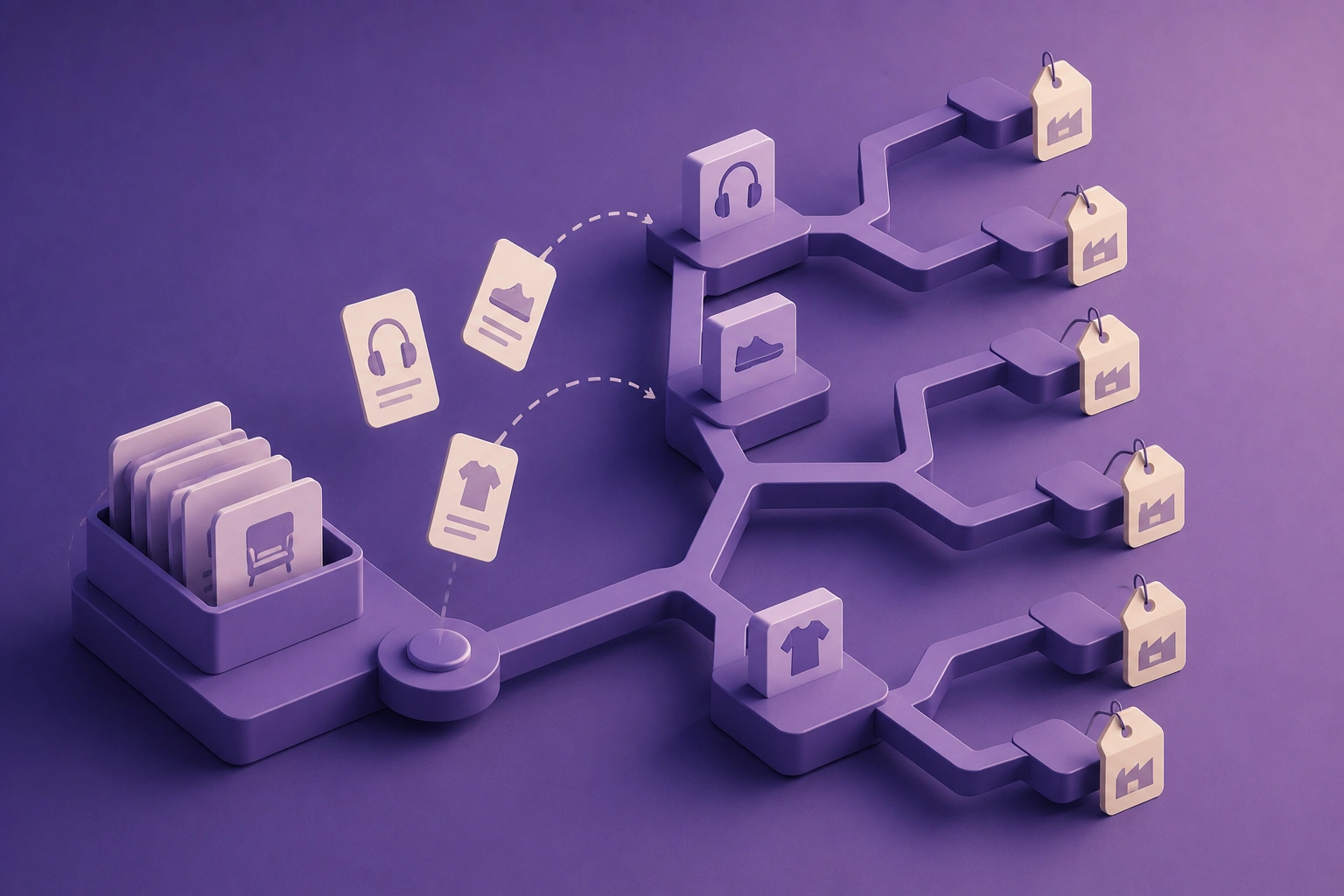
A workable taxonomy has three levels. The top level is the broad category the business reports on. The middle level is the specific mechanism. The bottom level is the detail that points to a fix.
Three levels is usually enough. More depth than that and maintenance cost outruns the value, which is the trap the 7 warranty management challenges piece describes. The taxonomy should mirror how the business actually makes decisions, covered in customer-centric warranty analytics.
Attribution: tying reasons to SKUs and suppliers
A reason without attribution is trivia. The taxonomy earns its keep when every tagged return links to the exact SKU, batch, and supplier, so cost rolls up to the party that caused it.
That is the bridge from returns analytics to supplier recovery. When reasons attribute to suppliers, the brand can chase defect cost and rank suppliers by the loss they drive. The supplier scorecard guide, serialized product defect tracking piece, and AI supplier quality scoring guide cover the attribution layer. Claimlane's forward to supplier turns an attributed reason into a recovery, and its integrations keep the SKU and supplier link intact across systems.
Letting AI maintain the taxonomy
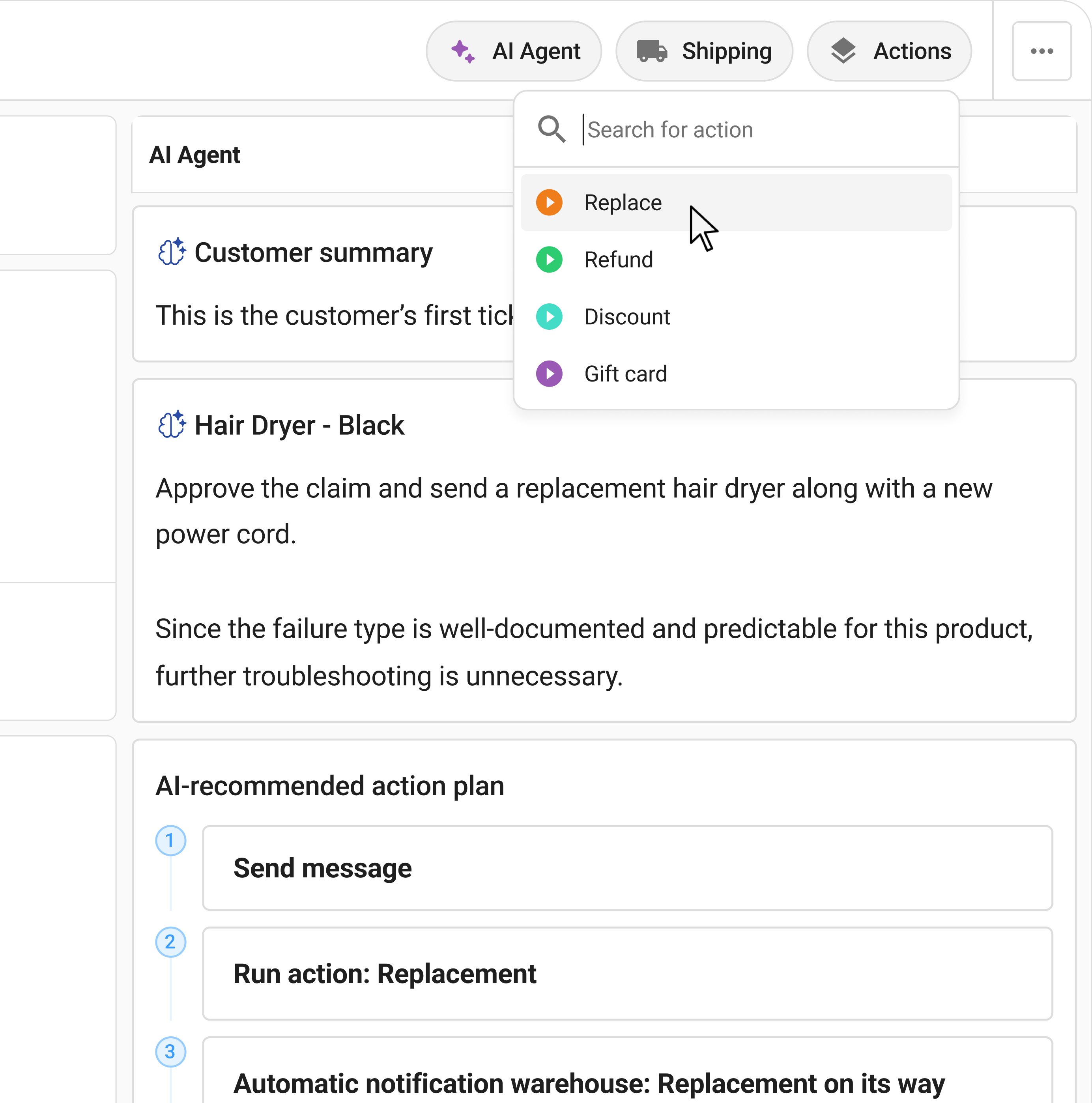
A taxonomy nobody maintains is just a longer list that rots slower. This is the job AI is actually good at. Instead of asking the customer to self-classify, the brand lets them describe the problem in their words, or upload a photo, and the AI maps that to the right path in the taxonomy.
Claimlane's AI Agent, the first AI agent purpose-built for warranty claims and returns, reads the free-text reason and the photo evidence, applies the rules per product and supplier, and assigns the taxonomy path, so classification is consistent instead of depending on which customer picked which drop-down. The AI image recognition for warranty claims guide and AI claim document extraction piece show the same reading applied to evidence, and AI claims triage covers routing off the back of it. Claimlane's AI Agent does the classifying.
Guardrails that keep the taxonomy trustworthy
AI classification is only useful if the brand trusts the tags, so the guardrails are part of the design, not a disclaimer. The AI proposes a path, low-confidence or ambiguous cases route to a human, the taxonomy itself stays owned by the brand rather than invented on the fly, and every classification leaves an audit trail that can be corrected and fed back.
That balance is what keeps the data credible enough to act on. The predictive warranty analytics piece and warranty claims processing guide cover how classified data feeds the rest of the operation.
Turning the taxonomy into root-cause action
The taxonomy is not the goal, the action is. Once reasons roll up by cause and supplier, the brand can fix the product that runs small, chase the supplier whose seams fail, and rewrite the description that oversells. Each is a specific move the flat code could never point to.
That is the return on building it. A quarter of returns tagged "other" is a quarter of the problem the brand cannot see, and the taxonomy pulls that into view. The reverse logistics overview and return management system page cover where the classified data lives and acts.
Claimlane holds a 4.8/5 rating on G2.
FAQ
See how each claim gets classified, not just counted. The reason code is where most return data goes to die. A taxonomy an AI keeps clean is where it starts being worth reading. How much of the current data is tagged "other"? See how the AI Agent classifies claims.