.webp)
Most brands file first-party fraud under "a payments problem" and hand it to the bank. That is the wrong drawer. By the time a first-party fraud loss shows up on a retailer's P&L, it almost never looks like a flagged card transaction. It looks like a return that came back empty, a refund request for an order the customer swears never arrived, or a worn jacket shipped back inside the tag-on window.
The fraud-scoring vendors that own the search results for this term, Experian, Socure, Signifyd, all describe first-party fraud from the issuer's seat. That view misses where the money leaks for a brand. The leak is in the returns and claims lane, and the controls that stop it are claim evidence and triage, not a risk score the merchant never sees.
First-party fraud, in plain terms
First-party fraud is when the real account holder, not a stolen identity, abuses a transaction they made on purpose. In ecommerce returns that means claiming a refund, replacement, or chargeback they are not entitled to, using their own name and card.
First-party fraud is a returns problem wearing a payments costume
Third-party fraud uses a stolen card or identity. First-party fraud uses the customer's own. That single difference is why fraud tools struggle with it: the order passed every check because it was genuine. The dishonesty comes later, at the return or the dispute.
For a brand, that timing matters. The defense cannot sit at checkout. It has to sit at the claim, where a person is asking for money back and you still have a chance to ask for proof. A structured returns management system is the right place to put that control because it already captures the return reason, the order, and the evidence in one record.
What first-party fraud actually means
First-party fraud covers any abuse where the genuine buyer is the bad actor. Friendly fraud, the most common variant, is when a customer disputes a legitimate charge with their bank instead of asking the merchant for a refund. Some of it is honest confusion. A lot of it is not.
The distinction between honest error and deliberate abuse is exactly what claim records are good at settling. When the return reason, timestamps, and photos live together, the pattern of a repeat abuser stops hiding behind "I changed my mind." Claimlane's guide to return fraud in ecommerce walks through where the line sits.
The four first-party fraud patterns brands see in returns
Four patterns cover most of what brands actually lose money to.
Empty-box and partial returns. The customer returns the box, the weight is wrong, the item is missing or swapped. Without a documented intake step, the refund goes out before anyone checks.
Wardrobing. The product is worn or used, then returned inside the policy window. High in apparel and electronics. A worn-item photo at intake is the only thing that reliably settles it.
Returnless-refund abuse. Returnless refunds save money on cheap items, but a customer who learns the trigger can repeat it across orders. Claimlane's piece on how to manage repeat returns covers the repeat-offender angle.
False "item not received." The order arrived, the customer files an INR claim or chargeback anyway. Delivery proof and a clean claim trail are what beat it. The mechanics overlap heavily with payment reversals and chargebacks.
Why transaction data alone never catches it
Fraud-scoring tools read the transaction: device, velocity, billing match, behavioral signals. Useful at checkout, close to useless at the return. The genuine buyer already cleared all of it.
What the merchant owns instead is the claim. The return reason the customer typed, the photos they uploaded or refused to, the serial number, the history of past claims on the same account. That is first-party data the brand collects directly, and it is the only data that speaks to the moment the fraud happens. Linking it to the product record, as in serialized product defect tracking, turns one claim into a pattern you can act on.
How claim evidence changes the dispute math
A chargeback is won or lost on documentation. Card networks decide representment on what the merchant can show. If the evidence is scattered across an inbox, a 3PL spreadsheet, and a help desk, the merchant loses by default.
A single claim record flips that. When the order, the return reason, the photos, the delivery proof, and the resolution all sit in one place, building a representment packet stops being a scramble. The same record that wins the dispute also feeds warranty and claims analytics so finance can see which SKUs and which customers drive the losses. Brands comparing tools for this often start with chargeback management software and the best returns tracking platforms.
Getting the evidence in the first place is a portal job. A self-service claims portal that asks for photos, video, and order details at submission means the honest customer breezes through and the dishonest one hits friction at exactly the right moment.
Where AI triage fits
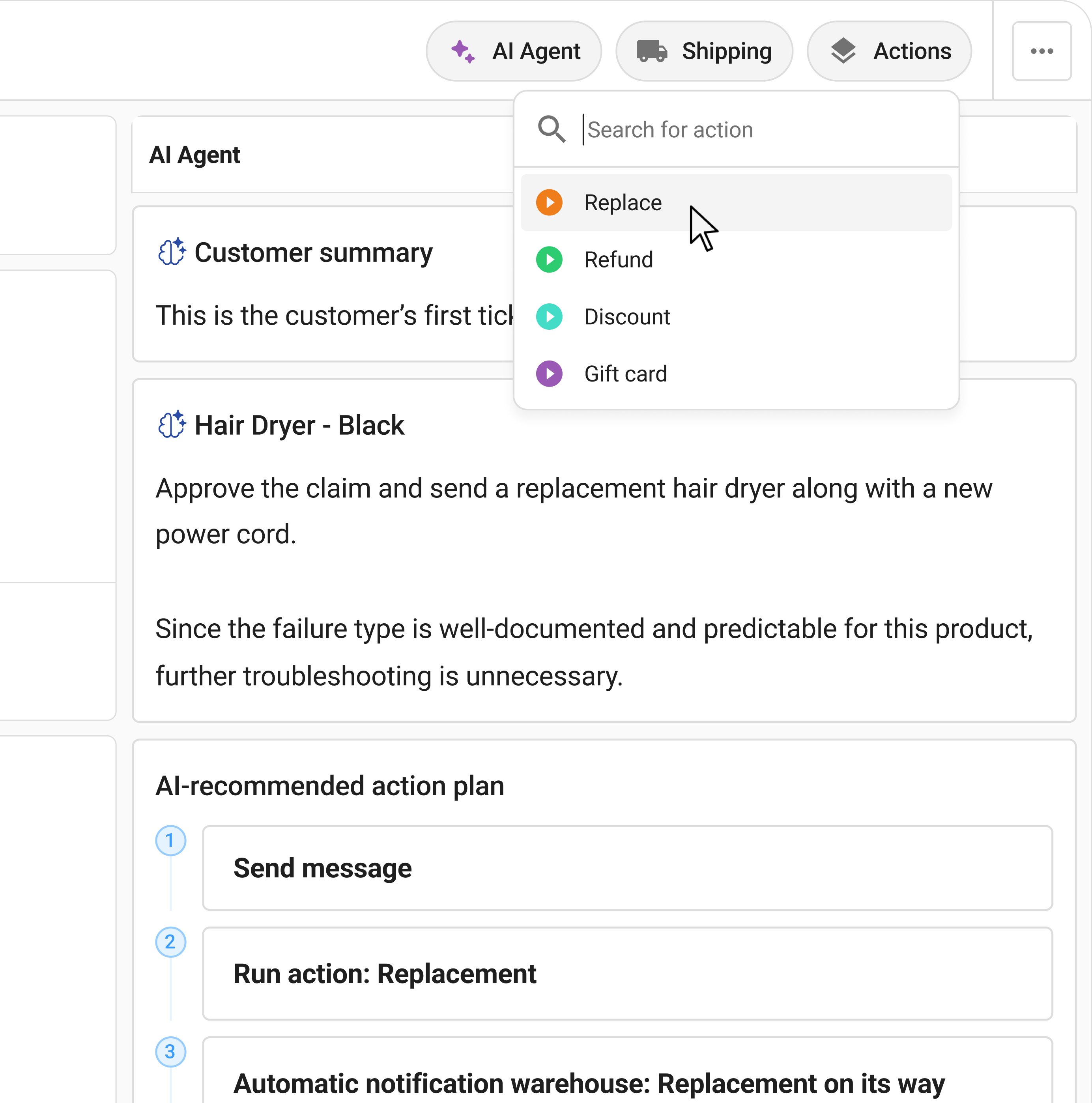
The volume problem is real. A support team cannot eyeball every return photo. This is where Claimlane's AI Agent, the first AI agent purpose-built for warranty claims and returns, earns its place. It reviews claim images and video, applies the brand's policy and supplier rules, and flags the claims that do not add up while auto-approving the clean ones.
That triage is what makes evidence-based fraud control survive at scale. The team spends its time on the handful of suspicious claims, not the thousands of legitimate ones. The same image-review approach powers AI image recognition for warranty claims.
MaxGaming resolves complex RMA cases 77% faster with Claimlane's AI Agent, which reviews claim images and checks business rules so agents do not need months of product training.
MaxGaming — Read the case study
A first-party fraud playbook brands can run
Start by capturing structured evidence on every claim, not just the suspicious ones. You cannot spot a pattern in data you never collected.
Set policy triggers that scale friction with risk. Low-value, first-time, photo-backed claims auto-resolve. High-value, repeat, or evidence-light claims route to a human. The decision tree should live in the claims workflow, not in a person's memory.
Reconcile returns against what physically arrived. An empty-box return is only caught if intake confirms the item and weight. Feed confirmed abuse back into the customer record so the next claim from that account starts with context, the core idea behind return fraud prevention.
For warranty-flavored abuse, where a customer claims a defect that is really wear or misuse, the same evidence trail applies. Claimlane's warranty fraud explainer and its notes on dead-on-arrival claims cover those edges.
What to measure
Track dispute win rate, the share of representments you win, because that number tells you whether your evidence is good enough. Track repeat-claim rate by customer to surface abusers early. Track the gap between refunds issued and items physically received back, which is where empty-box and never-returned losses hide.
Brands that want the wider returns context can read returns for ecommerce brands and the trade-offs in store credit vs refund, since refund method changes the incentive to abuse. More results sit in the Claimlane case studies.
First-party fraud will not stop being a problem, but it stops being an invisible one the moment the evidence has a home. So here is the question worth sitting with: if a chargeback landed today, could your team pull the photos, the delivery proof, and the claim history in five minutes, or would they go hunting? If it is hunting, the fraud already has the advantage.