
For two years, brands built compliance programs for the EU Green Claims Directive and its requirement to substantiate every environmental claim through independent verification. Then, in mid-2025, the Commission withdrew the proposal and the final talks were cancelled. A lot of brands read that as a reprieve and quietly shelved the work.
That is the trap. The headline rule died and the operational rule slipped through. The directive that actually passed, Empowering Consumers for the Green Transition, takes effect on 27 September 2026, and it does something subtler than the Green Claims Directive ever proposed. It moves the obligation into the warranty and durability information a brand has to give a buyer, and that information has to be true.
The law-firm and consultancy posts that rank for this term cover the marketing angle well: which claims are banned, what the legal status is, how to prepare a sustainability statement. None of them point at where the proof comes from. A durability claim is only as honest as the warranty and returns data behind it, and that data lives in operations, not in the brand book. This is the same operational-truth problem that GPSR and EU warranty law already created for retailers.
What changed: GCD out, ECGT in
The two directives get conflated constantly, so the timeline is worth setting straight before anything else.
Brands prepare for the Green Claims Directive and its substantiation-and-verification regime for environmental claims.
The Commission withdraws the Green Claims Directive proposal. Final negotiations are cancelled. Independent verification of claims is off the table.
Empowering Consumers for the Green Transition (Directive EU 2024/825) applies. Durability, repairability, and warranty information rules take effect.
Generic environmental claims and offset-based carbon-neutral claims are restricted across the EU.
The Green Claims Directive was the one everyone watched. ECGT is the one that passed, and it is already law, with the main obligations landing in September 2026. A brand that wound down its program after the withdrawal is preparing for the wrong deadline, the same way brands misread the timeline on EU right to repair.
The warranty label is now a regulated claim
The part of ECGT that catches brands out is not the green messaging. It is the warranty information rule.
From 27 September 2026, where a producer offers a commercial guarantee of durability longer than two years, free of charge and covering the whole product, the trader has to inform the consumer of that, clearly and prominently, using a harmonised label the Commission defines. Brands also have to give clear information on durability, repairability, spare-parts availability, and software updates.
In plain terms, the warranty and durability promise becomes a regulated consumer claim, on the same footing as a price or a size. It has to be accurate, consistent, and backed by the brand's actual terms, which is where implied warranty and the brand's stated guarantee start pulling in the same direction.
Durability and repairability claims have to be true
Here is the stakes part, and it is not abstract. A durability or repairability claim that the brand cannot back is a misleading commercial practice under EU consumer law, and the penalty regime behind that is real.
Under the EU consumer-protection enforcement regime, penalties for misleading practices can reach up to 4% of a trader's annual turnover in the member states concerned. A durability claim without data behind it is exposure, not marketing.
That is the shift. Before, a vague durability claim was a marketing liberty. After September 2026, it is a regulated statement that an enforcer can test, and the test is whether the brand can show the product actually lasts and can actually be repaired. The brands that can answer are the ones already running warranty analytics on product quality and customer-centric warranty analytics. The ones that cannot are making claims on faith.
The data that substantiates a green claim lives in returns and warranty
This is the connection the SERP results miss entirely. Marketing writes the durability claim, but returns owns the proof. The evidence that a product lasts is the warranty and returns record, because that is where failure shows up, or does not.
"Built to last" / durability rating
Failure rate and claim rate over the product's life
"Easily repairable"
Repair rate, repair turnaround, spare-parts availability
"Long warranty"
Recorded warranty terms tied to each unit and honored in practice
Each claim on the left has a single honest source on the right, and all three sources sit in the returns and warranty operation. A brand that captures structured warranty and claim data through warranty registration and reads it in analytics can produce the durability picture on demand. A brand running warranty over email cannot, which is why predictive warranty analytics stops being a luxury once the claim is regulated.
Generic green claims are banned, specific ones need proof
ECGT does two things at once, and brands tend to notice only the first. It bans the vague claims, words like sustainable or eco-friendly used without proof, and offset-based carbon-neutral claims. That part got the headlines.
The quieter part is that the specific claims a brand replaces them with, the durability rating, the repairability promise, the warranty length, all need substantiation. Swapping a banned vague claim for a specific one does not reduce the burden, it relocates it onto data the brand has to hold. A claim is only as honest as the data behind it, and the specific claims are the ones an enforcer can actually check. Reducing real failure rates through fewer warranty claims and a better warranty claim rate is both the marketing story and the compliance evidence, told once.
Where the substantiation actually comes from
The finance framing matters because compliance here is not a cost with no return. The same data that substantiates a durability claim also lowers warranty cost and informs design.
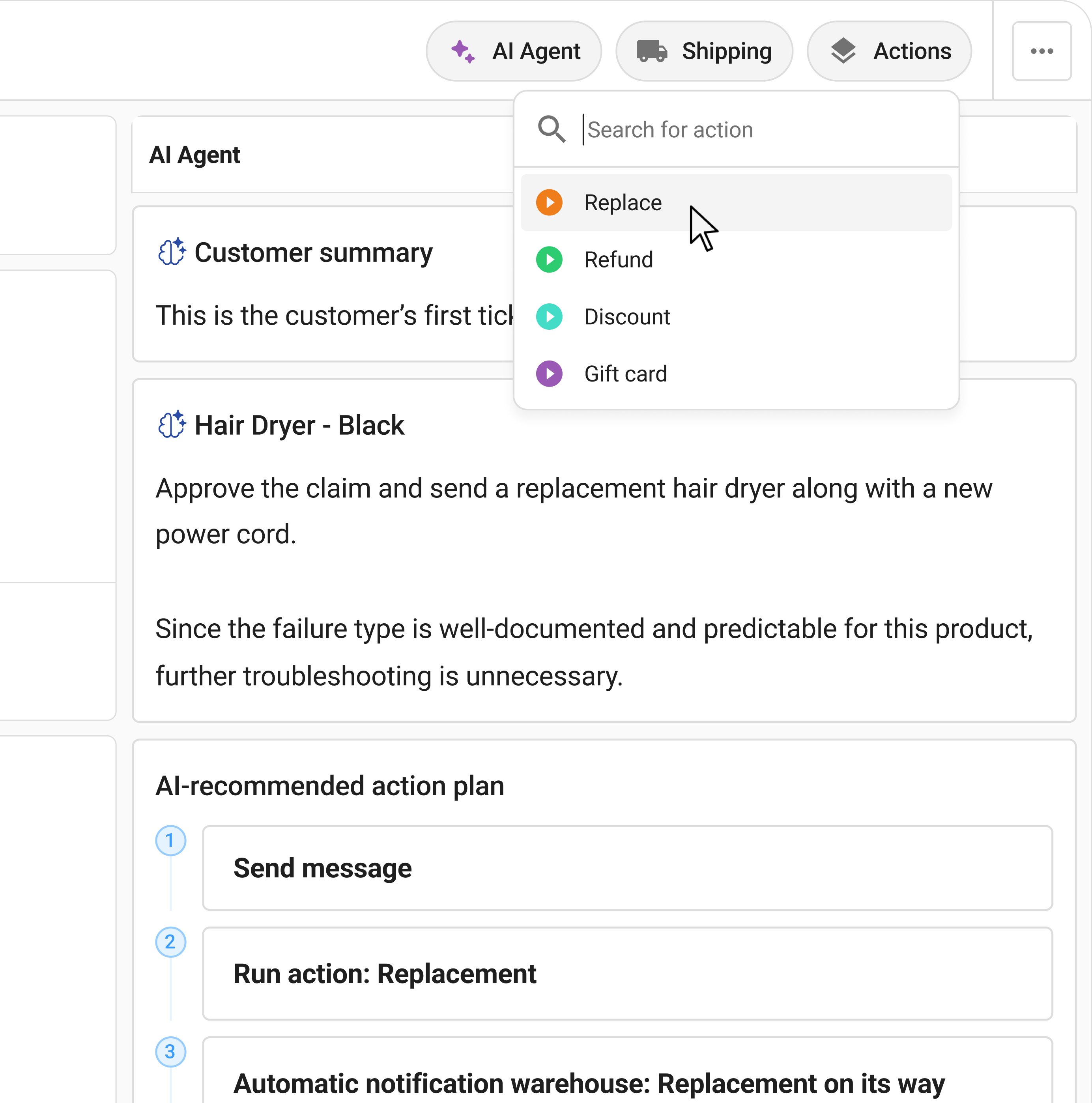
A brand that can show its failure rate, repair rate, and honored warranty terms has the evidence ECGT wants and the inputs to cut its own warranty reserve. The substantiation work and the cost-reduction work are the same work, done once, which is the argument that gets a CFO to fund it. Routing recurring failures back to suppliers and feeding the data into repair versus replace decisions turns the compliance record into a margin lever. Claimlane's AI Agent, the first AI agent purpose-built for warranty claims and returns, reviews claim evidence and applies the brand's rules so the durability and repair data stays clean enough to stand behind a public claim, with humans in the loop on high-value cases, configurable rules, and a logged decision trail for every case. Mads Nørgaard built its claims handling on Claimlane as part of a deliberate strategy, the kind of clean warranty record that makes a durability claim defensible rather than hopeful.
Generic returns app or claims platform: the two-tier reality
A standard returns app records refunds and exchanges. It does not hold warranty terms per unit, track repair rates, or produce the durability evidence a regulated claim now needs. For a simple size-and-fit return that is fine, and it is the right tool for that job.
A claims platform that runs warranty, repair, and spare-parts claims as structured data is the other tier, the execution and intelligence backbone that produces substantiation as a by-product of handling claims well, running alongside the brand's commerce and ERP stack. Simple returns belong with the generic apps. Warranty, durability evidence, and the SLA management behind a public repairability promise belong on a specialist platform, a split that also underpins repair workflows under EU compliance. Skechers runs its warranty claims on Claimlane, the kind of durable-goods claim record a public repairability promise depends on, shown in the Skechers case.
Can the brand prove its durability claim?
Five questions before September 2026
▸ Can the brand show a failure rate by product over its life?
▸ Are warranty terms recorded per unit, not just stated on a page?
▸ Can it report repair rate and spare-parts availability?
▸ Does every public durability claim trace to real claim data?
▸ Could the brand defend a claim if an enforcer asked tomorrow?
Three or more no answers means the brand is making claims it cannot yet prove.
A brand answering yes can make specific, confident durability and warranty claims, because the data is there to back them. A brand answering no is exposed twice, once to an enforcer and once to the warranty cost it cannot see, and the fix for both is the same record.
What to measure
Track failure rate and claim rate by product over its full life, the number that proves or disproves a durability claim. Track repair rate and spare-parts availability, the evidence behind a repairability claim. Track the share of public claims that trace to real warranty data, the metric that says whether marketing and operations are telling the same story, which is the discipline behind solid warranty management best practices.
The Green Claims Directive made headlines when it arrived and again when it died, and its death is exactly why so many brands are unprepared for the directive that actually passed. ECGT does not ask brands to verify a marketing slogan. It asks them to tell the truth about how long their products last and how easily they can be fixed, and to have the data to prove it. That data was always going to live in the warranty and returns operation. The brands that built that operation can make the claim. The brands that shelved the work in 2025 have until September 2026 to find out they cannot.
Claimlane scores 4.8 out of 5 on G2, on the warranty and claim data that turns a durability claim from a hope into a record.
The brands that will be ready in September 2026 are the ones treating durability as a data problem now, not a marketing one. Talk to the team that builds the warranty record behind a durability claim, and pressure-test whether the brand could defend its claims today. Book a demo.
FAQ
Was the EU Green Claims Directive withdrawn?
Yes. The Commission withdrew the Green Claims Directive proposal in mid-2025 and the final negotiations were cancelled, so its independent-verification regime for environmental claims is off the table. The separate Empowering Consumers for the Green Transition directive did pass and applies from 27 September 2026.
What does ECGT require for warranty and durability information?
From 27 September 2026, traders must inform consumers about durability, repairability, spare-parts availability, and software updates, and must use a harmonised label when a free commercial guarantee covers the whole product for more than two years. The warranty promise becomes a regulated consumer claim.
How do brands substantiate a durability claim?
With warranty and returns data. The proof of durability is the failure rate and claim rate over a product's life, the proof of repairability is the repair rate and spare-parts availability, and the proof of a warranty is recorded terms honored in practice. All of that lives in the warranty operation, not in marketing.
What are the penalties for unprovable green or durability claims?
An unsubstantiated durability or repairability claim is a misleading commercial practice under EU consumer law, and the enforcement regime allows penalties up to 4% of a trader's annual turnover in the member states concerned. A claim the brand cannot prove is a financial exposure, not just a marketing risk.