.webp)
Repair workflows are structured processes that move a product from a customer-reported defect through diagnosis, parts sourcing, repair execution, quality check, and return to the customer. In 2026, these workflows are no longer just an operational efficiency play. They are a compliance requirement.
The EU Right to Repair directive, combined with the General Product Safety Regulation (GPSR), requires brands selling in Europe to offer repair as a viable option for customers, maintain spare parts availability, and document the entire process. Brands that treat repairs as ad hoc exceptions handled through email chains face regulatory risk.
This guide covers how to build repair workflows that satisfy EU requirements while reducing operational costs through AI-powered automation.
- EU regulations now require brands to offer repair options and maintain documented repair workflows.
- A compliant repair workflow includes intake, AI-assisted diagnosis, parts sourcing, repair execution, QC, and customer return with full audit trails.
- Automation reduces repair cycle time from weeks to days while generating the documentation regulators require.
- Claimlane's AI Agent automates repair triage by analyzing product images and recommending repair vs. replace decisions, cutting diagnosis time to seconds.
Why EU Regulations Require Structured Repair Workflows
Three EU regulatory frameworks now directly impact how brands handle product repairs.
The Right to Repair directive
Adopted in 2024 with national transposition deadlines through 2026, the EU Right to Repair directive gives consumers the right to have products repaired rather than replaced, even outside the legal warranty period. Manufacturers must:
- Offer repair services at a reasonable cost
- Provide spare parts for a defined period after the product goes off sale
- Supply repair manuals and diagnostic tools to independent repairers
- Complete repairs within a reasonable timeframe
None of this works without a structured repair workflow.
GPSR (General Product Safety Regulation)
Effective since December 2024, GPSR requires economic operators (manufacturers, importers, distributors) to take corrective action when products are found to be unsafe. Corrective action includes recalls, but also repairs. Brands must document corrective actions taken and report to market surveillance authorities.
A repair workflow with full traceability (which product, what defect, what repair was performed, by whom, when) satisfies this documentation requirement.
Extended warranty obligations
Several EU member states have extended legal warranty periods beyond the two-year minimum. France requires a five-year spare parts availability guarantee. Germany and the Netherlands have strengthened consumer rights around repair-first remedies.
Brands without documented repair workflows cannot demonstrate compliance.
Anatomy of a Compliant Repair Workflow
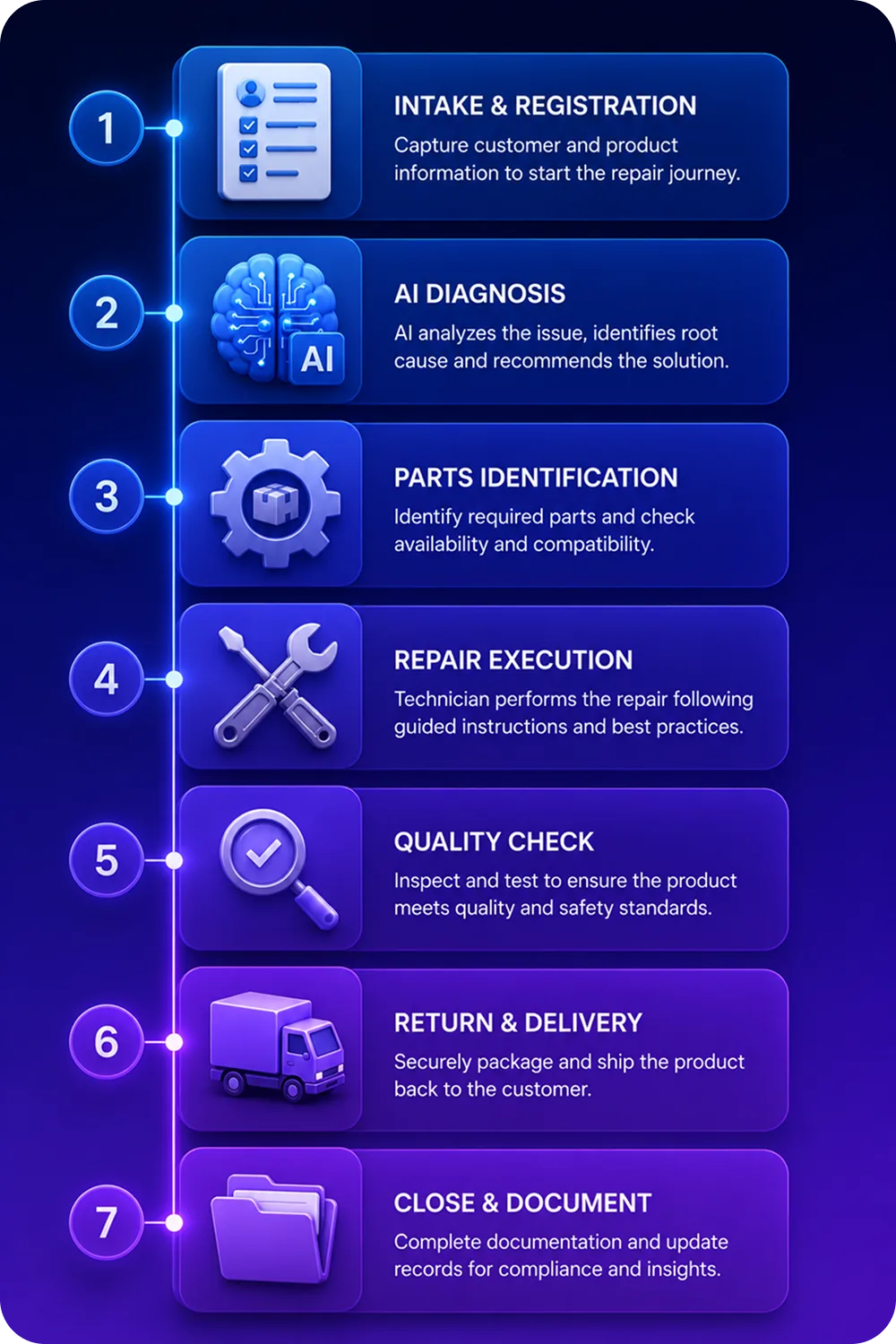
A repair workflow that meets EU standards has seven stages, each with specific documentation requirements.
Stage 1: Intake and claim registration
The customer reports a defect through a self-service portal or customer service channel. At intake, the system collects:
- Product identification (serial number, order number, model)
- Defect description and category
- Photos and/or videos of the issue
- Purchase date and warranty status
- Customer contact information
This data forms the foundation of the repair record. Under GPSR, the defect report may also need to be logged in a product safety monitoring system.
Stage 2: AI-powered diagnosis and triage
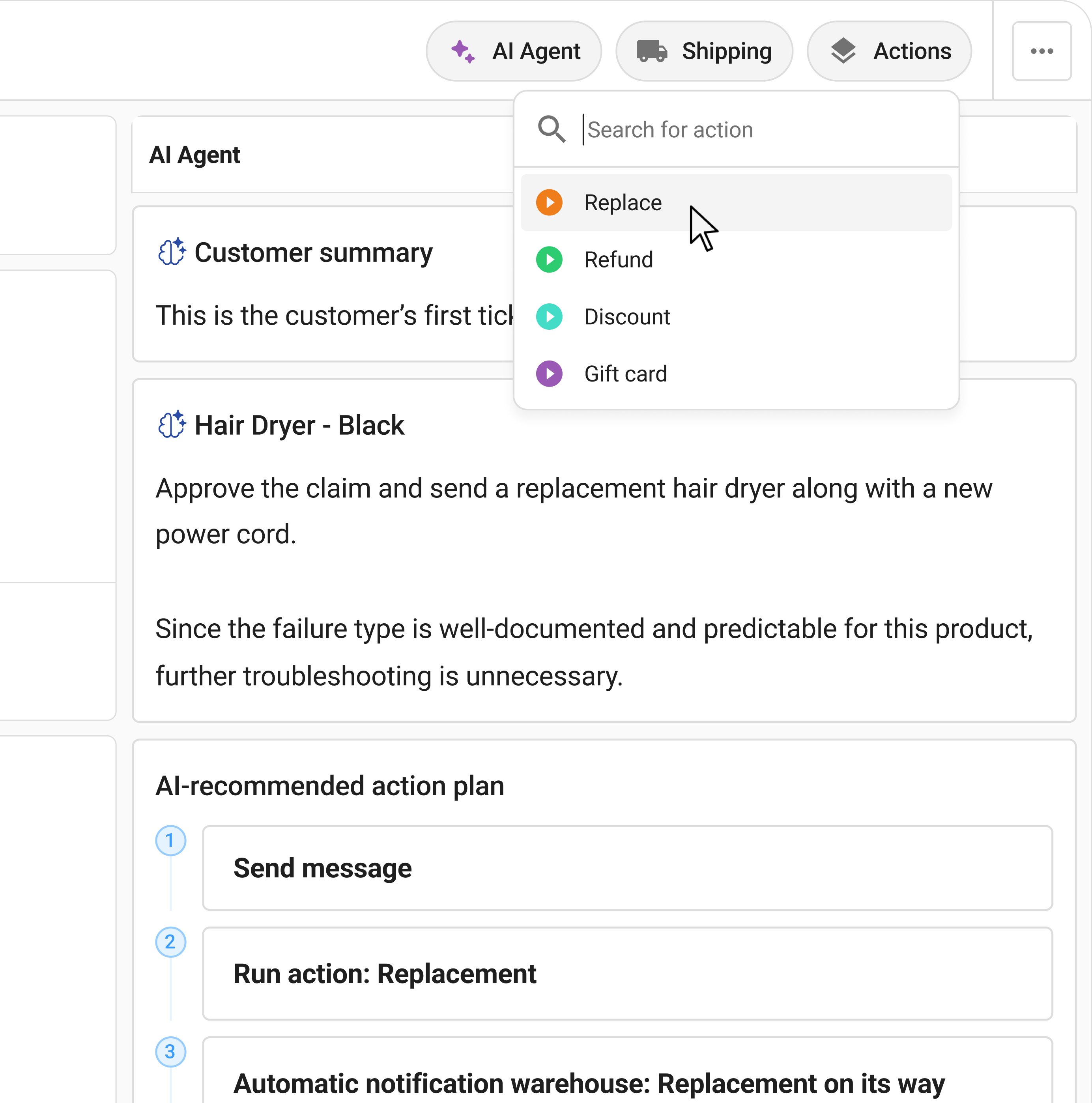
The fastest and most consistent way to triage repair claims is with AI. Claimlane's AI Agent, the first AI agent purpose-built for warranty claims and returns, analyzes submitted photos and videos, cross-references product specifications, and recommends the appropriate resolution:
- Repair: if the defect can be fixed with a spare part or service
- Replace: if the product is beyond repair or repair cost exceeds replacement cost
- Reject: if the claim falls outside warranty terms
Manual triage by support agents takes 15-30 minutes per claim and depends on individual product knowledge. AI triage takes seconds and applies rules consistently across every claim. MaxGaming, managing 30,000+ SKUs, resolved complex RMA cases 77% faster using AI-powered triage.
Stage 3: Spare parts sourcing
Once a repair is approved, the workflow identifies which parts are needed and checks inventory. If parts are not in stock, the system forwards the request to the supplier with the claim documentation attached.
For EU compliance, parts sourcing must be traceable. The repair record should show which part was used, from which supplier, and when it was shipped. This data is required if a product safety issue later triggers a recall or corrective action.
Stage 4: Repair execution
The actual repair may happen in-house, at an authorized repair center, or at the supplier's facility. The workflow tracks:
- Who performed the repair
- What was done (parts replaced, adjustments made)
- Time spent
- Quality control notes
Workflow automation routes repair tasks to the correct location based on product type, defect category, and geographic proximity to the customer.
Stage 5: Quality check
Before returning the product to the customer, a quality check confirms the repair was successful. The QC step should be documented in the repair record with pass/fail status and the inspector's notes.
Stage 6: Customer return and communication
The repaired product is shipped back to the customer with automated status updates at each stage. The customer should receive a repair summary explaining what was found and what was fixed.
Transparent communication during the repair process is not just good CX. Under the Right to Repair directive, customers have the right to a reasonable repair timeframe. Proactive updates demonstrate that the timeframe is being respected.
Stage 7: Record retention and compliance reporting
All repair records must be retained for the duration required by applicable regulations. GPSR requires economic operators to keep product safety documentation for 10 years after the product is placed on the market.
Analytics built into the repair workflow enable compliance reporting: number of repairs performed, average repair time, most common defects, parts consumed, and repeat repair rates.
How AI Transforms Repair Workflows
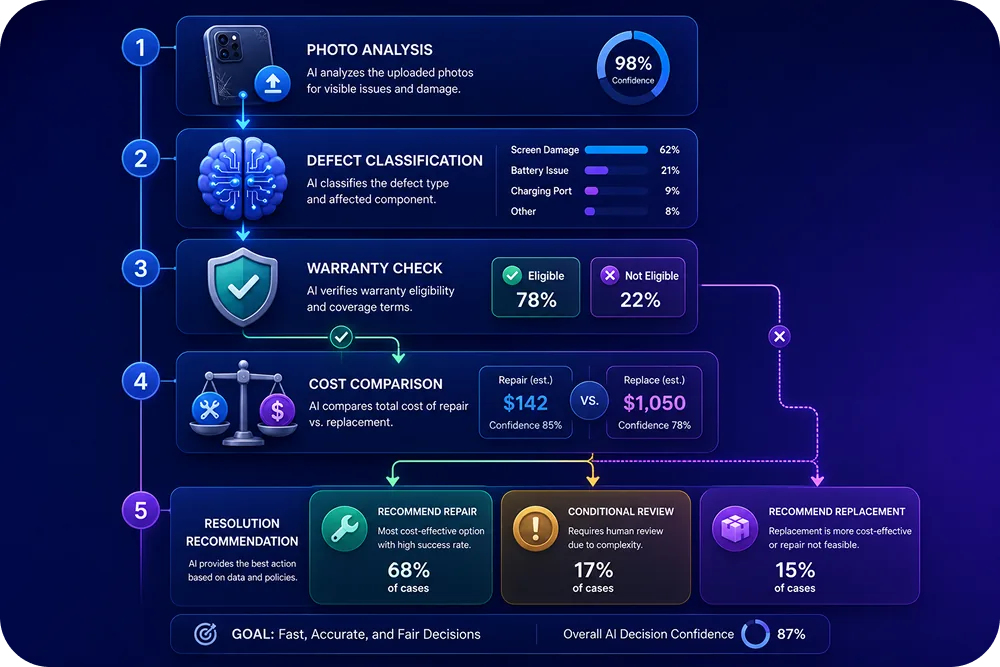
AI is the difference between a repair workflow that costs more than it saves and one that generates real operational value.
Visual defect analysis
AI models trained on product images can identify defect types, severity levels, and likely causes from photos submitted by customers. This replaces the back-and-forth emails asking customers to describe the problem in more detail.
Claimlane's AI Agent performs this analysis automatically at the triage stage, cross-referencing the visual evidence against known product issues and warranty terms.
Repair vs. replace decisions
The repair-or-replace decision has significant cost implications. A repair that costs $30 in parts and labor saves $120 compared to a full replacement. But making that decision requires product knowledge, cost data, and claim history.
AI models factor in repair cost estimates, product age, previous repairs on the same unit, and spare parts availability to recommend the most cost-effective resolution. This data-driven approach consistently outperforms human judgment, which tends to default to replacement when uncertain.
Predictive parts demand
AI analyzes historical repair data to predict which spare parts will be needed in the coming weeks and months. This enables proactive procurement instead of reactive ordering, reducing the time customers wait for parts.
Brands that connect their warranty analytics to spare parts procurement see 20-40% reductions in parts-related delays.
Automated supplier coordination
When a repair requires a part or service from an external supplier, AI-powered workflows automatically generate the supplier request, attach all relevant documentation (photos, product details, warranty status), and track the supplier's response. No manual forwarding, no missed follow-ups.
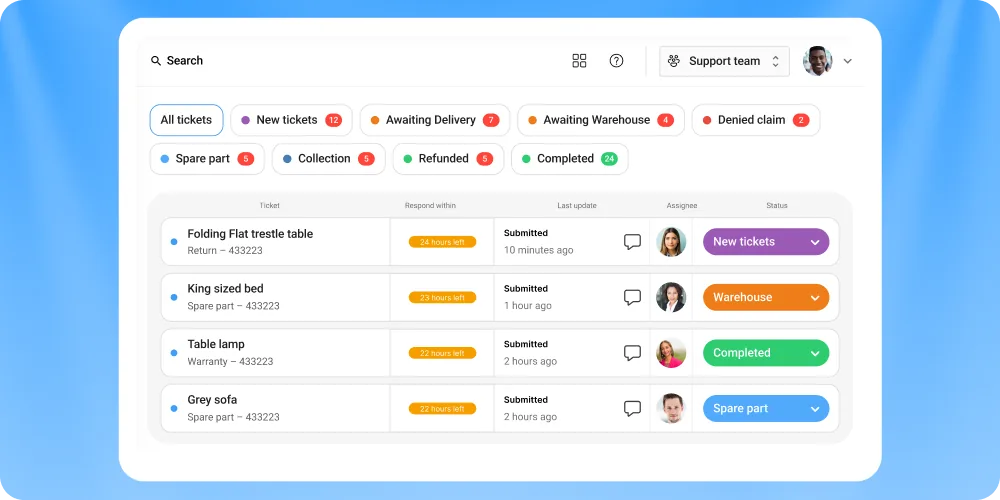
Building Repair Workflows in Claimlane
Claimlane provides the infrastructure for compliant repair workflows out of the box.
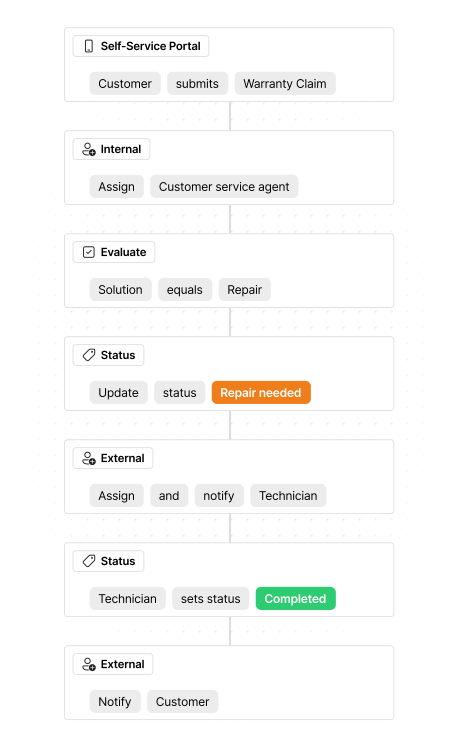
Self-service intake
The Claimlane Self-Service Portal guides customers through a structured claim submission process. Required fields ensure every repair request arrives with complete information: product ID, photos, defect description, and purchase proof.
Configurable workflow rules
Workflow automation lets brands define rules for every stage of the repair process:
- Route claims by product category, defect type, or customer location
- Set approval thresholds (e.g., auto-approve repairs under $50)
- Assign repair tasks to specific teams or locations
- Trigger supplier forwards when parts are needed
- Escalate overdue repairs automatically
Integration with ERP and logistics
Claimlane integrates with ERP systems (Business Central, SAP), shipping providers, and ecommerce platforms. When a repair is completed, the ERP can automatically generate credit memos, update inventory, and trigger shipping.
Repair Workflow Metrics for Compliance Reporting
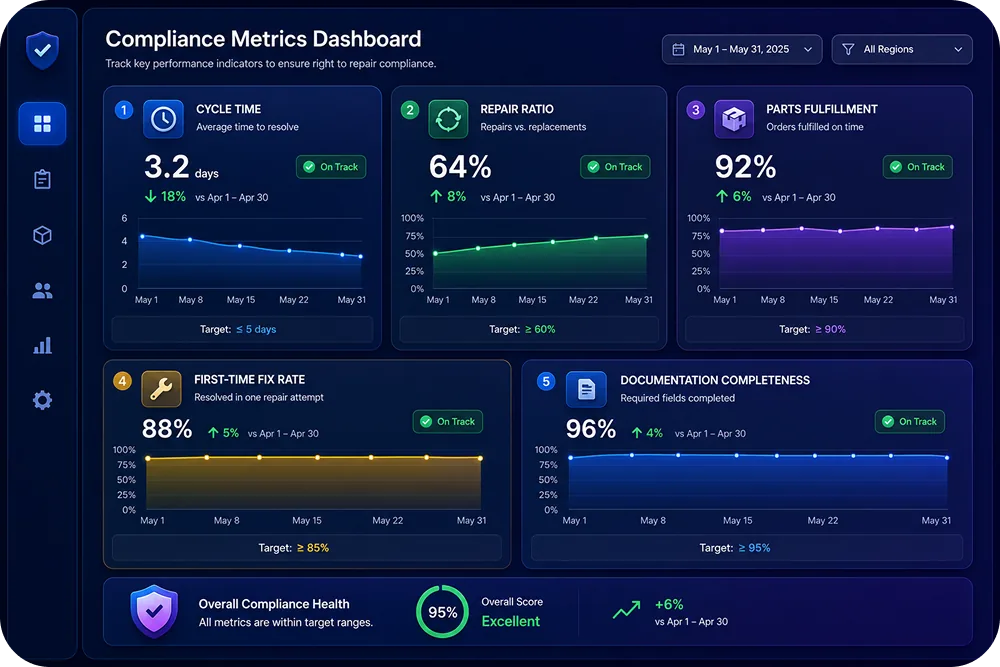
Regulators do not ask "do you have a repair process?" They ask for data. The following metrics should be tracked and reportable.
Average repair cycle time
From claim submission to repaired product returned to customer. The Right to Repair directive requires repairs within a "reasonable timeframe." Brands should benchmark this and track trends.
Repair vs. replacement ratio
What percentage of claims result in repair rather than replacement? A high repair ratio demonstrates commitment to the repair-first principle embedded in EU law.
Spare parts fulfillment rate
What percentage of required spare parts are fulfilled from stock vs. requiring supplier orders? A high fulfillment rate indicates good parts planning.
First-time fix rate
What percentage of repairs resolve the issue on the first attempt? Repeat repairs increase costs and frustrate customers.
Compliance documentation completeness
What percentage of repair records have complete documentation (photos, diagnosis, parts used, repair notes, QC results)? This is the metric that matters most in a regulatory audit.
Common Repair Workflow Mistakes
No structured intake
Accepting repair requests via email, phone, and chat without a standardized form means incomplete information. Technicians waste time chasing details that should have been collected upfront.
Manual triage bottleneck
When every repair claim goes through a human reviewer, the queue grows and resolution times suffer. AI triage handles 80-90% of cases automatically, leaving only edge cases for human review.
Disconnected systems
When the CRM, warranty system, ERP, and repair tracking tool are separate systems, data gets lost between handoffs. A unified platform like Claimlane keeps everything in one workflow.
No audit trail
Repairs performed without documentation are invisible to regulators. Every step, from intake to quality check, must be logged with timestamps, responsible parties, and outcomes.
Repair Workflows by Industry
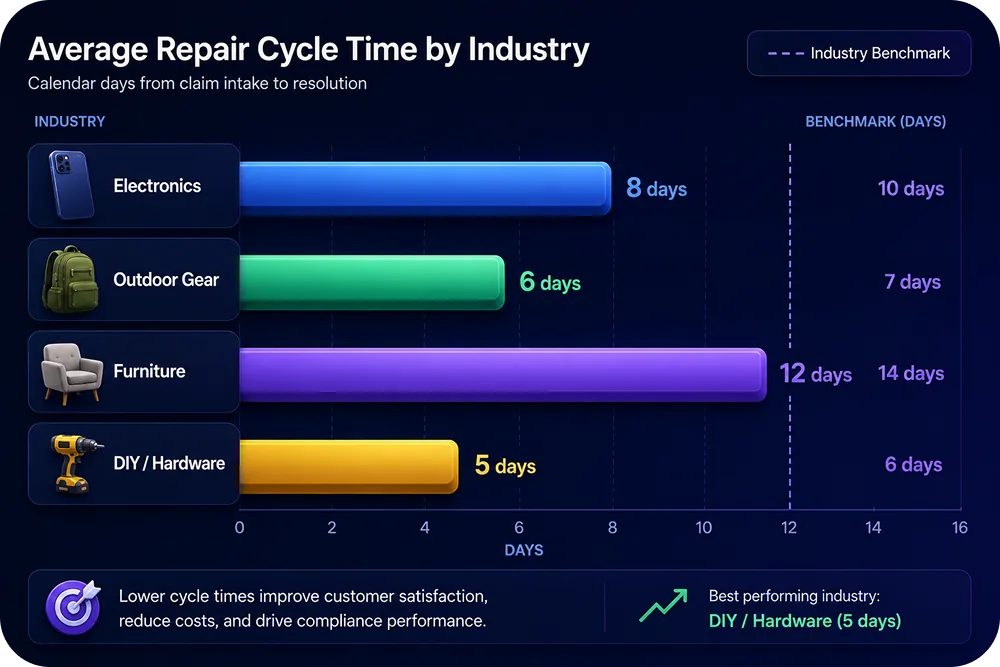
Consumer electronics
High volume, complex products, multiple component types. Repair workflows need detailed product catalogs, component-level diagnosis, and integration with authorized repair centers. Claimlane's integration network connects to these centers.
Outdoor and sporting goods
Products like climbing gear, tents, and backpacks often have specific repair procedures. Black Diamond uses Claimlane to manage warranty repair workflows across a wide range of technical products.
Furniture
Large items where return shipping is expensive. Repair is often more cost-effective, but requires coordination with local repair services. Swoon Furniture uses structured claim workflows to capture issues and feed them back to the supply chain.
DIY and hardware
Davidsen, a major DIY retailer, went from 5 agents handling claims to 1-2 by implementing structured repair and claim workflows through Claimlane.
Getting Started with Compliant Repair Workflows
Brands do not need to build repair workflows from scratch. The fastest path:
- Audit current repair processes. Map how repair claims are currently handled. Identify gaps in documentation, triage, and tracking.
- Implement a structured intake. Set up a self-service portal that collects all required information at submission.
- Enable AI triage. Connect Claimlane's AI Agent to automate repair vs. replace decisions.
- Build workflow rules. Configure automated routing for different product categories and defect types.
- Connect to ERP. Integrate with the ERP system to automate credit memos, inventory updates, and shipping.
- Track and report. Use analytics to monitor repair metrics and generate compliance reports.
Book a demo to see how Claimlane handles repair workflows end-to-end.