.webp)
Digital customer experience is the sum of every interaction a buyer has with a brand through digital channels. For ecommerce, that includes the product page, the checkout flow, the order confirmation email, the delivery tracking page, the return portal, and the warranty claim form. Every pixel, every notification, every automated response shapes how customers perceive the brand.
Most ecommerce teams obsess over acquisition. They A/B test landing pages, optimize ad spend, and refine product recommendations. But the touchpoints that happen after the sale generate 60-70% of all support tickets and have a disproportionate impact on whether a customer comes back or leaves a one-star review.
Digital CX in 2026 is not just about having a fast website. It is about building a connected experience across every digital touchpoint, including the ones most brands ignore.
- Digital customer experience covers every online touchpoint from first click to post-purchase support, not just the storefront.
- Post-purchase interactions (returns, warranty claims, delivery issues) generate the majority of support volume and have the biggest impact on retention.
- Brands that measure and improve digital CX across the full journey see higher repeat purchase rates and lower cost-to-serve.
- Claimlane's AI Agent automates post-purchase CX by resolving warranty claims and returns in seconds, closing the biggest gap in most ecommerce digital experiences.
What Is Digital Customer Experience?
Digital customer experience (digital CX) refers to the total quality of all interactions a customer has with a business through digital channels. Websites, mobile apps, email, chat, social media, self-service portals, and automated notifications all contribute to digital CX.
For ecommerce brands, digital CX is the entire experience. There is no physical store to fall back on. Every moment of friction, every confusing email, every slow-loading page directly affects revenue.
The concept is broader than user experience (UX). UX focuses on interface design and usability. Digital CX includes UX but also covers the emotional and operational aspects: how fast a return gets processed, how transparent order tracking is, how easy it is to submit a warranty claim.
According to PwC, 73% of consumers say experience is a key factor in purchasing decisions, ranking just behind price and product quality. For ecommerce, where switching costs are near zero, digital CX is the primary differentiator.
Why Digital CX Matters More in Ecommerce
Brick-and-mortar retailers can recover from a bad digital experience with great in-store service. Ecommerce brands cannot. The digital experience is the only experience.
Three forces make digital CX critical for ecommerce in 2026:
Customer expectations keep rising
Amazon, Shopify-powered DTC brands, and subscription services have trained consumers to expect fast, frictionless interactions. One bad experience and 32% of customers will stop doing business with a brand they love, according to PwC research.
Post-purchase is the new battleground
Most digital CX investment goes to acquisition. But post-purchase experience is where loyalty is built. A customer who has a smooth return or warranty claim experience is more likely to buy again than one who never had a problem.
Support costs scale with friction
Every gap in digital CX creates a support ticket. Unclear return policies generate emails. Missing tracking updates generate WISMO calls. Manual warranty processes create backlogs. Brands that fix these touchpoints digitally reduce cost-to-serve while improving satisfaction.
The Digital Customer Experience Journey in Ecommerce
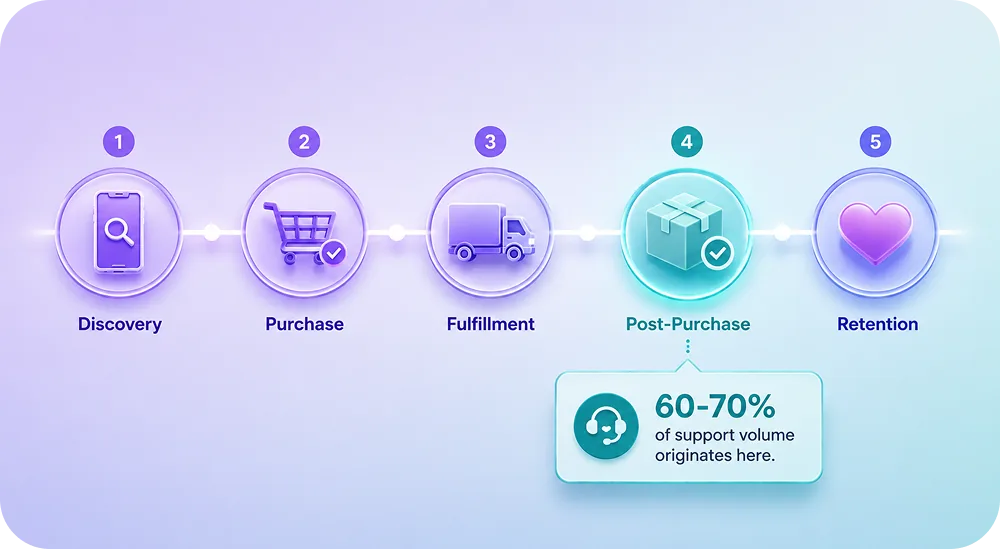
The digital customer journey for ecommerce has five distinct phases. Most brands only invest seriously in the first two.
1. Discovery and awareness
How customers find the brand: search, social, ads, referrals. The first impression is set by page speed, design quality, and content relevance.
2. Consideration and purchase
Product pages, reviews, size guides, checkout flow. This is where most CX investment goes. Tools like product photography and accurate descriptions reduce return rates downstream.
3. Fulfillment and delivery
Order confirmation, shipping notifications, delivery tracking. WISMO queries ("Where Is My Order?") account for up to 30% of all support tickets at some brands. Proactive communication cuts this dramatically.
4. Post-purchase support
Returns, exchanges, warranty claims, repairs. This phase generates the most support volume and the most emotional customer reactions. A customer with a broken product does not care how good the checkout was. They care about how fast the problem gets resolved.
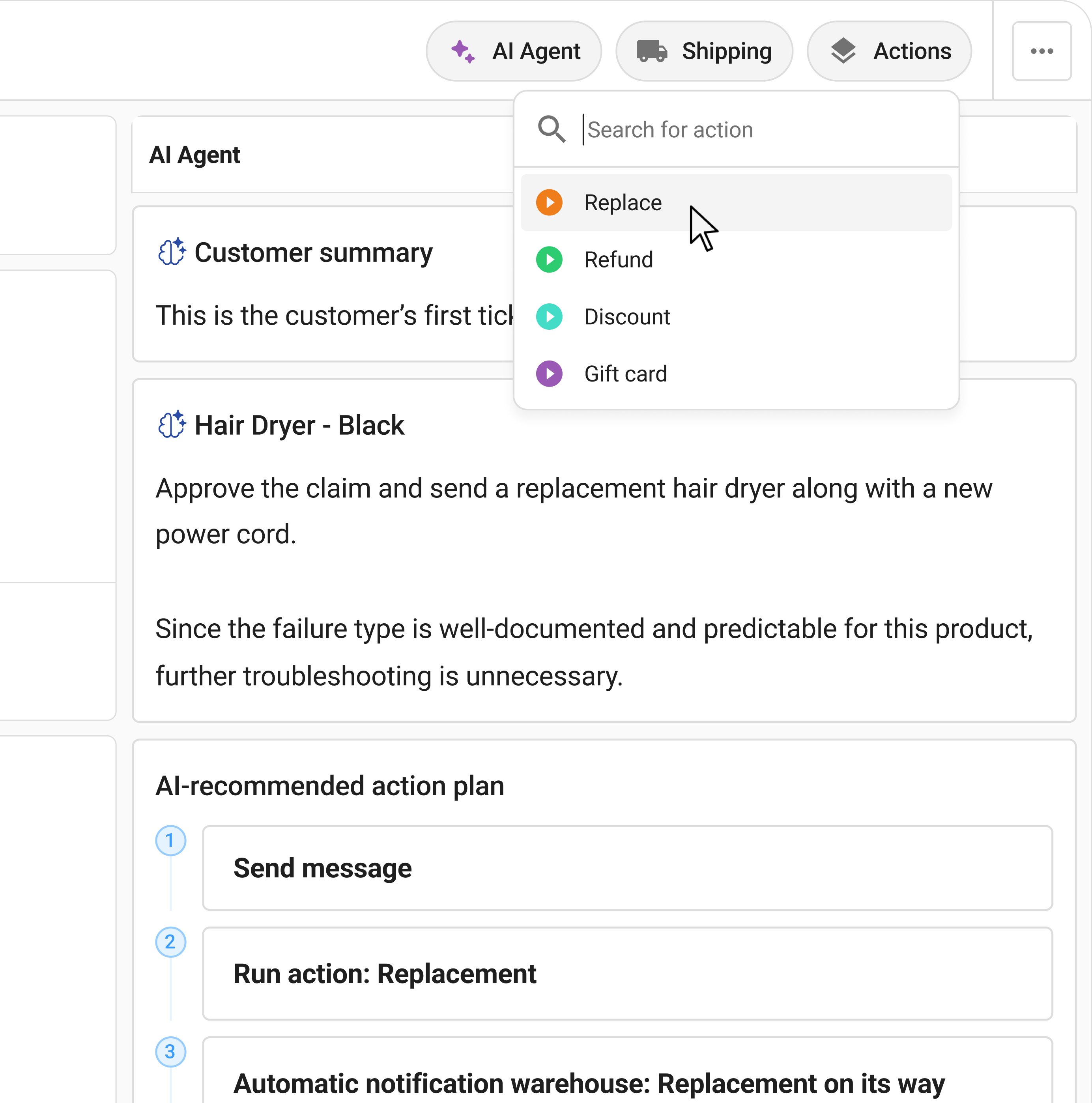
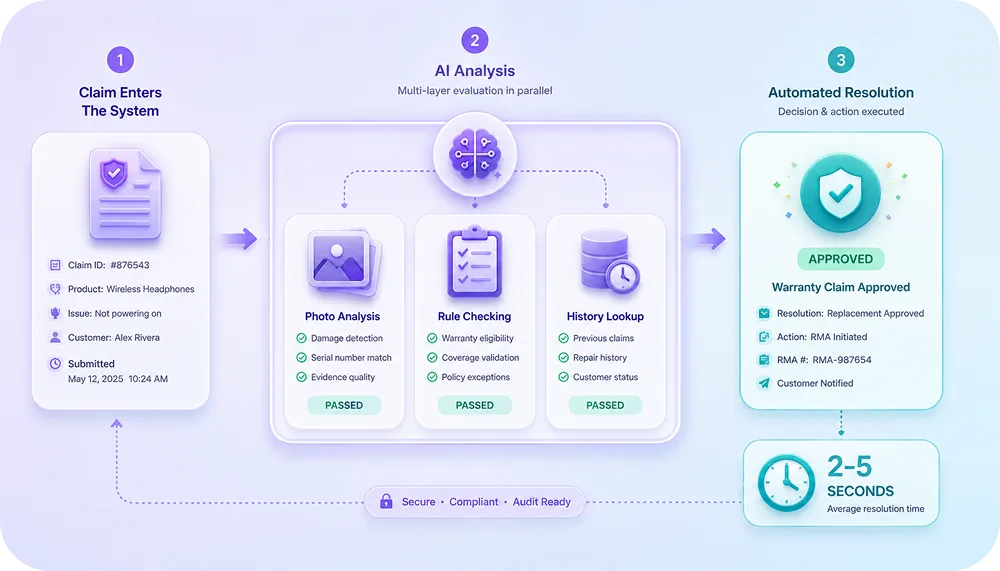
Claimlane's AI Agent, the first AI agent purpose-built for warranty claims and returns, handles this phase by analyzing product images, applying warranty rules, and recommending resolutions in seconds. It closes the CX gap that most brands leave wide open.
5. Retention and advocacy
Repeat purchases, referrals, reviews. This phase is the output of everything that came before. Brands that handle post-purchase CX well see higher customer lifetime value and lower acquisition costs.
How to Build a Digital Customer Experience Strategy
A digital customer experience strategy connects every touchpoint into a coherent system. Here is how ecommerce brands approach it.
Map every digital touchpoint
List every interaction a customer has with the brand digitally: website visits, email opens, chat conversations, portal logins, app usage. Most brands discover 30-50 touchpoints they were not actively managing.
Pay special attention to post-purchase touchpoints. The return request form, the warranty claim submission, the status update email, and the resolution notification are all digital CX moments that shape perception.
Identify friction points
Use support ticket data, returns analytics, and customer feedback to find where the experience breaks down. Common friction points:
- Unclear return policies leading to support calls
- Manual warranty processes that take days instead of hours
- Missing delivery updates creating anxiety
- Disconnected systems forcing customers to repeat information
Prioritize by impact
Not all touchpoints are equal. A slow-loading product page might lose a sale. A botched warranty claim loses a customer for life. Prioritize fixes based on the combination of frequency (how many customers hit this touchpoint) and severity (how bad the experience is when it goes wrong).
Automate where possible
Manual processes are the enemy of consistent digital CX. Every handoff between systems, every email a support agent has to write manually, introduces variability and delay.
Workflow automation for returns and warranty claims removes the variability. Rules-based routing sends claims to the right team. Automated status updates keep customers informed. AI-powered analysis speeds up resolution.
Digital CX Metrics That Matter for Ecommerce
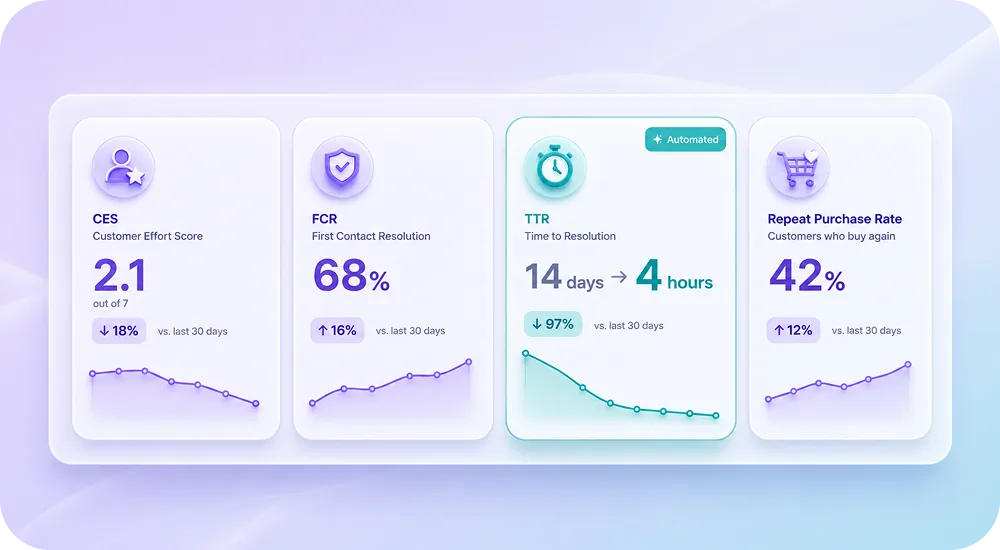
Measuring digital customer experience requires looking beyond NPS and CSAT. Here are the metrics that tell the real story.
Customer Effort Score (CES)
How easy is it for customers to accomplish what they need? CES is particularly revealing for post-purchase interactions. If returning a product or filing a warranty claim requires multiple emails and a phone call, CES will be terrible regardless of how polite the support team is.
First Contact Resolution (FCR)
What percentage of customer issues get resolved in a single interaction? For returns and warranty claims, FCR depends on having the right information upfront. A self-service portal that collects photos, order details, and defect descriptions at submission enables same-contact resolution.
Time to Resolution (TTR)
How long from issue report to resolution? Industry benchmarks for warranty claims range from 5-14 days. Brands using AI-powered claim processing resolve cases in hours. Onyx Cookware, for example, went from multi-day email exchanges to same-morning resolution using Claimlane.
Return Rate by Channel
Different digital touchpoints contribute to returns differently. Products sold via mobile may have higher return rates due to smaller screens showing less detail. Tracking return rates by channel reveals which parts of the digital experience need improvement.
Repeat Purchase Rate
The ultimate digital CX metric. If customers come back, the experience worked. If they do not, something in the journey failed. Brands with strong post-purchase CX see repeat purchase rates 20-40% higher than those that neglect it.
The Post-Purchase Gap in Digital CX
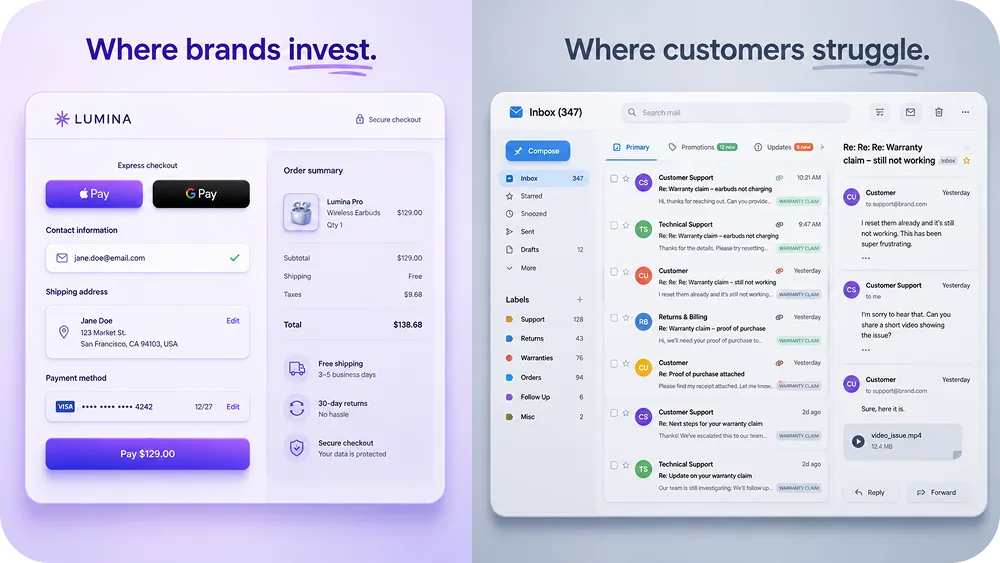
Here is the uncomfortable truth: most ecommerce brands have a massive gap in their digital customer experience, and it sits right in the post-purchase phase.
Brands spend millions on acquisition CX. They optimize landing pages, personalize recommendations, and build slick checkout flows. Then a customer needs to return a product or file a warranty claim, and the experience collapses into email chains, manual forms, and days of silence.
The gap exists because most customer experience software platforms focus on pre-purchase and support ticketing, not on structured after-sales workflows. A helpdesk like Zendesk can log a warranty claim as a ticket, but it cannot automate the warranty check, route the claim to the right supplier, trigger a replacement shipment, and update the customer in real time.
That is why purpose-built tools exist for the post-purchase phase. Claimlane handles warranty claims, returns, repairs, and replacements through structured workflows that keep every stakeholder informed and every step documented.
How AI Is Changing Digital Customer Experience
AI is the single biggest shift in digital CX since mobile commerce. But most of the attention goes to chatbots and product recommendations. The real impact is in the messy, unstructured parts of the customer journey that used to require human judgment.
AI in pre-purchase CX
Personalized recommendations, dynamic pricing, predictive search. These are well-established applications. Most major ecommerce platforms include them by default.
AI in post-purchase CX
This is where AI creates the most value per dollar spent. AI agents for post-purchase support can:
- Analyze product photos to assess damage and determine warranty eligibility
- Apply complex warranty rules per product, supplier, and geography
- Recommend or auto-approve resolutions based on claim data and business rules
- Route claims to the right team or supplier without manual triage
- Generate customer responses with case-specific context
Claimlane's AI Agent is the first AI agent purpose-built for warranty claims and returns. It does not just suggest answers. It analyzes the evidence, checks the rules, and acts. MaxGaming, the largest gaming ecommerce brand in Scandinavia with 30,000+ SKUs, resolved complex RMA cases 77% faster after implementing it.
Digital CX Strategy for Each Customer Segment
Not every customer needs the same digital experience. Segmenting the approach by customer type improves efficiency and satisfaction.
First-time buyers
Prioritize clarity. Clear product information, transparent pricing, straightforward return policies. First-time buyers are evaluating whether to trust the brand. The digital experience during their first purchase and any subsequent return determines whether they come back.
Repeat customers
Prioritize speed and recognition. Saved preferences, expedited support, loyalty benefits. Repeat customers generate 67% more revenue per transaction. Their digital CX should reflect that value.
B2B buyers
Prioritize structure. B2B claim workflows involve different approval chains, volume discounts, and supplier coordination. The digital experience for a retailer submitting a batch warranty claim is fundamentally different from a consumer returning a pair of shoes.
Tools for Managing Digital Customer Experience
%201.png)
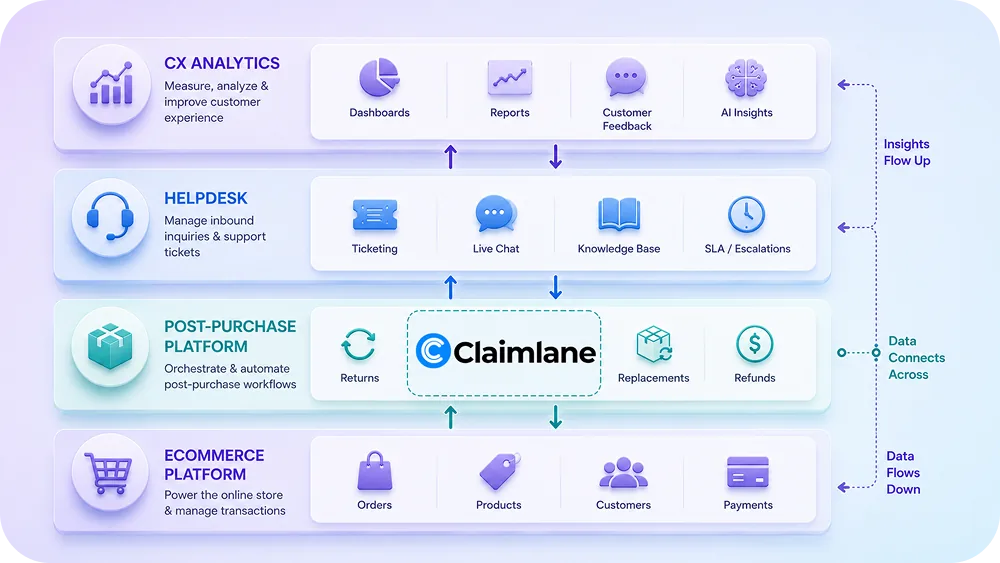
The digital CX tech stack for ecommerce typically includes:
CX analytics platforms
Tools like Qualtrics, Medallia, and Hotjar measure how customers interact with digital touchpoints. They surface friction points but do not fix them.
Helpdesk and support tools
Zendesk, Freshdesk, Gorgias. These handle support tickets and live chat but lack structured workflows for returns and warranty claims.
Post-purchase platforms
Purpose-built tools that handle the operational side of post-purchase CX: returns portals, warranty management, repair workflows, and supplier claims. Claimlane sits here, handling warranty claims, returns, repairs, and replacements through one system with AI-powered automation.
Ecommerce platforms
Shopify, WooCommerce, BigCommerce. These manage the storefront and orders. Their returns capabilities are basic, which is why brands integrate specialized tools like Claimlane through their 75+ integrations.
Common Digital CX Mistakes in Ecommerce
Brands make predictable mistakes when building digital customer experiences.
Ignoring post-purchase entirely
The most common mistake. Brands pour resources into acquisition and leave post-purchase to email and spreadsheets. The result: long resolution times, inconsistent experiences, and customers who never return.
Over-automating without context
Bad automation is worse than no automation. A chatbot that loops customers through irrelevant FAQs when they need a warranty claim resolved creates frustration. Good automation understands context and routes to the right process. AI-powered routing that understands claim types and applies business rules is the difference.
Siloed systems
When the ecommerce platform, helpdesk, ERP, and returns system do not talk to each other, customers feel the gaps. They get asked for the same information twice. Their warranty status is unknown. Their refund takes weeks because data has to be manually transferred between systems.
Measuring the wrong things
Tracking pageviews and conversion rates but not post-purchase metrics like time to resolution, return experience satisfaction, or warranty claim completion rates. The metrics that matter most for retention are the ones most brands do not track.
How to Improve Digital Customer Experience
Improving digital CX does not require a complete overhaul. Start with the highest-impact, lowest-effort changes.
Start with the post-purchase gap
For most brands, the biggest CX improvement available is in post-purchase. Implementing a self-service portal for returns and warranty claims immediately reduces support volume, speeds up resolution, and improves customer satisfaction.
Connect systems
Integrate the ecommerce platform with the returns and warranty system. When a customer submits a claim, the system should automatically pull order data, product details, and warranty terms without the customer having to look up their order number.
Add proactive communication
Do not wait for customers to ask for updates. Automatic status emails at each stage of a return or warranty claim reduce anxiety and prevent follow-up tickets.
Use data to prevent issues
Returns and warranty analytics reveal which products, suppliers, and order types cause the most problems. Fixing root causes improves the digital experience for future customers before they ever encounter an issue.
Digital CX Trends for Ecommerce in 2026
AI agents replace chatbots
Generic chatbots that answer FAQs are giving way to AI agents that take real actions: approve returns, process warranty claims, coordinate repairs, and update customers. The shift is from reactive support to proactive resolution.
Post-purchase CX becomes a revenue driver
Brands are recognizing that a well-handled return can increase lifetime value. Exchange-first policies, store credit strategies, and warranty registration programs turn cost centers into retention engines.
Compliance shapes CX
Regulations like the EU Right to Repair directive and GPSR are forcing brands to build structured repair and warranty processes. Compliance requirements are becoming CX opportunities for brands that handle them well.
Unified platforms replace point solutions
The trend is toward platforms that handle the full post-purchase lifecycle: returns, warranty claims, repairs, replacements, spare parts, and supplier recovery. Managing these through separate tools creates exactly the silos that hurt digital CX.