
A customer drops their new headphones on a tiled floor. The housing cracks. They file a claim. Under a standard manufacturer warranty, that claim is denied, because a drop is not a manufacturing defect. Under accidental damage protection, it is paid. Same crack, opposite outcome, and the only thing separating the two is a judgement about what happened.
That judgement is the whole job. Standard warranty asks whether the product was faulty. Accidental damage protection asks what happened to it, and that is a much harder question. It is a question about an event nobody at the brand witnessed, answered from a few photos and a customer's account. ADP is not a warranty with wider coverage. It is a different operation.
This is written for warranty-heavy brands with repairs and spare parts, the electronics, sporting goods, and durable-goods companies weighing whether to offer accidental damage protection and worried about what it costs to run.
The dropped-phone scenario
Run the scenario forward. The claim arrives. Someone has to decide: did the housing crack from a fall, which ADP covers, or from a moulding flaw, which the standard warranty covers, or from normal wear, which neither covers. Three different resolutions, three different cost centres, one blurry photo to tell them apart.
Get it wrong in the customer's favour every time and ADP becomes a money pit. Get it wrong against the customer and the reviews turn. The manufacturer warranty for consumer electronics guide and what voids a product warranty piece cover where standard coverage stops and ADP begins.
What accidental damage protection actually is
The distinction from warranty is the point. A manufacturer warranty covers defects in materials or workmanship at no extra cost. ADP is bought separately and covers the accidents of real-world use. The warranty versus guarantee breakdown, the OEM warranty explained guide, and the express warranty explained piece all sit next to ADP in a full coverage stack, and extended warranty platforms covers the tooling brands use to sell the plans.
Why ADP is harder to run than a warranty
A warranty claim has a clean test. The product either works as it should or it does not, and a fault is usually demonstrable. An ADP claim has no clean test. It hinges on cause, and cause is contested by design, because the customer wants coverage and the honest answer is sometimes normal wear.
Every ADP claim is an argument about a moment nobody filmed. The brand is reconstructing an event from evidence after the fact, the same shape of problem as a dead-on-arrival claim or a no-fault-found warranty claim, where the resolution turns on interpreting evidence rather than reading a spec. The repair versus replace decision then follows from what the evidence shows.
The evidence problem at the centre of every ADP claim
Because cause is the whole decision, evidence is the whole operation. The coverage is the easy part. The photo is the whole business. A brand running ADP needs consistent, structured evidence on every claim: clear photos of the damage, the serial number, the order, and enough of the customer's account to judge cause.
Collected by email, that evidence is a mess. One customer sends a dark photo, another sends none, a third describes the damage in a paragraph. The fix is to require the right evidence at submission, in a structured form, before the claim is even accepted. Claimlane's self-service portal forces that structure at intake, warranty registration ties the claim to the exact product and plan, and serial number tracking confirms the item is the one that was covered. The proof of purchase for warranty guide covers the documentation side.
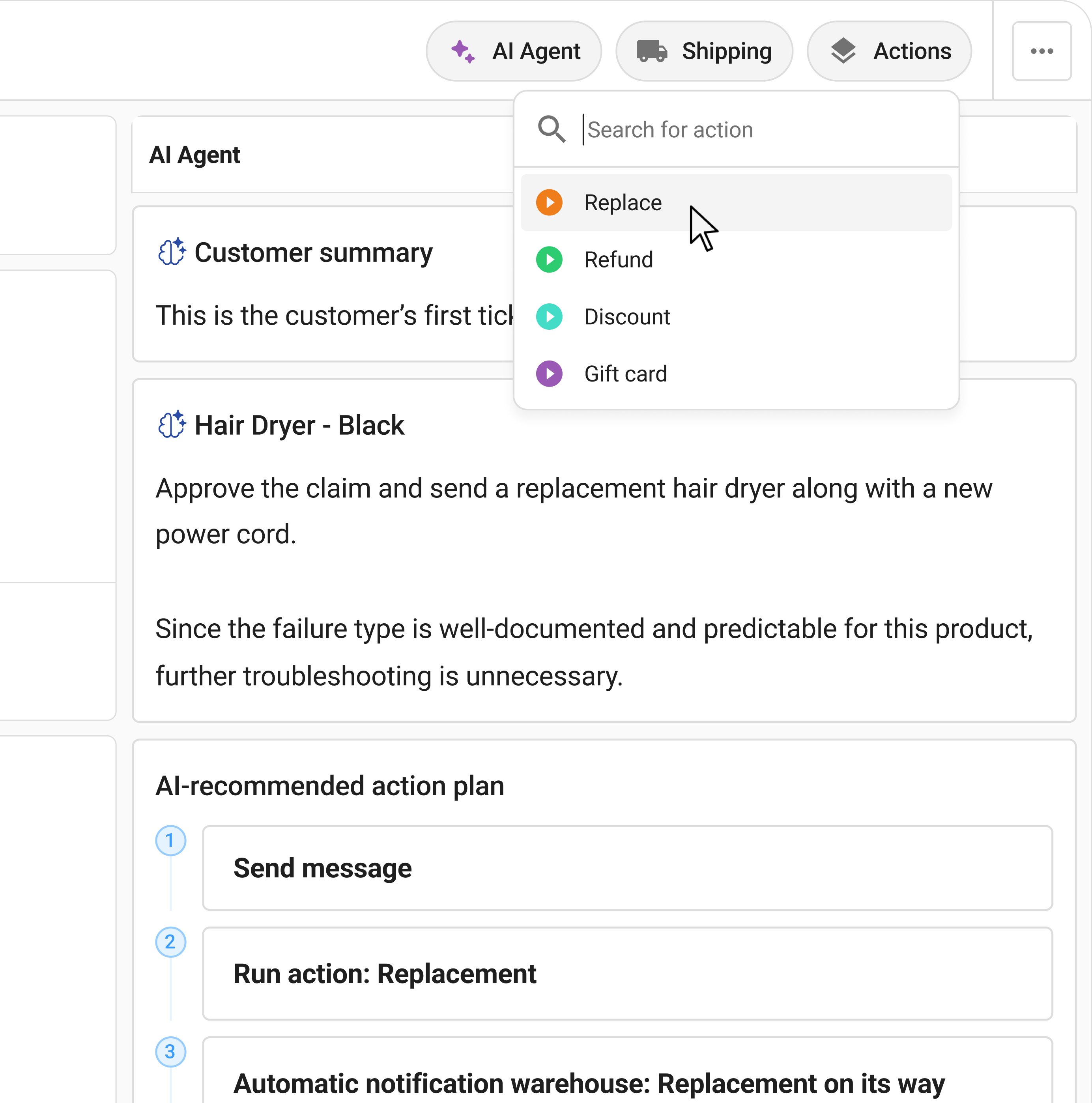
This is also where AI earns its place. Claimlane's AI Agent, the first AI agent purpose-built for warranty claims and returns, reviews the damage photos, applies the plan rules per product, and recommends whether the damage reads as accidental, a defect, or wear. The AI image recognition for warranty claims guide shows how that assessment runs on the exact evidence an ADP claim depends on. Claimlane's AI Agent sits on the claim, and analytics tracks which products and plans drive claim cost.
Fraud is the built-in risk
ADP invites fraud in a way standard warranty does not. A customer with a product they no longer want, or one already damaged, has a clear incentive to claim it as an accident. Wardrobing has a cousin here: buy the plan, damage the item, claim the payout.
That is why fraud screening is not optional on ADP, it is part of the core flow. Pattern checks on repeat claimants, evidence that does not match the described damage, and serial mismatches all flag claims for a closer look. The warranty fraud explained guide, the AI warranty fraud detection breakdown, and the return fraud prevention piece cover the screening that keeps ADP from becoming a payout scheme.
The deductible and the economics of offering ADP
ADP almost always carries a deductible, and for good reason. The deductible offsets part of the claim cost and deters the most casual fraudulent claims, since a payout that costs the claimant something up front is less attractive to abuse.
The economics for the brand are attach rate against claim cost. A plan sold to many customers who never claim funds the payouts for the few who do, so the model works when the evidence and fraud controls keep claim cost predictable. Poorly run, with loose evidence and no screening, the claim cost overruns the plan revenue. The electronics returns and warranty claims guide and warranty registration and why brands need it cover the setup, and the warranty management software overview and electronics industry page show where it fits.
Running ADP as a claim flow, not an inbox
The difference between ADP that works and ADP that leaks is whether it runs as a structured flow. Evidence required at intake, rules that sort accidental from defect from wear, AI review on the photos, fraud checks in the path, and a human on the disputed calls. Claimlane's workflow engine holds those rules per product and plan.
Claimlane holds a 4.8/5 rating on G2.
FAQ
Try the aftersales platform built for warranty and returns. Back to the cracked headphones: with evidence required at submission, the AI reading the photo, and the rules deciding drop versus defect, that claim resolves in one pass instead of a week of back-and-forth. See it on a demo.