An express warranty reads like a selling point. A brand promises the product will do what it says, for a stated period, and the copy team treats that line as reassurance on the product page. It is reassurance. It is also a legal promise the brand writes for itself, in its own words, with no lawyer in the room. Marketing writes the promise. Aftersales pays it.
That is the part the definition pages leave out. The dictionaries explain what an express warranty is. They do not mention that every adjective added to it, "lifetime," "guaranteed," "fully covered," is a claim someone in a support queue will have to honor two years later, often without the context the copywriter had. The cheapest word to write is the most expensive to honor.
This is written for warranty-heavy brands in electronics, sporting goods, furniture, and DIY, where products get used hard, claims carry photos, and the wording of the warranty decides how the queue behaves. The sibling term to know first is the implied warranty, which the law adds whether a brand writes it or not.
Express warranty, defined
An express warranty is a promise a seller makes explicitly, in writing or in a clear statement, about what a product is or will do. It is created by the brand's own words: a spec, a guarantee of performance, a stated coverage period, or a sample the product is promised to match.
The key word is explicit. An implied warranty comes from the law. An express warranty comes from the brand, which means the brand controls its scope and also owns every gap in it. The difference between a warranty and a looser guarantee is worth pinning down too, which is the job of warranty versus guarantee.
Express versus implied warranty
The two run in parallel, and a claim can invoke either. The table below is the short version.
| Express warranty | Implied warranty | |
|---|---|---|
| Source | The brand's own words | The law, by default |
| Scope control | Set by the brand | Set by statute |
| Example | "Guaranteed for 5 years" | Fit for ordinary use |
| Where it bites | Vague or generous wording | Cannot be waived easily |
Because the implied warranty sits underneath every sale, an express warranty does not replace it. It adds to it. That is why the exclusions matter, the ground covered in what voids a product warranty.
What an express warranty legally commits a brand to
In the United States, express warranties are governed by the Uniform Commercial Code and, for consumer products, the Magnuson-Moss Warranty Act, which sets rules on how warranties are labeled and what a "full" warranty must deliver. A brand does not need to say "warranty" to create one. A performance claim on the page can be enough.
The commitment is simple to state and hard to run. If the product fails to meet the promise inside the stated terms, the brand owes the remedy it named, usually repair, replacement, or refund. The choice between those is not cosmetic, it is a cost decision covered in repair versus replace, and it interacts with the OEM layer for branded components, the subject of the OEM warranty explainer.
Every clause is a future claim
This is the part that gets skipped. A warranty is only as good as the day someone tries to use it, and every clause a brand writes is a promise the queue inherits.
"Lifetime" invites claims with no end date. "No questions asked" removes the evidence step that settles wear-versus-defect disputes. "Covers all defects" turns every misuse into an argument. None of these are wrong to offer, but each one has a claim-volume price, and the brand should know the price before the copy ships. The denial cases that follow vague wording are their own headache, walked through in warranty claim denied. The starting point for tighter language is a real warranty policy template rather than a line lifted from a competitor.
Sample express warranty language
Clear language names four things: what is covered, for how long, what is excluded, and what proof is needed. A workable structure reads like this.
- Coverage: "This product is warranted against defects in materials and workmanship under normal use."
- Period: "For 24 months from the date of purchase," tied to the reasoning in optimal warranty period length.
- Exclusions: "This warranty does not cover wear and tear, misuse, or unauthorized repair."
- Proof: "A valid proof of purchase is required," the field that carries the whole claim, covered in proof of purchase for warranty.
- Remedy: "The brand will repair or replace the product, or refund the purchase price, at its option."
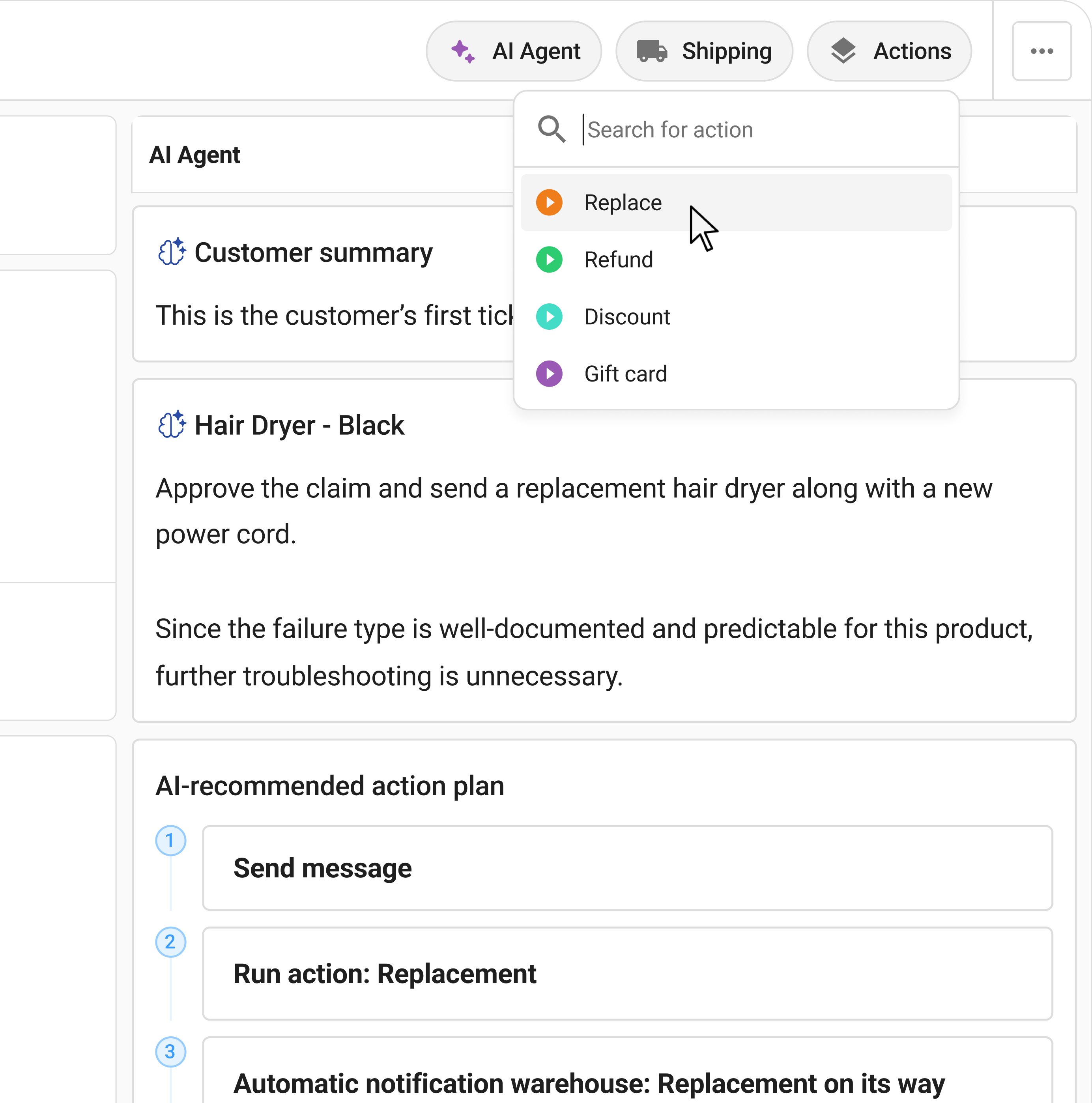
Every one of those lines maps to a field the intake form should capture, which is where a warranty management software setup turns the written promise into an operational rule.
How clear terms change claim outcomes
Tight terms do not just reduce disputes. They reduce headcount. When the warranty names its exclusions and its proof requirement, the intake form can enforce them, and a large share of claims resolve without a human reading them.
That is a finance number, not an ops one. Three fewer agents on claims is salary that leaves the cost line, and tighter terms also shrink the warranty reserve a brand has to carry, the accounting covered in warranty reserve accounting. Skechers reached the same place on volume, structuring warranty claims so the common cases resolve fast, shown in the Skechers case study.
Writing terms the aftersales team can run
The test for any warranty clause is whether the team can operate it without a judgment call. "Reasonable wear" is not operable. "Cosmetic scratches after 90 days" is. The general discipline sits in warranty management best practices, and the same rules power the automations in a claims workflow, so the promise on the page and the logic in the system say the same thing. The registration step that captures purchase data up front makes the proof requirement painless, which is the point of warranty registration. For the wider category picture, the ecommerce warranty overview covers how these pieces fit.
On where Claimlane fits, simple returns flows belong to tools like Loop or AfterShip. Warranty, repair, and spare-parts claims, the ones an express warranty actually triggers, are the complex post-purchase work Claimlane is built for.
Claimlane holds a 4.8 out of 5 rating on G2. External reading on the legal side: the Cornell Legal Information Institute on UCC 2-313 and the FTC guide to federal warranty law.
What to measure
Track claim rate by clause, because a single generous phrase often drives a disproportionate share of claims. Track first-pass resolution, the share of claims the terms let the system settle without a human. Track reserve as a percentage of warranty-covered revenue, since tighter, clearer terms should pull that number down over time and give finance a reason to care about the copy.
Frequently asked questions
What is an express warranty?
What is the difference between an express and an implied warranty?
Can a product claim create an express warranty by accident?
How does clear warranty wording reduce cost?
The promise on the product page and the rule in the claims system should say the same thing. Seeing how the terms run at intake is the fastest way to find the gaps.
Book a demo