Most guides to a white-label returns portal answer one question: can the brand put its own logo, colors, and domain on the returns page. The answer is almost always yes, and that is why the question is close to useless.
A logo on a broken process is still a broken process. The branding layer is the easy ten percent that every vendor ships. What separates portals is what happens underneath: whether one portal can run different returns rules for different brands, route a warranty claim differently from a size-and-fit return, and hand the right case to the right owner.
That distinction barely exists in the buyer's guides that rank for this term, because they are written for a single merchant with a single flow. The buyers who actually need white-label are messier. They run a hybrid B2C and B2B claims operation, a dealer network, or a house of brands, and for them the portal is an operations decision dressed up as a design choice.
What a white-label returns portal actually is
A white-label returns portal is a customer-facing returns and claims page that carries the brand's identity instead of the vendor's. The customer sees the brand, not the software, from the first click to the resolution.
Under the skin, a real white-label portal does more than restyle. It lets a brand define what a customer can submit, what evidence is required, and where each request goes, which is the same backbone behind any customer portal software. The branding is what the customer sees. The rules are what the business runs on.
The question dealers and multi-brand sellers should ask first
Before comparing portals, a buyer should figure out which kind of buyer they are. A single D2C brand selling one catalog has a simple need: a clean, branded page over one returns flow.
A dealer network or a multi-brand retailer has a different need entirely. Each brand or dealer may have its own returns window, its own warranty terms, its own approval owner, and its own split between what the customer handles and what a partner handles. That is the world of dealer warranty management and cross-channel returns, and a portal built for one merchant cannot fake it.
The demo always looks great because the demo is one flow. The buyer's job is to make the vendor show the second brand, the dealer exception, and the B2B claim that does not end in a refund.
The five things to evaluate before buying
The branding box gets ticked in five minutes. These five are the ones that decide whether the portal survives contact with a real multi-brand operation.
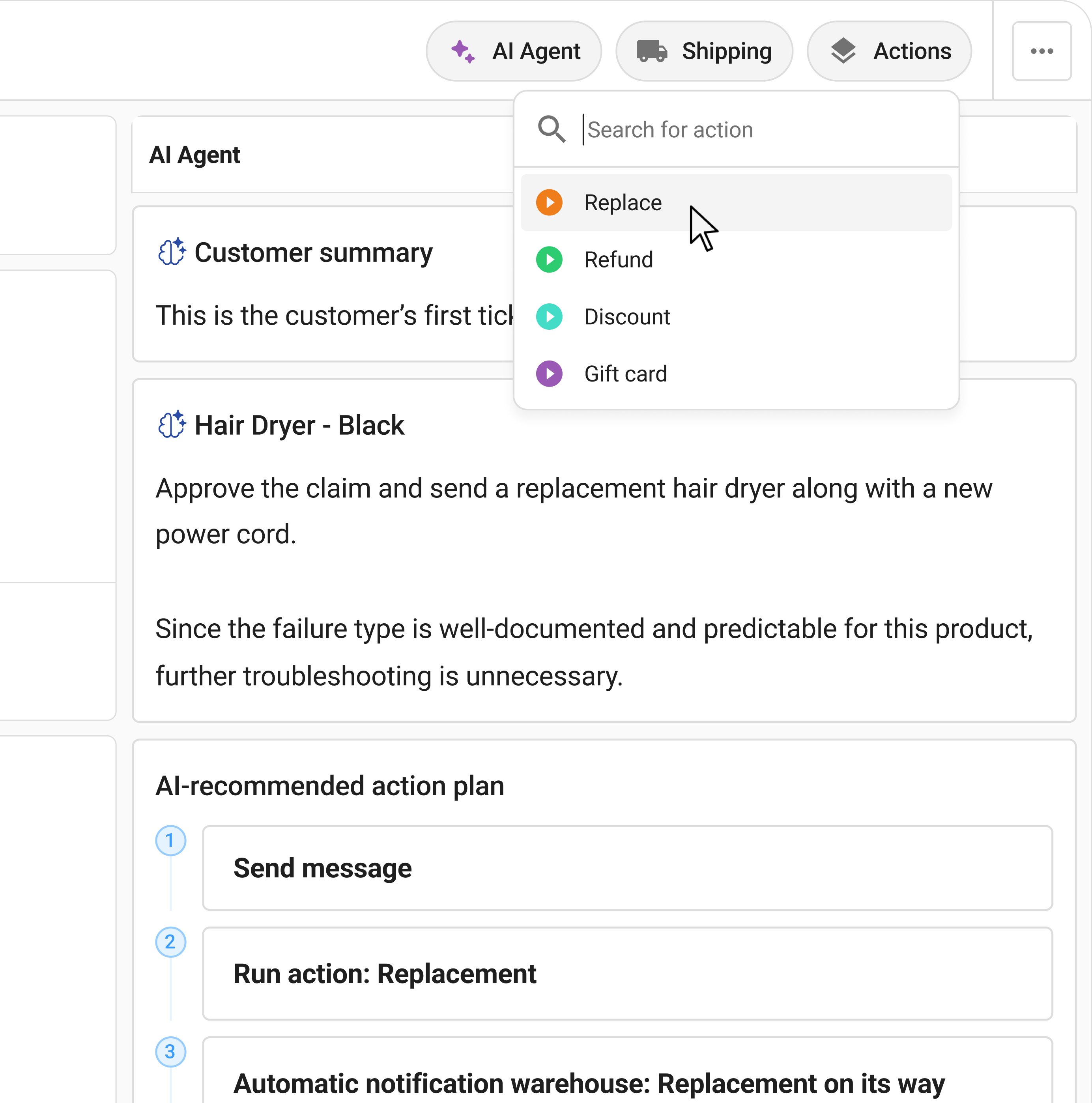
Can each brand or dealer set its own return window, warranty terms, and required evidence in one portal?
Does it handle warranty, repair, replacement, and spare-parts requests, not just refunds and exchanges?
Can a request route to the right team, dealer, or supplier automatically based on brand and reason?
Can it require photos, serial numbers, and order details before a case is created?
Does it write back to the ERP, OMS, and helpdesk each brand already runs?
Notice that only one of the five is about appearance, and it is not even on the list, because appearance is assumed. A buyer comparing tools from a post-purchase software shortlist should score every option against these five before looking at a single screenshot.
One portal, many rule sets: the multi-brand test
Here is the test that breaks most white-label portals. Take two brands in the same group. Brand A sells electronics with a two-year warranty and photo-required claims. Brand B sells apparel with a thirty-day window and no warranty. Can one portal run both, cleanly, without two separate logins and two separate back ends?
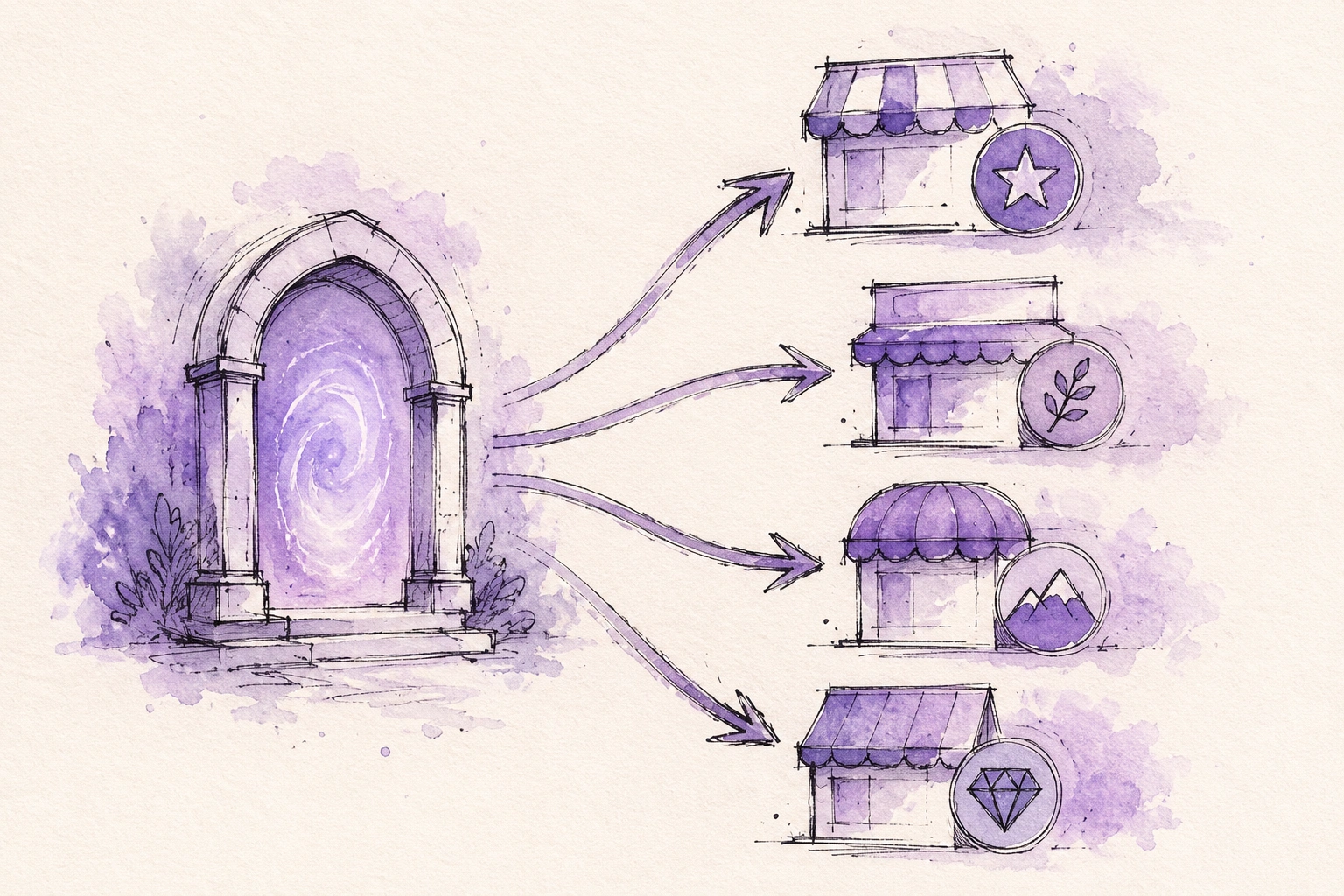
Many portals answer this by spinning up a second instance, which means two systems to maintain and no shared view. A portal built for this runs both brands as configurations of one system, with workflow rules deciding the path per brand and per reason. Eight brands is eight rule sets wearing one skin, not eight portals.
The same logic covers a dealer network. A dealer-submitted claim and a consumer-submitted claim are different flows with different owners, which is the core of B2B warranty claims and the reason B2B returns rarely fit a consumer returns app.
Branding is the easy ten percent, ownership is the hard ninety
The branding layer is real and worth having. Customers trust a returns page that looks like the brand, and a consistent look reduces the where-do-I-go confusion that drives support tickets.
But branding is roughly ten percent of the value. The other ninety is ownership: who approves this claim, who pays for it, who repairs it, and who recovers the cost. In a multi-brand or dealer setup, those answers differ by brand, and a portal that cannot encode them just pushes the mess one step back into a shared inbox, which is the supplier-claims and retailer-claims tangle brands already know too well.
This is where finance should weigh in. A multi-brand operation handling claims by hand across several inboxes carries duplicated FTE cost per brand. Consolidating to one rules-driven portal is where a brand recovers that overhead, and where routing a defect to the right supplier recovers a share of the cost instead of absorbing it across every brand's P&L.
Where a generic portal stops and a claims platform starts
This is the two-tier reality buyers should name out loud. A generic returns app gives a single brand a branded page over a refund-and-exchange flow. For a one-brand D2C store, that is the right tool, and vendors like Narvar and ZigZag do it well, which is why brands compare them in guides to Narvar alternatives and ZigZag Global alternatives.
A multi-brand claims platform sits on the other tier. It runs as the execution and intelligence backbone behind the branded skin, handling complex warranty, repair, and supplier claims across many brands at once. Simple single-brand returns belong with the generic apps. Multi-brand, dealer, and warranty-heavy operations belong on the specialist layer, a split brands can size against reverse logistics software platforms.
The integration question buyers skip
A white-label portal is only as good as what it writes back to. A branded page that creates a ticket nobody can act on in the ERP is theater.
A multi-brand portal has to write a claim back to each brand's ERP, OMS, and helpdesk, or the branding is the only thing that is actually shared.
For a group running NetSuite for one brand, Microsoft Dynamics Business Central for another, and Shopify plus Zendesk across both, the portal has to speak to all of them. That makes integrations the deciding factor, not a footnote, and it is why the integration story matters more than the color picker. F. Engels runs its B2B returns on Claimlane, which is the kind of dealer-and-wholesale flow a single-brand returns app was never built to carry.
White-label buyer or single-flow buyer?
Answer these before you shortlist a portal
▸ More than one brand or sub-brand under one roof?
▸ A dealer, reseller, or wholesale network submitting claims?
▸ Warranty, repair, or spare-parts claims, not just refunds?
▸ Different return rules or warranty terms across brands?
▸ Several ERPs, OMS, or helpdesks behind the brands?
Three or more yes answers means the buyer needs a multi-brand claims platform, not a branded single-flow app.
A buyer with zero or one yes is a single-flow buyer, and a generic branded portal is the honest, cheaper answer. A buyer with three or more is a white-label buyer in the real sense, and the branding is the least of what they need. The same evaluation runs through how to build a claims portal when a brand weighs build versus buy.
What to measure
Track claims handled per FTE across all brands, because the whole point of one portal is removing the duplicated headcount of many inboxes. Track routing accuracy, the share of claims that reach the right owner without a manual hand-off, which is where omnichannel returns usually leak time. Track supplier recovery rate across brands, the finance number that tells a CFO whether the consolidated portal is paying for itself.
The branded page is the part everyone can see, so it is the part everyone shops for. The rules, the routing, and the integrations are the part that decides whether the portal works, and they are invisible in a demo until a buyer asks for the second brand. A white-label returns portal is worth buying. It is just worth buying for the ninety percent nobody puts in the headline. More context sits in Skechers' warranty claims setup and the self-service portal that sits behind the branding.
Claimlane scores 4.8 out of 5 on G2, earned on the multi-brand and dealer claim flows a single-brand returns app cannot run.
If two or more of the readiness answers are yes, the white-label question is already settled, and the only real decision is which portal can run the rules behind the skin. See the self-service portal and put it against the five-point test.
FAQ
What is the difference between a white-label and a custom returns portal?
A white-label portal applies the brand's identity to a configurable returns system the vendor maintains. A custom portal is built from scratch and owned by the brand. White-label gives most of the brand control without the build cost, as long as the underlying rules engine is flexible enough for the brand's claim types.
Can one white-label portal run several brands with different rules?
Only if the platform is built for it. Many portals spin up a separate instance per brand, which means separate back ends and no shared view. A multi-brand platform runs each brand as a configuration of one system, with workflow rules deciding the path per brand, dealer, and reason.
Do dealer networks need a different returns portal than D2C brands?
Usually yes. Dealer and wholesale claims have different owners, approval steps, and outcomes than consumer refunds, so they need routing and B2B logic a consumer returns app does not include. A portal that handles both consumer and dealer flows in one place is the difference for an omnichannel operation.
How important are integrations for a white-label returns portal?
They are the deciding factor for multi-brand sellers. The portal has to write each claim back to the ERP, OMS, and helpdesk that each brand runs, or the branded page just creates tickets no system can act on. Integration depth matters more than the styling options.