Search for footwear reverse logistics and the results split two ways. One half is academic papers modeling shoe-return flows in the abstract. The other half is generic reverse-logistics advice that could apply to any product, plus one big brand's recycling program.
Neither helps a footwear brand on a Monday with three hundred returns to process. Because a returned shoe is not one thing. Some come back because the fit was wrong, some because a sole delaminated, some under warranty for a defect that showed up after a month of wear. Those are three different problems, and most brands run them down the same pipe.
Sorting the mix at intake is where the cost and the recovered value actually sit. This is the operational version of the guide.
Why footwear reverse logistics is its own problem
Footwear returns hard and returns often. Fit is variable across brands and models, so bracketing and size swaps are common, and return rates in footwear sit among the highest in retail alongside apparel. Claimlane's data on average ecommerce return rates puts the category in context, and the return rate formula is the number to watch.
The product also wears in a way that matters. A shoe that fails after real use is a warranty question, not a return question, and the two need different handling. That overlap is what the generic advice misses, and it is why footwear needs its own playbook rather than a copy of the reverse logistics fundamentals.
The footwear return mix
Three reasons cover most of what comes back, and each has a different right answer.
Unworn, resalable. Goal: fast grade, restock or exchange, minimal value loss.
Stitching, glue, finish. Goal: confirm, replace, recover cost from the supplier.
Sole separation, wear failure. Goal: validate against terms, repair or replace.
Why customers send footwear back, and how the reason changes the handling, is covered in why customers return products and the broader fashion returns management view. The point is that a size return and a warranty claim should never share a queue, because their cost, evidence, and disposition are different.
The reverse flow, stage by stage
The flow is intake, grade, disposition, and recovery. Each stage decides how much value survives.
Intake captures the reason and evidence at submission, so a defect arrives with a photo and a warranty claim arrives with proof of purchase. A self-service portal enforces that split at the door. From there the pair is graded, routed to a disposition, and, when a supplier caused the fault, queued for cost recovery. Claimlane's overview of reverse logistics software platforms and reverse logistics companies covers the moving-goods side of the flow.
Grading and disposition
Grading is the whole game. What condition the pair is in decides whether it becomes revenue again or becomes cost.
The classic framework is the five Rs, walked through in Claimlane's guide to the 5 Rs of reverse logistics: return to stock, resell, refurbish, recycle, and the ones that get donated or disposed. For footwear specifically:
- Restock: unworn size returns, back to inventory fast before the season turns.
- Resell as open-box or B-grade: lightly handled pairs into a discounted channel.
- Refurbish and recommerce: clean, re-lace, resole where viable, sell into a resale channel.
- Repair under warranty: fixable defects returned to the customer instead of replaced.
- Recycle or donate: end-of-life pairs routed out responsibly.
Disposition speed matters more in footwear than most categories because of seasonality. A running shoe graded and restocked in days keeps its value; the same pair sitting in a returns pile for a month may miss the season entirely.
Warranty and defect claims inside the flow
This is the stage the academic and generic content skips, and it is where money leaks.
When a sole delaminates after a month, that is a warranty claim, and the defect often belongs to a supplier or factory. Handled as a plain return, the pair gets refunded and the defect cost stays on the brand. Handled as a warranty claim, the brand validates it, chooses repair or replacement, and recovers the cost from the supplier who made the bad batch. Claimlane's defective product returns and repair vs replace guides cover the decision, and forward-to-supplier automates the recovery. For a brand seeing the same sole failure across a model, warranty analytics flags the batch before the claims pile up.
Skechers runs its warranty claims through Claimlane, handling footwear defect and warranty cases in a structured flow rather than treating every returned pair as a plain refund.
Skechers — read the case study
Repair-first and spare parts
A lot of footwear failures are fixable, and fixing beats replacing on both cost and sustainability.
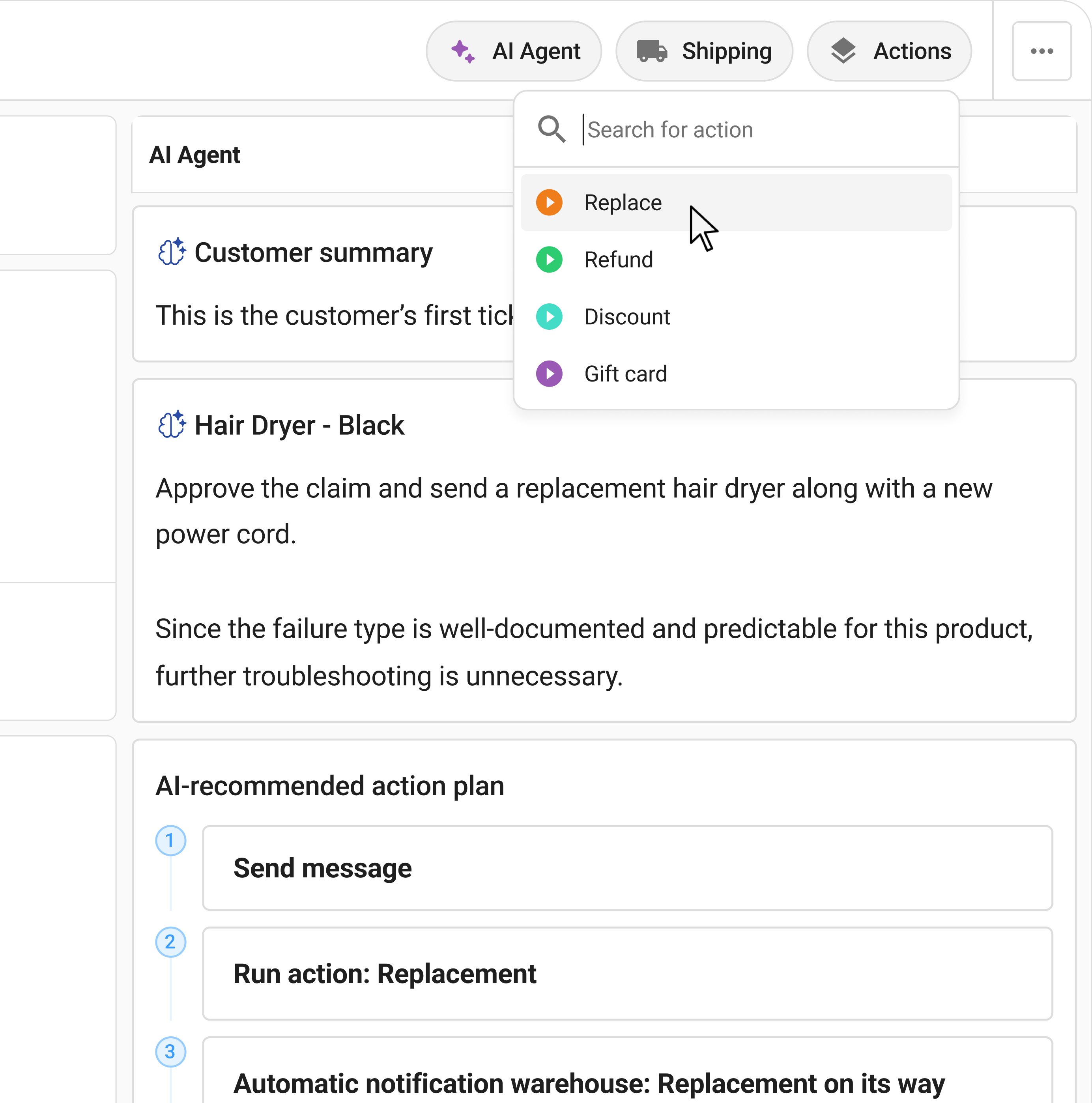
A re-lace, a resole, or a new insole can return a pair to the customer for a fraction of a replacement. That needs a spare-parts and repair capability inside the flow, not bolted on after. Claimlane's notes on spare parts and repair-first handling connect here, and AI claims triage at intake can route a repairable defect to the repair lane automatically. Claimlane's AI Agent, the first AI agent purpose-built for warranty claims and returns, reviews the photo, applies the warranty rule, and recommends repair, replace, or recover, with a human kept in the loop on high-value pairs and an audit trail on every call.
Sustainability and recommerce
Repair, refurbish, and resale are cost decisions and compliance decisions at once.
EU rules are tightening on textile and footwear waste, from textile EPR on returns to the ban on destroying unsold goods. Refurbishment and recommerce turn a compliance cost into a recovery channel, the theme of recommerce in 2026 and sustainable returns. Keeping a pair in use also protects customer lifetime value, since a repaired shoe keeps a customer that a slow refund would lose.
Where the flow breaks and what fixes it
The footwear flow breaks when the three return reasons share one undifferentiated queue and the data scatters.
Without structured intake, a warranty defect looks identical to a size return until an agent opens it, so both get the slow, expensive path and supplier recovery never happens. A single record fixes it: reason and evidence captured at intake, disposition rules in the claims workflow, and the whole flow connected to the stack, order data from Shopify, inventory and the 3PL for restock, carriers for the physical move. Claimlane runs as the execution layer across those systems.
Building the flow vs buying reverse-logistics software
Enterprise reverse-logistics platforms handle the moving-goods and warehouse side well. Footwear brands weighing them can read ReverseLogix alternatives and the wider best reverse logistics software for 2026.
The split is simple. For deep enterprise reverse logistics tied to a WMS, a logistics platform fits. For the claim side of the flow, where a footwear defect needs validating against a warranty term, evidence reviewed, and cost recovered from a supplier, that is the Claimlane lane. Most footwear brands need both, running side by side.
A readiness check and what to measure
A structured footwear reverse flow is worth building when volume and the return mix justify it.
- High return volume with a real defect and warranty share, not just size swaps
- Repair or resale options worth capturing value from
- Supplier or factory exposure on recurring defects
- Seasonal inventory where restock speed protects margin
- Sustainability or EPR obligations on returned and unsold goods
Measure the mix and the recovery. Track return reason split (size vs defect vs warranty), disposition mix (restock, resell, refurbish, repair, recycle), and supplier recovery rate on defect claims. The wider set sits in returns and warranty KPIs.
Claimlane holds a 4.8 out of 5 rating on G2.
A returned pair of shoes is a fork in the road, not a cost line. For the fuller picture of how brands turn returns into recovered value, read recommerce in 2026 next, then look at where the defect share of returns is quietly ending up on the brand instead of the supplier.
Frequently asked questions
What is reverse logistics in footwear?
It is the flow that moves footwear back from customers and decides its next step: restocking unworn size returns, validating and repairing or replacing defects and warranty claims, and refurbishing, reselling, recycling, or donating end-of-life pairs. It is fundamentally a grading-and-disposition problem.
Why do footwear brands need a separate returns process?
Because footwear comes back for three different reasons: size and fit, defect on arrival, and warranty failure after use. Each needs different evidence, handling, and disposition, and running them through one queue means defect cost that belongs to a supplier ends up on the brand.
How can footwear brands recover value from returns?
By grading fast and matching each pair to the right disposition: restock unworn returns before the season turns, resell or refurbish lightly used pairs, repair fixable defects, and recover supplier credit on manufacturing faults. Speed and accurate sorting at intake protect the most value.
How does sustainability regulation affect footwear returns?
EU rules on textile EPR and the ban on destroying unsold goods push footwear brands toward repair, refurbishment, and recommerce over disposal. Those paths turn a compliance cost into a recovery channel while keeping products in use.