.webp)
Most textile EPR coverage gets the deadline right and the cost driver wrong. The write-ups walk through the Waste Framework Directive, the fees, the registration, and they pitch it all at the sustainability team.
The number that actually moves under EPR is the return rate. Here is why. A returned garment that cannot be resold is still a textile the brand placed on the market. So the brand pays the EPR fee on it, and gets zero revenue back. The bin becomes the most expensive disposition there is.
Fashion already runs return rates of 20 to 30% online, higher in categories like apparel. Layer an EPR fee on the share of those returns that never resell, and the cost stops being a sustainability line and becomes a margin line. The brands that model this off their returns data will price and design around it. The ones treating EPR as a report will find the bill in their EBITDA.
Textile EPR, in plain terms
The revised EU Waste Framework Directive, in force since 16 October 2025, creates an EU-wide extended producer responsibility obligation for textiles and footwear for the first time. Producers pay fees that fund collection, sorting, reuse, and recycling of textile waste, and those fees are eco-modulated by durability, recyclability, and recycled content.
In plain terms, every brand placing clothing, footwear, accessories, or home textiles on the EU market will pay per item, and pay less per item if the item is built to last and easy to recycle.
The numbers that define the deadline
The timeline gives brands a narrow window to get their data in order before fees start.
The rule reaches non-EU brands selling online to EU customers, and several member states, Spain among the early movers, are building schemes ahead of the EU deadline. A brand selling across multiple markets registers as a textile producer in each one, which is the same multi-market complexity that already makes cross-border returns hard.
Why a returned garment is taxed twice under EPR
The double hit is the part the policy explainers skip. A garment generates an EPR fee when it is placed on the market. If it sells and stays sold, the fee is just a cost of doing business.
If it comes back and cannot be resold, the brand has now paid to make it, paid the EPR fee on it, and lost the sale. Three costs, one item, zero revenue. That is what taxed twice means in practice, and it is why return rate and resale rate suddenly belong in the EPR conversation.
The brands that already track why customers return products and run returns-adjusted profitability can see this coming. The ones that only count gross returns cannot.
Eco-modulation rewards the data you already collect
Eco-modulation is the lever, and it runs on exactly the data a returns operation generates. Fees drop for products that are durable, repairable, and recyclable. Returns data is where durability and quality problems show up first.
When a SKU comes back repeatedly for seam failure, pilling, or sizing, that is a durability signal and a fee signal at the same time. A brand capturing structured return reason codes is collecting the evidence that both fixes the product and lowers the eco-modulated fee on the next production run.
This is the same loop that predictive returns analytics already runs for margin. EPR just adds a regulatory reason to act on it.
The returns-data model EPR actually rewards
The difference between a brand that pays full EPR freight and one that minimises it comes down to what its returns data can do.
The finance number that lands: cutting the unresellable share of returns is a direct EPR saving on top of the recovered product value. A brand that lifts resale on returned items also lifts customer lifetime value after returns. Konges Sløjd improved data quality and automation on its retailer claims with Claimlane, and clean data is the precondition for every EPR calculation, because a fee model built on messy returns data is a guess.
Turning return reasons into fee reduction
The operational move is to make every return produce a clean reason and a disposition, so the data is good enough to act on and the item avoids the bin.
That starts with a self-service portal that forces a real reason and condition photos at submission instead of a vague "didn't fit." From there, workflow rules route a resellable item to restock, a lightly flawed one to repair, and a worn one to recommerce or recycling, and analytics turns the reason data into the durability picture eco-modulation rewards.
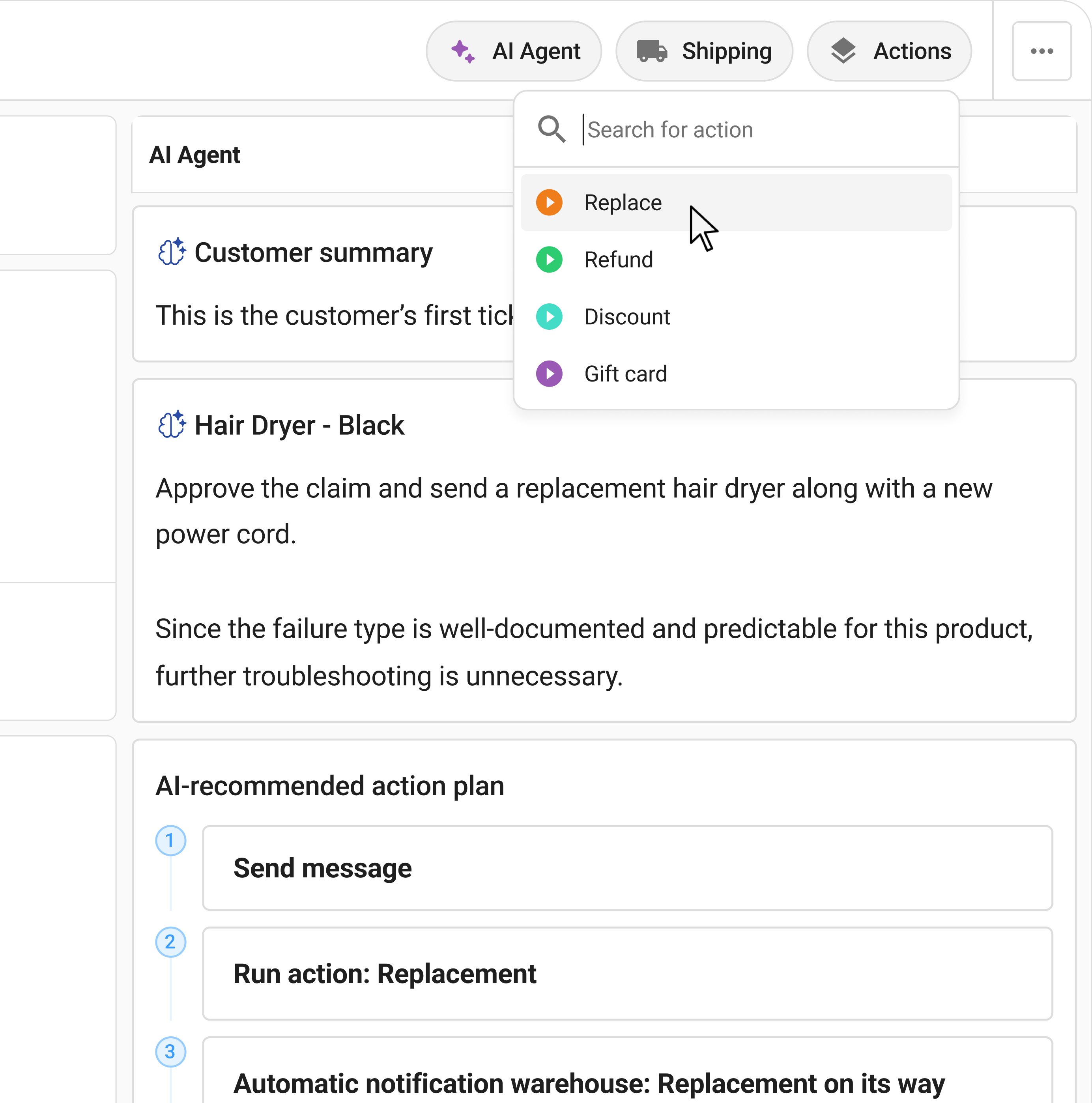
At fashion volume, the disposition decision has to be fast. Claimlane's AI Agent, the first AI agent purpose-built for warranty claims and returns, reviews return photos, applies the brand's rules, and recommends a disposition so resellable stock does not sit in a queue degrading. The guardrails keep it trustworthy: humans stay in the loop on edge cases, the rules are configurable, and every disposition leaves an audit trail, which matters when the disposition feeds a regulated fee calculation. This builds on AI returns disposition.
Generic returns app or claims platform: the two-tier reality
A Shopify returns app can process a refund and an exchange cleanly, and for a simple size-and-fit return that is the right tool. Loop Returns and its peers own that lane, and brands comparing them can read Loop Returns alternatives.
EPR asks for more than refunds. It asks for reason-level data, disposition logic, resale and repair routing, and reporting that holds up to an auditor. That is the specialist layer, the execution and intelligence backbone that runs alongside the generic post-purchase stack rather than under it. Simple size and fit returns go to the returns app. Durability, disposition, and EPR-grade data go to the specialist platform. Brands sizing the market often start with the best returns analytics software and fashion returns management.
Are you ready to run EPR off returns data?
What to measure
Track resale rate on returns, because every point of lift is product value recovered and an EPR fee avoided. Track the binned share of returns, which is the pure-cost disposition EPR makes more expensive. Track return reasons by SKU, the durability signal that both fixes the product and lowers the eco-modulated fee on the next run.
Textile EPR is being sold to fashion as a compliance burden. For brands with clean returns data it is closer to a discount they can earn. The fee is variable, the variable is resale and durability, and both live in the returns operation. More context sits in sustainable returns and recommerce in 2026.
Claimlane scores 4.8 out of 5 on G2, earned on the kind of clean, auditable returns data that an EPR fee model depends on.
Konges Sløjd cleaned up its retailer claims data and automated the handling with Claimlane. The same data foundation is what makes an EPR fee a number a brand can lower, not just a bill it pays. See how brands run cleaner returns data.