
Reverse logistics gets messy when a product starts moving backwards.
A customer sends something back. A warehouse needs to receive it. Someone has to decide whether it should be refunded, repaired, restocked, resold, recycled, donated, returned to a supplier, or written off.
That decision can either protect margin or quietly burn it.
For retailers and brands, reverse logistics software is no longer just about return labels. It needs to connect customer service, warehouses, suppliers, finance, ecommerce, and operations around the same returned product.
That’s why the best reverse logistics software in 2026 depends on what kind of return flow the business actually has.
Some platforms are built for enterprise disposition and resale. Some are better for reducing returns before they happen. Some focus on ecommerce return portals. Claimlane fits naturally for brands and retailers where reverse logistics includes warranty claims, repairs, replacements, supplier claims, and customer communication.
TL;DR: Best Reverse Logistics Software by Use Case
The best reverse logistics software depends on the return problem.
If the biggest issue is resale and disposition, a platform like Optoro can make sense. If the business needs enterprise return routing, ReverseLogix is a strong fit. If the goal is reducing preventable returns, Newmine fits that angle.
If the hard part is managing warranty claims, repairs, supplier claims, and customer communication in one workflow, Claimlane is the best fit.
Reverse Logistics Software Comparison Table
A lot of reverse logistics platforms sound similar.
Most promise better returns handling, lower costs, improved visibility, and faster processing. The difference is where each platform sits in the reverse logistics flow.
Some tools begin at the customer request. Some begin at the warehouse. Some begin after the product is received and needs a resale, refurb, recycle, or supplier decision.
That distinction matters.
Why Reverse Logistics Software Matters in 2026
Reverse logistics used to sit behind the scenes.
A returned product arrived at a warehouse, someone processed it, and the business moved on. That approach doesn’t work well anymore.
Returns are too expensive. Customers expect fast updates. Warehouses need clearer instructions. Finance teams need cleaner outcomes. Suppliers need evidence before accepting a claim. Operations teams need data on which products keep coming back and why.
The return is now a business signal.
It can show a product defect, a supplier issue, poor packaging, misleading product information, sizing problems, delivery damage, warranty abuse, or a repair opportunity.
The right reverse logistics software helps teams act on that signal instead of losing it inside emails, spreadsheets, and disconnected systems.
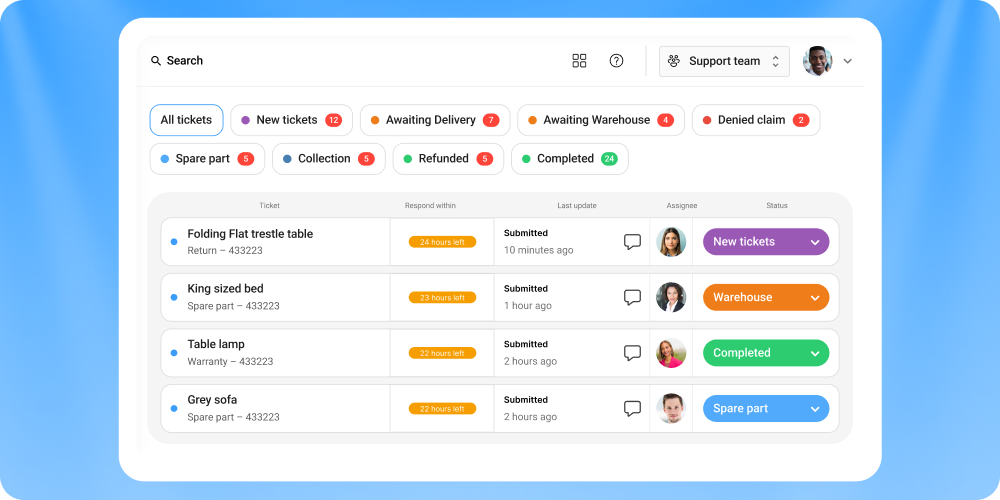
1. Claimlane
Best for: Retailers and brands where reverse logistics includes warranty claims, repairs, replacements, supplier claims, and customer communication.
Claimlane fits the part of reverse logistics that starts before the product reaches the warehouse.
That’s important because many reverse logistics problems begin at the claim intake stage. The customer submits too little information. The agent asks for photos. The supplier wants a video. The warehouse doesn’t know whether to inspect, repair, restock, or scrap the product. Finance waits for the right outcome.
Claimlane helps structure that work from the first customer touchpoint.
Instead of receiving vague emails like “my product is broken,” teams can collect the right information upfront through a branded self-service portal. That can include photos, videos, order details, serial numbers, issue categories, product-specific questions, and preferred outcomes.
From there, teams can route the case to the right next step.
That could be a refund, replacement, repair, spare part, supplier review, warehouse inspection, or rejection.
Why Claimlane stands out
Most reverse logistics software starts with the returned item.
Claimlane starts with the case.
That makes it a natural fit for businesses where the return is tied to a warranty claim, repair decision, product issue, or supplier responsibility.
A faulty stroller, broken appliance, damaged furniture item, failed outdoor product, or missing spare part rarely follows a simple return path. The team needs to know what happened, who should pay, what proof is required, and what outcome makes sense.
Claimlane gives that process structure.
It helps teams avoid the messy middle where customer service, logistics, suppliers, and finance all work from different systems.
Key features
Claimlane supports:
- Customer self-service portals
- Retailer and B2B claim portals
- Warranty claim handling
- Product-specific claim forms
- Photo and video collection
- Serial number collection
- Repair workflows
- Spare part workflows
- Replacement workflows
- Supplier claim forwarding
- Internal notes and team handovers
- Status updates to customers
- Analytics on claim reasons, outcomes, and products
Claimlane also includes Claimlane's AI Agent, the first AI agent purpose-built for warranty claims and returns.
The AI Agent can help review claim details, customer-submitted images, and videos, then suggest the right next step based on the company’s rules.
Pros
- Strong fit for warranty-heavy reverse logistics
- Built for customer service, operations, suppliers, and finance
- Good for B2B and B2C claim flows
- Helps collect documentation before products move backwards
- Supports repairs, replacements, spare parts, and supplier claims
- Gives teams better data on product issues and outcomes
Cons
- Not a pure warehouse disposition platform
- Not the best fit for businesses that only need a basic return label tool
- Works best when the business wants structure across the full aftersales process
Best fit
Claimlane is best for retailers and brands selling products where returns are often tied to warranty claims, product faults, repairs, suppliers, or replacement decisions.
It is especially relevant for furniture, baby products, electronics, appliances, outdoor gear, sporting goods, tools, kitchenware, and other categories where a returned product needs more than a refund decision.

2. Optoro
Best for: Large retailers and 3PLs focused on returns processing, disposition, resale, and inventory recovery.
Optoro is one of the better-known names in reverse logistics software.
Its core strength is what happens after products come back. Retailers need to decide whether returned items should go back to stock, be resold, moved through recommerce, liquidated, donated, recycled, or handled another way.
That decision has a direct impact on margin.
If the item sits too long, loses value, or goes to the wrong channel, the return becomes more expensive. Optoro is built to help retailers process returned and excess inventory and route items to better outcomes.
Pros
- Strong fit for returned inventory recovery
- Useful for large-scale retail and 3PL operations
- Good focus on disposition and resale paths
- Relevant for businesses with high return volume
Cons
- Less focused on warranty claim intake
- Less focused on customer service workflows
- May be more than smaller brands need
- Not primarily built around repairs, spare parts, or supplier claim collection
Best fit
Optoro is a good fit for large retailers, 3PLs, and enterprise teams where the main challenge is processing returned inventory and recovering as much value as possible.
It is less of a fit if the hardest part is collecting claim evidence, managing warranty decisions, or coordinating supplier reimbursement before the item comes back.
3. ReverseLogix
Best for: Enterprise reverse logistics and returns operations.
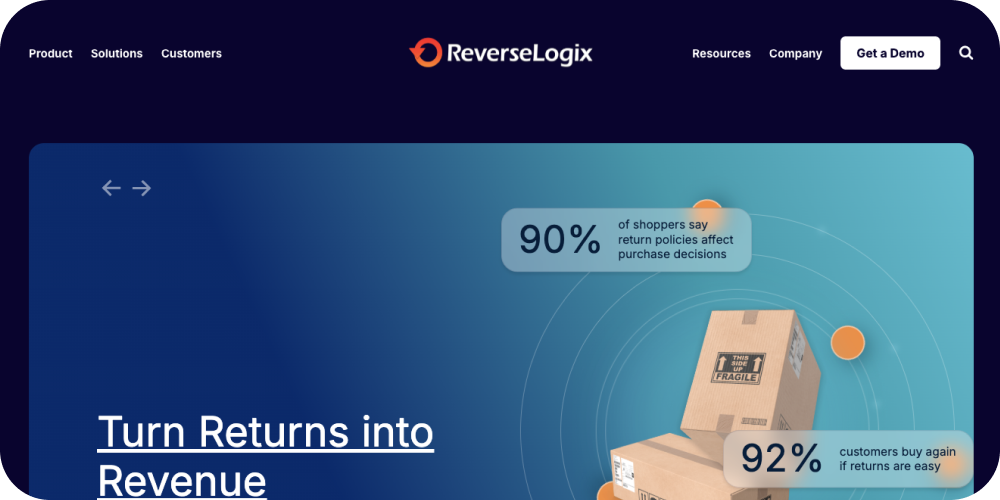
ReverseLogix is built for companies that need an end-to-end returns management system.
It can support customer return initiation, return routing, rules, warehouse workflows, repair routing, and operational visibility. That makes it a strong option for larger businesses with more complex returns operations.
ReverseLogix is especially relevant when multiple return types, locations, teams, and workflows need to be managed in one system.
Pros
- Strong enterprise fit
- Supports complex return routing
- Can handle B2B, B2C, and hybrid return environments
- Useful for large operations teams
- Can cover repair routing and return workflows
Cons
- Can be heavier than needed for smaller brands
- May require more setup and internal ownership
- Less focused on lightweight ecommerce return flows
- May not be the best fit for brands that mainly need warranty claim intake and supplier claim structure
Best fit
ReverseLogix is a strong fit for enterprises that need a broad returns management system across multiple teams, locations, and return types.
For businesses with heavy operational requirements, it can provide a central return operations layer.

4. Newmine
Best for: Retailers focused on reducing returns before they happen.
Newmine takes a different angle from many reverse logistics platforms.
Instead of focusing mainly on processing returns after they happen, Newmine focuses on returns intelligence. Its Chief Returns Officer platform is built to help retailers analyze return patterns, identify root causes, and reduce preventable returns.
That can be valuable because the cheapest return is often the one that never happens.
For example, return data may show that a specific product has unclear sizing, misleading product content, recurring quality issues, supplier problems, or packaging defects.
If the business can identify those patterns early, it can reduce avoidable return volume.
Pros
- Strong focus on returns analytics
- Useful for return reduction programs
- Helps identify product, supplier, and customer experience patterns
- Good fit for enterprise retailers with large datasets
Cons
- Not primarily a return execution platform
- Not a customer-facing claim portal
- Does not replace warranty claim handling or repair workflows
- Works best when the business already has enough return data to analyze
Best fit
Newmine is a good fit for retailers that want to reduce returns through better intelligence.
It is less of a fit for teams that mainly need to manage day-to-day reverse logistics execution, warranty claims, repairs, replacements, or supplier communication.
5. Inmar Supply Chain Solutions
Best for: Large-scale reverse logistics operations and returns processing.
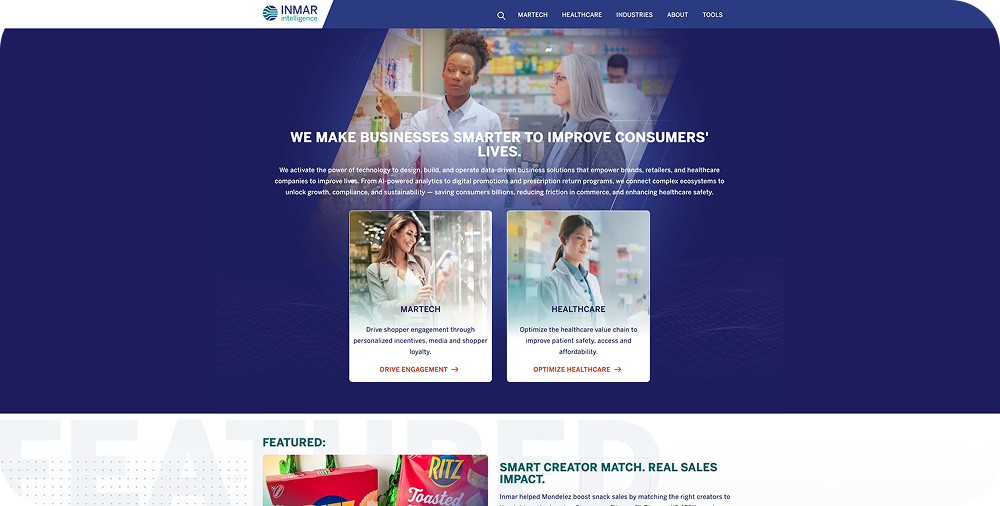
Inmar Supply Chain Solutions has long been connected with reverse logistics, returns processing, product remarketing, recalls, and supply chain services.
In 2025, DHL Supply Chain acquired Inmar Supply Chain Solutions, strengthening DHL’s reverse logistics presence in North America.
For retailers with large-scale returns operations, this type of solution can be relevant when software, facilities, processing, and logistics services need to work together.
Pros
- Strong reverse logistics operations background
- Relevant for large retailers and consumer goods businesses
- Supports large-scale returns processing
- Can fit businesses that need operational services, not just software
Cons
- Not a lightweight software-only option
- May be less relevant for smaller brands
- Less focused on customer claim intake as the main starting point
- Could be too broad if the business only needs warranty and returns workflows
Best fit
Inmar Supply Chain Solutions is a fit for businesses that need large-scale reverse logistics operations and service capacity.
It is especially relevant when the return problem is tied to physical processing, remarketing, recalls, and supply chain execution.
6. AfterShip Returns
Best for: Ecommerce teams that need a customer-facing returns and exchanges portal.
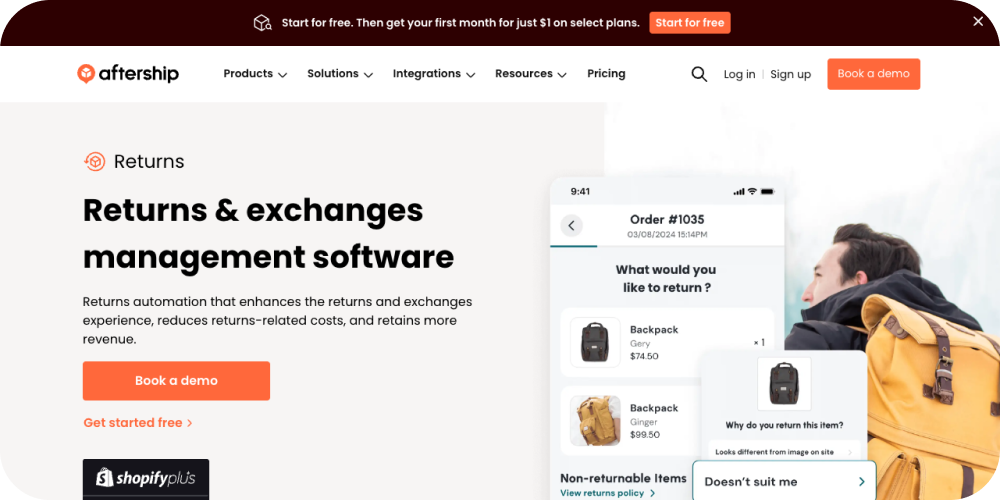
AfterShip Returns is a strong fit for ecommerce brands that want a branded returns experience, return status updates, exchange options, and return shipment tracking.
It works well when the main goal is to make the customer-facing return flow easier.
For many Shopify, WooCommerce, BigCommerce, and ecommerce teams, that can be enough. The team gets a return portal, automated rules, notifications, and return visibility.
Pros
- Strong customer-facing returns experience
- Useful for ecommerce returns and exchanges
- Supports status notifications
- Good fit for brands that want a faster returns setup
- Works across several ecommerce setups
Cons
- Warranty workflows are more basic
- Supplier claims are not the main focus
- Less suited for repair-heavy reverse logistics
- Not built for complex product fault handling
Best fit
AfterShip Returns is best for ecommerce businesses where reverse logistics mainly means customer returns, exchanges, labels, and tracking.
It is less suited for businesses where reverse logistics includes warranty claims, repairs, spare parts, supplier reimbursement, or multi-team decision-making.
7. Returnly
Best for: Legacy context, not an active 2026 pick.
Returnly was once a well-known returns software platform, especially in ecommerce.
However, Returnly is not an active reverse logistics software pick for 2026 because the product shut down in 2023. Merchants that previously used Returnly were directed toward other options, including Loop Returns through a partnership with Affirm.
That makes Returnly useful to mention for historical context, but not as a current platform to evaluate.
Pros
- Previously known in ecommerce returns
- Familiar name in older SERP results and comparison pages
Cons
- Not active as a 2026 software choice
- Not relevant for new reverse logistics software selection
- Businesses should evaluate current alternatives instead
Best fit
Returnly should not be treated as a current buying option.
If it appears in search results, buyers should check whether the article is outdated and compare active platforms instead.
How to Choose the Right Reverse Logistics Software
Choosing reverse logistics software starts with identifying where the process breaks.
Some businesses don’t have a returns portal problem. They have a warehouse decision problem.
Some don’t have a warehouse problem. They have a claim intake problem.
Some don’t have an intake problem. They have a product data problem.
The best software depends on the layer that needs fixing.
1. If the problem is customer claim intake
Choose a platform that collects the right information before the product comes back.
This matters for warranty claims, damaged items, missing parts, repairs, and high-ticket products.
The system should collect photos, videos, order information, serial numbers, product issue details, and supplier-specific evidence upfront.
Claimlane is a strong fit for this type of reverse logistics work.
2. If the problem is warehouse processing
Choose a platform focused on receiving, grading, routing, and disposition.
This matters when large volumes of returned products need to move quickly through a warehouse or 3PL process.
Optoro and ReverseLogix are stronger fits for this layer.
3. If the problem is return reduction
Choose a platform that helps analyze why products are coming back.
This matters when the business wants to reduce preventable returns caused by product content, sizing, defects, supplier issues, or customer expectations.
Newmine fits this angle.
4. If the problem is ecommerce return experience
Choose a platform that makes returns easier for customers.
This matters when the goal is a branded portal, return labels, exchanges, notifications, and a better customer-facing flow.
AfterShip Returns fits this use case.
5. If the problem is supplier recovery
Choose a platform that can track supplier responsibility.
Retailers often lose money because faulty products are refunded to customers, but the supplier recovery process happens later in emails.
A good workflow should connect the customer claim, evidence, product issue, supplier response, and final financial outcome.
Claimlane fits this well for brands and retailers with supplier-heavy warranty claims.
Frequently Asked Questions
Final Thoughts
Reverse logistics software should match the real return problem.
A business focused on resale and disposition needs a different platform than a business trying to reduce returns. A warehouse-heavy enterprise needs something different from a brand managing warranty claims, repairs, and supplier responsibility.
For retailers and brands where reverse logistics starts with customer claims, Claimlane is a strong fit.
It helps teams collect the right information upfront, manage warranty and return cases, coordinate suppliers, and keep the aftersales workflow in one place.
That matters because reverse logistics is no longer just about getting products back.
It’s about making the right decision once they come back.
.webp)