
Picture one jacket. A customer bought it, wore it once, returned it just inside the window with a faint mark on the cuff. It is not resellable as new. For years the quiet answer was the bin, and nobody outside the warehouse ever knew.
From 19 July 2026, for large companies, that quiet answer is illegal. The jacket cannot just disappear. It has to be routed somewhere legal, and the decision has to be documented well enough to show a regulator.
Most coverage of the EU destruction ban talks about warehouses full of unsold stock. That flow matters, but it has an owner and a process. The returned item usually does not. It lands in a grey zone between the warehouse, the help desk, and the 3PL, and the bin was always the quiet option. The destruction ban turns that grey zone into the brand's biggest exposure, and the returns operation is where it gets fixed.
The destruction ban, in plain terms
The ban sits inside the EU Ecodesign for Sustainable Products Regulation (ESPR). It prohibits the destruction of unsold consumer products, starting with apparel, footwear, and clothing accessories, and it explicitly reaches returned goods, not just never-sold stock.
Destruction is only allowed in narrow cases, such as a genuine safety risk or damage beyond use, and even then it has to be documented and justified. The permitted alternatives sit higher up the waste hierarchy: reuse or donation, repair or refurbishment, and remanufacturing.
Who it hits and when
The phase-in is by company size, and the first wave is the large brands that move the most volume.
A company counts as large when it passes at least two of three thresholds: more than 250 employees, more than fifty million euros in revenue, or more than twenty-five million euros in total assets. Brands also have to report publicly on the quantity, weight, and reasons for anything they do discard. That disclosure is what makes sloppy returns disposition visible, and it is why fashion returns management is suddenly a compliance topic.
The returned item is the real exposure, not the overstock
Overstock is a planning problem with a clear owner. A returned item is an operational orphan, and that is exactly why it is the bigger risk under this ban.
Returns arrive one at a time, in unknown condition, scattered across channels. A worn item, a damaged item, a final-sale dispute, a defective product return, each needs a disposition decision, and in most brands that decision is made fast and informally at the edge of the warehouse. The bin was the default because it was the easy default.
The ban removes the easy default. Now the jacket has to go somewhere, and now somewhere is on the record. Brands that already track why customers return products with structured reason codes have a head start, because the reason often determines the legal exit.
Destruction now needs a paper trail, and that's a returns job
The part that catches brands out is not the ban itself. It is the documentation. Destruction is still allowed in defined cases, but only with recorded justification, and from 2027 the reporting has to follow a standard format.
A justification you can show is now part of the cost of throwing something away. That means the decision, the reason, the condition evidence, and the disposition all have to live in one record per item. That is a returns-system job, not a spreadsheet job, and it is the same evidence discipline that underpins returns analytics. A brand that cannot produce the paper trail is a brand that cannot legally destroy anything, which pushes every borderline item back up the hierarchy whether the brand planned for it or not.
The only legal exits all run through disposition
The waste hierarchy is not abstract here. It is a routing decision the returns operation has to make on every item that is not resellable as new.
The finance number that lands: the bin is the most expensive disposition because it recovers nothing and, under this ban, now carries a documentation and reporting cost on top. Routing a returned item to recommerce or repair recovers a share of its value and lifts customer lifetime value after returns. Luksusbaby runs fast, reliable claims in baby retail on Claimlane, and that speed is what keeps a returned item in resellable condition instead of degrading in a queue until the bin becomes the only honest option.
Building compliant disposition into the returns flow
The operational fix is to make disposition a decision the system makes and records, not a judgment call at the warehouse edge.
That starts with a self-service portal that captures condition and reason at intake, so the item arrives with the data the disposition decision needs. Workflow rules then route resellable to restock, lightly flawed to repair, worn to recommerce or donation, and only the genuinely unusable to documented destruction. Analytics turns the per-item disposition record into the reporting the ban demands.
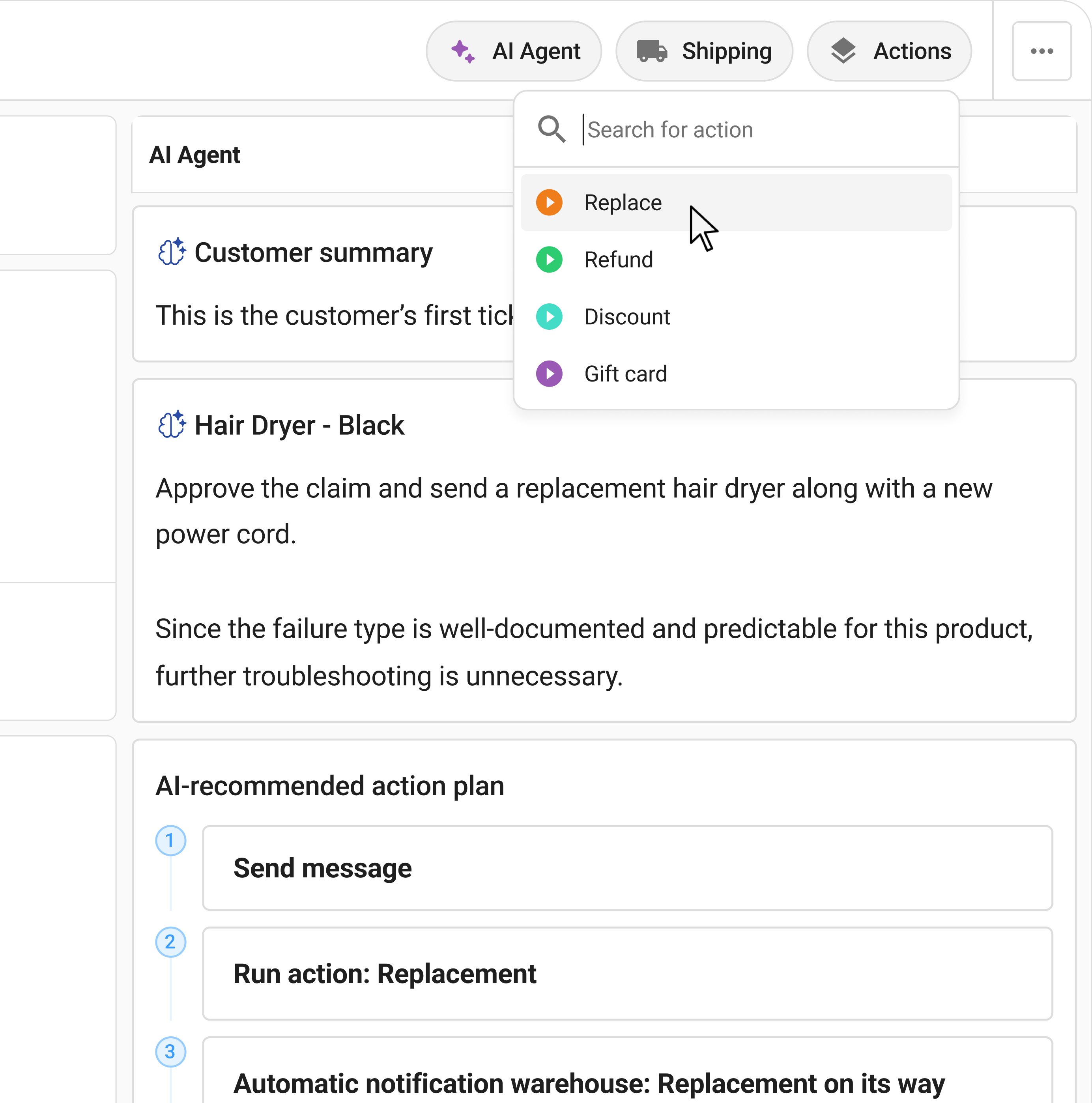
At scale, the routing has to be fast and consistent. Claimlane's AI Agent, the first AI agent purpose-built for warranty claims and returns, reviews the condition photos and recommends a disposition against the brand's rules, so resellable items do not get binned by a tired hand at five o'clock. The guardrails matter for a regulated decision: humans stay in the loop on edge cases, the rules are configurable, and every disposition is logged, which is the audit trail the documentation duty requires. This extends AI returns disposition.
Generic returns app or claims platform: the two-tier reality
A standard returns app processes the refund and the exchange, which is the right job for a clean size-and-fit return. It does not make a disposition decision, route up a waste hierarchy, or hold a per-item justification record.
That is the two-tier line. Simple returns belong with the generic post-purchase apps. Condition-based disposition, documented destruction, and compliance reporting belong on a specialist platform running as the execution backbone alongside them. Brands sizing the field can read sustainable returns and the best returns analytics software.
Are you ready to prove what happened to every return?
What to measure
Track the binned share of returns, the disposition the ban targets and the one that recovers nothing. Track recovery rate by route, how much value reuse, repair, and recommerce pull back. Track documentation completeness, the share of disposed items with a recorded justification, because that number is the difference between compliant and exposed.
Back to the jacket. It still has a mark on the cuff, and it still is not resellable as new. The difference in July 2026 is that its path now has to be a decision the brand can defend, not a bin nobody logged. The brands that wire that decision into returns will recover value and report by query. The ones that wait will be documenting destruction they are no longer allowed to do. More context sits in the environmental impact of warranty claims and store credit vs refund.
Claimlane scores 4.8 out of 5 on G2, on the kind of per-item returns record a destruction ban now makes mandatory.
The jacket has to go somewhere on the record now. The brands that decide where, by rule, before July 2026 keep the value and the proof. Book a demo and map the disposition flow.