A returned blood-pressure monitor, infusion pump, or hearing device arrives looking like any other parcel. So most brands run it through the same RMA tool that handles a returned phone case: log it, inspect it, refund or replace, restock or scrap.
That reflex is the mistake. A medical device return is not a return. It is a regulated material flow, and the part that comes back is also evidence. It carries a unique device identifier that has to stay attached, a status that has to be controlled so a used unit cannot drift back into sellable stock, and a story about why it failed that quality and the regulator both want.
The guides that rank for this term split into two camps that miss the same point. The generic RMA explainers describe receive, inspect, disposition and never mention regulation. The medical reverse-logistics overviews stay abstract. Neither connects the regulated flow to the returns system a brand actually runs, which is the gap that turns a controlled process into a compliance risk. A starting frame sits in what an RMA is.
Regulated RMA, in plain terms
A regulated RMA is the controlled process of authorizing, receiving, inspecting, and dispositioning a returned device while preserving its identity, status, and traceability the entire way. In medical, that means the unique device identifier follows the unit from the moment it is returned to its final disposition, and every step is recorded.
In plain terms, the system cannot just know that a unit came back. It has to know which exact unit, in what condition, why, and what happened to it, because a regulator or an auditor can ask, and a missing link is a finding. That is a different bar than the RMA software market is usually built for.
What makes a medical return different
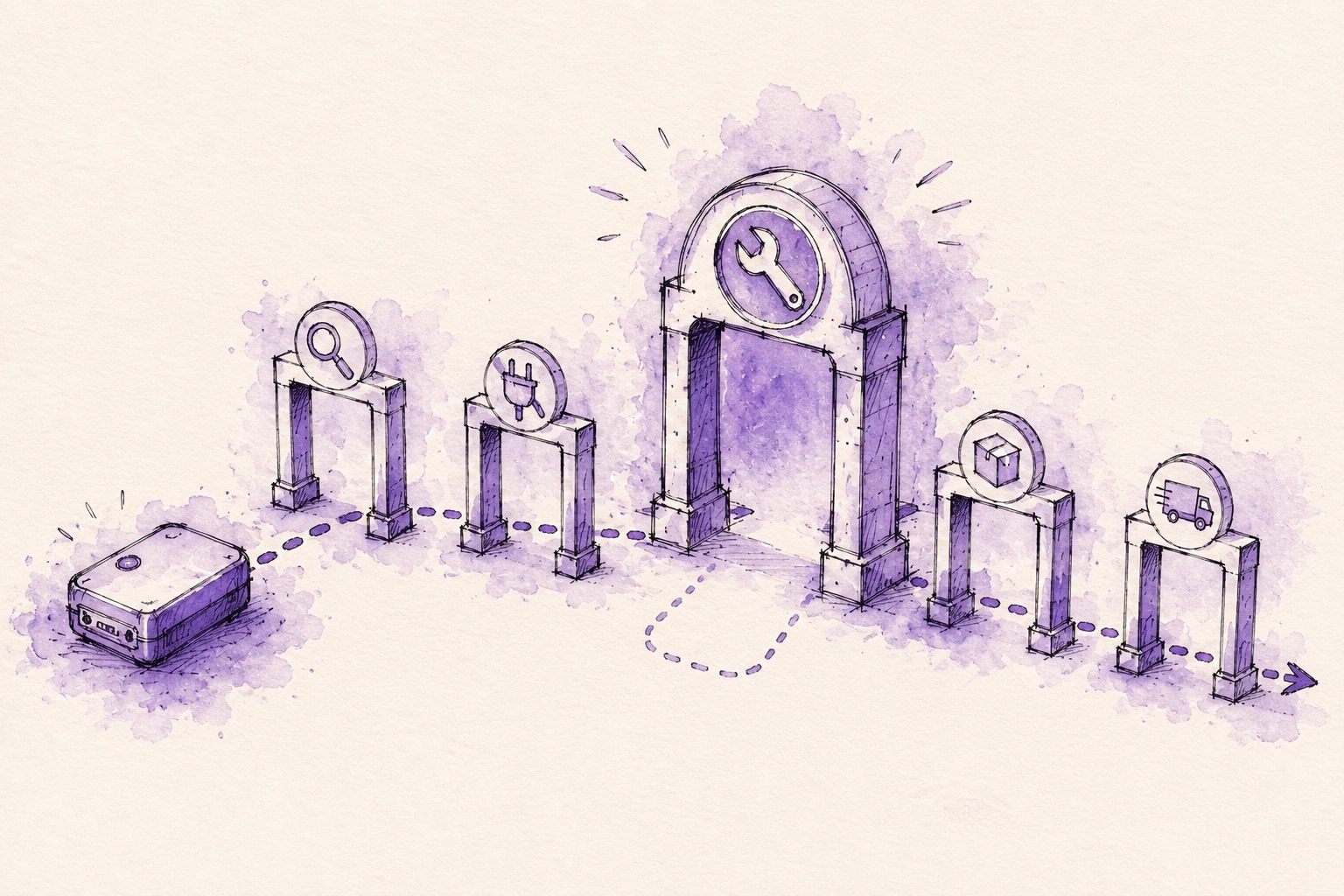
Strip away the parcel and a medical return runs through checkpoints a consumer return never sees.
UDI and serial captured and locked at intake
Quarantine so a used unit cannot resell
Decontamination and inspection recorded
Repair, refurbish, scrap, or return to maker
Root cause and supplier action logged
Each checkpoint produces a record, and the records have to connect to one unit. A consumer returns app has no quarantine status, no decontamination field, and no link to a corrective action. That is why serialized product defect tracking is the floor for this category, not a nice-to-have.
Traceability the regulator expects starts at intake
Traceability is not something a brand adds at the end. It is set, or lost, at the first touch.
If the unique device identifier is not captured the moment the unit is authorized for return, the chain is already broken, and no amount of careful handling downstream repairs it. The intake step has to demand the identifier, the order, and the reason before a case exists, which is exactly what a self-service portal is for when it forces structured input instead of a free-text email. The same discipline underpins product registration on the forward side, where the unit is identified before it ever fails.
Decontamination and condition: the step a refund flow has no room for
Here is a field a consumer returns app simply does not have: contaminated. A device used on a patient cannot be inspected, repaired, or shipped onward until it has been decontaminated and that decontamination is recorded.
A refund flow has no field for a contaminated unit, so the step gets handled off-system, on paper or in someone's memory, which is precisely where traceability dies. A returns platform built for regulated goods treats condition and decontamination as gated steps in the workflow, not optional notes, the same way defect severity grading turns a judgment call into a recorded decision. The wider discipline is captured in quality issue reporting on returns.
From RMA to CAPA: the return is a quality signal
The biggest miss in the generic RMA guides is treating the return as an endpoint. In a regulated setting, the return is the start of a quality investigation. The unit that came back knows why the product failed, if anyone is listening.
That loop runs on structured reason and supplier data, the kind that supplier quality issue reporting and AI supplier quality scoring turn into a corrective action. Brands tooling up for this often compare options in the market for NCR and CAPA tools, because a return that does not reach a corrective action is a cost with no payoff.
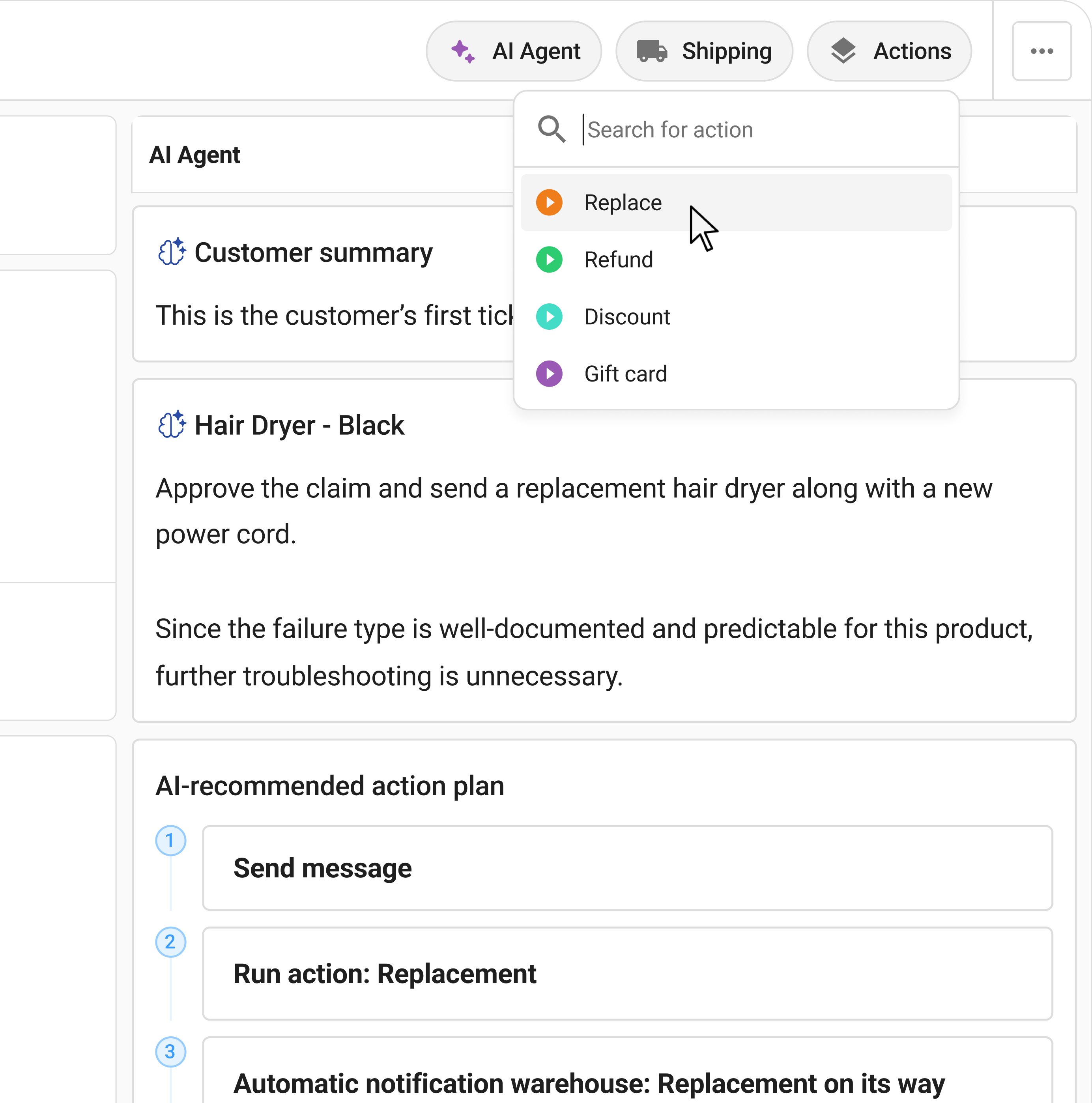
At volume, the triage has to be fast and consistent. Claimlane's AI Agent, the first AI agent purpose-built for warranty claims and returns, reviews intake photos of a returned device, applies the brand's rules per product and supplier, and recommends a disposition, so a flagged unit does not sit in a queue. The guardrails are not optional in a regulated setting: humans stay in the loop on high-value and high-risk cases, the rules are configurable rather than a black box, and every decision is logged, which is the audit trail a quality system is required to keep.
Supplier and manufacturer recovery on regulated returns
Regulated returns are high value, and that changes the finance math. A returned device is not a thirty-dollar write-off. It is hundreds or thousands of dollars of product, and when the failure traces to a component or a manufacturer, the cost can be recovered rather than absorbed.
Routing a traced device failure back to the manufacturer through a structured supplier claim turns a high-value write-off into a partial recovery, the line a CFO reads first.
That recovery only works if the return record proves the failure, which is the same evidence the regulator wanted anyway. A brand that runs supplier recovery to get credit notes faster through forward-to-supplier logic turns the compliance record into a financial one. GrejFreak saw ROI almost immediately after moving its warranty claims onto Claimlane, which is the speed-to-payback math that applies whenever high-value, evidence-heavy returns stop being handled by hand.
Generic RMA tool or regulated claims platform: the two-tier reality
The split is sharp in this category. A generic RMA or returns tool authorizes a return, prints a label, and processes a refund. For a non-regulated consumer good, that is the right tool, and the market for claims management software is full of capable options.
A regulated device return needs the other tier. It needs identity locked at intake, quarantine status, decontamination gating, CAPA linkage, and supplier recovery, running as the execution and intelligence backbone alongside the brand's quality and ERP systems rather than as a standalone refund app. Simple consumer returns belong with the generic tools. Regulated, serialized, high-value returns belong on a specialist platform, a line brands can size against the field for warranty claim software and modern RMA software for 2026. MaxGaming runs complex, serialized RMA cases across tens of thousands of SKUs on Claimlane, which is the same evidence-and-traceability backbone a regulated return depends on, applied to a different category.
Running a return, or running a regulated material flow?
Five questions before you pick a returns tool
▸ Do returns carry a UDI or serial that must stay attached?
▸ Does a used unit need quarantine so it cannot resell?
▸ Is decontamination or condition gating required before disposition?
▸ Should the return feed a CAPA or supplier corrective action?
▸ Is unit value high enough that recovery from the maker matters?
Three or more yes answers means the brand is running a regulated material flow, not a return, and needs a platform built for it.
A brand answering no to most of these is running ordinary returns, and a standard tool is the honest answer. A brand answering yes is running a regulated material flow that a refund app will quietly mishandle until an auditor finds the gap.
What to measure
Track traceability completeness, the share of returns with an unbroken identity record from intake to disposition, because that number is the difference between compliant and exposed. Track time in quarantine and decontamination, the steps where regulated returns stall and value degrades. Track recovery rate on traced failures, the finance line that tells whether high-value returns are a write-off or a recovery channel, the same way defective product returns are scored elsewhere.
The parcel makes a medical device return look ordinary, so brands treat it as ordinary, and the system they reach for has no room for the steps that make it regulated. The fix is not more discipline bolted onto a refund app. It is treating the return as what it is, a controlled material flow that happens to arrive in a box. Brands that do recover value and pass audits by default. Brands that do not are one finding away from learning the difference. For the next step, read how high-value RMA runs in practice in the MaxGaming case.
Claimlane scores 4.8 out of 5 on G2, on the kind of traceable, evidence-gated returns workflow a regulated return depends on.
The honest rule: if a return is just a refund, a generic tool is enough, and if a return is a traced, decontaminated, CAPA-feeding material flow, it needs a platform built for that. Brands handling regulated returns should put their process against the five questions above and see which side they are on. Compare it to the forward-to-supplier flow.
FAQ
Why can't a standard RMA tool handle medical device returns?
A standard RMA tool authorizes, refunds, and restocks. It has no quarantine status, no decontamination gating, no link to a corrective action, and no requirement to keep a unique device identifier attached. Medical returns need all of those, so the steps end up handled off-system, which is where traceability breaks.
When does traceability for a returned device actually start?
At intake. The unique device identifier, order, and reason have to be captured the moment the return is authorized. If the identifier is not locked at the first touch, the chain is already broken and downstream handling cannot repair it, which is why a structured intake portal matters more than the back-end paperwork.
How does a medical device return feed CAPA?
A regulated return records the unit, the condition, and the reason as structured data, which becomes the input to a root-cause investigation and a corrective or preventive action. Tying the return to supplier scoring also drives accountability upstream, so the same failure is less likely to recur.
Can the cost of a returned medical device be recovered?
Often, yes. These are high-value units, and when a failure traces to a component or manufacturer, routing the claim back through a structured supplier process recovers a share of the cost. The recovery depends on the same evidence record the regulator already requires, so the compliance work pays for itself.