
The tools that rank for return fraud detection watch the checkout. They read the card, the device, the billing match, the velocity, and they score the order in the moment it is placed. That is real work, and it stops stolen-card fraud.
It does nothing for return fraud, because return fraud happens later. The order was honest. The card was the customer's own. The return is where the dishonesty starts, weeks after every score already came back clean.
AI return fraud detection that works looks at a different thing entirely: the return itself, the evidence attached to it, and the pattern of the account behind it.
Where return fraud actually happens
Return fraud lives in the return lane, not the payment lane. The defense has to sit where the money leaves, which is the moment a refund or replacement is approved.
That timing is the whole argument. A structured returns management system is the right place for the control because it already holds the return reason, the order, and the evidence in one record. Claimlane's overview of return fraud in ecommerce sets the wider scene.
Why a fraud score misses it
A checkout fraud score reads the transaction. The genuine buyer already cleared all of it, so the score has nothing to flag.
A fraud score cannot see a box that comes back empty. It cannot see a jacket returned worn inside the tag-on window. It cannot see that this account has filed six "item not received" claims in four months. The data that would catch those things is the return evidence, and the merchant, not the bank, is the only party that holds it. Claimlane's piece on first-party fraud covers why genuine-buyer abuse slips past transaction tools.
The return-fraud patterns AI can catch
Four patterns cover most of what brands lose to return fraud, and each leaves a signal in the return evidence.
Wardrobing. The product is worn or used, then returned inside the policy window. High in apparel and electronics. A worn-item photo at intake is the signal, and Claimlane's wardrobing guide covers it.
Empty-box and item swaps. The box comes back, the weight is wrong, the item is missing or replaced with something else. Intake confirmation is the only thing that catches it before the refund goes out.
False "item not received." The order arrived, the customer files an INR claim anyway. Delivery proof and a clean claim trail beat it, and the mechanics overlap with payment reversals and chargebacks.
Serial refunders. One account, many refunds, a pattern no single claim reveals. Claimlane's note on managing repeat returns covers the repeat-offender angle, and returnless-refund abuse is a close cousin.
What the AI reviews on the return
The model does two jobs the checkout score cannot: it reads the evidence, and it reads the history.
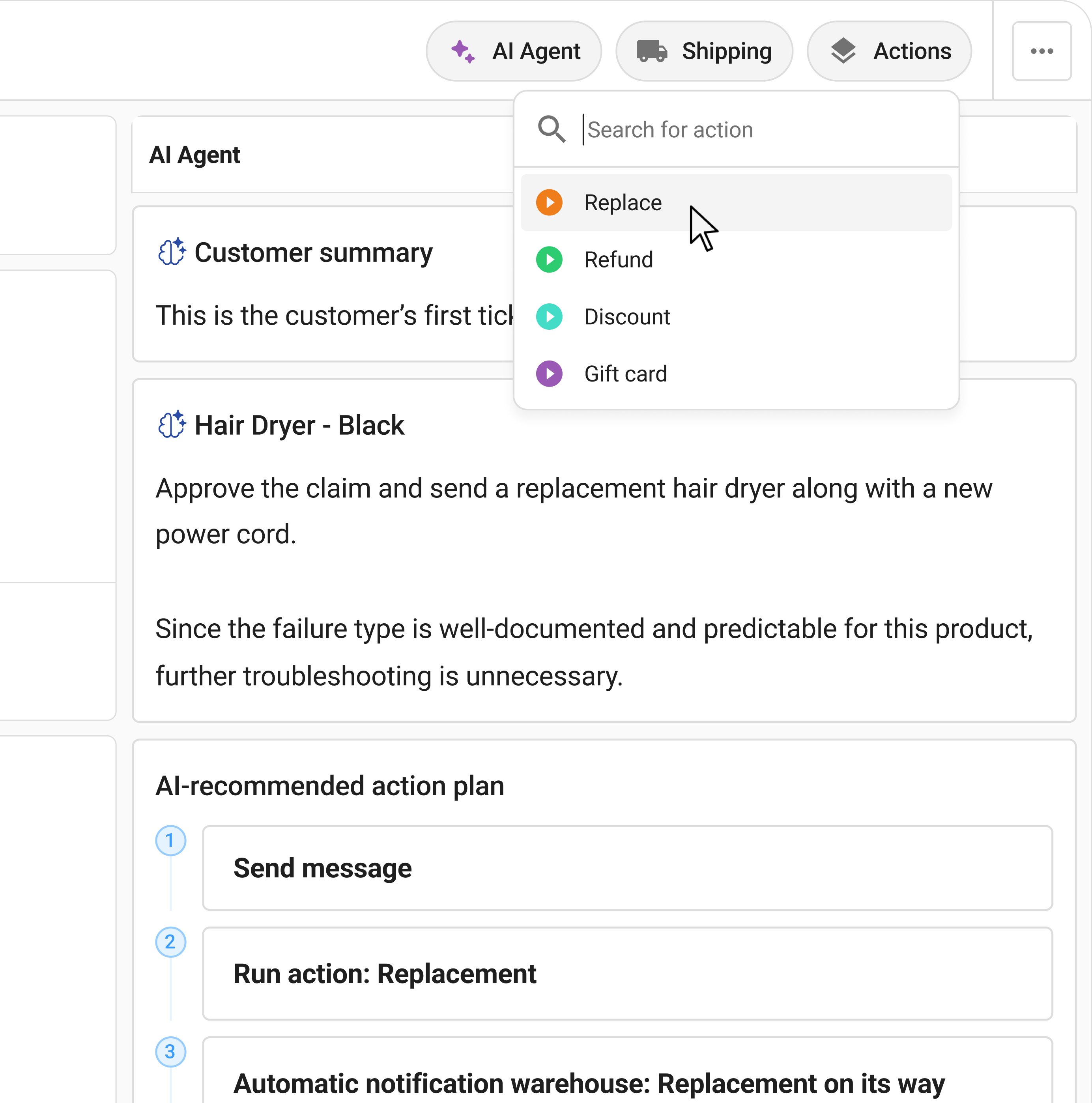
On evidence, it reviews the return photos and video against the claimed condition, flagging a worn item claimed as new or a box whose contents do not match the order. This is the same image-review capability behind AI image recognition for warranty claims. Claimlane's AI Agent, the first AI agent purpose-built for warranty claims and returns, applies the brand's policy and supplier rules to each return and flags the ones that do not add up while clearing the ones that do.
Evidence at intake, the data fraud tools never see
The honest customer breezes through. The dishonest one hits friction at exactly the right moment.
A self-service portal that asks for photos, video, and order details at submission is what produces the evidence in the first place. That evidence is first-party data the brand collects directly, and it is the only data that speaks to the moment the fraud happens. Linking it to the product record, as in serialized product defect tracking, turns a single return into a signal.
Pattern detection across accounts
One fraudulent return is hard to prove. A pattern is not.
When every return lives in one record, the sixth INR claim from one account stops hiding behind "I changed my mind." The model surfaces the account-level pattern: refund frequency, reason mix, and the gap between refunds issued and items physically received back. That gap is where empty-box and never-returned losses hide, and it feeds straight into warranty and returns analytics so finance can see which accounts and SKUs drive the loss.
Return-side vs warranty-side fraud
Return fraud and warranty fraud look similar and need different controls, so brands with both should not treat them as one.
Return fraud abuses a refund or exchange policy: wardrobing, empty-box, serial refunds. Warranty fraud claims a defect that is really wear, misuse, or a product the brand never sold. The evidence trail is the same idea, but the rules differ, and Claimlane's AI warranty fraud detection covers the warranty side. Both connect to the non-AI fundamentals in return fraud prevention.
The guardrail: catching abuse without punishing honest customers
The risk on the return side is not under-detection. It is wrongly denying a real customer and losing them over a $60 refund.
- The AI flags, a human decides on anything that would deny a customer, above the brand's value threshold.
- Configurable rules the brand owns, so policy, not the model, sets what counts as abuse.
- Audit trail on every flag, so a denied refund can be explained if the customer pushes back.
- Friction scales with risk. Low-value, first-time, photo-backed returns clear fast. Repeat or evidence-light returns get a closer look.
That balance is the point. Evidence-based review lets the honest majority self-clear while the flagged minority gets a human, which is what keeps fraud control from turning into a customer-service problem.
Konges Sløjd improved data quality and automation on retailer claims with Claimlane, the same structured-evidence foundation that makes account-level fraud patterns visible.
Konges Sløjd — read the case study
Where AI return fraud detection fits in the stack
This is a returns-and-claims control, not a payments control, and the two live in different lanes.
A simple size-and-fit return on a Shopify DTC store barely needs fraud review, and a returns app like Loop handles that lane; brands comparing it can read Loop Returns alternatives. Where returns carry photo evidence, supplier claims, or high-value goods, the review has to understand the return, which is the Claimlane lane. It runs alongside checkout fraud tools and chargeback tooling, not instead of them, and connects to chargeback management software for the dispute side. The decision tree lives in the claims workflow.
A readiness check
AI return-fraud review earns its place when return volume and abuse are both high enough to matter.
- High return volume across DTC and retail channels
- A category prone to wardrobing or swaps (apparel, electronics)
- A visible gap between refunds issued and items received back
- Repeat-claimant patterns the team suspects but cannot prove
- Refund losses large enough to justify structured intake
What to measure
Three numbers tell a brand whether the control works.
Track the gap between refunds issued and items physically received back, where empty-box and never-returned losses hide. Track repeat-claim rate by account, to surface serial refunders early. Track dispute win rate, the share of chargeback representments won, because that number shows whether the evidence is good enough. Claimlane's returns and warranty KPIs guide covers the full set.
Claimlane holds a 4.8 out of 5 rating on G2. More outcomes sit in the case studies.
Here is the question worth sitting with: if a refund went out today on a box that came back empty, would the brand ever know, or would the loss just blend into the returns line? If it would blend in, the fraud already has the advantage, and no checkout score is going to change that.
Frequently asked questions
Can AI detect return fraud?
Yes, when it reviews the return rather than the payment. AI checks return photos and video against the claimed condition and surfaces account-level patterns like serial refunds and empty-box returns, then flags the suspicious cases for a human while clearing the clean ones.
Why do checkout fraud tools miss return fraud?
Checkout fraud tools score the transaction, and return fraud is committed by the genuine buyer using their own card, so the order passed every check. The abuse happens weeks later at the return, which is data the checkout score never sees.
How does AI avoid wrongly denying honest customers?
Through guardrails: the AI flags but a human decides on anything that would deny a customer above a value threshold, rules are configurable and owned by the brand, every flag leaves an audit trail, and friction scales with risk so low-value first-time returns clear fast.
What is the difference between return fraud and warranty fraud?
Return fraud abuses a refund or exchange policy, such as wardrobing or empty-box returns. Warranty fraud claims a defect that is really wear, misuse, or a product the brand never sold. Both use structured evidence, but the rules and resolutions differ.