.webp)
A customer uploads a photo of a cracked hinge, types a sentence, and hits submit. Before the page finishes loading, the claim is approved, a replacement is on its way, and no human has touched it. That is auto-approval, and to most teams it looks like magic or like a risk they are not ready to take.
It is neither. Underneath that instant sits a short, inspectable sequence of checks. Pull back the curtain and auto-approval stops being a leap of faith and becomes a set of rules a brand controls.
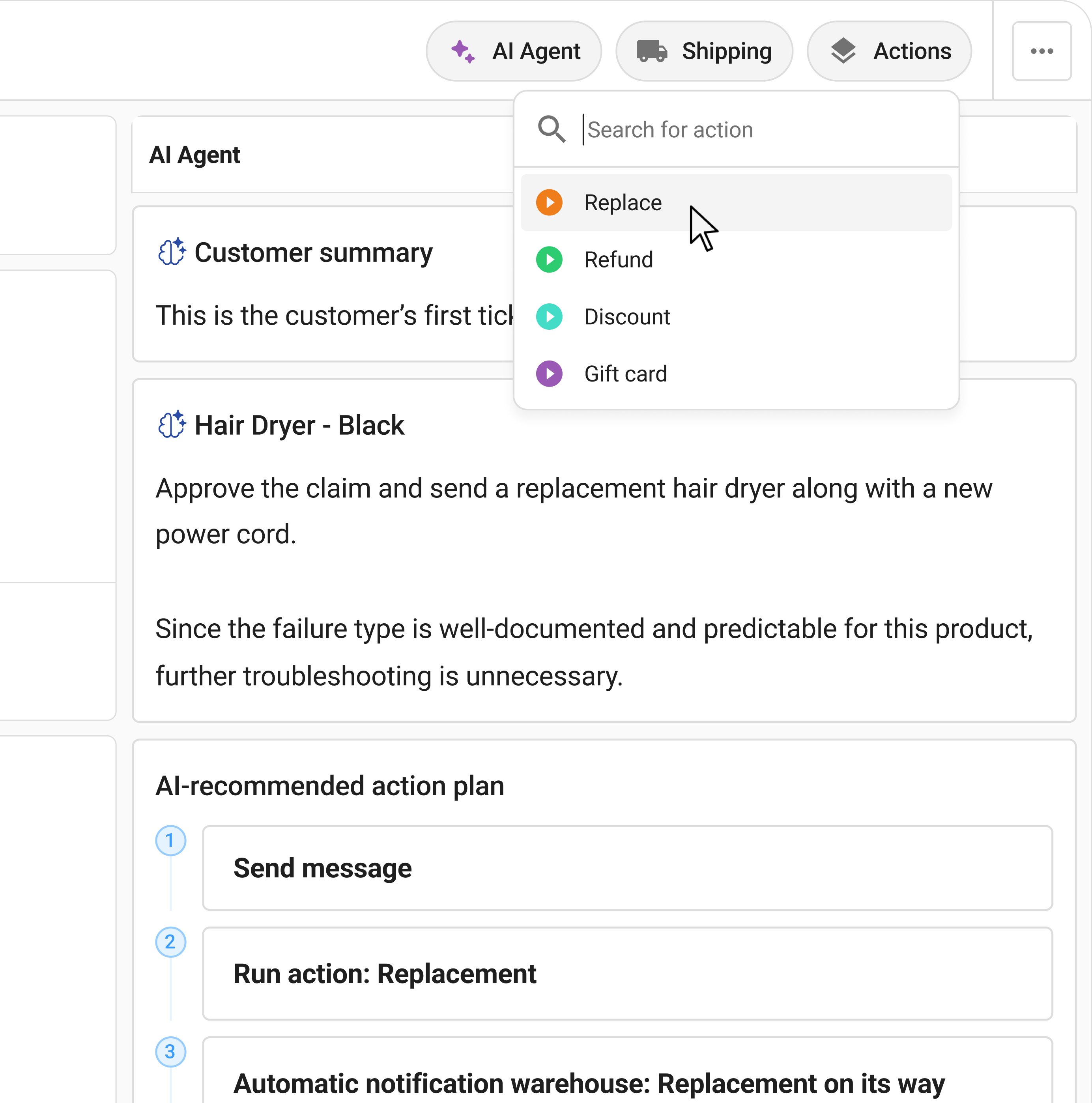
This is exactly what Claimlane's AI Agent, the first AI agent purpose-built for warranty claims and returns, does. It reads the evidence, applies the warranty rules per product and supplier, scores its confidence, and either approves, recommends, or routes to a person. The rest of this piece walks through exactly what happens, and where the brake pedals are.
The seconds of an auto-approval, step by step
Here is the sequence behind that instant approval. First, the AI reads the submitted evidence: the photos or video, the serial number, the order data, and the customer's description. Second, it matches the case against the warranty rules for that exact product and supplier.
Third, it produces a confidence score, a number expressing how sure it is the claim is valid and correctly categorised. Fourth, it checks that score and the claim's attributes against the brand's thresholds. Only if both clear does it approve and trigger the resolution. Everything else becomes a recommendation for a human. This sequence is the practical core of AI warranty claims automation, and it leans heavily on image recognition for warranty claims to read the evidence in the first place.
What AI claim auto-approval actually is
Auto-approval is not the AI making policy. The policy is the brand's, written as rules. The AI applies those rules faster and more consistently than a queue of tired agents reading the hundredth identical claim of the day.
That distinction matters. A well-built auto-approval system is configurable rules plus AI suggestions, not a model deciding on its own what counts as covered. It sits inside the broader job of claims management automation, handling the high-volume, low-ambiguity cases so people can spend their time on the hard ones.
The confidence threshold and where the line sits
The threshold is the dial that decides how much gets automated. Set it high, say only approve above 95 percent confidence, and the system auto-resolves a smaller, very safe slice. Lower it, and more claims clear automatically, with slightly more risk.
The sensible path is to start conservative, watch the decisions, and widen the criteria as the rules prove out. A brand that reviews outcomes and tunes the dial over a few weeks usually lands on a threshold that auto-approves the obvious cases and routes the rest. Tracking that against claim resolution time shows the payoff quickly.
Why thresholds vary by product, supplier, and claim type
One global threshold is a blunt instrument. The best setups let a brand set different rules for different products, suppliers, and claim values, because the risk is not uniform.
A low-value accessory with a clear photo of obvious damage is a safe instant approval. A high-value item, a claim near the edge of the warranty window, or a supplier with a history of disputed faults deserves a human look. Tiering the thresholds this way is what separates real workflow-based warranty resolution from a crude on-off switch. It is also where supplier data earns its keep, since a pattern of warranty fraud signals should pull a claim out of the auto lane.
The guardrails that keep auto-approval safe
This is the part most articles skip, and it is the part that decides whether a leadership team will turn the feature on. Auto-approval is only responsible if it ships with guardrails.
Four matter most. Configurable rules, so the brand defines what is approvable rather than the model guessing. Value thresholds, so big-money claims always get a human. Override controls, so an agent can reverse or adjust any decision. And a complete audit trail, so every approval can be explained after the fact. Without these, automation is a liability. With them, it is just faster, more consistent claims handling that still answers to people.
Human-in-the-loop: the claims that never auto-approve
A trustworthy system is as defined by what it refuses to automate as by what it approves. Some claims should always reach a person, by design.
High-value resolutions, claims with conflicting or missing evidence, suspected fraud, goodwill exceptions, and anything outside the written rules all route to a human with the AI's recommendation attached. The agent starts from a summarised case instead of a blank screen, which is faster than manual triage without removing the judgment. That balance is the whole point of keeping a human in the loop on the cases that deserve one, and it connects directly to broader return fraud prevention.
The audit trail behind every decision
Every auto-approval should leave a record: what evidence was read, which rules applied, what confidence score resulted, and what action followed. That trail is what makes the system auditable to finance, to suppliers, and to a regulator if it comes to that.
It also makes the system improvable. Reviewing the decisions that were close to the threshold is how a brand tightens its rules over time. The audit trail turns auto-approval from a one-time setup into something that gets sharper each quarter, which is exactly how the pillars of warranty claims software are meant to work together.
What auto-approval does to cost and speed
The numbers are the reason this matters. Well-tuned auto-approval commonly handles a large share of straightforward claims without a human, which collapses resolution time from days to seconds on those cases and frees agents for the complex ones.
The finance read-through is direct: fewer touches per claim, lower fully loaded cost per claim, and a claims team that scales volume without scaling headcount. MaxGaming's 77 percent faster complex-case resolution is the speed side of that, and the cost side shows up as the same team absorbing growth instead of hiring against it. Reading it next to claims and returns analytics makes the saved hours and the deflected cost visible.
Where Claimlane fits versus general automation
Plenty of tools automate simple ecommerce returns. A size-and-fit exchange on a Shopify store does not need an AI reading evidence, and a general returns app such as Loop Returns covers that well.
Auto-approval for warranty is a different problem, because the decision rests on photos, serial numbers, warranty rules, and supplier history. That is where Claimlane sits: complex warranty, repairs, and supplier-linked claims, run through a configurable workflow and submitted by customers through a self-service portal. Simple returns to the general tools, evidence-based warranty auto-approval to Claimlane.