.webp)
Aftership is known for one thing: telling customers where their parcel is. It does that well. But brands that ship physical goods need more than tracking. They need to handle the parcel that arrives broken, the warranty claim filed two weeks later, and the supplier credit note that never came back. That is where Aftership shows its limits.
The 7 alternatives below cover the same post-purchase moment but go further. Each one is built for a different audience, from Shopify retailers wanting a clean return portal to brands juggling warranty claims across 200 suppliers.
TL;DR
- Aftership is a parcel tracking tool first. It does not resolve damaged goods, warranty claims, or supplier disputes.
- Loop Returns, Narvar, and Returnly cover returns automation but skip warranty workflows.
- ParcelLab and Outvio focus on branded tracking and notifications.
- Claimlane is the only alternative that handles returns, warranty, repairs, and supplier claims from one system, with an AI Agent built for post-purchase.
| Tool | Returns | Warranty | Repairs | Supplier Claims | AI Resolution | Starting Price |
|---|---|---|---|---|---|---|
| Claimlane | ✓ | ✓ | ✓ | ✓ | ✓ | Custom |
| Aftership | Partial | ✗ | ✗ | ✗ | Partial | $11/mo |
| Loop Returns | ✓ | ✗ | ✗ | ✗ | ✗ | $155/mo |
| Narvar | ✓ | Limited | ✗ | ✗ | ✗ | Custom |
| ParcelLab | Limited | ✗ | ✗ | ✗ | ✗ | Custom |
| Returnly (Affirm) | ✓ | ✗ | ✗ | ✗ | ✗ | Custom |
| ReturnLogic | ✓ | ✗ | ✗ | ✗ | ✗ | Custom |
| Outvio | ✓ | Limited | ✗ | ✗ | ✗ | $60/mo |
For a wider scan, the best returns tracking platforms and the best post-purchase software cover the broader landscape.
What's a returns and post-purchase tracking platform?
A returns and post-purchase tracking platform is the layer that runs everything from "your order shipped" through to "your refund is in your account." The category bundles three things that used to live in separate tools: outbound parcel tracking (where the order is), returns and exchanges (how to send it back), and resolution tracking (refund, replacement, repair, or warranty claim status).
AfterShip is the most established name on the tracking side. The alternatives below mix the same ingredients in different proportions. Loop leans hard on exchanges. Narvar leans on CX and concierge support. Reverselogix leans on enterprise reverse logistics. Claimlane covers tracking-adjacent comms and goes further into warranty, repairs, spare parts, and supplier recovery. The fit depends on which part of the journey actually causes the most pain.
AfterShip vs Loop vs Narvar vs Reverselogix at a glance
| Platform | Outbound parcel tracking | Returns + exchanges | Warranty + repairs | Pricing starts at | Best for |
|---|---|---|---|---|---|
| AfterShip | Yes (1,400+ carriers, the broadest coverage) | Basic add-on | No | From ~$11/month | Multi-carrier outbound tracking |
| Loop Returns | No | Yes (exchange-first, Shopify) | No | From $155/month + volume | Shopify DTC apparel and fashion brands |
| Narvar | Yes (branded tracking + notifications) | Yes (returns portal + exchanges) | No | Enterprise (~$20K+/yr) | Enterprise retailers prioritizing CX |
| Reverselogix | No | Yes (enterprise RMS) | Yes (modules) | Enterprise (custom) | Enterprise reverse logistics with ERP integration |
| Claimlane | Status emails + portal (not a primary parcel tracker) | Yes (returns, exchanges, store credit) | Yes (full workflow + AI Agent + spare parts + supplier claims) | $800/month | Brands managing returns and warranty in one system |
The four platforms in the action overlap on returns but diverge on everything else. AfterShip leads on raw parcel tracking. Loop leads on exchange-first Shopify returns. Narvar leads on enterprise post-purchase CX. Reverselogix leads on warehouse-side reverse logistics. Claimlane sits in a related category covering the operational layer for warranty, repairs, and supplier recovery that none of the others touch.
Why Trust This Comparison
This breakdown comes from a team that builds returns and warranty software used by brands like MaxGaming, Davidsen, Black Diamond, and Luksusbaby. Claimlane has a 4.8/5 rating on G2 with verified reviews from operations and customer service leaders.
"We went from 5 agents handling claims to 1 to 2 agents. The system catches mistakes before they hit the customer."
1. Claimlane
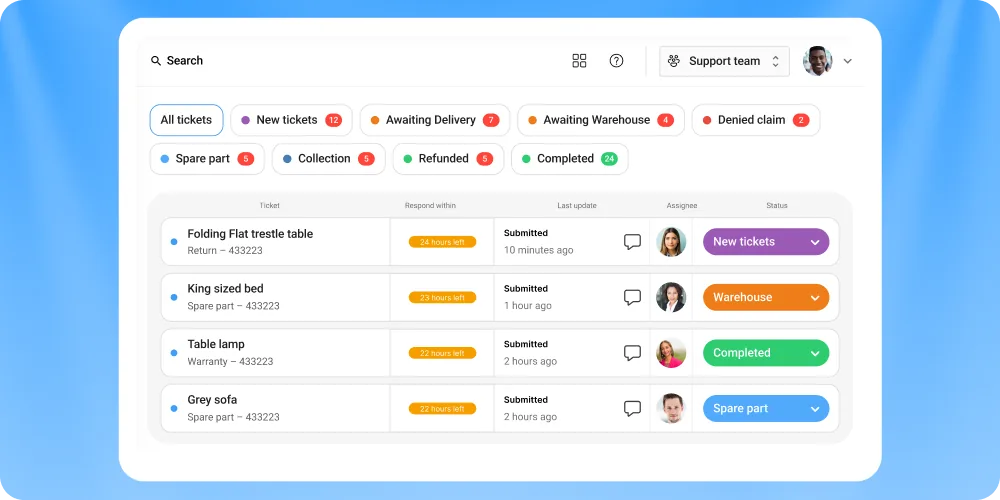
Claimlane is a returns and warranty management platform for brands and retailers. It handles claims, repairs, replacements, returns, and spare parts from one system. The product was built around a hard truth: tracking the parcel is the easy part, resolving what happens when the parcel is wrong is the hard part. Brands move to Claimlane when their support team is buried in claim emails, when warranty data is scattered across spreadsheets, and when supplier follow-up takes weeks.
Why people choose Claimlane
The pattern is consistent across customers. Returns and warranty live in different tools, suppliers chase their own credit notes, and the customer is the one waiting two weeks for an answer. Claimlane consolidates the whole flow, with Claimlane's AI Agent, the first AI agent purpose-built for warranty claims and returns, reviewing the case and recommending the next step.
Pros and cons
Pros
- Returns, warranty, repairs, and supplier claims in one system
- AI Agent reviews images and applies warranty rules
- Self-service portal with photo and video uploads
- 75+ integrations across Shopify, WooCommerce, ERPs, Zendesk, and shippers
- Analytics on faulty products and supplier performance
Cons
- Overkill for very small Shopify shops with no warranty needs
- Pricing is custom, no public starting tier
- EU-headquartered, US time zone coverage is via partner support
Core features
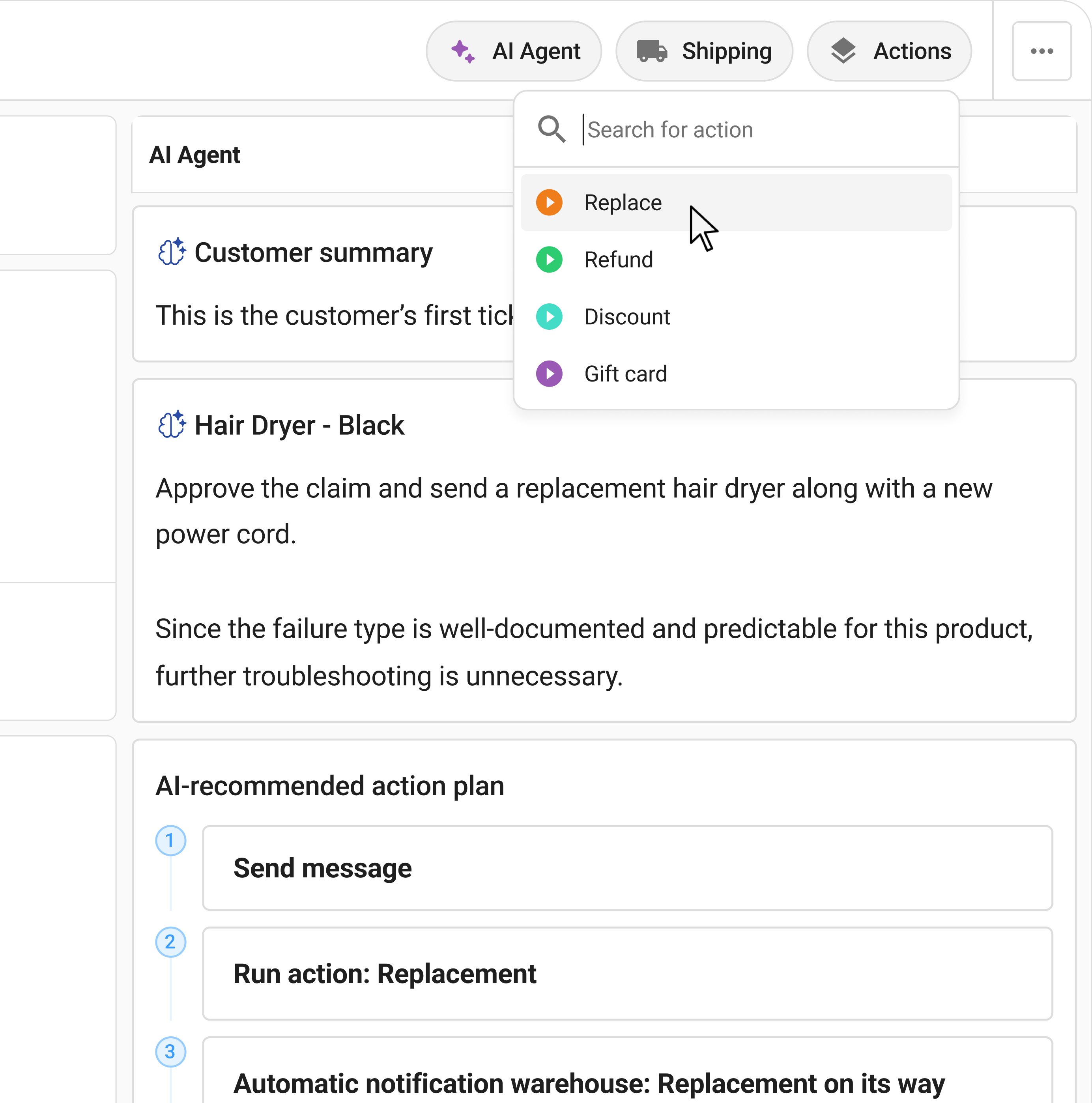
- AI Agent that reviews claim photos and videos, applies warranty rules, and recommends or auto-approves resolutions
- Self-service portal where customers upload proof, serial numbers, and order data
- Workflow engine for repairs, replacements, refunds, and spare parts
- Supplier claim handoff with proof packages and credit note tracking, see the supplier recovery guide
- Returns and warranty analytics by SKU, supplier, and reason code
- Native integrations with Shopify, WooCommerce, BigCommerce, ERPs, Zendesk, and 70+ more
Pricing
Claimlane uses custom pricing. The platform scales with claim volume and number of suppliers. Most brands land between mid-market and enterprise tiers.
Product in action
Screenshot suggestion: AI Agent reviewing a claim photo with rule match results and a recommended resolution.
A typical flow: a customer files a claim through the portal, uploads photos, the AI Agent checks the images against warranty rules, and the system either auto-approves a refund or routes the case to an agent with a recommended action. For MaxGaming, complex RMA cases now resolve 77% faster than before.
Screenshot suggestion: Supplier claim view with attached proof package and credit note status.
Book a walkthrough at /book-demo.
"ROI was almost immediate. The team can finally see which suppliers cost us money."
2. Aftership (the reference point)
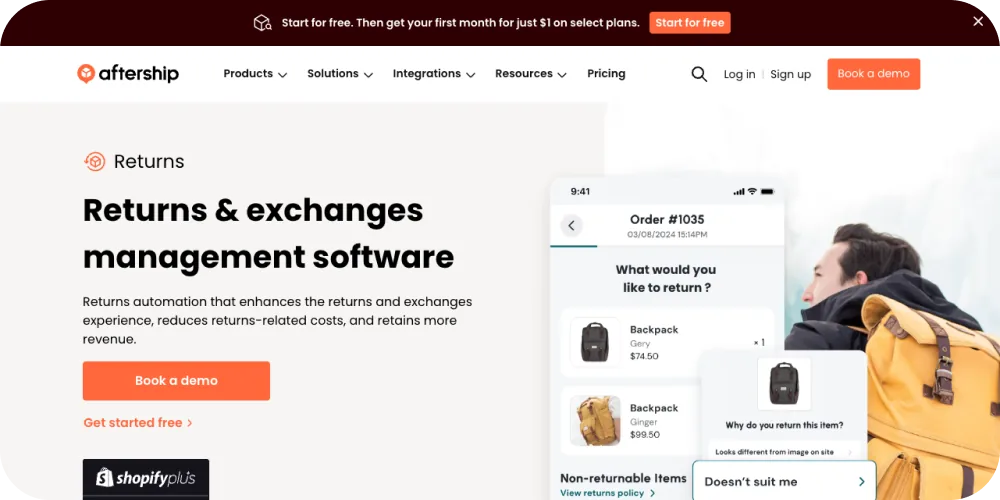
Aftership is built for parcel tracking. It pulls events from 1,400+ carriers and displays a branded tracking page. Many brands use it to keep "where is my order" emails down. There is more on that pattern in the reduce WISMO queries guide.
Where it works
Parcel visibility across many carriers. Branded tracking pages with marketing modules. A lightweight returns add-on for Shopify shops.
Where it stops
There is no native warranty claim workflow. No repair management. No supplier claim handoff. The returns add-on is basic, with no rules-based exchange logic and limited handling of photo and video proof for damaged goods. For brands shipping apparel with few warranty cases, Aftership is fine. For brands shipping electronics, sporting goods, furniture, or anything with a warranty period, it covers the front of the journey but leaves the back open.
3. Loop Returns
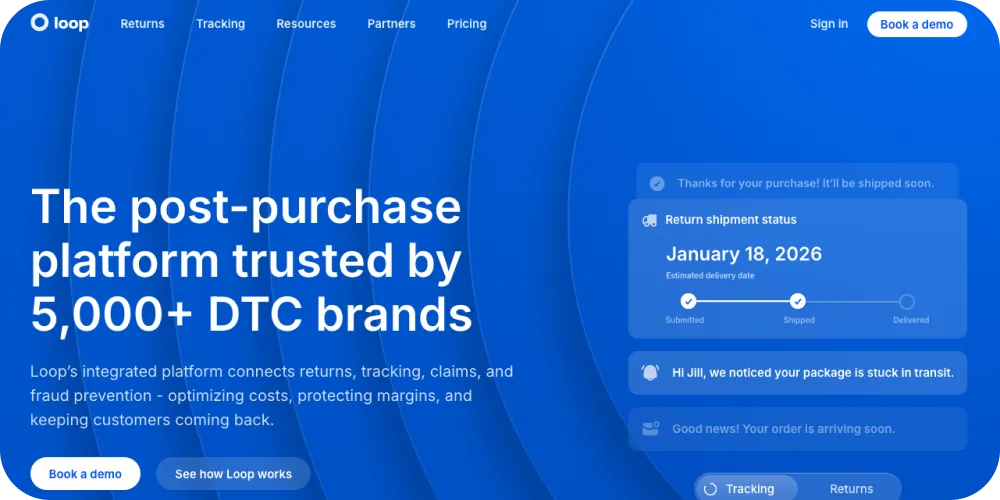
Loop Returns is a Shopify-first returns platform. It does exchanges, refunds, store credit, and bonus credit incentives well. The exchange-over-refund logic is its strongest feature, and the exchange policies for ecommerce guide explains why that matters.
Best for: DTC Shopify brands focused on apparel where exchanges drive revenue retention.
Limitations: Shopify only, no warranty claims workflow, no repair management, no supplier claim handoff. Starts at $155/month for Essentials, scales fast. For deeper alternatives, see the Loop Returns alternatives roundup.
4. Narvar
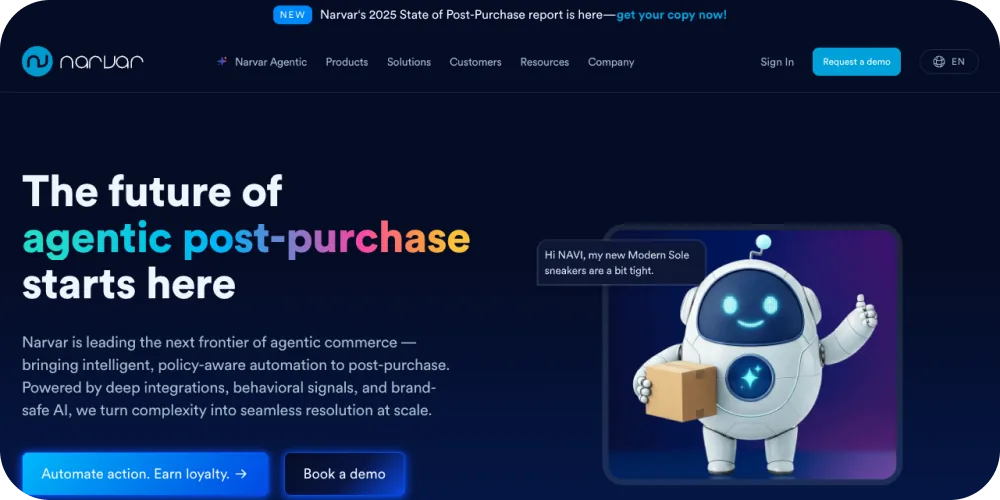
Narvar is an enterprise post-purchase platform. It started in branded tracking and has added returns, messaging, and concierge support over the years. Used by large brands like Sephora and Patagonia.
Best for: Enterprise retailers with budget and an ops team to run a full post-purchase stack.
Limitations: Sales-led, slow onboarding. Warranty support is limited with no AI claim review. Returns logic is mature but feels heavy for mid-market. Custom pricing, typically high six-figure annual contracts. For a closer look, see the Narvar alternatives breakdown.

5. ParcelLab
ParcelLab is an operations experience platform. It owns the post-purchase notification flow from order confirmation through delivery and into returns, all under the brand's domain.
Best for: Brands prioritizing branded comms across the parcel journey.
Limitations: The returns module is functional but not the product's center of gravity. No native warranty or repair workflows. No supplier claims. Pricing is custom and aimed at mid-market to enterprise. See top ParcelLab alternatives for a fuller comparison.

6. Returnly (by Affirm)
Returnly was acquired by Affirm and is now bundled into Affirm's post-purchase offering. It runs Shopify returns with instant credit at the point of return.
Best for: Affirm merchants wanting instant credit returns.
Limitations: Future product roadmap is uncertain post-acquisition. No warranty claim workflows. No repair management. Shopify-first.
7. ReturnLogic
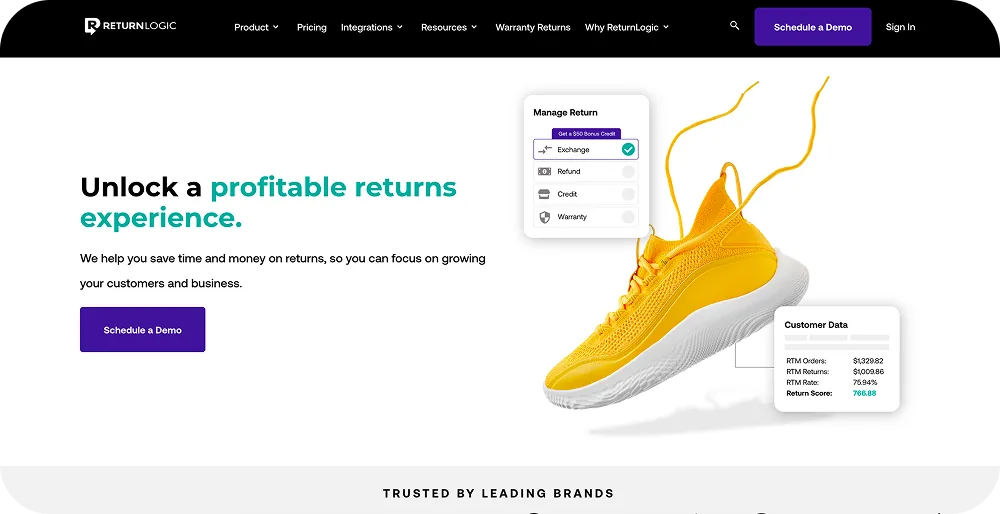
ReturnLogic is a US-based returns platform popular with mid-market Shopify brands. Custom workflows, analytics, and policy rules are the headline features.
Best for: Shopify brands with complex return policies and multiple SKU categories.
Limitations: No warranty claims module, no repair workflows, no supplier claims handoff, US-only support. See the ReturnLogic alternatives for similar tools.

8. Outvio
Outvio is a European post-purchase tool coverng tracking, returns, and basic warranty notes. It fits well for small to mid-market European retailers.
Best for: SMB European brands wanting a one-stop tracking and returns tool.
Limitations: Warranty is shallow with no AI claim review. No supplier claims handoff. No repair workflows. Limited US support. See the Outvio alternatives roundup for similar tools.
9. Reverselogix
Reverselogix is an enterprise reverse logistics management system. It handles returns, warranty claims, repair workflows, and disposition routing for retailers running operations in-house, with deep ERP integration to systems like NetSuite, SAP, and Oracle.
Best for: Enterprise operations teams that want granular control over returns routing, refurbishment, and repair workflows rather than customer-facing tracking experiences.
Limitations: Not built for parcel tracking. The interface is operations-first, which is the point for enterprise teams but feels heavy for mid-market or DTC brands. Custom enterprise pricing. Onboarding typically takes months. See the Reverselogix alternatives roundup for similar tools.
How to Choose the Right Aftership Alternative
The choice depends on three questions.
1. What is the bigger problem, tracking or resolution?
If parcels arrive fine and customers just want a status page, a tracking tool works. If parcels arrive damaged, customers file warranty claims, and the support team spends hours hunting receipts, a returns and warranty platform fits better. The hidden costs of returns and claims covers what that backlog actually costs.
2. Are suppliers part of the process?
If a meaningful share of claims should flow back to a supplier for credit, none of the pure returns or tracking tools handle that. Claimlane and a few field service tools do.
3. How much volume justifies the spend?
Aftership starts at $11/month. Loop Returns starts at $155/month. Enterprise platforms run six-figure annual contracts. Match the cost to the claim volume and team time being saved.
Quick fit check by brand type
Baby and nursery brands often pick a warranty-heavy tool, the baby and nursery industry page covers why. Electronics brands hit warranty volume early. Outdoor and sporting goods brands like Black Diamond automate warranty and repair workflows from day one.
The Migration Reality
Most "alternatives" articles skip the part everyone actually cares about: what switching off Aftership looks like in week 1, week 4, and week 12.
Week 1: data portability is messier than it sounds.
Historical tracking events can be exported, but the returns add-on data (reason codes, customer messages, photos) usually cannot. Brands that switch in Q4 with a flat freeze on Aftership lose the analytics tail. The fix is a parallel-run window of 30 to 60 days where both tools handle live traffic and the data sits side by side for reconciliation. The audit your returns process piece covers what to capture before pulling the plug.
Week 4: agent confusion peaks.
Support agents are used to seeing tracking and returns in one tab. When the tool changes, AHT goes up before it comes down. Brands that prepare a one-pager of "where things moved" and add a 15-minute daily standup for the first month recover faster than brands that just sent a Loom video and a Notion doc. The how to avoid costs of new system rollout piece covers rollout pitfalls in detail.
Week 12: the value finally shows up.
Auto-resolution rate is the late-blooming metric. It needs enough cases for the rules and AI to settle into the brand's actual claim pattern. Operations leaders report the supplier recovery number moves first, around week 6, because that workflow is dormant before the switch and immediately active after.
The broader read is that tool selection matters less than the implementation craft around it. Brands that pick the right tool and run a sloppy rollout produce worse outcomes than brands that pick a slightly imperfect tool and run a disciplined rollout.
Conclusion
Aftership covers parcel tracking. That is the front door. The harder work, resolving damaged goods, warranty claims, repairs, and supplier credits, sits behind that door, and most alternatives in this list do not reach it either.
For brands where warranty and returns volume matters, Claimlane covers the full picture: intake, AI review, resolution, supplier handoff, analytics. Book a walkthrough at /book-demo to see how it handles a sample claim end-to-end.
FAQ: AfterShip alternatives
What should I consider when choosing an alternative to AfterShip?
Five things matter most when evaluating an AfterShip alternative:
- Which problem hurts most. If parcels arrive fine and "where is my order" is the main issue, a tracking tool covers it. If parcels arrive damaged and warranty claims pile up, a returns and warranty platform is the better fit.
- Carrier and platform coverage. AfterShip's 1,400+ carrier coverage is hard to match. Make sure the alternative supports the carriers and ecommerce platforms you actually ship through.
- Warranty and repair workflows. Most AfterShip alternatives stop at returns. If you handle warranty claims, repairs, or spare parts, you'll need a platform like Claimlane or Reverselogix that covers those.
- Supplier recovery. If manufacturing defects make up a meaningful share of claims, supplier claim forwarding and credit note tracking saves real money. AfterShip doesn't do this; Claimlane does.
- Pricing model. AfterShip starts cheap (around $11/month). Mid-market platforms run $150 to $500+/month. Enterprise platforms run six-figure annual contracts. Match the spend to the claim volume and team time being saved.
Can you recommend some reliable AfterShip alternatives for ecommerce tracking?
Depending on what's driving the switch:
- Narvar. Enterprise post-purchase platform with branded tracking, notifications, returns portal, and concierge support. Best for large retailers with budget and an ops team to run the full stack.
- ParcelLab. Operations experience platform owning the post-purchase notification flow. Best for European brands prioritizing branded comms across the parcel journey.
- Loop Returns. Strong on Shopify exchanges and store credit. Best for apparel and fashion DTC brands. Doesn't cover outbound tracking, so often paired with another tool.
- Claimlane. Returns plus warranty plus repairs plus spare parts plus supplier recovery in one platform. Best for brands where the real pain is resolving damaged goods and warranty claims, not just tracking parcels.
- Reverselogix. Enterprise reverse logistics with deep ERP integration. Best for ops teams running returns operations in-house at scale.
- Outvio. European SMB-friendly platform covering tracking and returns. Best for small to mid-market European retailers.
- ReturnLogic. US-based returns platform popular with mid-market Shopify brands needing custom workflows.
What are AfterShip alternatives and competitors in 2026?
The seven most commonly compared AfterShip alternatives in 2026 are Claimlane, Loop Returns, Narvar, ParcelLab, Returnly (now part of Affirm), ReturnLogic, and Outvio. Each one solves a slightly different problem, from Shopify DTC exchanges (Loop) to enterprise post-purchase CX (Narvar) to warranty and repair operations (Claimlane). For brands shipping bulky goods or complex products, Reverselogix is a closer enterprise fit for the reverse logistics side specifically.
Is AfterShip the same as a returns platform?
No. AfterShip is primarily a parcel tracking platform with a returns add-on. The core product reads carrier events and surfaces them on a branded tracking page. The returns add-on handles basic Shopify return flows but does not cover warranty claims, repairs, spare parts, or supplier-attributed claim recovery. Brands needing real returns and warranty operations typically pair AfterShip with a dedicated returns platform like Claimlane, Loop Returns, or Reverselogix.
What's the difference between AfterShip and Claimlane?
AfterShip is built for parcel tracking. It tells the customer where their order is in the delivery network. Claimlane is built for what happens once a product comes back: returns, warranty claims, repairs, spare parts, supplier claim forwarding, and AI-assisted claim triage. AfterShip leads at the front of the post-purchase journey. Claimlane leads at the back. Brands with high warranty volume often run both: AfterShip for outbound tracking and Claimlane for the operational layer underneath.
How much does AfterShip cost compared to alternatives?
AfterShip has a free tier and paid plans starting around $11/month, scaling with shipment volume. Loop Returns starts at $155/month plus volume. ReturnLogic and Outvio land in the $100 to $300/month range. Claimlane starts at $800/month for mid-market brands managing returns and warranty together. Narvar, ParcelLab, and Reverselogix run enterprise pricing in the $20K-plus annual range. The right benchmark isn't licence cost alone, it's licence cost plus operational savings: brands automating claim handling typically pay back the platform within 3 to 6 months at meaningful volume.
Can I migrate from AfterShip without losing historical data?
Partial. Historical tracking events are exportable from AfterShip in most plans. Returns add-on data (reason codes, customer messages, photos) often is not. The common pattern is a 30 to 60-day parallel-run window: both tools handle live traffic, the data sits side by side for reconciliation, and the analytics tail stays intact. Brands that cut over flat without a parallel-run window lose visibility into return reason trends for the months around the switch.
Which AfterShip alternative offers warranty claims and repairs?
Most AfterShip alternatives focused on returns (Loop, ReturnLogic, Outvio, ParcelLab, Returnly) do not cover warranty claims or repair workflows. The two platforms that do are Claimlane (returns plus warranty plus repairs plus spare parts plus supplier claims, with an AI Agent for claim triage) and Reverselogix (enterprise modules for warranty and repair within a broader reverse logistics platform). For most mid-market and DTC brands, Claimlane is the practical fit.