.webp)
ReturnLogic is a returns management platform built primarily for Shopify and BigCommerce brands. It focuses on returns analytics, self-service return portals, and automation rules that help ecommerce teams handle the operational side of product returns more efficiently.
For D2C brands running a high volume of standard returns, ReturnLogic gives you the basics: a branded customer portal, configurable return policies, carrier integrations, and reporting. It's a solid fit for brands whose returns problem is primarily about volume, not complexity.
However, returns are only one slice of the post-purchase operations stack. Many brands also need platforms that support warranty claims, B2B returns, supplier reimbursement workflows, and deeper product defect tracking.
For those teams, several alternatives are worth evaluating. Below are the most notable ReturnLogic alternatives in 2026.
⚡ TL;DR — The Best ReturnLogic Alternatives in 2026
- Claimlane ✨ — Best for warranty claims, B2B returns, and supplier workflows
- Loop Returns — Best for exchange-first Shopify brands
- ReturnGO — Best for flexible return rules and multi-carrier support
- Narvar — Best for branded post-purchase communication and tracking
- AfterShip Returns — Best for mid-market brands with global tracking needs
Why brands switch from ReturnLogic
ReturnLogic is designed to help ecommerce companies manage standard D2C returns, with a focus on analytics and customer self-service. That works well for brands whose primary returns challenge is volume and customer experience.
However, several patterns come up repeatedly when teams start evaluating alternatives.
Limited support for warranty claims
ReturnLogic is built for returns, not warranty claims. For brands selling electronics, furniture, outdoor gear, appliances, or any product with a warranty, the claims process has different requirements than a standard return.
Teams typically need tools that handle:
- Warranty validation (checking purchase date, serial number, proof of purchase)
- Photo or video evidence collection for damage claims
- Repair versus replacement decision workflows
- Supplier claim forwarding and credit note trackingDefect categorization tied to specific products
These aren't optional features when warranty claims make up a meaningful portion of your ticket volume. They're the core of the process.
Lack of B2B returns handling
ReturnLogic is built around D2C return flows. For brands that sell through retailers, distributors, or business customers, B2B returns work differently. Stakeholders multiply, approval flows get more complex, and the data you need to collect changes.
B2B returns often involve:
- Multiple approvers inside the customer's organization
- Higher-value claims that require more documentation
- Long-form credit note workflows instead of simple refunds
- Bulk returns across multiple SKUs in one claim
- Custom pricing and contract terms that affect outcomes
Insufficient supplier coordination
For retailers that source products from suppliers, a big share of returns and warranty claims ends up getting forwarded upstream. That's where ReturnLogic stops being useful. It doesn't provide structured supplier forwarding workflows, which means teams fall back on email, spreadsheets, or third-party tools to recover costs from vendors.
This becomes especially painful at scale or in 3PL-managed operations, where supplier chargebacks and credit note reconciliation can represent significant recovered revenue if handled properly.
Weak product defect tracking
ReturnLogic provides returns analytics, but it doesn't go deep on product-level quality intelligence. For brands where returns are symptoms of product defects, the data tells you something went wrong, but not always what or why.
Teams that need to feed return insights back into product development, quality control, or supplier management often look for platforms with:
- Structured defect categorization at the claim level
- Photo and video evidence attached to each defect record
- Supplier performance analytics across product categories
- Trend detection that flags emerging quality issues early
The best ReturnLogic alternatives in 2026
Each of the following platforms addresses a different gap that brands often run into with ReturnLogic. Depending on your priorities, one or more of these will likely be a stronger fit.
Claimlane
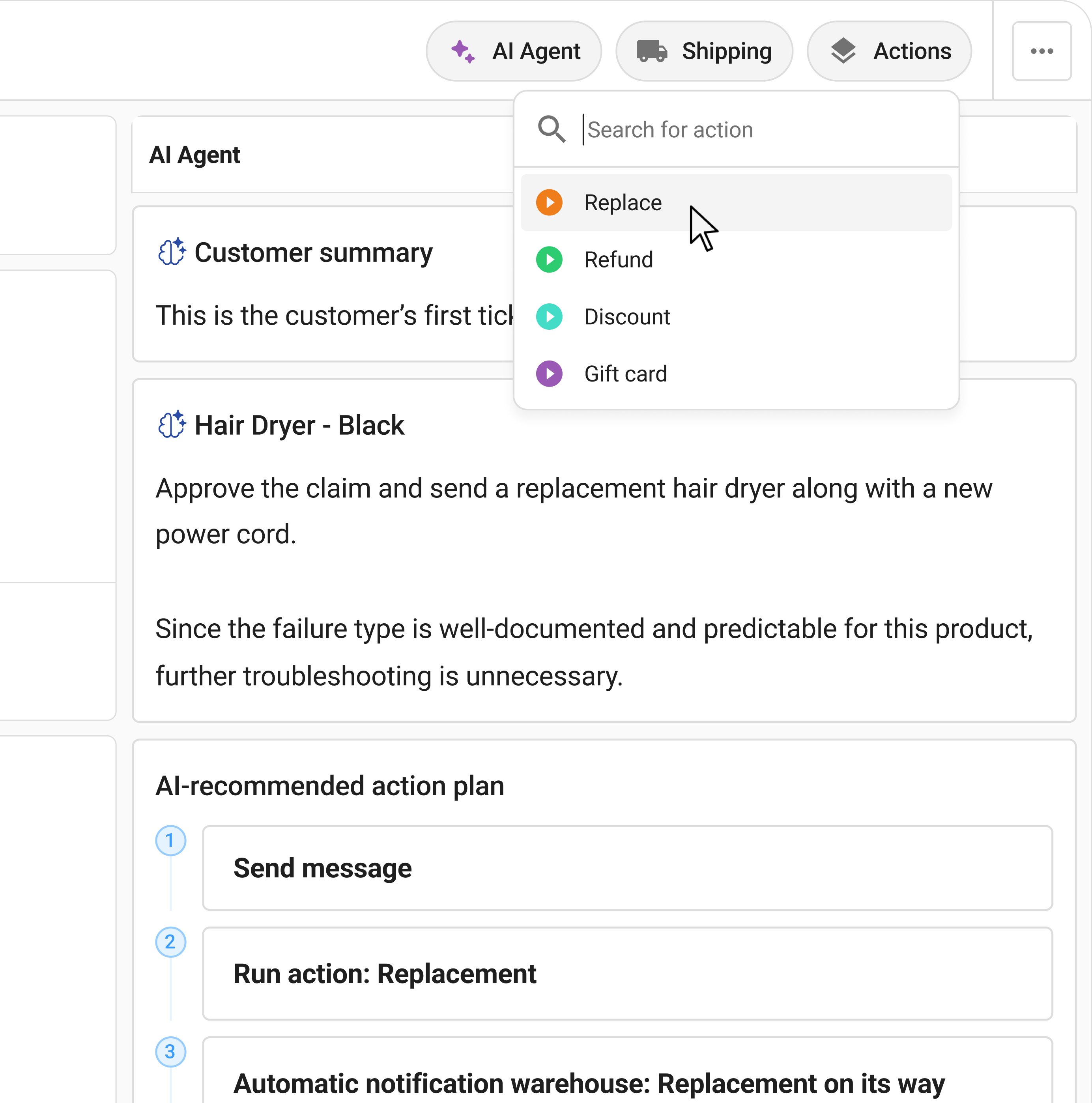
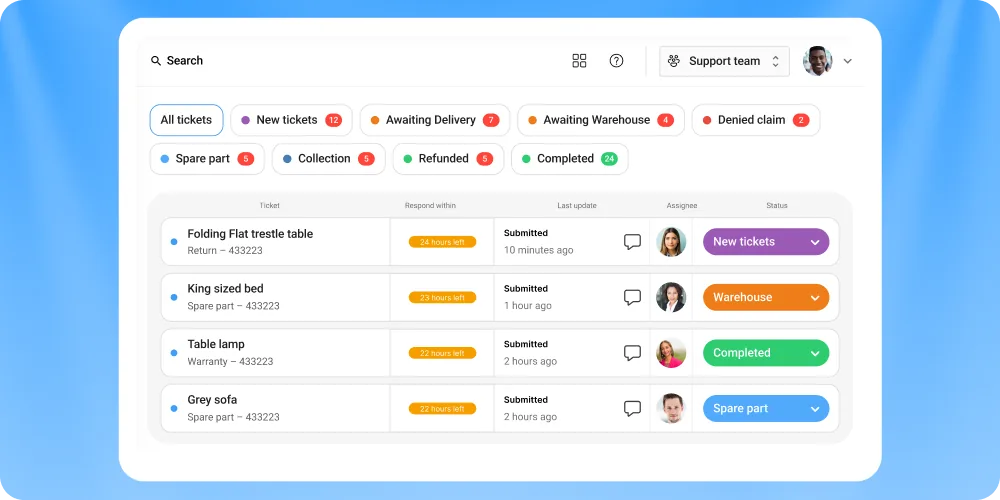
Claimlane is a post-purchase operations platform built specifically for returns, warranty claims, and supplier workflows. Where ReturnLogic focuses on D2C return volume and analytics, Claimlane is designed for brands that also handle warranty claims, B2B cases, or supplier forwarding as part of their operations.
It's used by brands in furniture, outdoor gear, electronics, baby and nursery, and DIY, industries where warranty and supplier coordination are central to the claims process.
Capabilities
- Returns and warranty claim workflows in one platform
- B2B and D2C case handling
- Supplier forwarding and credit note management
- Branded self-service claim portals
- Structured defect tracking with photo and video evidence
- Automated replacement and repair decision workflows
- Operational analytics with supplier performance insights
- Native integrations with Shopify, WooCommerce, Microsoft Dynamics, and more
Pricing
Flat pricing from $800 per month, including 2,000 tickets per year. Unlimited users. See the pricing page for current tiers.
Use Cases
- Brands selling products with warranty requirements
- Retailers handling supplier claims and credit notes
- B2B operations with multi-stakeholder approval flows
- Electronics, furniture, outdoor, and hardware categories
- Teams that need defect data to feed product improvements
How it compares to ReturnLogic
ReturnLogic is a D2C returns specialist. Claimlane is a broader post-purchase platform that covers returns, warranty claims, B2B cases, and supplier workflows in one system. For brands whose operations extend beyond standard returns, Claimlane removes the need for multiple tools.
Loop Returns
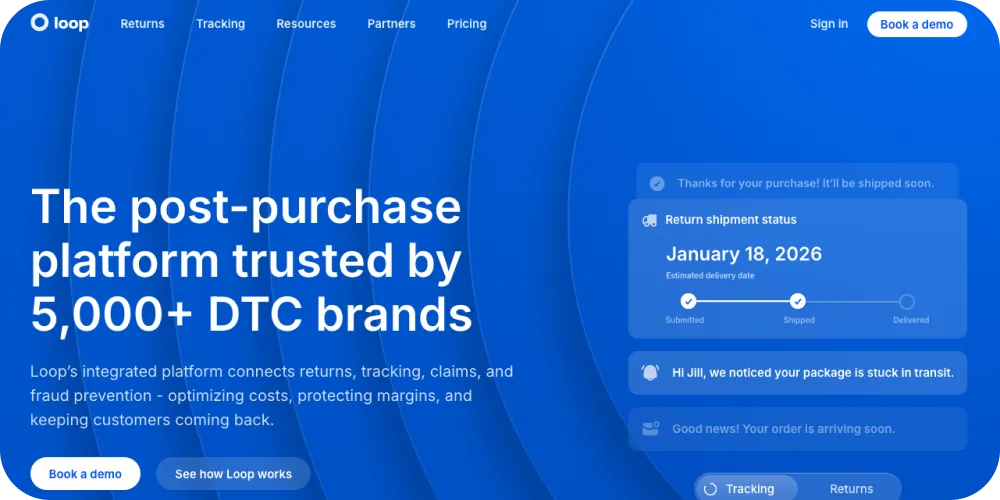
Loop is a Shopify-native returns platform that specializes in exchange-first return experiences. The platform is built around the idea that many returns can be converted into exchanges or upsells, retaining revenue that would otherwise be refunded.
Capabilities
- Exchange-first return flows with "shop now" functionality
- Bonus credit incentives for exchanges instead of refunds
- Branded customer-facing return portal
- Shopify-native integration
- Returns analytics focused on exchange conversion
Pricing
Tiered SaaS pricing based on return volume and Shopify plan.
Use Cases
- D2C Shopify brands in apparel and fashion
- Brands with strong existing customer demand for exchanges
- Teams focused on refund deflection and revenue retention
How it compares to ReturnLogic
Both platforms focus on D2C returns. Loop specializes in exchange-driven experiences and revenue retention, while ReturnLogic emphasizes returns analytics and automation rules. Loop's strengths don't extend to warranty claims or B2B returns.
ReturnGO
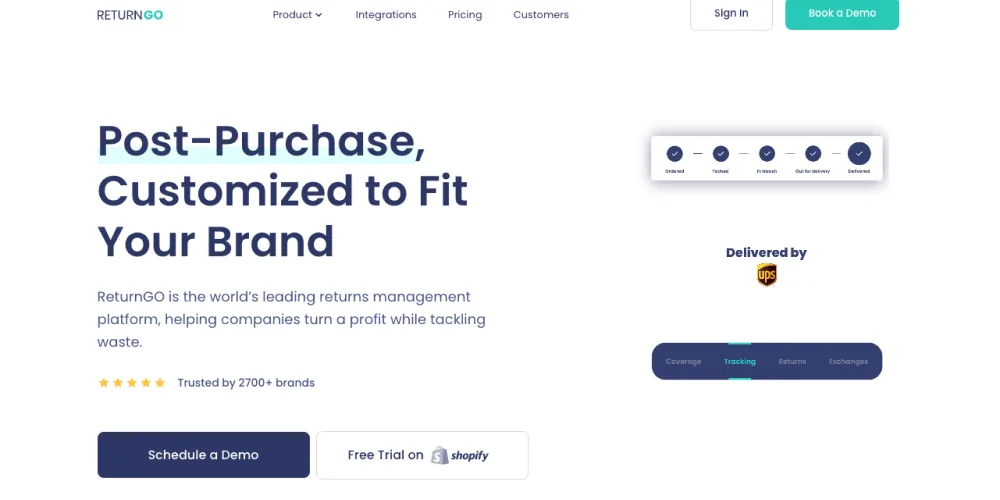
ReturnGO offers a self-service returns portal with flexible return policy configuration, multi-carrier label support, and broader ecommerce platform compatibility than ReturnLogic.
Capabilities
- Configurable return rules and policies
- Multi-carrier label integration
- Branded customer portal
- Automated refund, exchange, and store credit options
- Broad ecommerce platform support (Shopify, Magento, WooCommerce, BigCommerce)
Pricing
Tiered SaaS pricing based on return volume.
Use Cases
- Mid-market D2C brands with complex return rules
- Multi-platform ecommerce operations
- Brands testing multiple carriers for return logistics
How it compares to ReturnLogic
ReturnGO's strength is rules flexibility and broader platform support. ReturnLogic leans harder into analytics. Neither platform is built for warranty claims or supplier coordination.
Narvar
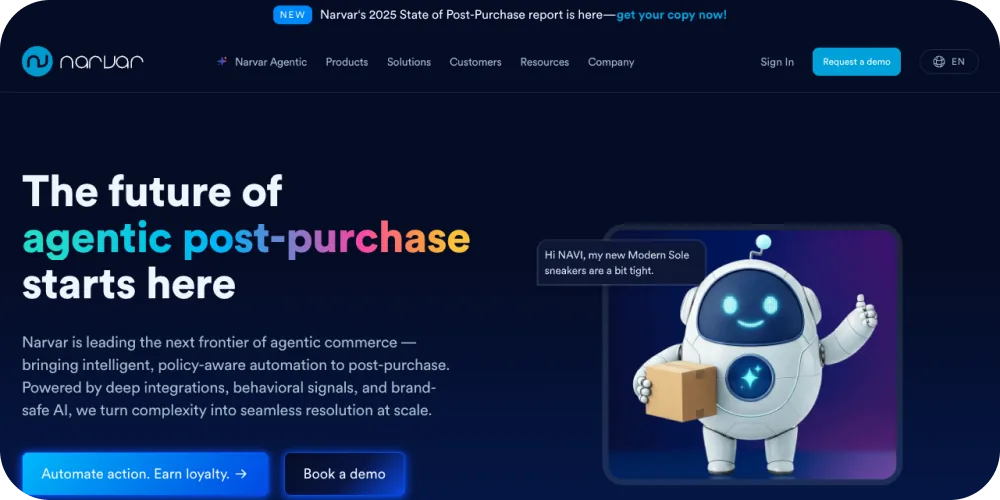
Narvar is a post-purchase customer experience platform used by many enterprise ecommerce brands. Returns are one module within a broader suite that also covers shipment tracking, branded notifications, and post-purchase engagement.
Capabilities
- Branded shipment tracking pages
- Post-purchase email and SMS notifications
- Returns management portal
- Customer engagement features across the delivery journey
Pricing
Use Cases
- Enterprise ecommerce brands
- Customer experience teams running branded post-purchase journeys
- Operations that want tracking and returns under one roof
How it compares to ReturnLogic
Narvar is broader and heavier. If you want returns bundled with tracking and branded notifications, Narvar covers more ground. ReturnLogic is more focused, and typically a better fit for mid-market brands that just need a strong returns tool.
AfterShip Returns
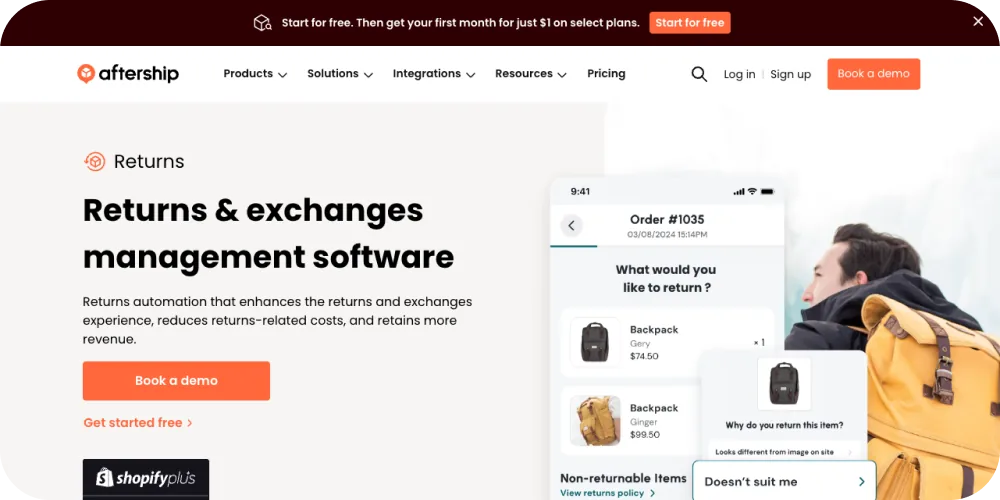
AfterShip Returns is part of the broader AfterShip suite, which also includes shipment tracking, notifications, and protection products. The returns module gives ecommerce brands a customer-facing portal with automation rules and global carrier integrations.
Capabilities
- Branded return portal
- Automation rules for return approvals
- Global multi-carrier label integration
- Returns analytics and reporting
- Ties into AfterShip's wider tracking ecosystem
Pricing
Tiered SaaS pricing from a free entry tier up to enterprise plans.
Use Cases
- Mid-market ecommerce brands
- Shopify stores wanting global carrier flexibility
- Teams already using other AfterShip products
How it compares to ReturnLogic
Both are D2C returns-focused platforms. AfterShip's pricing flexibility and global carrier coverage are its edge, while ReturnLogic focuses more on analytics depth. Neither handles warranty claims or B2B flows.
How to choose the right ReturnLogic alternative
The right alternative depends on which gap ReturnLogic left for you. A few common scenarios:
If you need warranty claim handling and supplier workflows
Claimlane is the most direct fit. It's the only platform on this list purpose-built for warranty claims, B2B returns, and supplier coordination alongside standard returns. If warranty or supplier workflows are eating up a meaningful share of your team's time, a returns-only tool won't solve the problem, regardless of how good it is at the returns piece. Before switching platforms, it's also worth reviewing your return policy strategy itself to make sure the tool you're choosing matches how you actually want to handle returns.
If you want a better exchange experience
Loop Returns is built for this specifically. If your biggest opportunity is converting returns into exchanges or retaining revenue through store credit, Loop's exchange-first design is hard to beat.
If you need broader platform support
ReturnGO or AfterShip Returns both support more ecommerce platforms than ReturnLogic and Loop. If your stack includes Magento, BigCommerce, or a custom platform, these are worth evaluating first.
If you want returns bundled with tracking and notifications
Narvar covers the full post-purchase experience in one platform. It's heavier and more expensive, but for enterprise brands that want one vendor for the whole delivery and returns journey, it's a legitimate consolidation play.
Final thoughts
ReturnLogic is a solid returns platform for D2C Shopify and BigCommerce brands whose primary challenge is return volume and customer experience. For those use cases, it remains a reasonable choice.
However, as ecommerce operations mature, the platforms that handle what happens after the return, warranty validation, supplier forwarding, defect tracking, B2B coordination, often become just as important as the returns portal itself. For brands whose needs extend beyond standard D2C returns, ReturnLogic starts to show its limits.
If you're in this comparison phase, a few related reads that might help: Reclaimit alternatives for brands evaluating Nordic-focused returns tools, best returns analytics software for teams prioritizing reporting depth, and what is a returns management system for anyone earlier in the evaluation process.
Want to see how Claimlane compares to ReturnLogic for your specific use case?
Book a demo →Comparing just these two? See the head-to-head breakdown: Claimlane vs ReturnLogic.