
Every guide to warranty deductibles is written for the customer. Pay $100 on an $800 repair, the warranty covers the rest, choose a lower deductible for a higher price. All true, and none of it helps a brand decide whether to set a deductible in the first place.
For a brand, a deductible does something the consumer guides never mention. It changes how many claims arrive. A claim that costs $40 in labour, shipping, and admin to process is a loss on a $15 accessory, and a small deductible makes that claim disappear before it reaches the desk. The deductible is not really about the money it collects. It is about the claims it never receives.
This is for warranty-heavy brands with repairs and spare parts, and it is written to be read by the finance and ops people who carry the claim cost, not just the customer service team.
What a warranty deductible is
Standard manufacturer warranties in many categories carry no deductible. Extended warranties and service contracts usually do. Common amounts sit at $0, $50, $100, or $200, and a lower deductible generally means a higher price for the coverage. That much matches the consumer explainers. The warranty policy template and the limited warranty explained guide show where a deductible sits inside the wider policy, and warranty versus guarantee clears up a related mix-up.
Why a deductible is a filter, not a fee
The revenue a deductible collects is small and beside the point. Its real job is to filter claims by making the customer decide whether the claim is worth their own money.
A zero-dollar warranty sounds generous until the claims desk meets a $9 keychain. When a claim costs the customer nothing, every minor issue, every borderline case, and a fair number of frivolous ones all get submitted, because there is no reason not to. A modest deductible removes the claims that were never worth processing while leaving real faults untouched. The hidden costs of returns and claims piece and the guide to reducing warranty claims both show how much of a claim queue is low-value volume rather than genuine failures.
The cost-per-claim math
Start with what a claim actually costs the brand. Add the labour to assess it, the parts or replacement, return shipping, and the admin overhead. In many repair-heavy categories the fully-loaded handling cost per claim runs well into double digits before the product itself is counted.
The point is to tie the deductible to the cost of processing, not to a round number a competitor happened to use. The returns and warranty KPIs guide covers how to measure that cost, and warranty reserve accounting explains how claim cost feeds the reserve that finance has to hold.
How deductible levels change claim behaviour
The level is the whole decision. Too low and it collects a little cash but barely moves claim volume. Too high and the warranty becomes a promise the brand never has to keep, because customers stop bothering to claim. That looks like a saving until the reviews and repeat-purchase numbers show the cost.
This is why the deductible should vary by product value and category rather than being one figure across the catalogue. The optimal warranty period length piece makes the same argument for duration, and how to improve the warranty claim rate covers the retention side of setting terms too tight.
Where deductibles help and where they backfire
Deductibles help most on low-value, high-volume categories where handling cost dwarfs the item, and on extended warranties customers chose to buy. They backfire on premium products where customers expect a no-friction claim, and on any brand competing on service, where a deductible reads as the brand nickel-and-diming a genuine fault.
The deductible also sits next to other policy levers. A brand weighing one should read it alongside return fees and what a restocking fee is, since all three shape the same trade-off between cost control and goodwill. Some brands skip the deductible entirely and instead turn claims into upsell moments, covered in three ways to turn warranty claims into revenue.
Applying a deductible in the claim flow
A deductible only works if it is applied cleanly. Bolting a manual payment step onto an email-based claim process adds friction that annoys customers with genuine faults, which is the opposite of the intent.
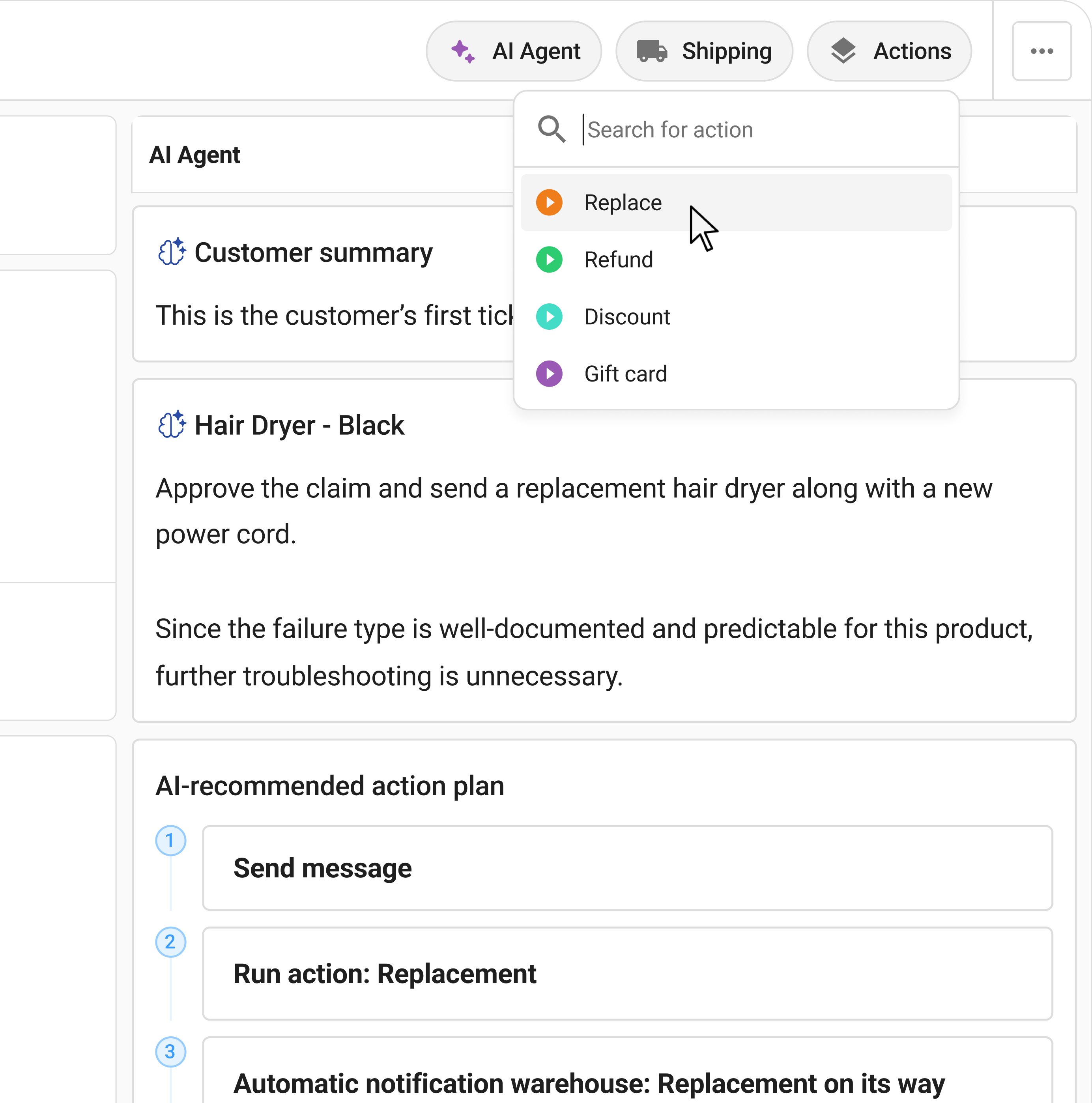
The better model applies the deductible inside the claim flow. Rules decide which products carry a deductible and at what level, the portal shows the customer the amount before they submit, and payment is collected as part of resolution. Claimlane's workflow engine sets the rules per product, the self-service portal presents the deductible up front, and warranty registration ties coverage and terms to the specific product. The warranty management process guide and proof of purchase for warranty cover the steps around it.
Deductible, reserves, and fraud
Two finance effects are worth naming. A deductible lowers claim volume, which lowers the warranty reserve a brand carries, since the reserve is a function of expected claims. And it removes a slice of low-value fraud, because a small out-of-pocket cost is enough to deter opportunistic claims while never blocking a real one.
Neither effect is large on its own, and neither is the reason to set a deductible. They are the finance-side benefits that come with a filter that was worth setting anyway. For the fraud angle, warranty fraud explained is the companion read, and analytics shows where claim cost concentrates. Brands running heavy repair volume can also see the warranty management software overview and the DIY and hardware industry page.
Claimlane holds a 4.8/5 rating on G2.
FAQ
Build the return and warranty portal customers actually use. The real question is not what number to charge. It is whether the claim process is cheap enough to run that a brand can afford to be generous. Where does the cost sit in the current process? Benchmark the warranty process to find out.