.webp)
Shopify just made every AI assistant a potential sales channel. With the launch of Agentic Storefronts, millions of merchants can now sell products directly inside ChatGPT, Google Gemini, Microsoft Copilot, and Google AI Mode. No redirects. No links to click through. Customers discover a product, ask questions, and buy it without ever leaving the conversation.
This isn't a plugin or a third-party hack. It's native infrastructure built into Shopify's admin, with pricing, inventory, and checkout synced automatically across every AI channel. For ecommerce brands already managing multiple sales channels, this changes the operational picture significantly.
What Are Shopify Agentic Storefronts?
Agentic Storefronts are Shopify's built-in sales channel that connects a merchant's product catalog to AI platforms. Once activated, products show up in AI-powered conversations when a customer asks for recommendations, comparisons, or specific items.
Here's what happens on the customer side:
- A shopper asks ChatGPT (or Gemini, or Copilot) something like "best running shoes under $150"
- The AI surfaces products from Shopify merchants that match
- The shopper sees product details, pricing, and images inside the chat
- They buy directly in the conversation using Shopify's checkout
For merchants, setup is minimal. Agentic Storefronts are active by default for eligible stores. Merchants manage channel permissions from Settings > Sales Channels in the Shopify admin.
The Agentic Commerce Protocol
Behind the scenes, this runs on what OpenAI calls the Agentic Commerce Protocol, built with Stripe. It handles the transaction layer so that purchases are secure, attributed correctly, and processed through Shopify's existing checkout infrastructure.
Currently, Instant Checkout in ChatGPT supports single-item purchases in the U.S. for ChatGPT Plus, Pro, and Free users. Multi-item carts and expanded regions are on the roadmap.
The Agentic Plan for Non-Shopify Brands
Shopify also launched the Agentic Plan, which lets brands that don't use Shopify for their main ecommerce site add products to the Shopify Catalog specifically to reach AI shopping channels. It plugs into existing PIMs, tax systems, and order management platforms. This means even brands running on custom stacks or other platforms can sell inside AI conversations.
Which AI Platforms Are Supported?
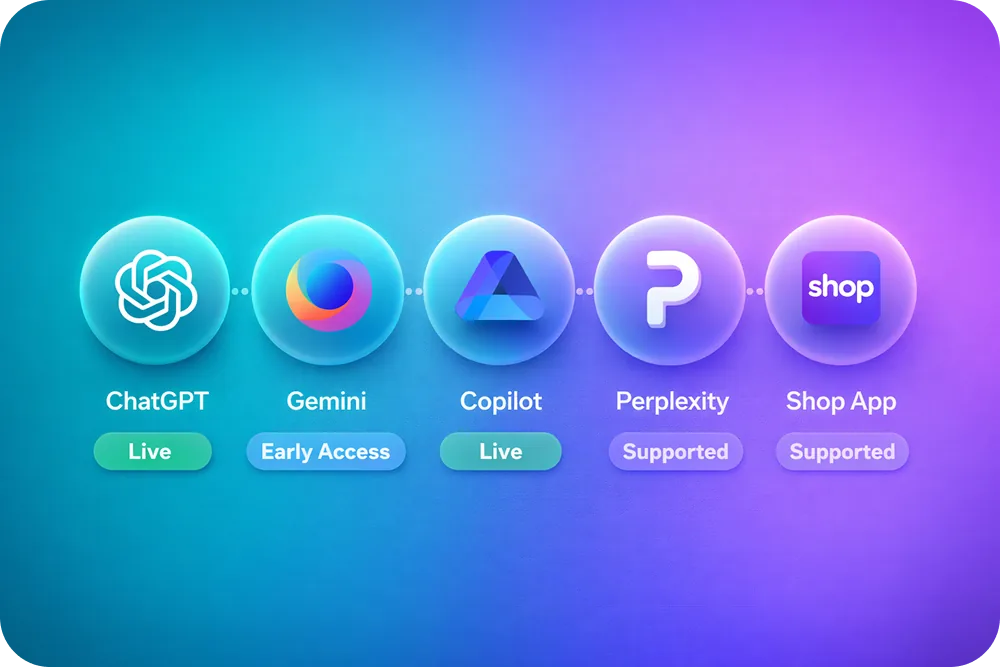
As of March 2026, Shopify Agentic Storefronts support:
- ChatGPT (live for eligible merchants)
- Google AI Mode and Gemini (early access)
- Microsoft Copilot (early access)
- Perplexity (supported)
- Shop App (supported)
More AI platforms are expected to join. The pattern is clear: wherever people have conversations with AI, commerce will follow.
Why This Matters for Ecommerce Operations
Adding a new sales channel sounds exciting until the operational reality sets in. Every new channel where products are sold creates new workflows for fulfillment, customer communication, and, critically, returns and warranty claims.
More Channels, More Returns Complexity
When a customer buys a product inside ChatGPT, the post-purchase experience still needs to work. That means:
- Return requests need to route correctly regardless of where the sale happened
- Warranty claims still need photo documentation, defect assessment, and resolution workflows
- Customer communication needs to be consistent whether someone bought on a website, through Instagram, or inside an AI chat
- Analytics need to track return rates and claim patterns per channel
Brands selling across 5+ channels often struggle with fragmented returns management. Adding AI chat channels makes this even more important to solve.
Attribution and Data Tracking
Shopify's Agentic Storefronts include built-in attribution and tracking. Merchants can see which AI channel drove a sale. But the real question for operations teams is: can they also see which AI channel drives the most returns?
If products sold through ChatGPT have a higher return rate than products sold on the website (possibly because conversational discovery leads to more impulse purchases), brands need that data to adjust pricing, descriptions, and return policies per channel.
Platforms like Claimlane that sit on top of Shopify and handle warranty and returns workflows will need to support this channel-level segmentation. Returns analytics that break down claim rates by acquisition channel become essential.
What Changes for Product Discovery
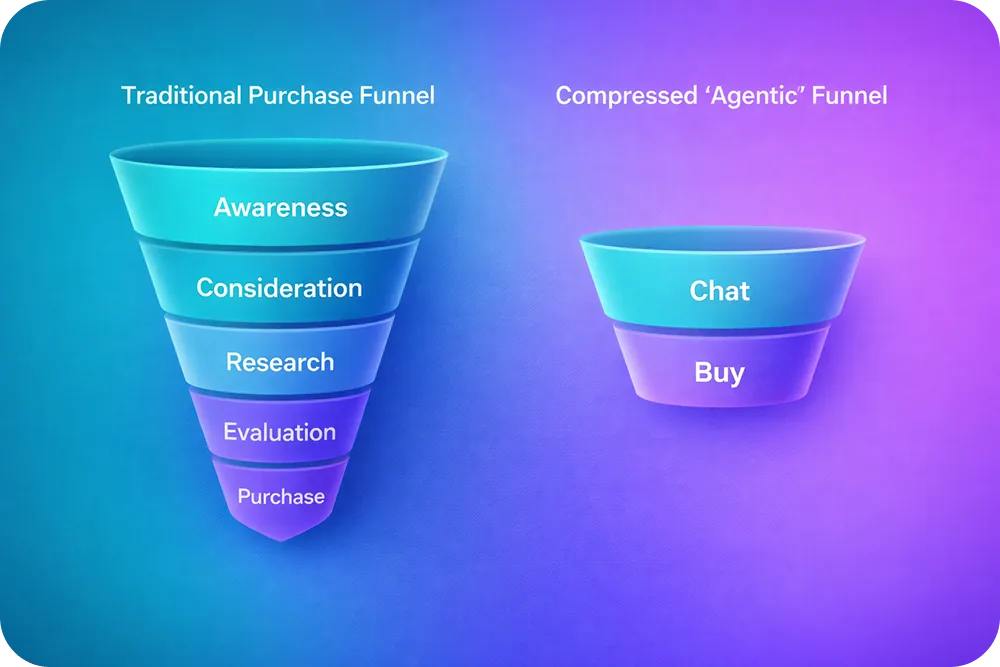
Traditionally, ecommerce product discovery follows a pattern: search engine > product page > add to cart > checkout. Agentic Storefronts compress this entire funnel into a single conversation.
Conversational Commerce vs. Traditional Funnels
This compression is powerful for conversion but raises questions about the post-purchase experience. When someone buys through a chat interface, how do they file a return? Where do they submit a warranty claim with photos? The purchase journey is conversational, but the after-purchase journey still needs structure.
Structured Data Becomes Critical
For products to surface accurately in AI conversations, product data needs to be clean and structured. AI models read product titles, descriptions, pricing, availability, and structured data (like JSON-LD schema) to decide what to recommend.
Brands with messy product data, vague descriptions, or inconsistent pricing across channels will struggle in this new discovery model. The brands that already optimize product data for SEO are best positioned to benefit.
Implications for Returns, Warranties, and After-Sales
This is where things get interesting for operations teams. Agentic Storefronts solve the "buy" problem but don't yet solve the "what happens after" problem.
Returns from AI-Channel Purchases
When a customer buys a pair of shoes inside ChatGPT and they don't fit, the return flow still needs to work. The order goes through Shopify's system, so existing return policies and return management systems still apply.
But the customer's expectation might be different. If they bought in a chat, they might expect to initiate a return in a chat too. Brands need to make sure their self-service claims portal is easy to find regardless of where the sale happened.
Warranty Claims Across Channels
For brands selling products with warranties (furniture, electronics, outdoor gear, baby products), the channel where the product was sold shouldn't change how a warranty claim is handled. But operationally, it often does.
Different channels sometimes feed into different systems. A sale through Shopify's website might create one order record, while a sale through ChatGPT might create another. If the warranty management system doesn't pull from a unified order source, customers can fall through the cracks.
This is where platforms like Claimlane add value. By integrating directly with Shopify and centralizing all claims regardless of sales channel, brands can handle warranty claims from ChatGPT purchases the same way they handle claims from website purchases.
The AI Agent Problem (and Opportunity)
Here's an interesting tension: Shopify is using AI agents to sell products, but what happens when those same customers need help after the sale?
The logical next step is AI-powered after-sales support that matches the buying experience. If a customer bought through an AI conversation, the return and warranty experience should feel equally smooth.
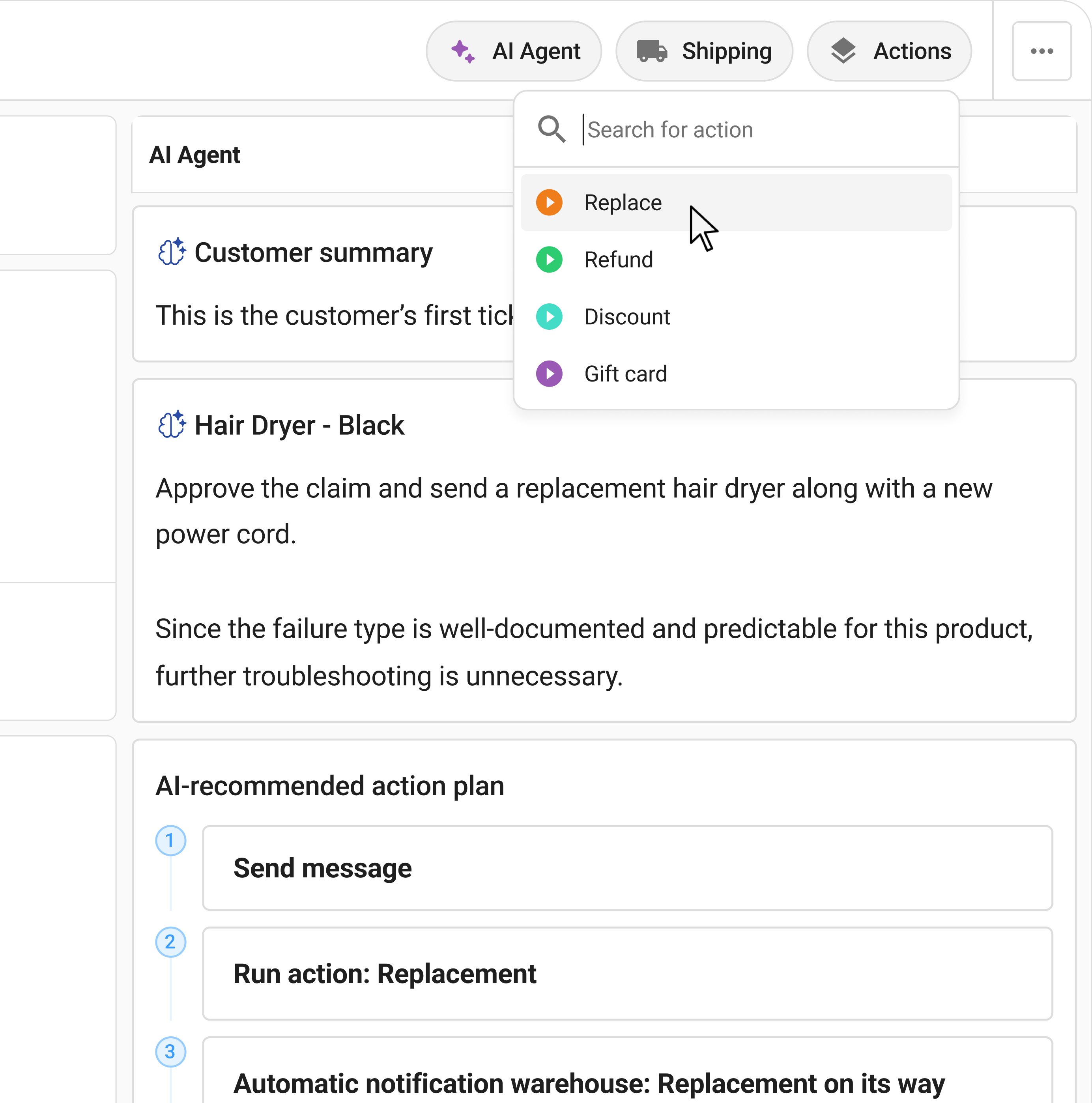
Claimlane's AI Agent, the first AI agent purpose-built for warranty claims and returns, is already built for this reality. It analyzes product images and videos, applies warranty rules per product and supplier, and recommends or auto-approves resolutions. As more sales happen through AI channels, having AI-powered after-sales to match becomes a competitive requirement, not a nice-to-have.
How to Prepare Your Shopify Store
For merchants looking to make the most of Agentic Storefronts, preparation goes beyond flipping a switch.
1. Clean Up Product Data
AI platforms pull from your product catalog. Ensure every product has:
- Clear, descriptive titles (no internal SKU codes)
- Detailed descriptions that answer common customer questions
- Accurate pricing and inventory levels
- High-quality images from multiple angles
- Proper categorization and tagging
2. Review Return and Warranty Policies
If your current return policy references "purchases made on our website," update it. Customers buying through ChatGPT are still your customers. Make return initiation channel-agnostic by pointing customers to a self-service portal rather than channel-specific instructions.
3. Set Up Channel-Level Analytics
Start tracking returns and claims data by sales channel from day one. This baseline will help identify if AI-channel purchases have different return patterns than traditional web purchases.
4. Ensure Your After-Sales Stack Integrates with Shopify
Your returns management, warranty claims, and customer communication tools all need to pull from Shopify's unified order system. If any after-sales tool can't see orders from Agentic Storefronts, fix that integration gap now.
5. Brief Your Support Team
Customers who bought through AI chat may reference the conversation when reaching out for support. Train agents to handle questions like "I bought this through ChatGPT" without confusion. The order is still a Shopify order; only the discovery channel is different.
What This Means for Brand Control
One concern merchants have raised: in an AI conversation, the AI decides which products to surface. Brands don't control placement the way they do with paid ads or their own website.
This is a real trade-off. The upside is access to hundreds of millions of potential buyers (ChatGPT alone has over 700 million weekly users). The downside is that brand storytelling, visual merchandising, and upselling are all compressed into whatever the AI decides to show.
For brands that differentiate on product quality and customer experience rather than brand aesthetics, this is a net positive. The product speaks for itself in the conversation. For brands that rely heavily on visual storytelling, the trade-off is harder.
Competitive Landscape: Who Else Is Moving?
Shopify isn't alone. Walmart has signaled interest in AI commerce integrations. Amazon's relationship with Alexa and its own AI assistants positions it well. Etsy was actually the first marketplace to go live with ChatGPT Instant Checkout.
For mid-market and DTC brands on Shopify, the advantage is clear: Shopify has already done the integration work. Merchants just need to activate it.
The brands that combine great product data with strong post-purchase operations will win in this new channel. Selling through AI is the easy part. Handling returns, warranties, and customer service at scale across all these channels is the hard part.
The Bigger Picture: Agentic Commerce Is Here
Shopify's move is part of a broader trend called agentic commerce, where AI agents act on behalf of consumers to find, compare, and purchase products. This isn't a pilot or experiment anymore. With millions of merchants now connected to AI shopping channels, it's infrastructure.
For ecommerce operations teams, the playbook is straightforward:
- Activate Agentic Storefronts if not already active
- Audit product data for AI readability
- Ensure after-sales systems (returns, warranties, claims) work across all channels
- Track channel-level metrics from day one
- Invest in AI-powered after-sales tools like Claimlane to match the AI-powered buying experience
The gap between how people buy and how people get support after buying is about to get a lot wider unless operations teams close it now.