.webp)
Free returns used to be the default in ecommerce. Amazon normalized it. Zappos built a brand around it. For years, the unspoken rule was simple: if online shoppers can't try before they buy, the least a retailer can do is make returns painless and free.
That era is ending. According to the National Retail Federation, nearly $850 billion in merchandise was expected to be returned in 2025. And 72% of retailers now charge restocking or return fees, up from 66% the year before.
The shift is clear: free returns are expensive, and brands are looking for alternatives. But killing free returns entirely isn't simple either. This guide breaks down the real pros and cons of free returns and explores smarter policy models that protect margins without driving customers away.
The Case for Free Returns
They increase conversion rates
Free returns reduce purchase risk. When shoppers know they can send something back without cost, they're more likely to click "buy." Route's 2026 research found that 97% of shoppers say a positive return experience makes them more likely to shop again, and 82% say easy returns influence their decision to try new brands.
For categories where fit or quality is uncertain (fashion, footwear, furniture), free returns directly affect whether a first-time customer converts.
They build customer trust and loyalty
A free return policy signals confidence in the product. It tells the customer: "We believe you'll love this, and if you don't, we won't penalize you for it."
Brands that handle after-sales service well, including returns, build long-term loyalty. A customer who has a smooth return experience is more likely to buy again than one who never returns at all but had a mediocre experience.
They level the playing field with physical retail
In a physical store, shoppers try on clothes, sit on furniture, and test electronics before buying. There's no "return shipping fee" for putting a shirt back on the rack. Free returns give online shoppers a similar level of confidence, which helps ecommerce compete with brick-and-mortar on experience.
They reduce cart abandonment
Return policy is one of the top factors shoppers check before completing a purchase. A visible "free returns" badge on product pages and at checkout reduces hesitation. Studies consistently show that restrictive return policies increase cart abandonment rates, particularly for higher-priced items.
The Case Against Free Returns
The cost is staggering
Every free return involves real expenses:
- Return shipping labels: $5 to $15 per package depending on size and carrier
- Warehouse processing: receiving, inspecting, repackaging, restocking
- Payment processing fees: refund transaction costs
- Depreciation: items returned opened, tried on, or out of season often can't be resold at full price
The NRF reports that online return rates average 19.3%. For a mid-size ecommerce brand doing $10 million in annual revenue, that's nearly $2 million in returned merchandise, with processing costs on top.
The hidden costs of returns go beyond shipping. Returned inventory ties up warehouse space, creates forecasting errors, and often ends up in liquidation channels at a fraction of original value.
They encourage over-ordering and bracketing
When returns are free, there's no reason not to order three sizes and return two. This behavior, known as bracketing, is directly correlated with free return policies. Business Insider notes that bracketing is "especially prevalent when retailers offer free shipping and free returns."
Gen Z shoppers are the biggest bracketers. Emarketer data shows that 53% engage in bracketing, and 49% admit to wardrobing (buying items for one-time use and returning them).
They attract return fraud
Free returns with minimal friction create an opening for abuse. The same Emarketer research found that more merchants reported an increase in fraud after implementing return fees (44%) than a reduction (42%). But that doesn't mean free returns are safer. Free return policies with no verification make fraud easier because the barrier to initiating a return is zero.
Common fraud types: returning stolen merchandise, sending back empty boxes, and swapping products for cheaper versions. Returns analytics that track patterns across customer accounts are essential for catching abuse.
They're not sustainable
Every returned package generates carbon emissions from shipping, packaging waste, and in many cases, product disposal. Research shows that 44% of returned products are never resold. Free returns that encourage over-ordering multiply this environmental impact.
As sustainability regulations tighten across Europe and beyond, the environmental cost of free returns is becoming a compliance issue, not just a brand values question.
What Major Retailers Are Doing
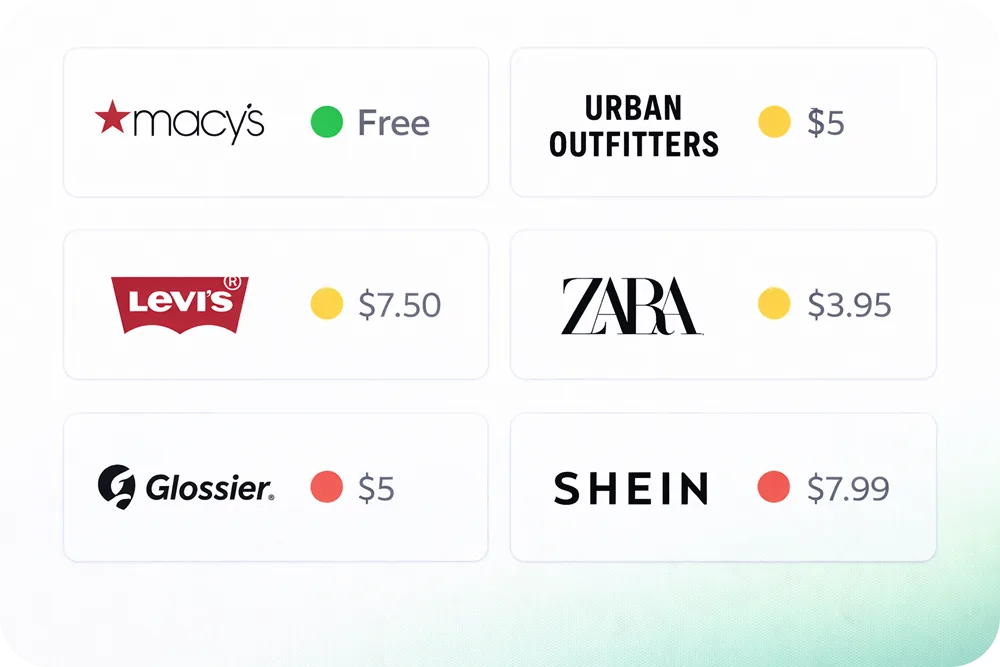
The industry shift away from blanket free returns is accelerating.
The pattern is clear: mail-back returns are getting a fee, while in-store returns stay free. This pushes shoppers toward in-store returns, which cost less to process and create opportunities for additional purchases.
| Retailer | Return Fee (Mail) | Free In-Store? | Notes |
|---|---|---|---|
| Zara | $3.95 | Yes | Introduced 2023 |
| H&M | $5.99 | Yes | Free for loyalty members |
| J. Crew | $7.50 | Yes | Deducted from refund |
| T.J. Maxx / Marshalls | $11.99 | Yes | Highest mail return fee |
| Amazon | Free (most items) | Yes (Kohl's, UPS) | May charge selectively |
| Target | Free | Yes | Shortened holiday window |
Smarter Alternatives to Blanket Free Returns
The best return policies aren't "free for everyone" or "paid for everyone." They're nuanced systems that balance customer experience with operational costs.
Free exchanges, paid refunds
This is the most popular alternative model. Exchanges are free because the customer is keeping a product. Refunds come with a small fee ($3 to $8) that's deducted from the refund amount.
The incentive structure nudges customers toward exchanges (revenue retained) rather than refunds (revenue lost). Many returns management platforms support this model natively.
Store credit with bonus incentives
Instead of a refund to the original payment method, offer store credit with a bonus. For example: "Return for a full refund, or choose store credit and get an extra 10%."
This keeps the money in the brand's ecosystem and often results in the customer spending more than the credit value on their next purchase. It turns a return into a retention tool.
Loyalty-tiered returns
Reward low-return customers with better return terms:
- Gold tier (low return rate): Free returns, extended window
- Standard tier: Free first return per quarter, nominal fee after
- High-return accounts: Standard fee applies to all returns
This creates a fair system where customers who rarely return aren't subsidizing the costs created by serial bracketers.
Free returns on warranty and defect claims only
Product defects and warranty claims should always be free to return. The customer didn't cause the problem, and charging them for a return on a defective product destroys trust.
Separating warranty returns from preference returns requires a system that can distinguish between the two. A dedicated claims management platform with AI-powered claim routing can automatically identify warranty claims, validate them, and process free returns while applying different rules to change-of-mind returns.
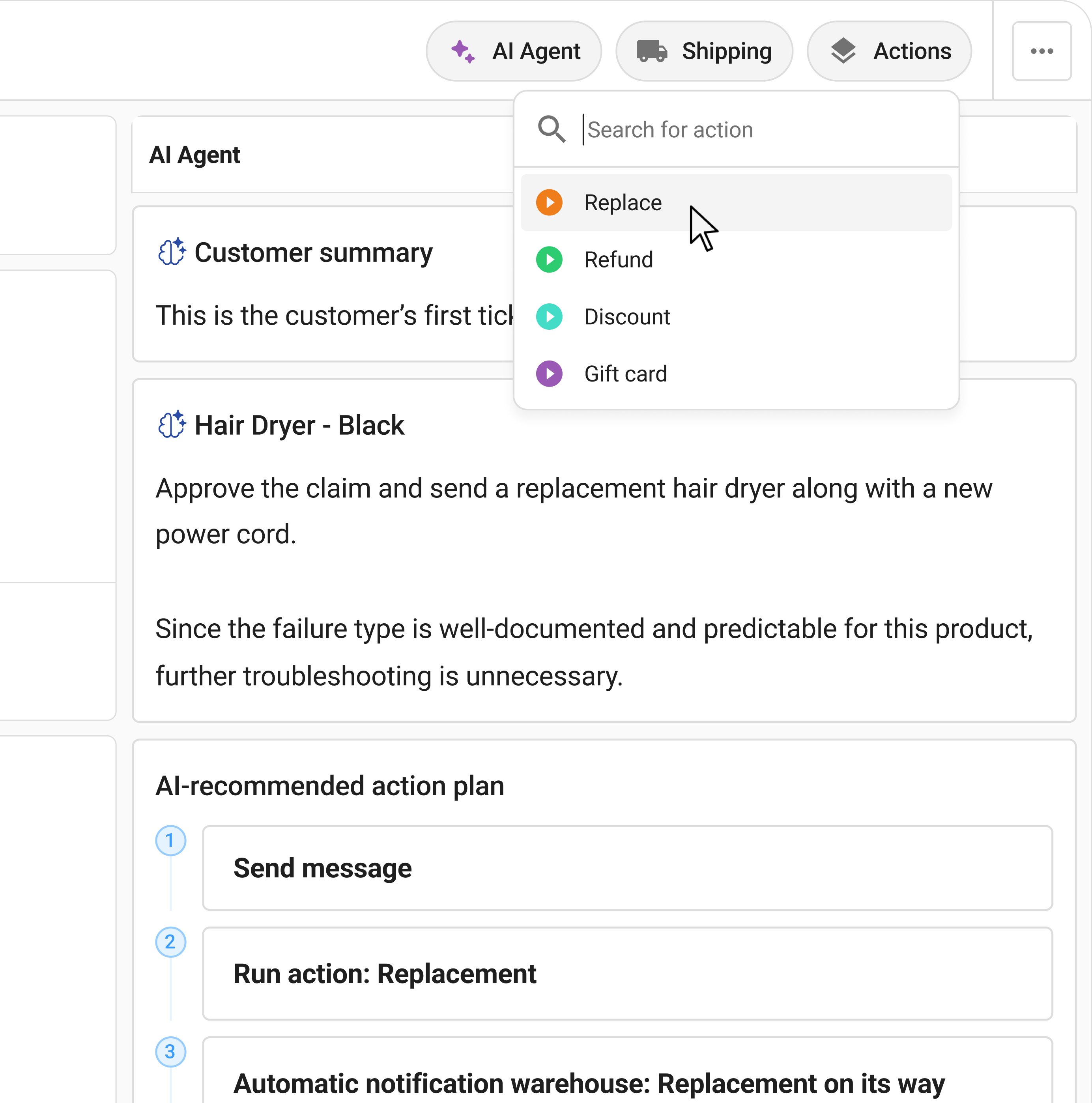
Claimlane's AI Agent, the first AI agent purpose-built for warranty claims and returns, analyzes product images and videos, applies warranty rules per product and supplier, and recommends resolutions. This ensures that legitimate warranty claims get fast, free resolution while standard returns follow the brand's paid return policy.
In-store return incentives
For brands with physical locations, making in-store returns free while charging for mail returns drives foot traffic and reduces shipping costs. Today.com reports that this model is gaining traction because "returns can be free if returned into the store and brands that have those locations can convert those losses into another purchase."
Even pure-play ecommerce brands can use third-party drop-off networks (like Amazon's Kohl's partnership or Happy Returns' locations) to offer a similar experience.
How to Transition Away from Free Returns
Switching from free returns to a paid or hybrid model requires careful execution. Do it wrong, and customer backlash can offset any cost savings.

Step 1: Analyze current return data
Before changing anything, understand the current state. Key metrics:
- Overall return rate by category and channel
- Return reason breakdown (sizing, defective, changed mind, bracketing)
- Cost per return including shipping, processing, and depreciation
- Customer segmentation by return frequency
Returns analytics tools provide this data automatically. Without it, policy changes are guesswork.
Step 2: Communicate the change clearly
Announce the new policy well in advance. Explain the reasoning honestly. Brands that frame the change around sustainability ("reducing unnecessary shipping to lower our carbon footprint") or fairness ("keeping prices low for everyone") see less pushback than those that quietly add fees.
Update the return policy page, order confirmation emails, and product pages. Surprises at the return stage are the fastest way to lose a customer permanently.
Step 3: Implement gradually
Don't flip the switch overnight. A phased approach:
- Week 1-4: Announce the change, offer a transition period with free returns
- Month 2: Introduce the new policy for new customers
- Month 3: Roll out to all customers
- Ongoing: Monitor return rates, conversion rates, and customer satisfaction
Step 4: Invest in reducing return triggers
Every dollar spent on reducing returns is worth more than every dollar spent on processing them. Priorities:
- Better product photography and size guides
- Customer reviews with fit context
- Self-service portal that captures return reasons for continuous improvement
- Automated workflows that process returns faster and cheaper
Step 5: Keep warranty returns free
This is non-negotiable. If a product is defective, the customer shouldn't pay to return it. Use a dedicated warranty management system to separate warranty claims from standard returns and apply different policies automatically.
The Economics: Free Returns vs. Paid Returns

Here's a simplified comparison for a mid-size ecommerce brand doing $5M in annual revenue with a 20% return rate.
These numbers are illustrative, but the directional impact is consistent across brand sizes. A 25% reduction in return volume plus modest fee revenue adds up fast. The key variable is whether conversion rates dip. Brands that invest in better product content and a smooth claims experience typically see minimal conversion impact.
| Metric | Free Returns | Hybrid Model ($5 fee) | Difference |
|---|---|---|---|
| Annual returns volume | 20,000 | 15,000 | 5,000 fewer |
| Return shipping cost | $200,000 | $75,000 | $125,000 saved |
| Processing cost | $300,000 | $225,000 | $75,000 saved |
| Return fee revenue | $0 | $52,500 | +$52,500 |
| Total annual impact | ~$252,500 saved |
Warranty Claims Are Different
One critical distinction that many brands miss: warranty claims and product defect returns should never be subject to return fees.

When a product breaks during the warranty period, the customer didn't do anything wrong. Charging them for a return on a defective product is a fast track to negative reviews, social media complaints, and lost lifetime value.
The challenge is separating legitimate warranty claims from standard returns. A self-service portal that collects photos, videos, and product details at the point of claim submission gives brands the data to make this distinction. Claimlane's AI Agent reviews this evidence automatically, validates warranty eligibility, and routes claims through the appropriate workflow without human intervention for straightforward cases.
Skechers uses Claimlane to manage warranty claims efficiently, ensuring customers with legitimate defects get fast resolution while the brand maintains control over its return policy for non-warranty returns.