.webp)
Magento powers some of the largest online stores in the world. But no ecommerce platform does everything well out of the box. The real power of Magento (now Adobe Commerce) comes from its integration ecosystem, which lets brands connect the tools they actually need to run their business.
The problem? There are thousands of Magento extensions and integrations available. Picking the right ones can feel like sorting through a warehouse with no labels.
This guide breaks down the best Magento integrations for 2026 across every major category: returns and warranty management, CRM, ERP, shipping, payments, customer support, marketing, and more. Each pick is based on real-world performance, ease of setup, and how well it actually works with Magento 2.
Why Magento Integrations Matter
Magento's native features cover the basics: product catalog, checkout, basic reporting. But most brands hit limits quickly when they try to manage after-sales operations, customer relationships, fulfillment, and marketing from Magento alone.
The right integrations solve specific operational gaps:
- Returns and warranty claims still run on email and spreadsheets at many Magento stores. A dedicated integration cuts handling time significantly.
- Shipping and fulfillment gets complex fast with multiple carriers, international orders, and split shipments.
- CRM and ERP connections keep customer and order data in sync across departments.
- Payment flexibility directly affects conversion rates at checkout.
Think of Magento as the foundation. Integrations are what turn it into a business that actually scales.
How This List Was Built
Every integration on this list meets three criteria:
- Native or well-maintained Magento 2 compatibility. No abandoned extensions or workarounds.
- Proven at scale. Used by real ecommerce brands processing meaningful order volumes.
- Clear ROI. Saves time, reduces errors, or directly improves revenue.
Category winners were selected based on feature depth, Magento-specific functionality, pricing transparency, and user reviews on G2 and the Adobe Commerce Marketplace.
Best Magento Integration for Returns and Warranty Management

Claimlane
Most Magento stores handle returns through email threads or basic RMA extensions that only cover the simplest cases. Warranty claims, repairs, and supplier coordination? Those usually live in spreadsheets.
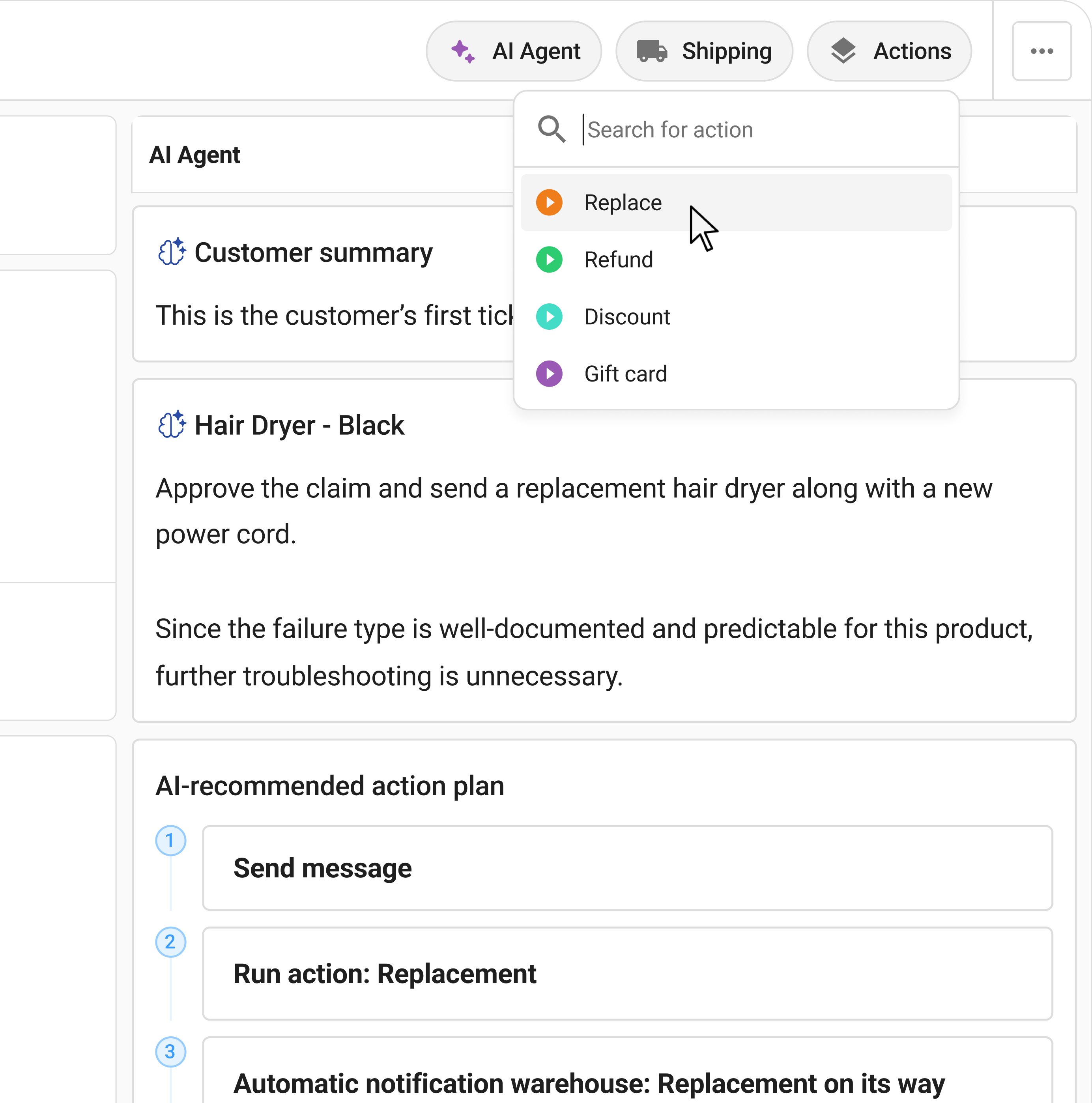
Claimlane connects directly to Magento and pulls in order data automatically. When a customer submits a claim through the self-service portal, Claimlane matches it to the original order, collects photos and videos, and routes it through the right workflow based on product type, warranty status, and claim reason.
What sets Claimlane apart from basic Magento RMA extensions:
- AI Agent that analyzes product images and videos, applies warranty rules per product and supplier, and recommends or auto-approves resolutions. This is the first AI agent purpose-built for warranty claims and returns.
- Warranty claims, not just returns. Handles repairs, replacements, spare parts, and supplier forwarding.
- Analytics on defect patterns, supplier performance, and claim trends.
- 75+ integrations beyond Magento, including Shopify, WooCommerce, ERPs, and shipping providers.
Davidsen, a major Danish DIY retailer, went from five agents handling claims to one or two after connecting Claimlane to their systems. MaxGaming, the largest gaming ecommerce store in Scandinavia with over 30,000 SKUs, resolved complex RMA cases 77% faster using Claimlane's AI agents.
Best for: Magento stores that handle warranty claims, repairs, or supplier returns alongside standard ecommerce returns.
Pricing: From $800/month.
Best Magento CRM Integrations

HubSpot CRM
HubSpot connects to Magento through several well-maintained extensions, including Mageplaza's HubSpot integration and Zapier-based connectors. It syncs customer data, order history, and browsing behavior into HubSpot's CRM, giving marketing and sales teams a full picture of each customer.
The free CRM tier makes it accessible for smaller Magento stores. Larger brands benefit from HubSpot's marketing automation, email sequences, and lead scoring tied directly to ecommerce activity.
Best for: Magento stores focused on inbound marketing and lead nurturing.

Salesforce Commerce Cloud Connector
For enterprise Magento stores already using Salesforce, the Commerce Cloud connector keeps customer profiles, order data, and service tickets synchronized. It works well for brands running complex B2B and B2C operations from the same Magento instance.
The setup is heavier than HubSpot and usually requires a Salesforce implementation partner. But for large catalogs and multi-brand operations, the depth of data integration is hard to match. Brands already using Salesforce integrations across their stack will find this a natural fit.
Best for: Enterprise Magento stores with existing Salesforce investments.
Best Magento ERP Integrations

Microsoft Dynamics 365
Dynamics 365 connects to Magento through middleware platforms like Celigo and Jitterbit, or through custom API integrations. It handles inventory synchronization, order management, financial reconciliation, and procurement workflows.
For brands managing warranty claims through Dynamics, the Magento connection ensures that RMA data, credit notes, and inventory adjustments flow automatically between systems.
Best for: Mid-market and enterprise brands standardized on Microsoft's ecosystem.

NetSuite (Oracle)
NetSuite offers a native Magento connector (SuiteCommerce) and several third-party connectors through Celigo and Folio3. It syncs orders, inventory, customers, and financial data in near real-time.
The integration shines for brands running multi-channel operations where Magento is one of several sales channels feeding into NetSuite. Brands using NetSuite for warranty and repairs management can sync claim data alongside standard order flows.
Best for: Multi-channel brands using NetSuite as their core ERP.

SAP Business One / S4HANA
SAP integrations with Magento typically run through middleware like APPSeCONNECT or Alumio. They handle complex B2B pricing, multi-warehouse inventory, and advanced procurement workflows that smaller ERPs struggle with.
Setup is the most complex of any ERP integration on this list. But for brands with SAP already in place, the Magento connector prevents the manual data entry that otherwise slows down ecommerce logistics operations.
Best for: Large enterprises with existing SAP infrastructure.
Best Magento Shipping and Fulfillment Integrations
ShipStation
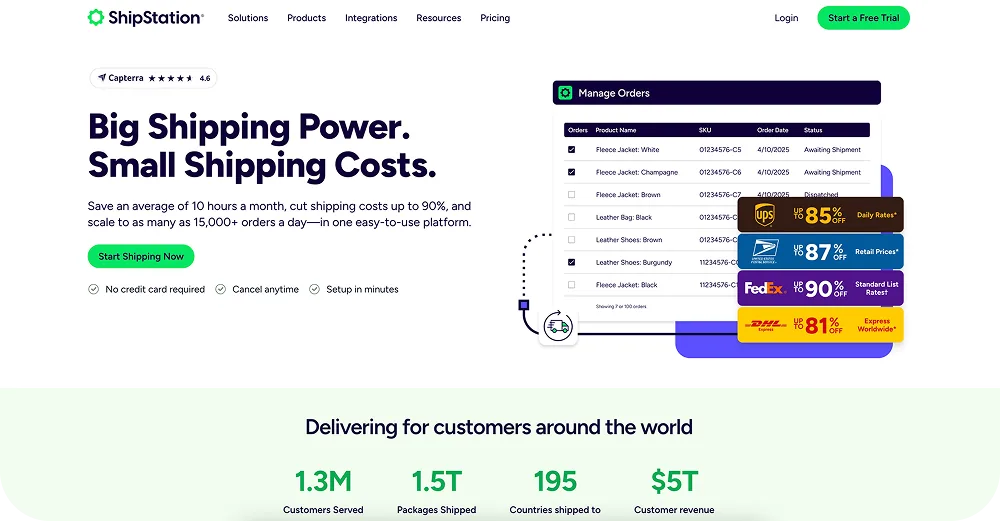
ShipStation connects to Magento and pulls in orders automatically. It compares rates across carriers (USPS, UPS, FedEx, DHL), prints labels in batch, and pushes tracking numbers back to Magento.
The Magento 2 extension works reliably and supports multi-warehouse routing, which matters for brands with distributed fulfillment. Automation rules can assign carriers based on weight, destination, or shipping method selected at checkout.
Best for: Mid-volume Magento stores shipping domestically and internationally.

Shippo
Shippo takes a simpler approach than ShipStation, focusing on rate comparison and label generation. It connects to Magento through its API and offers pay-per-label pricing, which works well for smaller stores that don't need ShipStation's full automation suite.
The platform also handles return labels, which pairs well with a dedicated returns management system for brands that want to automate the full post-purchase flow.
Best for: Smaller Magento stores looking for simple, affordable shipping.

ShipBob
ShipBob is a 3PL fulfillment provider with a direct Magento integration. It syncs inventory and orders, routes shipments to the nearest warehouse, and handles pick-pack-ship operations.
The integration makes sense for brands that want to outsource fulfillment entirely rather than manage their own warehouse. ShipBob also handles returns processing at their facilities, though brands with warranty claims or repair workflows typically need a separate tool like Claimlane for that layer.
Best for: DTC brands outsourcing fulfillment to a 3PL.
Best Magento Payment Integrations
Stripe
Stripe's Magento 2 module supports credit cards, Apple Pay, Google Pay, and dozens of local payment methods. It handles subscriptions, invoicing, and one-click checkout, and its fraud detection (Radar) runs automatically on every transaction.
The developer experience is excellent, which matters for Magento stores with custom checkout flows. Stripe's reporting also gives finance teams clean data on payment reversals and chargebacks.
Best for: Magento stores that want flexible, developer-friendly payment processing.
Klarna
Klarna's buy-now-pay-later integration is available as a native Magento 2 extension. It offers Pay in 4, Pay in 30 days, and financing options at checkout.
For ecommerce brands, Klarna can increase average order value by 40-60% according to Klarna's own data. The trade-off is higher return rates, since BNPL customers tend to over-order and return what doesn't fit. Brands using Klarna should have a solid returns workflow in place.
Best for: Fashion, furniture, and electronics stores where flexible payments drive conversions.
PayPal / Braintree
PayPal remains the most widely recognized online payment method globally. Braintree (PayPal's developer platform) offers a cleaner Magento integration with support for credit cards, PayPal, Venmo, and local payment methods.
The Magento 2 module is well-maintained and handles refund processing directly through the admin panel. For brands dealing with high volumes of refund and return transactions, PayPal's buyer protection policies are worth understanding thoroughly.
Best for: Magento stores that need broad payment coverage and buyer trust.
Best Magento Customer Support Integrations
Zendesk
Zendesk connects to Magento through its official app and several third-party connectors. Support agents can see order history, shipping status, and customer details directly inside Zendesk tickets.
The integration works well for general support, but brands that handle complex warranty claims or multi-step returns often find that Zendesk alone isn't enough. Pairing Zendesk with a dedicated claims management tool covers both general support and specialized aftersales workflows.
For more on optimizing the Zendesk stack, see this guide to the best Zendesk integrations.
Best for: Magento stores with high support ticket volumes across multiple channels.
Gorgias
Gorgias is built specifically for ecommerce support. Its Magento integration pulls in order data, allows one-click refunds and order edits from the support dashboard, and uses automation rules to handle common ticket types.
The platform's integration ecosystem connects to Klaviyo, Yotpo, and shipping providers, making it a strong hub for DTC brands. Like Zendesk, it handles general support well but doesn't replace specialized warranty claim workflows.
Best for: DTC Magento stores focused on fast, branded customer support.
Best Magento Marketing and Email Integrations
Klaviyo
Klaviyo is the dominant email and SMS marketing platform for ecommerce. Its Magento 2 integration syncs customer profiles, order data, browsing behavior, and product catalog in real-time.
The platform's segmentation engine lets brands build flows triggered by specific ecommerce events: abandoned carts, post-purchase sequences, win-back campaigns, and review requests. For Magento stores running on tight margins, Klaviyo's revenue attribution reporting shows exactly which emails drive sales.
Best for: Magento stores serious about email and SMS marketing.
Omnisend
Omnisend offers a more affordable alternative to Klaviyo with similar Magento integration depth. It supports email, SMS, push notifications, and even WhatsApp from a single platform.
The free tier is generous enough for smaller Magento stores to get started, and the pre-built automation workflows save setup time. Where Klaviyo wins on advanced segmentation, Omnisend wins on simplicity and multi-channel coverage.
Best for: Budget-conscious Magento stores that want multi-channel marketing.
Best Magento Search and Navigation Integrations
Algolia
Algolia replaces Magento's native search with a fast, typo-tolerant, AI-powered search experience. Results appear in milliseconds, and the platform supports faceted filtering, synonyms, and merchandising rules.
For stores with large catalogs (5,000+ SKUs), Algolia's impact on conversion rates is measurable. Shoppers who search convert at 2.6x the rate of non-searchers, according to Algolia's research. The Magento 2 extension is well-documented and actively maintained.
Best for: Magento stores with large catalogs where search drives a significant share of revenue.
Klevu
Klevu offers AI-powered search, category merchandising, and product recommendations specifically built for ecommerce platforms including Magento. It learns from shopper behavior to improve result relevance over time.
The platform positions itself between Magento's native search (limited) and Algolia (more developer-focused). Klevu's visual merchandising dashboard gives non-technical teams control over search results and category pages.
Best for: Magento stores that want AI search without heavy developer involvement.
Best Magento Reviews and Social Proof Integrations
Yotpo
Yotpo collects product reviews, photos, and Q&A content from customers and displays them on Magento product pages. It also syndicates reviews to Google Shopping, which can improve click-through rates on product listing ads.
The Magento 2 integration is solid, and Yotpo's post-purchase review request emails have high completion rates. For brands dealing with product quality issues, reviews can serve as an early warning system for defects before warranty claims spike.
Best for: Magento stores that rely on social proof and user-generated content.
Trustpilot
Trustpilot focuses on company-level reviews rather than product-level reviews. The Magento integration sends automatic review invitations after purchase and displays TrustBox widgets on the storefront.
For brands where trust and reputation matter (electronics, furniture, high-value goods), a strong Trustpilot score directly affects conversion rates. The platform also integrates with Google Seller Ratings, adding star ratings to paid search ads.
Best for: Magento stores in trust-sensitive categories.
Best Magento Analytics Integrations
Google Analytics 4 (GA4)
GA4 is the default analytics platform for most Magento stores. The Magento 2 integration (via GTM or direct module) tracks ecommerce events: product views, add-to-cart, checkout steps, purchases, and refunds.
Setting up enhanced ecommerce tracking properly takes some work on Magento, but the payoff is clear visibility into the full customer journey. For brands tracking returns and warranty KPIs, GA4 can complement platform-specific analytics with site-level behavior data.
Best for: Every Magento store. This is a baseline integration.
Hotjar
Hotjar adds heatmaps, session recordings, and user surveys to Magento. It answers the question GA4 can't: why are users doing what they're doing?
The Magento integration is simple (a script tag) and the free tier covers most small-to-mid-size stores. Watching real users struggle with checkout, search, or returns pages reveals improvement opportunities that data alone misses.
Best for: Magento stores optimizing conversion rates and user experience.
How to Choose the Right Magento Integrations
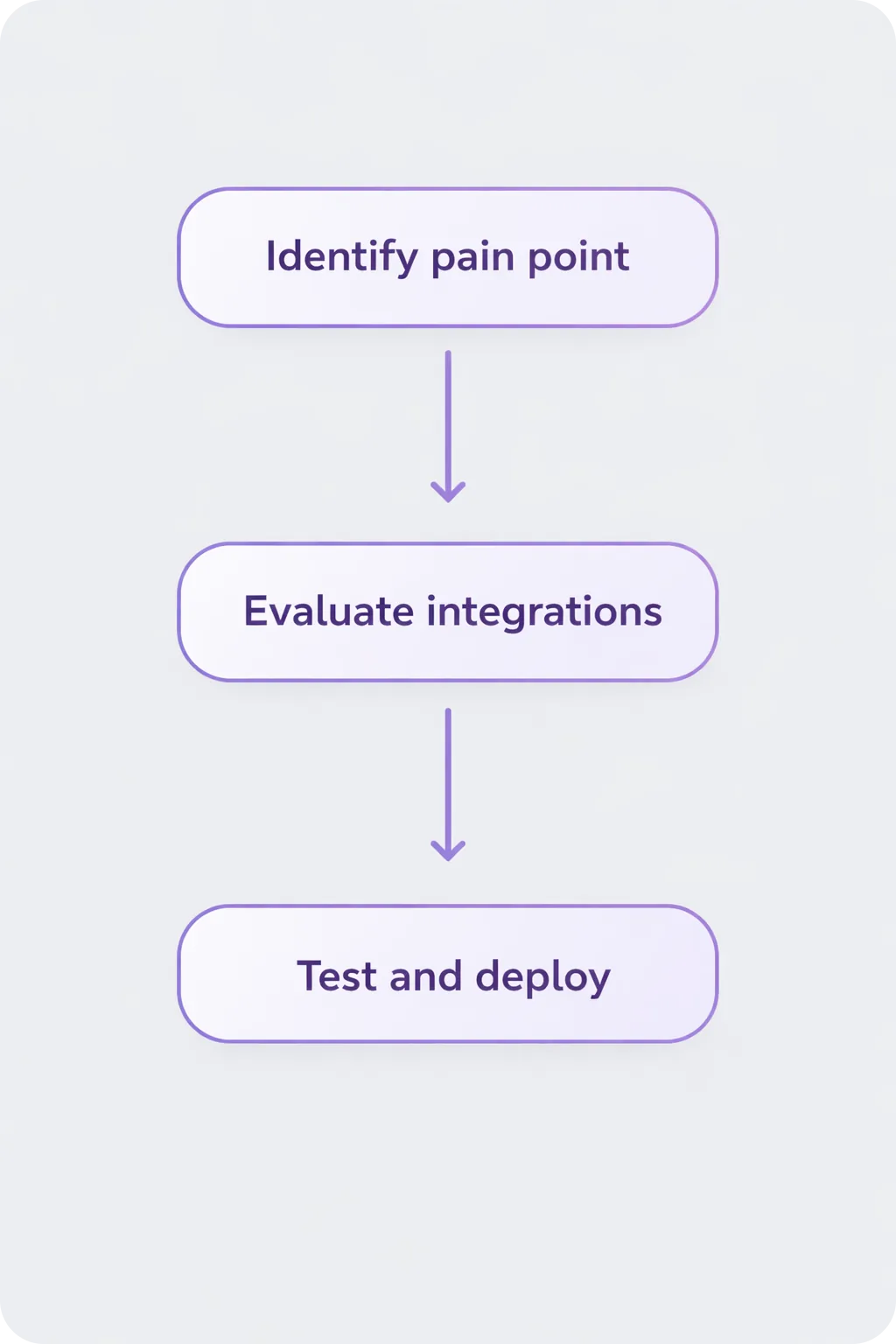
Not every store needs every integration on this list. Here's a practical framework for deciding:
Start with pain points
Map out where the team spends the most manual time. Common bottlenecks:
- Copying order data between Magento and an ERP
- Handling returns and warranty claims through email
- Manually printing shipping labels
- Chasing customers for review submissions
Prioritize by revenue impact
Some integrations directly affect the bottom line:
- Payment integrations affect conversion at checkout
- Search integrations affect product discovery
- Returns and warranty integrations affect customer retention and operational costs
- CRM and email integrations affect repeat purchase rates
Check Magento 2 compatibility
Not all extensions are created equal. Before installing anything:
- Verify it supports your Magento version (2.4.x)
- Check the last update date on the Adobe Commerce Marketplace
- Read recent reviews for compatibility issues
- Test in a staging environment first
Plan for the full stack
The best Magento stores run a connected stack where data flows between tools. A common high-performing setup:
| Category | Recommended Integration | Why It Matters |
|---|---|---|
| Returns & Warranty | Claimlane | Automates claims, repairs, supplier coordination |
| CRM | HubSpot or Salesforce | Unified customer data across channels |
| ERP | NetSuite or Dynamics 365 | Inventory, financials, order sync |
| Shipping | ShipStation | Multi-carrier rate comparison, batch labels |
| Payments | Stripe + Klarna | Flexibility for cards, wallets, and BNPL |
| Support | Zendesk or Gorgias | Centralized ticket management |
| Klaviyo | Automated post-purchase and retention flows | |
| Search | Algolia | Fast, relevant product discovery |
| Reviews | Yotpo | Social proof and UGC collection |
| Analytics | GA4 + Hotjar | Quantitative and qualitative insights |
Common Magento Integration Mistakes to Avoid
Installing too many extensions at once
Every extension adds code to Magento's already complex architecture. Installing five new modules simultaneously makes it nearly impossible to diagnose conflicts. Add one integration at a time, test thoroughly, then move on.
Ignoring the aftersales stack
Most Magento stores invest heavily in acquisition tools (marketing, payments, search) but leave returns, warranty claims, and repairs running on email. Aftersales is where customer loyalty is won or lost, and it's one of the highest-ROI integration categories.
Skipping data validation
ERP and CRM integrations sync large volumes of data between systems. Without proper field mapping and validation rules, bad data propagates everywhere. Test sync accuracy with a small batch of orders before going live.
Using outdated Magento 1 extensions
Magento 1 reached end of life in 2020. Any extension built for Magento 1 that hasn't been rebuilt for Magento 2 is a security and compatibility risk. Always verify Magento 2.4.x compatibility.
Magento Integration Trends for 2026

AI-native integrations
The biggest shift in 2026 is integrations that don't just connect systems but make decisions. Claimlane's AI Agent, the first AI agent purpose-built for warranty claims and returns, reviews submitted photos and videos, applies warranty rules automatically, and recommends resolutions without human involvement for straightforward cases.
Similar AI-native features are showing up across the Magento ecosystem: Algolia's AI search ranking, Klaviyo's AI-generated subject lines, and Gorgias's automated ticket resolution.
Composable commerce
More Magento stores are moving toward headless and composable architectures, where the frontend is decoupled from the backend. This makes API-first integrations more important than traditional Magento extensions. Tools with strong REST and GraphQL APIs will outperform those that rely solely on Magento's admin panel.
Unified post-purchase platforms
Brands are consolidating their post-purchase stack. Instead of separate tools for shipping tracking, returns, warranty claims, and customer communication, platforms that cover multiple aftersales workflows from a single integration are gaining traction. This reduces the number of Magento extensions to maintain and keeps the customer experience consistent.