A return comes back to the warehouse. The box is intact. Inside is the product, and nothing else. No order number, no reason, no photo of the fault the customer described on the phone last week. The agent who took that call is out today. The parcel is honest. The paperwork is not.
That gap is where returns quietly cost brands money, and it opens before the box is ever opened. It opens at the return authorization form. Most brands treat that form as a formality that generates a number so the parcel has something to reference. A number is not a control. The form is the cheapest control a brand owns over cost, fraud, and data quality, and skipping the fields that matter is what turns a five-minute resolution into a two-week thread.
This is written for omnichannel retailers running both direct and dealer returns, where the same product can come back through three different doors and the form is the only thing that makes those paths look the same. A structured returns management system is where that form should live.
What a return authorization form actually is
A return authorization form is the document a brand uses to approve and log a return before the item ships back. It captures the order, the product, the reason, and the evidence, then issues a return authorization number that ties the physical parcel to the case record.
The form sits at the front of the process, not the middle. It decides what enters the system. A claim that arrives complete can be routed, approved, or refused on the first look. A claim that arrives with half the fields blank goes into a queue of follow-up emails, which is exactly the failure the return merchandise authorization guide is built to close.
The fields that decide whether a claim resolves in one pass
Every field on the form is either doing work or wasting space. The ones that do work are the ones that let a decision happen without a second message to the customer.
Order number and proof of purchase anchor the claim to a real transaction, which is the first thing a warranty-flavored return needs, as covered in proof of purchase for warranty claims. The reason code sorts a size return from a fault return before anyone touches it, and consistent codes are the whole point of returns reason codes. Photos or video at submission settle the wear-versus-defect question that otherwise takes three rounds, and they are the same evidence that stops wardrobing fraud at intake.
Serial number, where the product has one, links the return to a specific unit and its history. Condition and packaging notes tell the warehouse what to expect. The form did its job before anyone opened the box.
A copy-ready return authorization form template
A working template captures the following, in this order:
- Customer name and contact
- Order number and purchase date
- Product name, SKU, and serial number
- Quantity and reason code (fault, wrong item, size, changed mind, damaged in transit)
- Written description of the issue
- Photo or video upload of the product and fault
- Preferred resolution (refund, replacement, repair, store credit)
- Return authorization number, issued automatically once the fields validate
- Return address and label reference
The same skeleton works for a warranty case, which is why brands often start from a warranty claim form template and add the returns-specific fields. A form that lets a customer submit with the fault photo missing is a form that guarantees a follow-up, so the upload field should block submission when the reason code is a fault.
RA form, RMA number, and return label are not the same thing
The three get used as if they mean one thing. They do not. The RA form is the intake and approval step. The return authorization number, sometimes called the RMA number, is the identifier the form issues so the parcel and the record stay married. The label is the shipping instruction that comes after approval. Getting the sequence right matters because a label printed before the form validates is a parcel moving with no case behind it, the same disconnect described in RMA software platforms and in the mechanics of the return to vendor process when the item goes back to a supplier rather than a shelf.
Where manual RA issuance leaks time and money
The leak is measurable, and it hides in the rework rate. When intake is incomplete, a fifth to a third of returns come back to the customer with a question before they can move.
of returns need rework when the form arrives incomplete
of returns inbox volume is status chasing, not resolution
the target: approve or refuse on first look
Fully loaded, each of those extra touches carries a cost per claim that finance can see even when ops cannot. A brand handling 500 returns a month at a 25% rework rate is paying for 125 avoidable conversations every month, before a single refund. The fix is not a better inbox. It is a form that refuses to pass an incomplete claim, and a place for the data to accumulate, which is what a structured return management software setup provides.
| Step | Manual RA by email | Automated RA issuance |
|---|---|---|
| Field validation | After the fact, by an agent | At submission, by the form |
| RA number | Typed by hand | Issued automatically |
| Evidence | Requested in a reply | Required to submit |
| Status to customer | Manual updates | Automatic |
Issuing RA across channels and dealers
An omnichannel brand does not have one return path. It has a website return, a dealer return, and a marketplace return, and each tends to grow its own form. That is how three versions of the same field end up meaning three different things, the data-silo problem covered in managing cross-channel returns. One RA form issued from one system, with the record synced to the commerce and ERP stack through Claimlane integrations across Shopify, NetSuite, Business Central, and Zendesk, keeps the dealer case and the D2C case in the same shape. B2B returns carry extra fields, and the approach to simplifying B2B returns shows how the same form scales to account-level flows.
How automated issuance changes the math
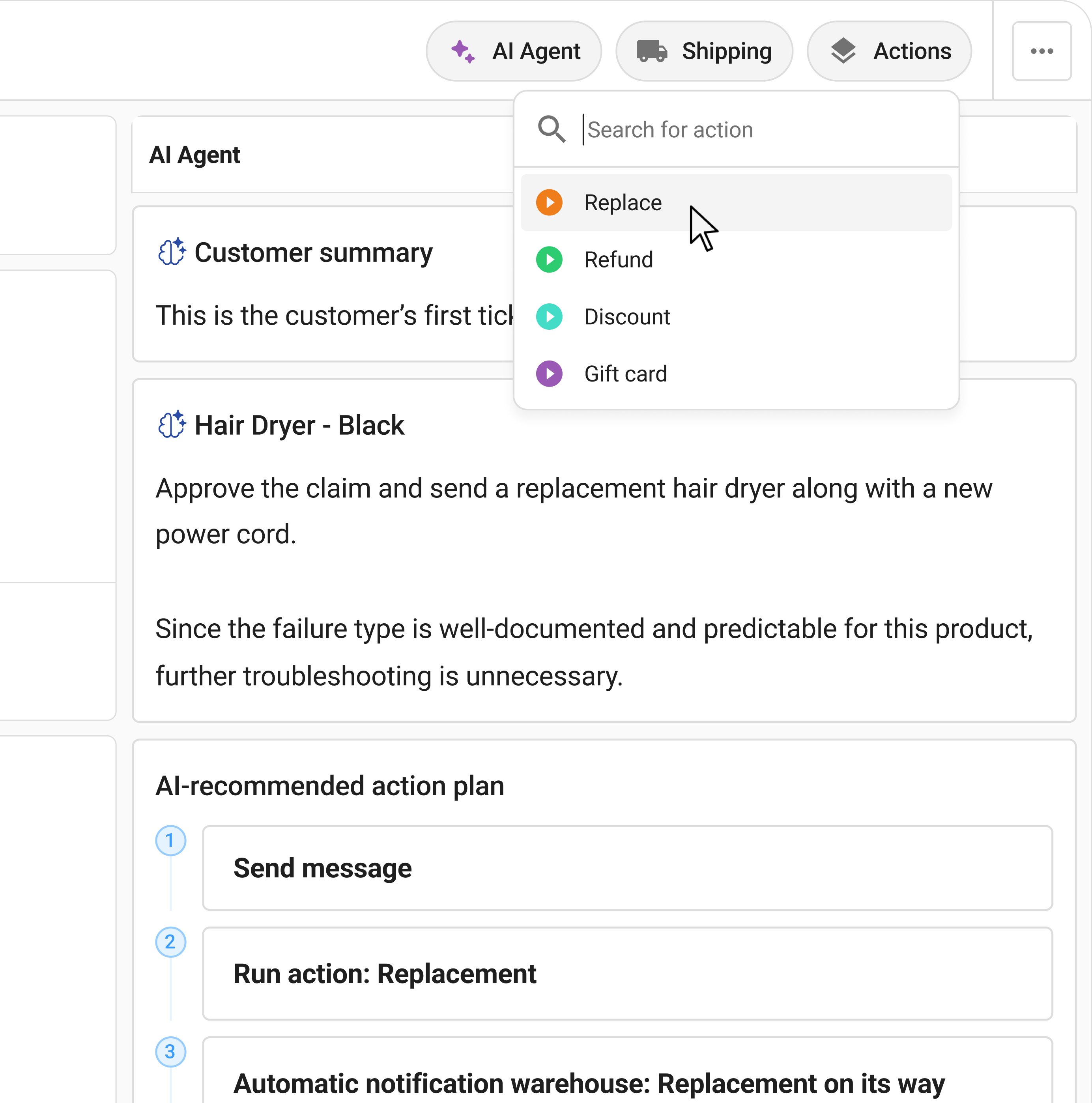
Automating the RA form does two things at once. It moves validation to the moment of submission, so incomplete claims never enter the queue, and it hands the customer a clear next step instead of silence, the pattern behind notifying customers through the returns process. The routing logic that decides refund, replace, or repair lives in a claims workflow, not in an agent's memory. The intake itself runs through a self-service portal that asks for the order, the reason, and the photo up front.
The result is fewer conversations per return and faster return processing times. F. Engels reached the same outcome on the B2B side, where dealer returns needed structure the inbox could not give, shown in the F. Engels B2B returns case study.
What to measure once the form does its job
Three numbers tell a brand whether the form is working. Rework rate, the share of returns that need a follow-up before they move, should fall first. First-pass approval rate, the share of returns decided on the first look, should rise. Time to resolution, the clock from submission to refund or replacement, should shrink because the earlier two moved. Those metrics feed warranty and returns analytics so the reason data on the form rolls up to product and supplier patterns, and they belong in the wider ecommerce returns reporting a brand already runs. Coolshop consolidated exactly this kind of scattered intake into one record, described in the Coolshop case study.
On the platform question, simple size and fit returns are well served by exchange-first tools like Loop or tracking-led tools like Narvar and AfterShip. Complex fault returns, warranty cases, dealer flows, and supplier recovery are where Claimlane sits, as the post-purchase execution layer that runs alongside the commerce stack rather than under it.
Claimlane holds a 4.8 out of 5 rating on G2. External references worth reading on the mechanics: the Investopedia definition of return merchandise authorization and the NRF returns research on the scale of returns costs.
Frequently asked questions
What is a return authorization form?
What should a return authorization form include?
Is a return authorization form the same as an RMA number?
How does automating the form reduce cost?
The next empty-box return is already on its way back to the warehouse. Whether it settles in one pass or five depends on what the form captured the day it was authorized.
Build the return & warranty portal customers actually use