
.webp)
BigCommerce ships with a strong set of built-in features: product management, multi-channel selling, headless commerce APIs, and native B2B capabilities. But no ecommerce platform does everything. Shipping, returns, email marketing, accounting, helpdesk, and warranty management all require integrations.
The BigCommerce ecosystem is smaller than Shopify's, which means fewer apps but also less noise. The integrations that exist tend to be more enterprise-ready, matching BigCommerce's positioning as a platform for mid-market and growing brands.
This guide covers the best BigCommerce integrations in 2026, organized by what they solve.
Why BigCommerce Needs Integrations
BigCommerce handles the storefront and order management. What it doesn't do natively:
- Process warranty claims or complex returns
- Manage email marketing campaigns with behavioral triggers
- Sync inventory with ERP or accounting systems in real time
- Provide helpdesk ticketing with order context
- Handle shipping rate shopping and label generation at scale
- Track defective products and forward claims to suppliers
For brands scaling on BigCommerce, integrations fill these gaps. The right stack turns BigCommerce from a storefront into a full ecommerce operating system.
Returns and Warranty Management Integrations
Post-purchase operations are where many BigCommerce brands feel the most pain. Returns come in through email. Warranty claims get handled in spreadsheets. Nobody tracks which supplier's products are causing the most defects.
Claimlane
Best for: Warranty claims, returns management, and after-sales operations
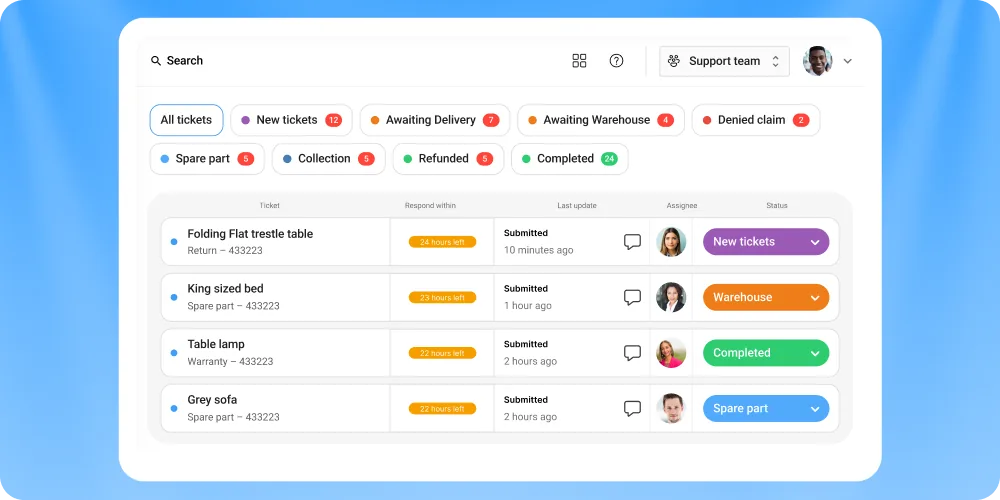
Claimlane is a warranty and returns management platform that handles the full after-sales workflow for BigCommerce brands. While standard returns apps focus on labels and refunds, Claimlane goes deeper: structured claims intake with photo evidence, AI-powered defect assessment, resolution routing, repair tracking, spare parts management, and supplier cost recovery.
Why it matters for BigCommerce users:
- AI Agent, the first AI agent purpose-built for warranty claims and returns. Analyzes product images and videos, applies warranty rules per product and supplier, and recommends or auto-approves resolutions.
- Self-service portal that connects to BigCommerce order data so customers can initiate claims without emailing support.
- Automated workflows that route claims by product type, defect category, or supplier.
- Supplier forwarding that packages claims with complete documentation and routes them to the correct supplier for credit note recovery.
- Analytics on defect patterns, supplier performance, and claim resolution times.
- 75+ integrations including BigCommerce, Shopify, WooCommerce, Zendesk, ERPs, and shipping providers.
MaxGaming resolved complex RMA cases 77% faster with Claimlane's AI agents across 30,000+ SKUs. For BigCommerce brands handling warranty-heavy product categories like electronics, furniture, or outdoor gear, Claimlane fills the gap that generic returns apps leave open.
Pricing: Custom. Book a demo.
AfterShip Returns
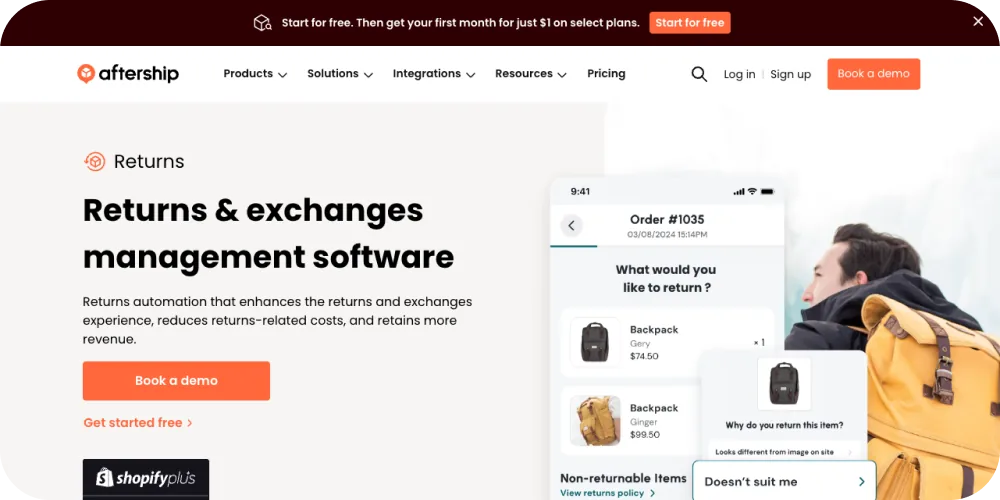
AfterShip offers a returns portal with label generation, exchange incentives, and return tracking. For BigCommerce brands with straightforward return flows (size exchanges, change-of-mind returns), it's a practical choice. The platform tracks returns across 1,100+ carriers.
Limitation: AfterShip handles standard returns but lacks the depth for warranty claims: no image-based defect analysis, no per-product warranty rules, no supplier forwarding.
ReturnGO
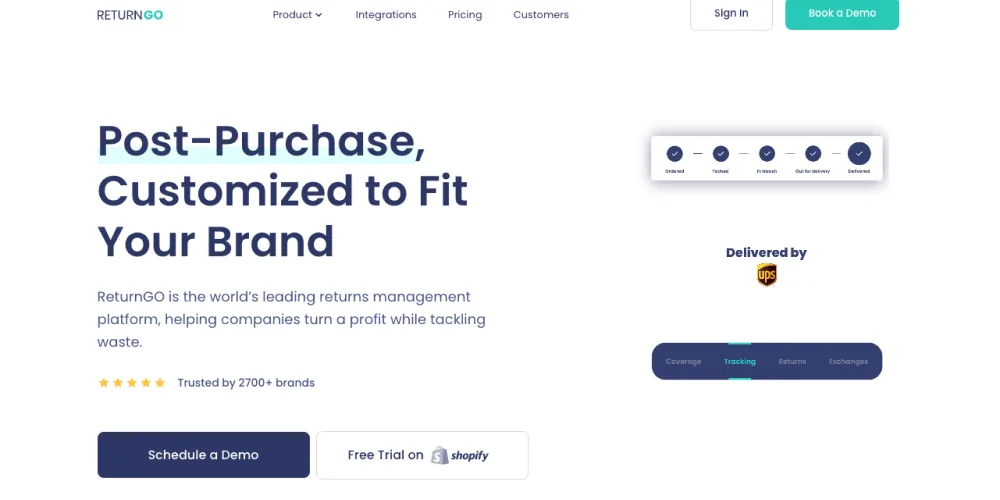
ReturnGO provides a returns management platform with customizable return policy rules for BigCommerce. Brands can set different policies by product type, collection, or order value. It supports exchanges and store credit incentives.
Limitation: Like AfterShip, ReturnGO focuses on the return/exchange flow. Complex warranty claims and supplier recovery are outside its scope.
Shipping and Fulfillment Integrations
ShipStation
Best for: Multi-carrier shipping and order fulfillment
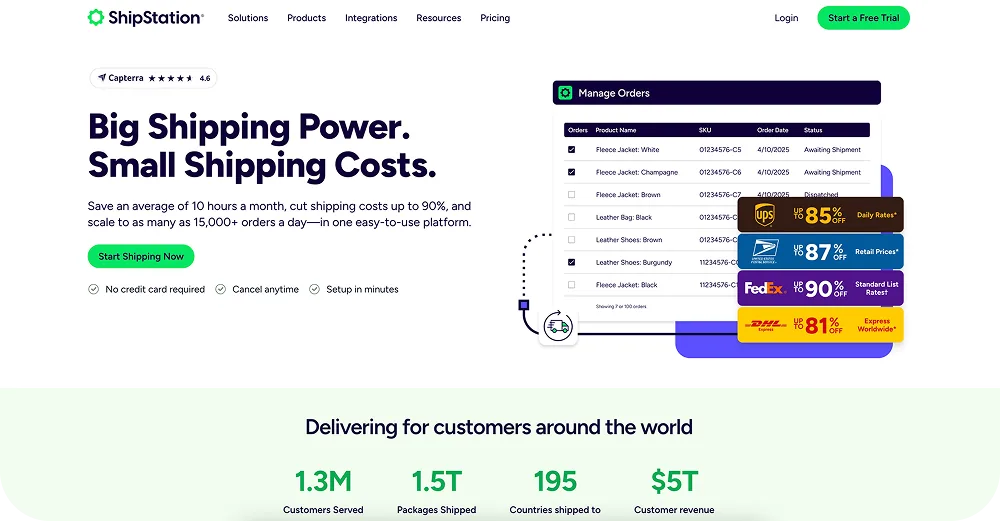
ShipStation connects BigCommerce with 70+ carriers for shipping rate comparison, label generation, and order fulfillment. It pulls orders from BigCommerce, lets the team compare rates, print labels in batches, and push tracking data back to BigCommerce.
Key features:
- Multi-carrier rate shopping
- Batch label printing
- Automation rules for shipping presets
- Branded tracking pages
- International shipping with customs forms
For BigCommerce brands handling 100+ orders per day, ShipStation is nearly essential for shipping efficiency.

Shippo
Shippo offers a similar carrier comparison and label generation service with a slightly different pricing model (pay-per-label vs. monthly subscription). Good for smaller BigCommerce brands that want shipping optimization without a monthly commitment.
ShipperHQ
Best for: Complex shipping rate rules
ShipperHQ specializes in shipping rate calculation and display at checkout. For BigCommerce brands with complex shipping scenarios (dimensional weight, multiple warehouses, LTL freight, hazmat), ShipperHQ provides the rate logic that BigCommerce's native shipping can't handle.
Marketing and Email Integrations

Klaviyo
Best for: Data-driven email and SMS marketing
Klaviyo is the leading email and SMS marketing platform for ecommerce. Its BigCommerce integration syncs customer profiles, order history, browsing behavior, and product data to power automated marketing flows.
What makes Klaviyo strong for BigCommerce:
- Behavioral triggers. Abandoned cart, post-purchase, win-back, and browse abandonment flows.
- Segmentation. Build audiences based on purchase history, order value, product category, and engagement.
- Revenue attribution. See exactly how much revenue each email flow and campaign generates.
- SMS. Combined email and SMS campaigns from one platform.
- Product feeds. Dynamic product recommendations in emails based on browsing and purchase data.
Omnisend
Omnisend is an alternative to Klaviyo with a lower price point and simpler interface. It supports email, SMS, push notifications, and Facebook Messenger from one dashboard. Good for BigCommerce brands that want marketing automation without the complexity of Klaviyo's full feature set.
Mailchimp
Mailchimp offers basic email marketing with BigCommerce integration. Customer and order data sync to Mailchimp for segmented campaigns. Best for smaller brands or those already using Mailchimp for other purposes.
Helpdesk and Customer Service Integrations

Zendesk
Best for: Enterprise-grade multi-channel support
Zendesk's BigCommerce integration pulls order data, customer information, and shipping status into support tickets. Agents see the full customer context without switching between screens.
For BigCommerce brands where a significant portion of support tickets are warranty claims or returns, pairing Zendesk with Claimlane creates a complete setup: Zendesk handles the conversation, Claimlane handles the operational claims workflow.
See also: Zendesk vs. Claimlane and Zendesk alternatives for ecommerce.

Gorgias
Gorgias is a helpdesk built for ecommerce. While its deepest integration is with Shopify, it also connects to BigCommerce with order lookup, customer profiles, and ticket automation. For BigCommerce brands that want a more ecommerce-native helpdesk than Zendesk, Gorgias is worth evaluating. See: Gorgias alternative.
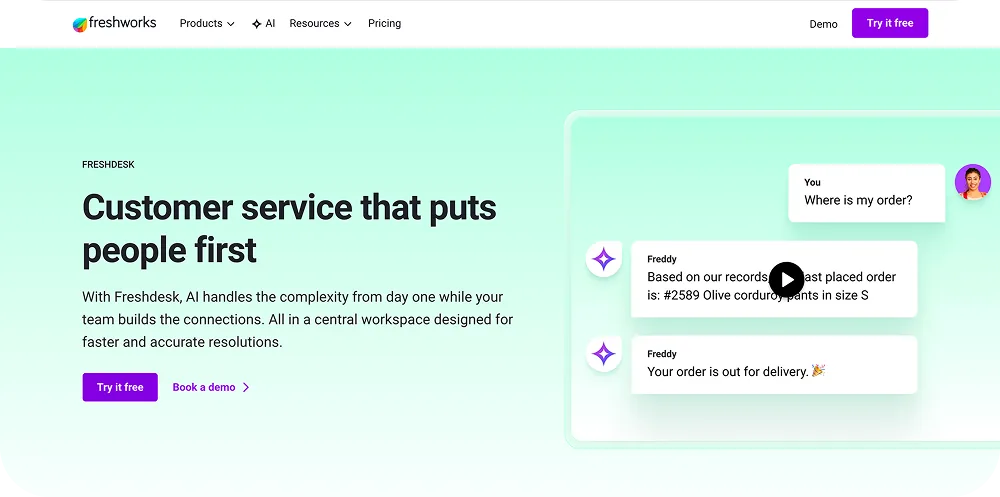
Freshdesk
Freshdesk offers a solid BigCommerce integration at a lower price point than Zendesk. Multi-channel ticketing (email, chat, phone, social) with BigCommerce order context. For mid-size BigCommerce brands that need helpdesk features without enterprise complexity.
ERP and Accounting Integrations
NetSuite
Best for: Enterprise ERP with full BigCommerce sync
NetSuite is the most common ERP for mid-market BigCommerce brands. The integration syncs orders, inventory, customers, and financial data between BigCommerce and NetSuite. This ensures that order processing, inventory allocation, and revenue recognition happen in real time.
For brands using NetSuite for warranty and repairs management, integrating both NetSuite and Claimlane with BigCommerce creates a complete post-purchase operations stack.
QuickBooks
QuickBooks syncs BigCommerce orders, taxes, and customer data for accounting. For smaller BigCommerce brands that don't need full ERP, QuickBooks handles the bookkeeping.
Dynamics 365
Microsoft Dynamics 365 integrates with BigCommerce for inventory, orders, and customer management. Popular with BigCommerce brands that are already in the Microsoft ecosystem. For warranty management within Dynamics, see: Dynamics 365 warranty management.
Analytics and Optimization Integrations
Google Analytics 4
The essential analytics integration. GA4 tracks website behavior, conversion funnels, and traffic sources for BigCommerce stores. Combined with returns analytics from Claimlane, brands get end-to-end visibility from acquisition to post-purchase.
Lucky Orange
Lucky Orange provides heatmaps, session recordings, and conversion optimization tools for BigCommerce. Useful for identifying why visitors don't convert and where they drop off in the checkout process.
Hotjar
Similar to Lucky Orange, Hotjar offers heatmaps and user session recordings. Many BigCommerce brands use one of these tools to understand customer behavior beyond what Google Analytics shows.
Marketplace and Multi-Channel Integrations
Feedonomics
Best for: Product feed optimization across marketplaces
Feedonomics (a BigCommerce company) manages product data feeds to Amazon, Google Shopping, Facebook, Walmart, eBay, and other marketplaces. For BigCommerce brands selling on multiple channels, it ensures product data is formatted correctly for each platform.
ChannelAdvisor
ChannelAdvisor provides multi-channel listing, inventory sync, and repricing across marketplaces. For BigCommerce brands with significant marketplace revenue, it centralizes operations.
Codisto
Codisto syncs BigCommerce inventory and orders with Amazon and eBay. A simpler alternative to ChannelAdvisor for brands that sell on fewer marketplaces.
Automation Integrations
Zapier
Zapier connects BigCommerce to 5,000+ apps through no-code workflows. Common BigCommerce automations:
- Send order data to Google Sheets for custom reporting
- Create helpdesk tickets when specific order conditions are met
- Sync customer data between BigCommerce and CRM
- Trigger Slack notifications for high-value orders
Make (Integromat)
Make offers more complex automation workflows than Zapier with visual workflow builders and branching logic. Better for BigCommerce brands with sophisticated multi-step processes.
Loyalty and Reviews Integrations
Yotpo
Yotpo collects product reviews, photos, and Q&A from BigCommerce customers. Reviews feed back to product pages and can be syndicated to Google Shopping. The loyalty and referral features help BigCommerce brands build repeat purchase behavior.
Smile.io
Smile.io adds points, VIP tiers, and referral rewards to BigCommerce stores. For brands where customer retention is a priority, a structured loyalty program increases repeat purchase rates.
A good post-purchase experience that includes smooth returns and claims handling is the foundation that loyalty programs build on. A customer won't join a loyalty program from a brand that made returning a defective product painful.
Comparison Table: Top BigCommerce Integrations
How to Build a BigCommerce Integration Stack

Start with the operational essentials
For most BigCommerce brands, the core stack is:
- Shipping (ShipStation or Shippo) for label generation and carrier management
- Email marketing (Klaviyo or Omnisend) for automated campaigns
- Returns and warranty management (Claimlane) for after-sales operations
- Accounting (QuickBooks or NetSuite) for financial sync
Add helpdesk, marketplace, and analytics integrations as the operation scales.
Avoid integration overload
More integrations means more data flowing between systems, but also more points of failure. Each integration needs monitoring: API changes, field mapping updates, and sync error handling.
Start with 4-5 core integrations. Add more only when a clear operational bottleneck justifies the added complexity.
Map the data flow
Before connecting tools, map which data needs to flow where:
- Orders: BigCommerce → ShipStation (fulfillment) → Claimlane (if returned) → NetSuite (finance)
- Customer data: BigCommerce → Klaviyo (marketing) → Zendesk (support)
- Returns data: Claimlane → BigCommerce (inventory update) → NetSuite (refund processing)
- Product data: BigCommerce → Feedonomics (marketplace listings) → Claimlane (warranty rules)
BigCommerce vs. Shopify: Integration Ecosystem
Shopify has a larger app ecosystem (8,000+ apps vs. BigCommerce's ~1,200). But BigCommerce's integration quality tends to be higher for mid-market needs:
- B2B features. BigCommerce has stronger native B2B capabilities, reducing the need for B2B-specific apps.
- Headless commerce. BigCommerce's API-first approach makes custom integrations cleaner.
- Multi-channel native. BigCommerce includes built-in marketplace connections that Shopify charges extra for.
- No transaction fees. BigCommerce doesn't charge transaction fees on third-party payment gateways.
For after-sales operations, both platforms integrate with Claimlane. The returns management workflow works the same regardless of ecommerce platform.