
Managing warranties manually is time-consuming for any team. As businesses grow, spreadsheets, email inboxes, and generic helpdesk tools quickly become overwhelmed, slowing claim processing and frustrating both customers and support teams. That’s why choosing the best warranty management software isn't just about automating claims. The best platforms help manufacturers, retailers, and service teams track warranties, process claims faster, and improve customer satisfaction.
In this article, we compare the leading solutions in this area, explain the features that matter most, and help you determine which platform best fits your business.
TL;DR – The best warranty management software:
- Claimlane. Best overall for enterprise teams
- ServiceNow Warranty Management. Best for large enterprises already part of the ServiceNow ecossystem
- Salesforce Service Cloud. Cheap non-scalable option to be built into current SalesForce systems.
- Zendesk. Best for basic support and businesses with low warranty case volume.
- ReverseLogix. Best for high volume enterprise returns operations.
- Narvar. Best for post purchase communication and visibility
- IFS Service Management. Best for only field service management
- SAP Warranty Management. Best for SAP centric organizations
Who Needs It?
Software for warranty management benefits any company that manufactures, sells, repairs, or services products covered by a warranty. Manufacturers use it to monitor product quality, identify recurring defects, and handle warranty claims. Retailers and e-commerce businesses rely on it to improve customer satisfaction while reducing manual tracking.
Industries like consumer electronics, baby and nursery products, furniture, and sports goods often handle large volumes of warranty claims where automation delivers significant operational savings.
Why teams look for the best warranty management software
Manual tracking stops scaling once claim volumes grow, and running separate tools for support, warranty, and repairs adds cost on top of that. See our warranty management software guide for the full picture of what breaks down without the right system.
The best warranty management software for modern teams
Not all warranty management solutions offer the same capabilities, so it's important to evaluate features that support your entire claims process.
Modern platforms go beyond basic workflow automation by offering configurable business rules, AI-assisted claim validation, and seamless integrations with ERP, CRM, and ecommerce systems. Choosing software that combines automation, reporting, and customization ensures your warranty operations can scale efficiently without increasing administrative overhead.
Below is a detailed look at the top warranty management software options, to make the best decision for warranty management.
Unlike generic helpdesk or ticketing solutions, Claimlane is a modern platform built specifically for warranty management, returns, and repairs. It combines flexibility with fast setup and is designed for growing and enterprise teams.
Top features
- Warranty registration and product tracking
- End-to-end warranty claim workflows
- Customizable self-service portals
- Automated approvals and routing
- Supplier and repair partner handling
- Warranty analytics and reporting
Why it's the best solution: Because it is designed specifically for warranty operations, businesses can implement it faster and adapt workflows as policies or business requirements change—without relying on complex custom development.
As one G2 review puts it:
”Willingless to tweak the process to suit our business needs and requirements. The financials it has provided through efficiency and effective handling. Turn around time on enhancements to the platform. Simple process for consumer and business. Support offered by the team. Implementation has been seemless across phases” (source)
Why Businesses Choose Claimlane
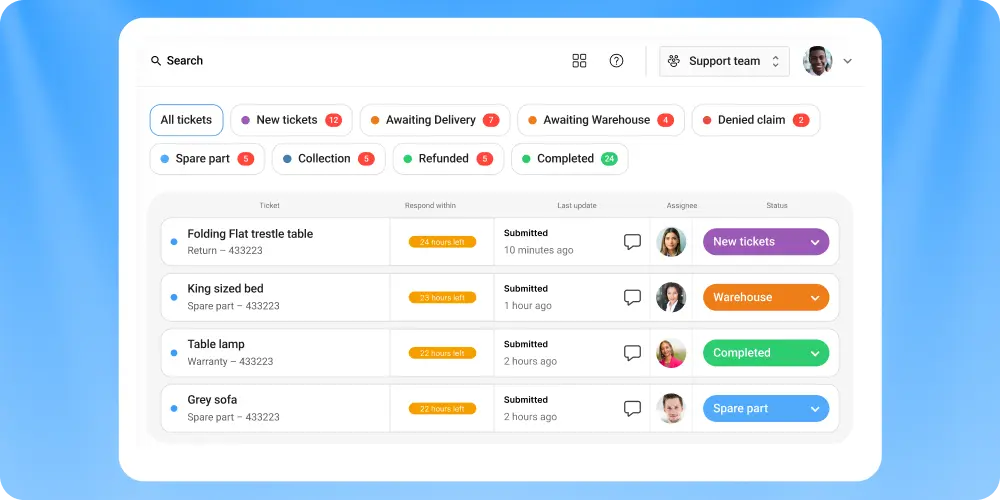
Claimlane gives you an all-in-one platform to solve any type of warranty claim. Manage all your warranties with automations.
Warranty management capabilities
Claimlane centralizes all warranty-related processes in one system. Teams can manage claims, repairs, replacements, and escalations without switching tools, which reduces handling time and errors.
Warranty registration capabilities
Claimlane makes warranty registration easy for customers and partners. Registrations are tied directly to products, serial numbers, and purchase data, giving teams clean, structured data from day one.
Warranty claim handling capabilities
Claims are handled through configurable workflows that reflect real business rules. Automation ensures claims are routed, approved, or rejected consistently, even at high volumes.
Warranty AI Agent capabilities
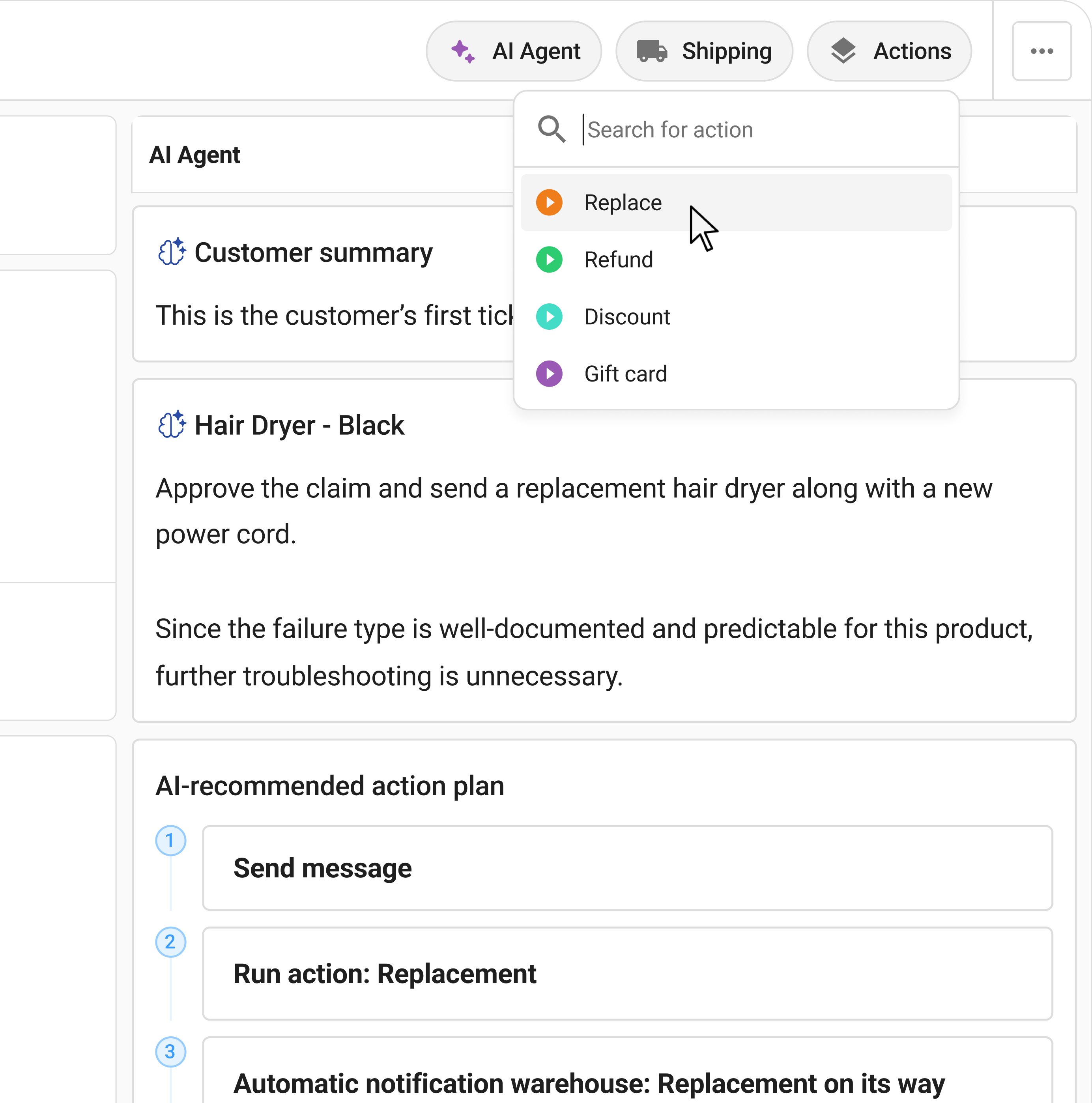
Claimlane’s AI Agent can handle repetitive warranty cases automatically. It reviews submissions, applies policy logic, and resolves eligible claims without human involvement, freeing teams to focus on complex cases.
Warranty automations
Claimlane automates repetitive warranty tasks like eligibility checks, approvals, notifications, and status updates. Rules ensure every claim follows policy without manual review, which speeds up resolution and keeps handling consistent at scale.
Repair and custom workflows
Claimlane supports repair flows that match how teams actually work. You can build custom workflows for inspections, spare parts, refurbishments, replacements, or supplier handoffs, and adjust them as processes evolve without rebuilding the system.
Pricing
Starts from $800 per month. For more information, check out our pricing.

ServiceNow offers warranty capabilities as part of its broader service management suite. It is mainly used by some of the largest companies with complex internal processes.
Top features
- Enterprise-grade workflow engine
- Asset and product lifecycle tracking
- Advanced reporting and dashboards
- Integration with ITSM modules
- Broader suite of features
How it compares: Powerful but complex. Best for big enterprises with existing ServiceNow infrastructure.
Pricing
Custom enterprise pricing.
3. Salesforce Service Cloud
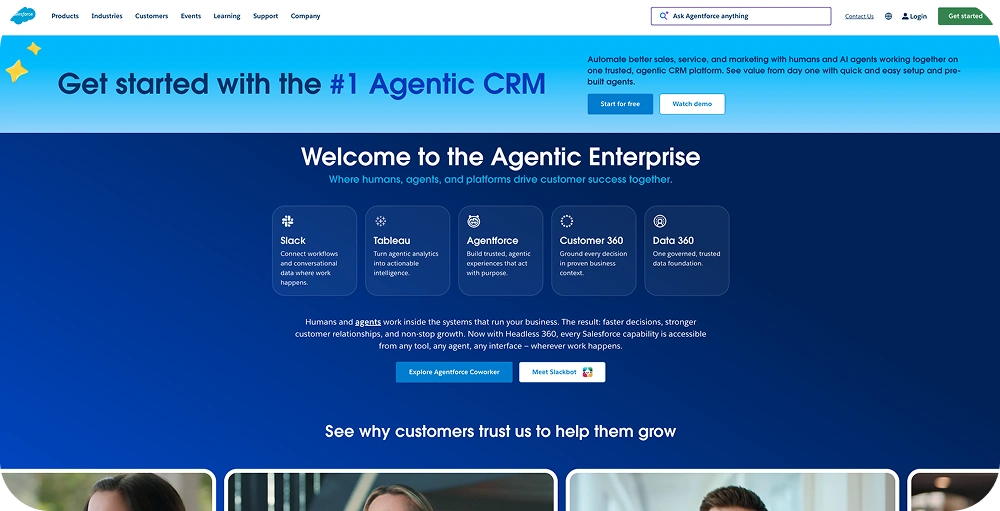
Salesforce Service Cloud can be configured for warranty tracking through cases, assets, and automations.
Top features
- Case management and automation
- Asset and customer data tracking
How it compares: Flexible but requires heavy customization to work as a warranty tracker.
Pricing
Starts around $75 per user per month.

Zendesk is a popular support platform that some teams adapt for warranty claims.
Top features
- Ticket-based support workflows
- Customer communication tools
- App marketplace integrations
- Reporting and dashboards
How it compares: Works best for generic customer support. No dedicated warranty features.
Thinking about using Zendesk? Check out our article on why a dedicated Warranty Management Software might be the best choice.
Pricing
Starts around $55 per user per month.

5. ReverseLogix
ReverseLogix is an enterprise-grade returns and warranty management platform designed for complex, high-volume operations. It is commonly used by large retailers and manufacturers with advanced warehouse and repair workflows.
Top features
- Advanced returns and warranty workflows
- Repair, refurbishment, and disposition management
- Warehouse and logistics integrations
- Rule-based automation
- Detailed operational reporting
How it compares: ReverseLogix is powerful but heavy. It requires long implementation cycles and ongoing configuration, which might persuade teams to try other tools, check out Reverselogix alternatives here.
Pricing
Custom enterprise pricing.

6. Narvar
Narvar focuses on post-purchase experiences, including returns visibility and customer communication. It is often used by large ecommerce brands to improve transparency rather than operational depth.
Top features
- Returns tracking and notifications
- Branded customer communication flows
- Carrier integrations
- Post-purchase analytics
- Enterprise-scale infrastructure
How it compares: Narvar excels at customer-facing communication but is not a full warranty management system. If you’re looking for something different than Narvar, check out our article where we list the best alternatives.
Pricing
Enterprise pricing on request.

7. IFS Service Management
IFS is built for manufacturers and service-heavy industries with complex warranty requirements.
Top features
- Warranty entitlement management
- Service contract handling
- Field service integration
- Advanced analytics
How it compares: Strong for industrial use cases but heavy to implement.
Pricing
Custom pricing.
8. SAP Warranty Management
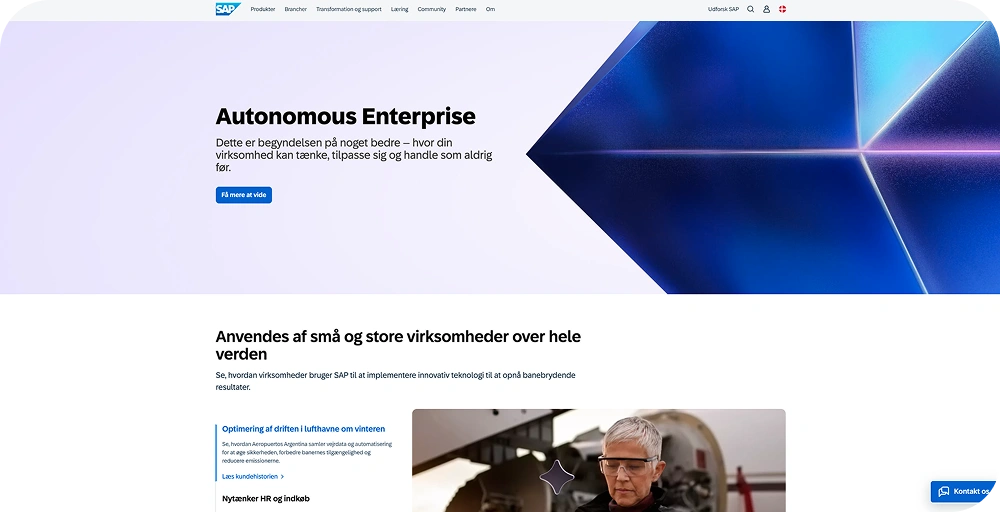
SAP provides warranty functionality as part of its ERP ecosystem.
Top features
- Deep ERP integration
- Warranty entitlement checks
- Supplier recovery processes
- Financial reporting
How it compares: Best for SAP-centric enterprises, less flexible for customer-facing workflows. If you want to combine your SAP tools together with a better warranty management software, Claimlane integrates directly to SAP.
Pricing
Enterprise pricing on request.
How to Choose the Best Warranty Management Software
When evaluating warranty software, consider more than just features. Ask questions such as:
- Does it support your existing warranty workflows?
- Can it automate repetitive tasks?
- Does it integrate with your ERP, CRM, or ecommerce platform?
- Can customers submit claims through a self-service portal?
- Does it provide reporting and product quality insights?
- Can workflows evolve as your business grows?
- Is implementation measured in weeks or months?
The right platform should reduce manual work while remaining flexible enough to support future business requirements.
Conclusion
Choosing the best warranty management software depends on how complex your products and processes are. Generic support tools can handle basic cases, but they fall short on warranty registration, tracking, and analytics.
Claimlane stands out as the best warranty management software for teams that want structured workflows, clear data, and fast resolution without enterprise complexity. It is purpose-built for warranty management, scales with your business, and reduces operational overhead from day one.