
.webp)
Refunds look simple from the outside.
A customer sends something back. The business checks the return. The money goes back to the customer.
Inside the team, it rarely feels that clean.
A refund may depend on return reason, product condition, warranty status, customer type, order value, supplier responsibility, warehouse inspection, shipping cost, or whether the customer should receive a replacement instead.
That’s why refund management software matters.
The best refund management software in 2026 doesn’t only issue money back. It helps teams decide when a refund should happen, when it should be blocked, when a replacement makes more sense, and when the case should become a warranty claim or supplier claim.
Claimlane fits this category because refunds sit inside the broader returns and warranty workflow. The platform helps retailers and brands manage refunds, replacements, warranty claims, repairs, supplier communication, and aftersales cases from one place.
Quick note: Refund management is not only about sending money back. The real value is knowing which cases should be refunded, replaced, repaired, rejected, or sent to a supplier.
TL;DR: Best Refund Management Software by Use Case
The best refund management software depends on the refund problem.
If the goal is to reduce refunds through exchanges, Loop Returns and ReturnGO are strong options. If the business wants automated approvals, labels, and refund rules, AfterShip Returns is a natural fit. If the brand needs ecommerce post-purchase and logistics features, Outvio can make sense.
If refunds are tied to warranty claims, damaged products, replacements, repairs, supplier responsibility, or B2B claims, Claimlane is the strongest fit.
| Platform | Best for | Strongest fit |
|---|---|---|
| Claimlane | Refunds, returns, warranty claims, replacements, and supplier workflows | Retailers and brands where refunds are part of a larger aftersales process |
| Loop Returns | Reducing refunds through exchanges | Ecommerce brands focused on keeping revenue inside the store |
| ReturnGO | Automated return outcomes and refund rules | Brands that want flexible return and exchange automation |
| AfterShip Returns | Auto-refunds, approvals, labels, and tracking | Ecommerce teams that need a lighter refund and returns setup |
| Outvio | Post-purchase returns and logistics | Ecommerce brands that want returns, shipping, and customer updates together |
| Reclaimit | Returns, claims, and complaints | Retailers handling returns, service cases, and customer claims |
Refund Management Software Comparison Table
Most refund tools handle the obvious part.
They help approve a return, issue a refund, send a status update, or offer an exchange instead.
The harder part is deciding what should happen before the refund is issued.
Was the product used? Is the return inside the policy? Is it damaged? Is it a warranty claim? Should the business refund, replace, repair, or wait for warehouse inspection? Should the supplier pay for it?
That is where refund management becomes operational.
| Platform | Primary refund layer | Refund automation | Warranty claims | Supplier workflows | Best fit |
|---|---|---|---|---|---|
| Claimlane | Refunds inside returns, claims, repairs, and aftersales workflows | Yes | Yes | Yes | Brands with complex refund decisions |
| Loop Returns | Refund reduction through exchanges and store credit | Yes | Limited | No | Ecommerce brands focused on exchanges |
| ReturnGO | Return rules and refund outcomes | Yes | Basic | Limited | Brands that want configurable return rules |
| AfterShip Returns | Auto-refunds, approvals, labels, and tracking | Yes | Basic | No | Ecommerce refund and return workflows |
| Outvio | Returns, logistics, and refund reduction | Yes | Basic | Limited | Post-purchase ecommerce teams |
| Reclaimit | Returns, claims, and complaints | Yes | Yes | Limited | Retail service and claim teams |
Why Refund Management Matters in 2026
Refunds are one of the fastest ways to lose margin.
That doesn’t mean businesses should make refunds difficult. A bad refund process creates angry customers, more support tickets, chargebacks, bad reviews, and lost loyalty.
The goal is not to block every refund.
The goal is to refund the right cases quickly and review the cases that need more context.
That distinction matters.
A low-value standard return may be safe to refund automatically. A damaged high-ticket item may need inspection. A warranty claim may need photos and videos. A supplier fault may need documentation before the customer receives a replacement or credit.
Good refund management software helps separate those flows.
It should reduce manual work without giving up control.
Used by retailers and brands to manage refunds, returns, warranty claims, replacements, repairs, and supplier workflows.
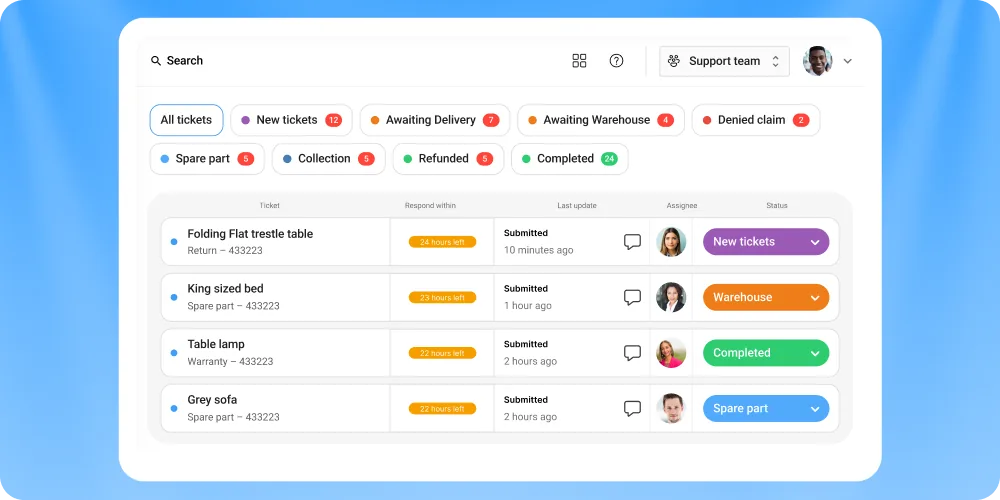
1. Claimlane
Best for: Retailers and brands that need to manage refunds as part of returns, warranty claims, replacements, repairs, supplier claims, and aftersales workflows.
Claimlane is built for the refund decisions that don’t fit a simple yes or no.
A customer may request a refund for a damaged product. Another customer may need a replacement instead. A retailer may submit a B2B claim. A supplier may need to approve the claim before the business can recover the cost. A warehouse may need to inspect the item before finance takes action.
Claimlane helps teams manage all of that from one case.
Instead of handling refunds in one system, warranty claims in another, supplier communication in email, and customer updates somewhere else, Claimlane gives the team a single workflow.
That makes refunds easier to control.
Why Claimlane stands out
Most refund management software starts with the return.
Claimlane starts with the reason behind the return.
That matters because the refund is often just the final action. The real work happens before that.
The team needs to know what happened, what proof exists, whether the claim follows policy, whether the product should be repaired or replaced, and whether a supplier should pay.
Claimlane helps collect that information upfront through customer and retailer portals.
Teams can ask for photos, videos, serial numbers, order details, product issue categories, and other required fields based on the product type or claim type.
Then the case can move to the right outcome.
That outcome might be a refund, replacement, repair, spare part, rejection, internal review, or supplier claim.
Key refund management features
Claimlane can help teams manage:
- Refund requests
- Return approvals
- Warranty claims
- Replacement decisions
- Repair flows
- Spare part flows
- Supplier claims
- B2B retailer claims
- Customer documentation
- Product-specific forms
- Internal handovers
- Customer status updates
- Claim and refund analytics
Claimlane also includes Claimlane's AI Agent, the first AI agent purpose-built for warranty claims and returns.
The AI Agent can review claim information, customer-submitted images, and videos, then help classify the issue and suggest the right next step based on the company’s rules.
“Add approved customer quote here. Use only a verbatim quote from the Claimlane quote library.”
Approved customer brand
Pros
- Strong fit for complex refund decisions
- Built for returns, warranty claims, repairs, and replacements
- Supports B2B and B2C claim flows
- Helps collect evidence before the refund decision
- Supports supplier communication and recovery
- Gives teams structured data on product issues and refund outcomes
- Useful when several teams touch the same case
Cons
- More advanced than a basic refund tool
- Not the lightest fit for very small stores
- Best suited for businesses that need to manage refunds inside a broader aftersales process
Best fit
Claimlane is best for retailers and brands where refunds are connected to warranty claims, repairs, replacements, product issues, suppliers, or B2B claims.
It is especially relevant for furniture, baby products, electronics, appliances, outdoor gear, sporting goods, kitchenware, tools, and other products where a refund decision often needs more context.

2. Loop Returns
Best for: Ecommerce brands that want to reduce refunds through exchanges and store credit.
Loop Returns is one of the best-known returns platforms for ecommerce brands.
Its main refund-related strength is refund reduction. Instead of letting every return become a refund, Loop helps brands guide customers toward exchanges, store credit, and other revenue-saving outcomes.
That makes it a strong fit for fashion, apparel, footwear, accessories, and other ecommerce categories where many returns are caused by size, fit, color, or preference.
Why Loop Returns stands out
Loop is strong for brands that want to protect revenue during the return moment.
A customer may start with the intention of getting a refund, but the return flow can encourage an exchange instead. That can help the business keep the sale while still giving the customer a good experience.
For ecommerce teams, that is often the main refund problem.
They don’t only want to process refunds faster. They want to reduce how many refunds happen in the first place.
Pros
- Strong exchange and retention flow
- Good fit for Shopify and ecommerce brands
- Helps reduce refunds through exchanges and store credit
- Customer-friendly return experience
- Strong fit for apparel and fashion returns
Cons
- Less focused on warranty claims
- Less suited for repairs and spare parts
- Supplier workflows are not the main focus
- Complex product claims may need separate handling
Best fit
Loop Returns is best for ecommerce brands that want to reduce refunds by turning more returns into exchanges.
It is less suited for brands where refunds are often connected to product faults, warranty rules, supplier claims, or repair decisions.
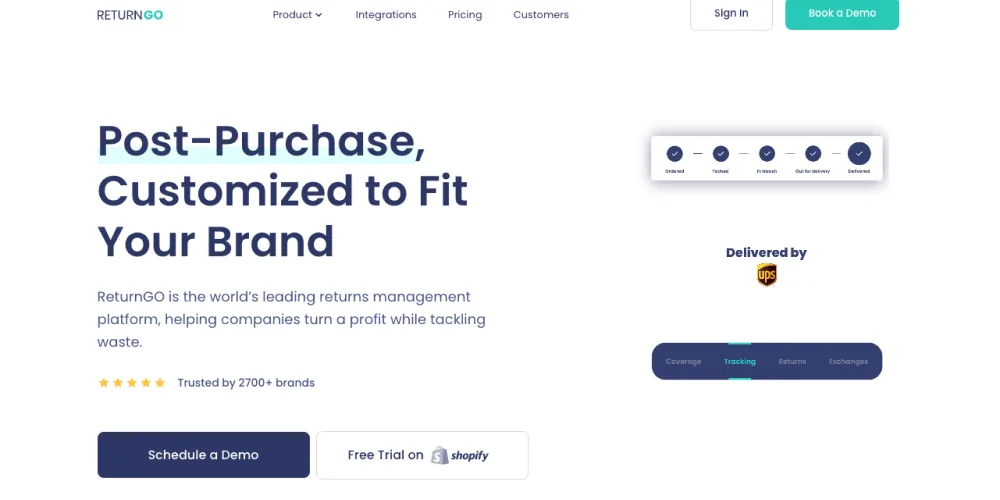
3. ReturnGO
Best for: Ecommerce teams that want flexible refund rules and return outcomes.
ReturnGO helps brands create automated return and exchange flows.
Its strength is rule-based return management. Businesses can define what refund, exchange, store credit, or other return outcomes customers should see based on order data, product rules, return reasons, or business logic.
That makes it useful for brands that want more control over when refunds are offered.
Why ReturnGO stands out
ReturnGO is a strong fit for merchants that want configurable refund logic.
A store might want to offer store credit for some products, exchanges for others, and manual review for damaged goods or high-value orders.
That type of setup can reduce customer service work while keeping refund decisions inside company rules.
Pros
- Flexible return and refund rules
- Good customer self-service portal
- Useful for refunds, exchanges, and store credit
- Strong fit for Shopify merchants
- Helps reduce manual return handling
Cons
- Warranty claim handling is more basic
- Supplier claims are not the main focus
- Repairs and spare parts may need another process
- Less suited for B2B or supplier-heavy refund workflows
Best fit
ReturnGO is a good fit for ecommerce brands that want rule-based refund management and return automation.
It is less of a fit if the team needs deeper warranty claim handling, supplier communication, or repair workflows.
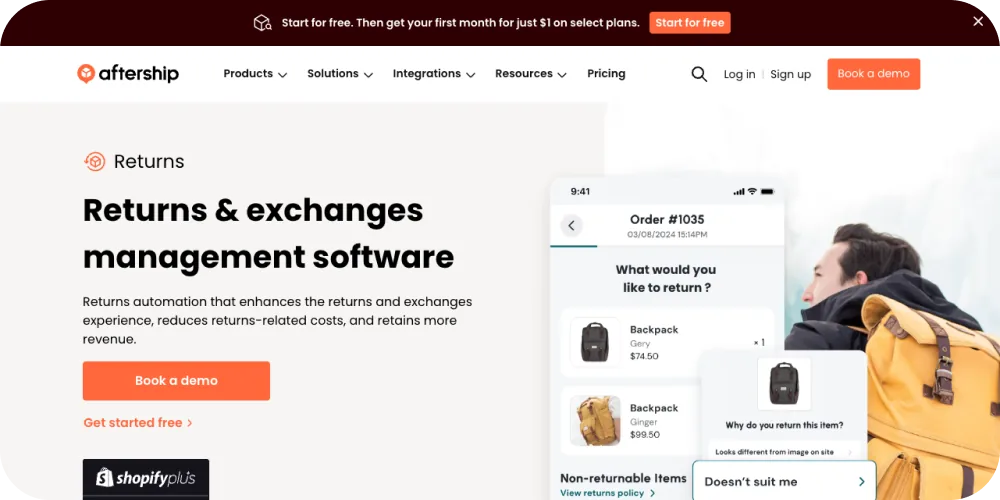
4. AfterShip Returns
Best for: Ecommerce teams that need auto-refunds, return approvals, labels, and tracking.
AfterShip Returns is a practical option for ecommerce businesses that want to automate the standard refund and returns process.
The platform can help teams set up return portals, auto-approve requests, create return labels, track returned items, and trigger refunds based on rules.
For many ecommerce teams, that covers the most common return cases.
Why AfterShip Returns stands out
AfterShip Returns is strong when the goal is operational speed.
A customer submits a return. The system checks the rule. The return can be approved, the label can be generated, and the refund process can move with less manual effort.
That can reduce repetitive work for support teams.
It can also help customers see what is happening without asking support for updates.
Pros
- Good fit for standard ecommerce refunds
- Supports automation rules
- Can support auto-refunds
- Can create return labels
- Useful return tracking and notifications
- Works well for lighter ecommerce returns workflows
Cons
- Warranty claim handling is more basic
- Supplier workflows are not the main focus
- Complex product issues may still require manual review
- Less suited for repair-heavy categories
Best fit
AfterShip Returns is best for ecommerce teams that want to automate refunds, approvals, labels, and tracking.
It is less suited for brands where many refund requests are tied to warranty claims, repairs, supplier reimbursement, or product fault documentation.

5. Outvio
Best for: Ecommerce brands that want refund management inside a broader post-purchase setup.
Outvio is a post-purchase platform with returns management, shipping, tracking, customer communication, and ecommerce logistics features.
For refund management, Outvio is useful when the business wants to manage returns and post-purchase communication together.
It can help brands reduce refunds by offering return options and improving the customer return experience.
Why Outvio stands out
Outvio is strongest for ecommerce teams that see refunds as part of the full post-purchase journey.
The refund is not isolated. It connects to shipping, delivery, tracking, returns, notifications, and customer service.
That broader setup can be useful for brands that want one platform for more of the customer journey after checkout.
Pros
- Good fit for ecommerce post-purchase teams
- Combines returns, logistics, and customer communication
- Can help reduce refunds through better return options
- Useful for brands with shipping and returns needs
- Good fit for standard ecommerce return flows
Cons
- Warranty claim handling is more basic
- Supplier workflows are not the main focus
- Not built primarily for repairs and spare parts
- Complex claim decisions may need a different workflow
Best fit
Outvio is a good fit for ecommerce brands that want refund management inside a wider post-purchase and logistics setup.
It is less suited for businesses where refund decisions depend on warranty rules, supplier claims, repairs, or B2B workflows.

6. Reclaimit
Best for: Retailers managing returns, claims, complaints, and service cases.
Reclaimit focuses on helping retailers manage returns, complaints, claims, and related service workflows.
That makes it relevant for businesses where refunds are connected to customer claims and product issues, not only simple return requests.
For retailers, this can be important because the refund decision may depend on whether the case is a return, complaint, warranty claim, or another service issue.
Why Reclaimit stands out
Reclaimit fits teams that want to handle more than standard ecommerce returns.
Its strength is closer to claims and service case handling than pure exchange-first ecommerce returns.
That makes it relevant for retailers that need structure around returns, claims, complaints, and customer support workflows.
Pros
- Relevant for returns, claims, and complaints
- Good fit for retail service teams
- Can support refund decisions connected to customer cases
- More claim-oriented than many ecommerce return tools
Cons
- May not be as ecommerce-exchange focused as Loop or ReturnGO
- Supplier workflows may require extra setup
- May not fit teams looking mainly for Shopify-native return automation
- Product experience and fit depend on market and use case
Best fit
Reclaimit is a good fit for retailers that want to manage refunds alongside returns, complaints, and claims.
It is especially relevant when refund management needs to connect with broader customer service work.
How to Choose the Right Refund Management Software
Choosing refund management software starts with one question:
What makes refunds difficult for the business?
For some teams, the answer is volume. Too many standard returns need the same manual refund steps.
For others, the answer is margin. Too many refunds could have been exchanges or store credit.
For complex product brands, the answer is context. Refunds depend on product condition, warranty rules, repair decisions, supplier responsibility, and internal review.
The right software depends on which problem matters most.
1. If the goal is faster refunds
Look for auto-approval rules, refund triggers, return tracking, and customer notifications.
AfterShip Returns, ReturnGO, and similar tools can be useful here.
The key is to make sure the rules are specific enough. Not every case should be refunded automatically.
2. If the goal is fewer refunds
Look for exchange-first flows, store credit, gift cards, product recommendations, and revenue-saving options.
Loop Returns, ReturnGO, and Outvio can fit this use case.
This is especially relevant for apparel, footwear, accessories, and ecommerce categories where many returns are preference-based.
3. If the goal is safer refund decisions
Look for review workflows that separate low-risk cases from exceptions.
High-value products, damaged products, suspected fraud, missing documentation, and warranty claims should not follow the same path as a standard return.
Claimlane is a strong fit here because it helps collect the right evidence before the outcome is chosen.
4. If the goal is warranty refund handling
Look for software that can manage claims, not only returns.
A warranty refund may require photos, videos, serial numbers, product issue categories, supplier evidence, and internal approval.
The software should support refunds, replacements, repairs, spare parts, rejections, and supplier claims.
Claimlane is built for this type of refund workflow.
5. If the goal is supplier recovery
Look for software that connects the refund decision to supplier communication.
Many retailers refund customers quickly, then lose money because supplier recovery happens later in email or spreadsheets.
A stronger workflow should connect the customer case, evidence, refund outcome, supplier response, and reimbursement status.
6. If the goal is better refund data
Look for reporting that shows more than refund count.
The team should be able to see refund reasons, product issues, claim types, customer outcomes, supplier acceptance, repeat faults, refund rates, replacement rates, and resolution time.
That data helps the business reduce future refunds instead of only processing current ones.
Refund management should cover the hard cases too
For retailers handling refunds, warranty claims, replacements, repairs, and supplier claims, Claimlane helps teams manage the full aftersales workflow from one place.
Book a Claimlane demoFrequently Asked Questions
Refund management software helps businesses manage refund requests, approvals, refund rules, customer communication, return status, and related aftersales actions.
The best refund management software depends on the use case. Claimlane is best for refunds connected to returns, warranty claims, repairs, replacements, and supplier workflows. Loop Returns, ReturnGO, AfterShip Returns, Outvio, and Reclaimit are strong options for ecommerce returns and refund workflows.
Yes. Some refund management tools reduce refunds by offering exchanges, store credit, replacements, or other outcomes instead of a direct refund. The right setup depends on the product type and return reason.
Some tools can handle basic claim flows, but warranty refunds often need photos, videos, serial numbers, policy checks, supplier evidence, and repair or replacement options. Claimlane is built for this type of workflow.
Refund management software should include return intake, refund rules, approvals, customer updates, refund tracking, exchange options, exception handling, and reporting. For complex products, it should also support warranty claims, repairs, replacements, and supplier workflows.
Final Thoughts
Refund management software should make refunds faster without making the business lose control.
That balance matters.
Simple refunds can often be approved quickly. Complex refund cases need more context. Damaged products, warranty claims, supplier responsibility, repairs, high-value products, and B2B claims should not follow the same path as a standard return.
For ecommerce brands focused on reducing refunds through exchanges, tools like Loop Returns, ReturnGO, AfterShip Returns, Outvio, and Reclaimit can be strong options.
For retailers and brands where refunds sit inside warranty claims, repairs, replacements, supplier workflows, and aftersales operations, Claimlane is the better fit.
It helps teams collect the right information, choose the right outcome, and keep the full refund workflow connected.