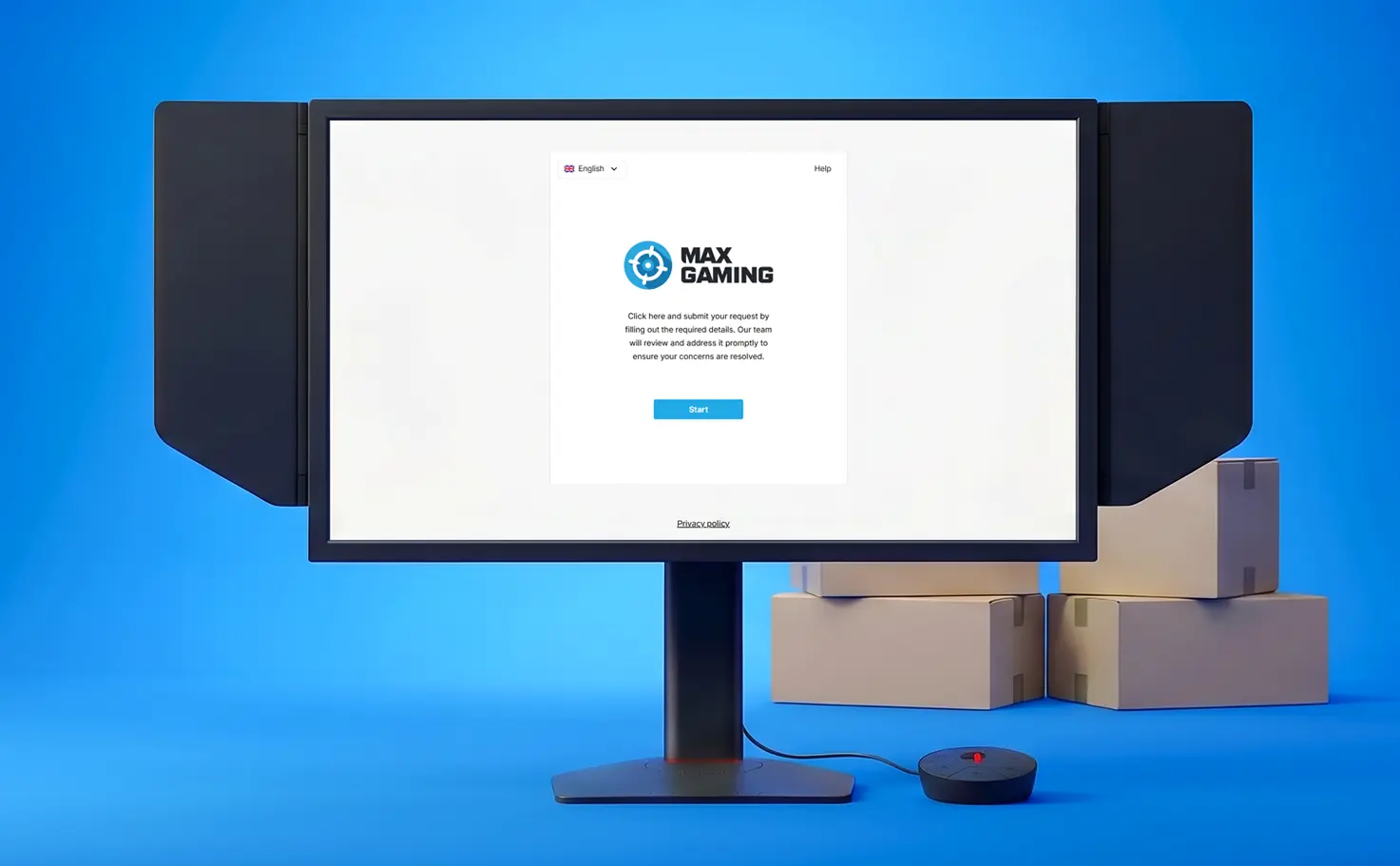
.webp)
After-sales service is everything that happens after the customer pays: warranty claims, returns, repairs, replacements, spare parts, and ongoing support. For product brands, after-sales is where customer loyalty is won or lost.
Most brands cobble together after-sales with a helpdesk (Zendesk, Freshdesk), an ERP for refunds, and spreadsheets for tracking. The result is slow, fragmented, and invisible. Customers wait days for updates. Agents switch between systems. Nobody knows the true cost of a defective product line.
Purpose-built after-sales platforms fix this by bringing warranty management, returns processing, repair coordination, and supplier accountability into one system. This guide ranks the best options for 2026.
- Helpdesks handle tickets. After-sales platforms handle the entire post-purchase lifecycle: claims, warranties, repairs, returns, and supplier coordination.
- The best platforms combine AI-powered triage, customer self-service, and integration with ERP/ecommerce systems.
- Choose based on your primary after-sales challenge: warranty claims, returns logistics, field service, or general support.
- Claimlane is the top pick for brands where after-sales means warranty claims, returns, and supplier coordination.

Comparison Table
| Platform | Best For | Key Strength | Pricing |
|---|---|---|---|
| Claimlane ★ | Warranty + returns | AI claims + suppliers | Custom |
| Zendesk | General support | Omnichannel tickets | From $55/agent |
| Freshdesk | SMB support | Affordable helpdesk | Free tier |
| ServiceMax | Field service | On-site repairs | Custom |
| Salesforce SC | Enterprise CRM | CRM integration | From $25/user |
Why Trust This Comparison
Claimlane is used for after-sales by brands like Skechers (warranty claims across markets), Matas (retail after-sales), and BabySam (consumer electronics and baby products). Rated 4.8/5 on G2.
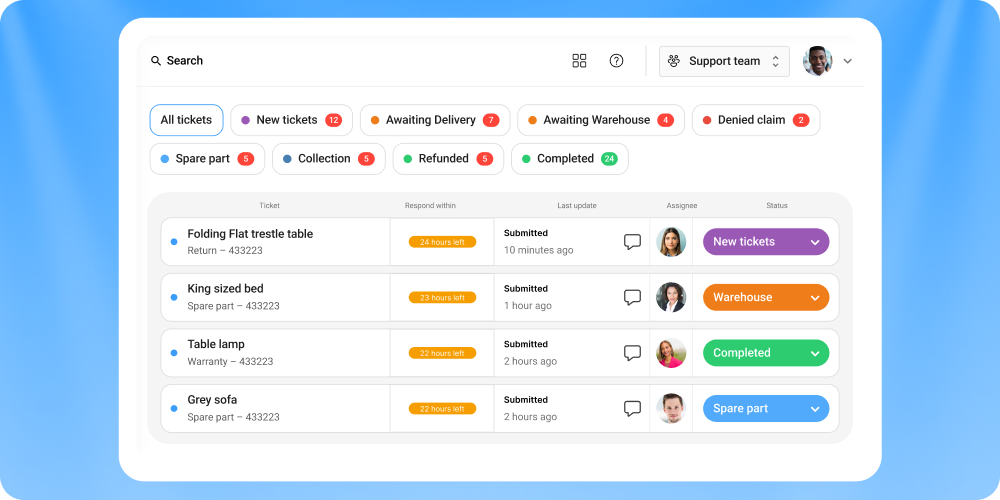
Claimlane — Best for Warranty, Returns, and Repair After-Sales
Claimlane is the only platform on this list built specifically for the after-sales needs of product brands: warranty claims, returns, repairs, replacements, and supplier coordination.
Why people choose Claimlane for after-sales
- AI Agent triages warranty claims automatically, analyzing photos and product data to recommend resolution
- Self-service portal lets customers submit claims 24/7 with photos, order details, and defect descriptions
- Supplier forwarding sends claims to suppliers with full documentation for warranty recovery
- Custom workflows define different processes for warranty claims, returns, repairs, and replacements
- Analytics show claim volumes, resolution times, defect patterns, and supplier performance
- 75+ integrations with Shopify, WooCommerce, ERPs, and shipping providers
Pros and cons
Pros: Purpose-built for product after-sales. AI-powered triage. Full warranty lifecycle. Supplier coordination. Skechers and Matas are production customers.
Cons: Not a general helpdesk. If the primary need is email/chat support without warranty complexity, a helpdesk may suffice.
Pricing
Custom. Book a demo or try the interactive demo.
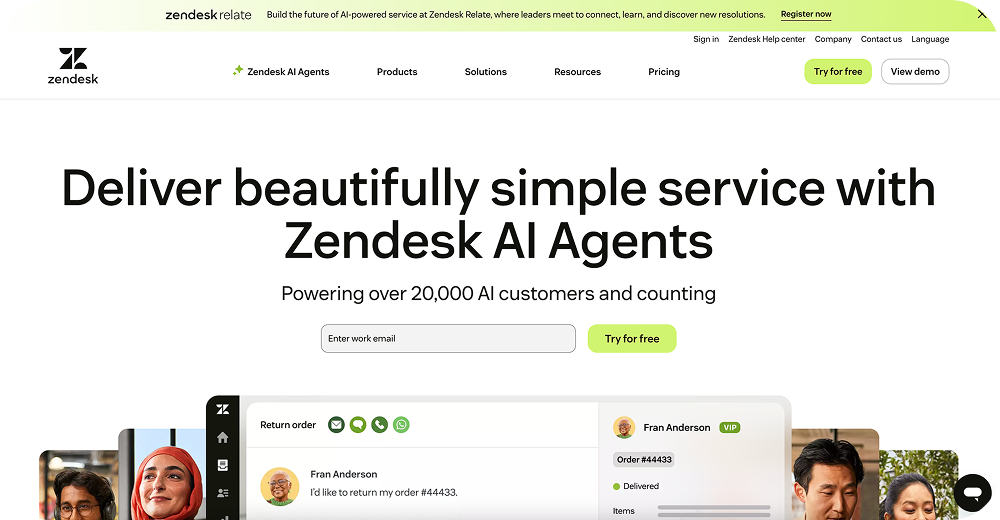
Zendesk — Best for General Customer Support
Zendesk is the market leader in customer support software. It handles support tickets across email, chat, phone, and social channels. But it is a support tool, not a claims management tool.
Key features
- Omnichannel ticket management
- Knowledge base and self-service help center
- AI-powered ticket routing and suggested responses
- Extensive app marketplace
Pros: Industry standard for support. Strong ecosystem. Good for email/chat support alongside after-sales.
Cons: No warranty management built in. No AI claim photo analysis. No supplier forwarding. No returns-specific workflows. Claims get treated as tickets, losing structured data.
Best for: Brands that need general customer support and want to layer warranty management on top.

Freshdesk — Best for SMB Support
Freshdesk offers helpdesk functionality at a lower price point than Zendesk, with a free tier for small teams.
Key features
- Ticket management with automation
- Knowledge base
- Basic AI features
- Free tier for up to 10 agents
Pros: Affordable, good for small teams, free tier available.
Cons: Same limitations as Zendesk for after-sales. No warranty, claims, or supplier features.
Best for: Small brands needing basic customer support without after-sales complexity.
ServiceMax — Best for Field Service
ServiceMax focuses on field service management: scheduling technicians, managing on-site repairs, and tracking parts inventory for physical service operations.
Key features
- Technician scheduling and dispatch
- Work order management
- Parts inventory tracking
- IoT integration for predictive maintenance
Pros: Strong for brands with physical repair/maintenance operations. Good scheduling.
Cons: Not built for ecommerce returns. No self-service customer portal for claims. Enterprise pricing.
Best for: Brands with field service teams doing on-site repairs (appliances, industrial equipment).
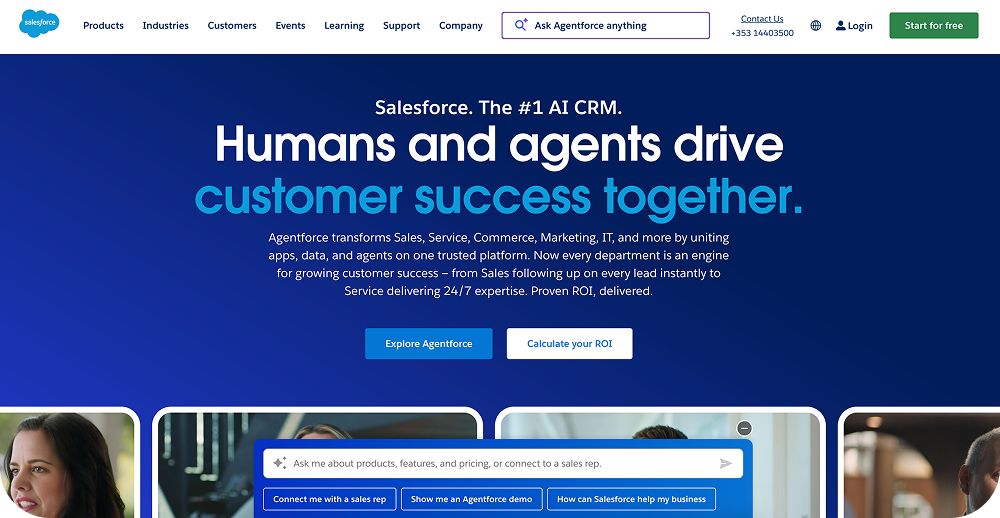
Salesforce Service Cloud — Best for Enterprise CRM Integration
Salesforce Service Cloud is the service module within the Salesforce CRM ecosystem. It is highly configurable but requires significant implementation effort.
Key features
- CRM-integrated case management
- AI-powered Einstein features
- Highly configurable workflows
- Enterprise-grade reporting
Pros: Deep CRM integration. Configurable for almost any workflow. Enterprise reporting.
Cons: Expensive total cost (licenses + implementation + maintenance). Takes months to configure for after-sales. Not purpose-built for warranty claims.
Best for: Enterprise brands already on Salesforce that want after-sales within their CRM, and have budget for implementation.
SweetHawk — Best Zendesk Warranty Add-On
SweetHawk adds warranty tracking fields to Zendesk tickets. It is not a standalone platform but extends Zendesk for basic warranty use cases.
Key features
- Warranty date tracking on tickets
- Custom fields for product/serial data
- Basic warranty status checks
Pros: Cheap add-on if already using Zendesk. Quick setup.
Cons: Limited to Zendesk. Basic warranty fields only, no AI, no supplier forwarding, no self-service portal.
Best for: Zendesk users wanting basic warranty date tracking without a separate platform.
Helpdesk vs. After-Sales Platform: Key Differences
Helpdesks and after-sales platforms solve different problems.
Helpdesks are designed for communication: managing tickets, responding to inquiries, and tracking conversations.
After-sales platforms are designed for outcomes: resolving warranty claims, processing returns, coordinating repairs, recovering costs from suppliers, and tracking product quality.
The article Zendesk Alternative for Warranty Management covers this comparison in detail.
- Manages conversations
- Ticket-based workflows
- No warranty tracking
- No supplier coordination
- No AI claim analysis
- Manages outcomes (claims, repairs)
- Claim-based workflows
- Full warranty lifecycle
- Supplier forwarding + recovery
- AI-powered claim triage
What to Look for in an After-Sales Platform

Warranty lifecycle management
The platform should track warranty status, validate eligibility, and manage the full claim lifecycle from submission to resolution.
AI-powered triage
AI claim analysis reduces manual work by automatically assessing claim validity, defect type, and optimal resolution.
Customer self-service
A self-service portal reduces support volume and collects structured data upfront.
Supplier coordination
Supplier forwarding is critical for brands that need to recover costs from manufacturers.
Integration with existing systems
ERP, ecommerce, and shipping integrations ensure after-sales data flows to the systems that process refunds, ship replacements, and update inventory.
Analytics and reporting
After-sales analytics should show claim volumes, resolution times, defect patterns, supplier performance, and cost data.
.webp)