
A good share of the PPWR guidance published this year tells brands that empty space in a parcel must not exceed 40 percent from 12 August 2026.
Both halves of that are wrong. The figure in the regulation is 50 percent, and it does not bite until 1 January 2030 at the earliest.
That matters less as a correction than as a signal. The advice circulating on this regulation is inconsistent, and compliance teams at brands shipping into the EU are planning against it.
There is a second problem underneath, and it is bigger. Almost every guide treats packaging as something that leaves the warehouse once. Returns and warranty replacements say otherwise.
- Regulation (EU) 2025/40 replaced the 1994 Packaging Directive and has applied across all 27 member states since 12 August 2026.
- The 50 percent empty space cap on grouped, transport and e-commerce packaging arrives from 1 January 2030, not 2026. What applies now is documentation, substance limits and the minimisation principle.
- Every warranty replacement puts a second set of packaging on the market for a single sale, which no amount of carton right-sizing offsets.
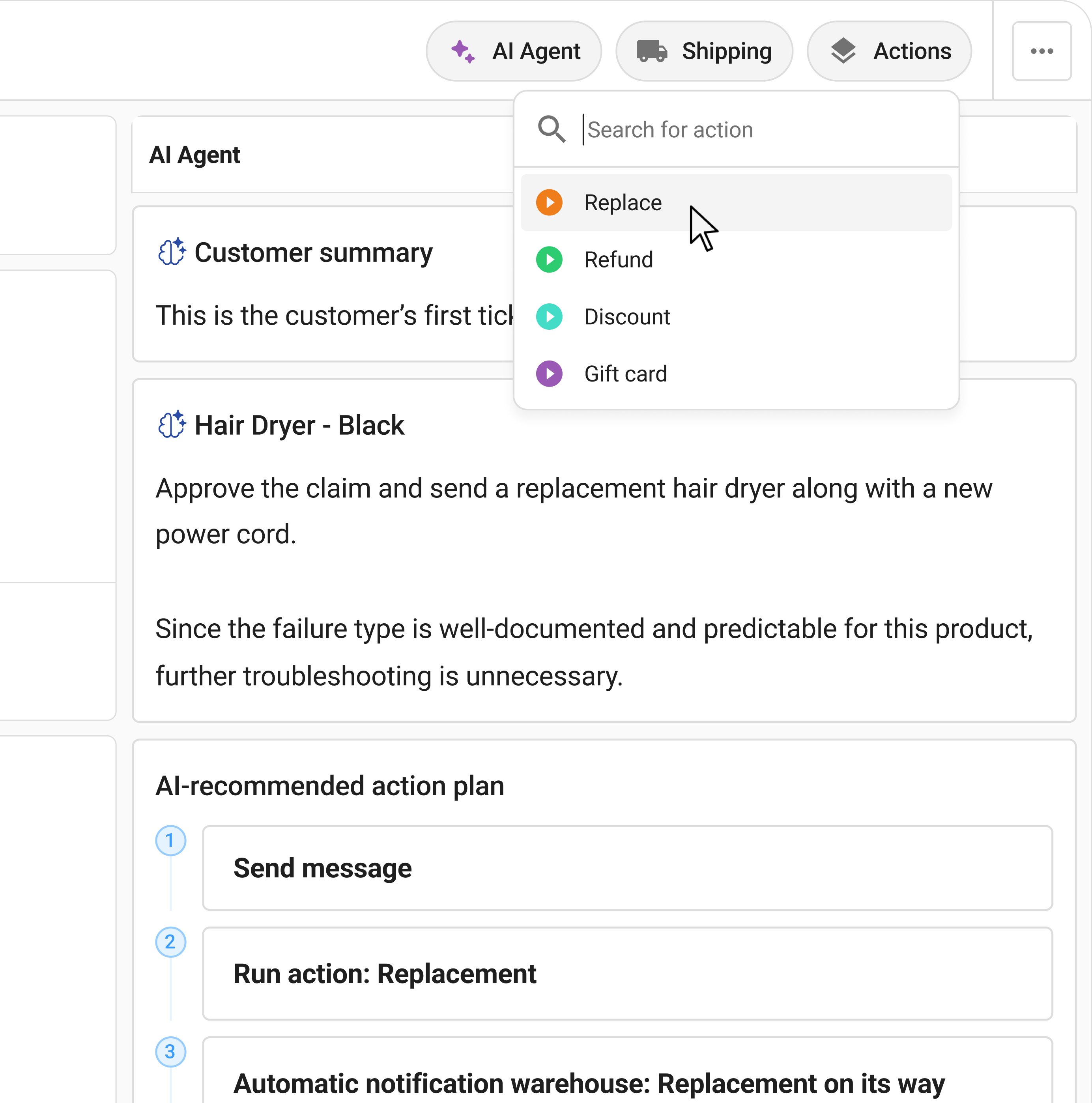
- Claimlane cuts the number of shipments a case needs by resolving more of them with a part, a repair or advice instead of a replacement box.
What actually changed on 12 August 2026
Regulation (EU) 2025/40 was published in the Official Journal in January 2025 and entered into force on 11 February that year. After an 18 month transition it became applicable on 12 August 2026, replacing Directive 94/62/EC.
The structural change matters more than any single threshold. A directive gave member states room to implement differently, which is why packaging compliance has been 27 slightly different problems. A regulation applies directly, with no national transposition.
What binds right now: a declaration of conformity and technical documentation for each packaging type placed on the market, and the substance limits in Article 5. The combined concentration of lead, cadmium, mercury and hexavalent chromium in packaging may not exceed 100 mg/kg.
Online marketplaces are named as responsible actors where they handle packaging or logistics for third-party sellers, which settles an argument that ran for years across different member states.
What arrives later
PPWR is a rolling set of deadlines rather than one switch. Most of the rules that dominate the coverage land after 2026.
| Date | Obligation |
|---|---|
| 12 August 2026 | General application. Declarations of conformity, technical documentation, Article 5 substance limits, minimisation principle |
| 2027 | Producer registers established in each member state |
| 12 February 2028 | Commission implementing act defining the empty space calculation method. Harmonised labelling |
| 1 January 2030 | 50 percent empty space cap on grouped, transport and e-commerce packaging, or 3 years after the implementing act, whichever is later |
| 2030 | Recyclability classes. Only packaging rated class C or better, meaning at least 70 percent recyclable, may be placed on the market |
The full text sits on EUR-Lex as Regulation (EU) 2025/40, and Article 24 is the one worth reading directly rather than through a summary.
One detail gets lost in the summaries. Filler counts as empty space, and that includes paper, air cushions, bubble wrap, foam, wood wool and polystyrene chips.
Stuffing a large carton does not solve the ratio. It only changes what the void is made of.
The packaging nobody counts
Here is where the standard advice runs out.
Shipping air is the problem everyone noticed. Shipping it twice for one sale is the one they missed.
A brand sells an item and ships a parcel. The customer reports a fault, so the brand ships a replacement in a second parcel.
That is one sale and two sets of packaging placed on the market.
Right-sizing the carton might shave a fraction off each one. Not sending the second parcel removes an entire unit of packaging, and it removes the outbound freight with it.
The packaging team can right-size the entire catalogue and still lose ground if replacements climb. Nobody in that team controls the replacement rate.
Minimisation and returnability pull against each other
The minimisation principle asks for packaging reduced to the minimum needed for protection and function. Reasonable on its own.
Then consider what happens when a customer has to send something back in the same box.
A carton that survives one trip is a design brief. A carton that survives three, out to the customer, back to the warehouse, and out again as a replacement, is a different product.
Brands that ask customers to reuse the original packaging for returns are quietly relying on that box being over-specified. Cut it to the minimum and the return leg starts producing damaged goods, which turns a resaleable return into a write-off.
That tension is real and the regulation does not resolve it. It has to be resolved per category, with the return rate and the damage rate both in the model. Categories with a fragile reverse leg feel it first.
The second box
Replacement rate is the packaging variable nobody assigned to anyone.
It sits with customer service, or with the warranty policy, or with whoever writes the resolution rules. It rarely sits with the team answering to PPWR, and it moves total packaging volume more than carton dimensions do.
The arithmetic is unglamorous. A product line with a 4 percent replacement rate places 4 percent more packaging on the market than its order volume suggests. That is before any return shipment is counted.
Extended producer responsibility fees are charged on packaging placed on the market. More shipments per sale means more fees, and unlike carton redesign it compounds every year the replacement rate stays where it is.
Responses were typically 2–3 days after they had reached out. Now tickets come through and are auto routed to the right people and customers get responses within a day.
Tess Jordan, Senior Manager of Customer Experience, Black DiamondReuse meets the return leg
PPWR pushes reusable transport packaging, and reuse systems are one of the areas the regulation expects operators to build toward.
Reusable transport packaging works cleanly on a closed loop between known parties, which is why B2B and inter-warehouse flows are the easier case. A consumer return is an open loop. The packaging goes to an address the brand does not control, and comes back only if the customer takes part.
Brands running reuse on the outbound leg need a plan for the reverse one, or the reusable asset simply leaves the system at the same rate as returns.
Retailers with physical stores have an advantage here that pure online sellers do not, because in-store return points close the loop without a second parcel at all.
What to change in the returns process
The compliance work that matters most is not in the packaging spec. It is in how cases get resolved.
Resolving with a spare part rather than a whole unit ships a smaller parcel, or sometimes an envelope. Repair rather than replace ships nothing outbound at all when the repair happens locally. A returnless refund removes the inbound leg entirely for low-value goods where recovery costs more than the item.
Each of those is a packaging decision made by a customer service agent who has no idea it is one.
Getting the diagnosis right at intake is what makes those options available. A case that arrives with photos, a serial number and a clear fault description can be routed to a part. A case that arrives as "it's broken" gets a replacement, because that is the safe default when nobody knows what failed.
Konges Sløjd cut handling time per claim from 15 minutes to 5 by generating credit notes directly from the resolved claim. MaxGaming resolves complex RMA cases 77 percent faster with AI-assisted review. Faster, better-informed decisions are what put the cheaper resolution on the table before an agent reaches for a replacement.
Where Claimlane sits
Loop, Narvar and AfterShip are built around the consumer returns journey and the outbound customer experience. ReverseLogix goes further into reverse logistics execution and warehouse flows.
Claimlane sits where warranty, repair, replacement, spare parts and returns run on one case record with one set of rules. That is the layer that decides whether a case becomes a second parcel, which is the part PPWR actually touches.
Resolution rules live in workflows, so a fault code can route to a spare part or a repair by default instead of a replacement. Integrations into Business Central, NetSuite, SAP, Dynamics, Shopify, Zendesk and Gorgias keep the resulting shipment and credit records in the systems that already carry the packaging data.
For the neighbouring electronics obligations, the guide to WEEE compliance and ecommerce returns covers take-back rather than packaging.
Claimlane holds a 4.8/5 rating on G2 from aftersales and customer service teams.
Frequently asked questions
Counting the right thing
PPWR will get read as a packaging project because it has packaging in the name. Carton sizes will shrink, void fill will get swapped, declarations of conformity will get filed.
All of that is necessary and none of it addresses how many parcels leave the building for each item sold.
That number is set by the warranty policy, the diagnosis quality at intake, and whether an agent has a resolution available that is smaller than a replacement. Brands that fix those ship less packaging without redesigning a single box.
MaxGaming resolves complex RMA cases 77 percent faster, which means more of them reach a resolution that is not a second parcel. Try the aftersales platform built for warranty and returns, and book a demo.