
The returned item does not match the record
A service desk receives a product that appears different from the one on the receipt. The warehouse flags the discrepancy, but another team has already approved a refund against the same request.
That situation needs investigation. It could involve a mistaken item, an incorrect record or deliberate deception. The business needs enough evidence to distinguish them before deciding what happens next.
Fraudulent returns can affect stores, dealer networks and business-to-business claims as well as remote purchases. This guide explains how brands and retailers can review suspected return fraud while keeping legitimate requests moving.
- Fraudulent returns involve deliberate misrepresentation, not simply a high return rate.
- Check product identity, authorised scope and prior adjustments across sales channels.
- Use discrepancies and patterns to trigger review, with a clear route for clarification.
- Claimlane supports documented returns workflows; specialised fraud detection needs separate evaluation.
What are fraudulent returns?
Fraudulent returns involve deliberate misrepresentation to obtain a refund, replacement, credit or another benefit through a returns process. Examples include knowingly presenting a different item as the purchased product or claiming a reimbursement that has already been received.
Refund fraud focuses on the financial benefit. It may involve a product return, but can also concern a false request for money back without any item changing hands.
Policy abuse is another category. A business may believe a customer is using a generous policy in an unintended way, but that does not establish deception or a fraudulent refund.
The NRF and Happy Returns 2025 Retail Returns Landscape treats fraudulent returns as a retail concern. Its findings provide context; they cannot determine whether an individual request is fraudulent.
Keep fraud, mistakes and legitimate returns distinct
A wrong item in a parcel is an observation. Fraud is a conclusion about deliberate conduct. Those should not be recorded as the same thing.
A serial-number mismatch could reflect a previous replacement that was never recorded. Missing accessories might be consistent with an authorised partial return. A repeated request may be a customer chasing an unresolved case.
Use separate outcomes for a confirmed mistake, an unresolved discrepancy, suspected deception and substantiated fraud. Document the basis for each conclusion and who reviewed it.
The classifications below are suggested operational categories, not legal definitions or automatic refusal rules.
| Contract detail | Question to answer |
|---|---|
| Legitimate request | The request meets the applicable criteria |
| Operational mistake | Incorrect records, packing or execution explain the discrepancy |
| Unresolved discrepancy | Evidence is incomplete or conflicting; further review is needed |
| Suspected deception | Specific evidence raises concern, but the conclusion remains under review |
| Substantiated fraud | The authorised review records evidence supporting deliberate misrepresentation |
Where return fraud can enter a physical retail workflow
At a store counter, the team may need to connect a purchase record with the item presented and any prior adjustment. Packaging or a familiar product name alone may not identify the specific unit.
Return scams can involve misrepresented purchase evidence, substituted products or a false claim about the item’s condition. The useful checks concern the transaction and product, rather than assumptions about the person presenting them.
Give staff a consistent inspection checklist and a supervisor route for unresolved differences. Keep factual notes and any permitted supporting evidence attached to the request.
A store return should also be visible to other authorised teams. Otherwise, a remote support request might be assessed without knowledge of an adjustment already made at the counter.
Check product identity and condition proportionately
For products where individual identity matters, compare relevant model, variant or serial information with the purchase and service history. Record a mismatch for review rather than immediately labelling the customer dishonest.
For furniture, the relevant evidence may concern the component, finish or reported damage. For a tool kit, it may concern the authorised components and quantities. A useful inspection reflects the product.
Signs of use do not, by themselves, prove a fraudulent return. The assessment must account for the reason, applicable conditions and any rights involved.
Photos can support an observation, but they do not automatically establish when damage occurred or who caused it. Preserve uncertainty when the available evidence cannot resolve those questions.
Link refunds, replacements and credits before acting
Different teams can unintentionally issue overlapping remedies when records are disconnected. That financial error should be separated from a customer knowingly seeking a duplicate benefit.
Before executing an adjustment, check the original purchase and linked actions. A previous partial refund, replacement or store credit may change what remains to be done.
Keep the authorisation separate from confirmation that the action succeeded. A failed refund should not look complete, and an uncertain result should be checked before another attempt.
Assign ownership for the final financial action. Sharing visibility is useful; several teams independently acting on the same request creates another risk.
Review retailer and supplier claims against the agreed scope
B2B returns can involve the retailer’s customer request, the brand’s assessment and a separate supplier credit. The same product may appear in several legitimate records.
Link those records and establish what each adjustment represents. A supplier credit reimbursing a retailer for a customer remedy is different from an unrelated duplicate claim.
For a batch return, record authorised items and quantities, what arrived and any differences. Preserve the original agreement so a later reviewer can understand the scope.
Discrepancies may reflect packing, invoicing or receiving errors. Seek clarification before concluding that a partner deliberately misrepresented the request.
Keep unresolved commercial recovery visible without automatically blocking a customer remedy the business must provide.
Use patterns to prioritise review, not to prove fraud
High return volume or repeated damage reports can justify examining cases. They cannot establish fraudulent returns on their own.
Consider relevant context such as purchase volume, product defects, delivery problems and previous service failures. A customer returning several faulty items might be experiencing a genuine product issue.
Compare similar case types and inspect the underlying records. An apparent duplicate may be two contacts about the same unresolved problem rather than two separate claims.
Define what triggers review, who performs it and how the flag can be cleared. A risk label should not become a permanent conclusion without supporting evidence.
A practical process for suspected fraudulent returns
First, record the specific discrepancy. “Received model differs from authorised model” is more useful than a general accusation.
Next, check the purchase, return scope, previous replacements and financial actions. Gather any relevant inspection findings from the team handling the product.
Ask the customer or business partner for clarification using neutral language. Explain what does not match and which information would help resolve it.
Assign a reviewer with the appropriate authority. Record the findings, applicable rules and reason for the next action, including any unresolved uncertainty.
Then communicate the decision and available review route. If the evidence supports further escalation, follow the business’s established process for legal, security or payment-provider involvement.
Protect legitimate customers during fraud review
Evidence requirements should be relevant to the request and proportionate to the decision. A routine unwanted-item return should not inherit every check designed for a high-value product discrepancy.
An inability to provide one document does not itself establish fraud. Define how alternative purchase evidence or incomplete historical records can be reviewed.
Fraud controls must also account for applicable consumer rights. A risk flag should not automatically change an entitlement or become a reason to delay a required action indefinitely.
Limit access to sensitive information and retain records under the business’s applicable requirements. Collecting more personal data is not a substitute for checking the transaction and product correctly.
Online fraud refund: understand the different search intent
People searching for “online fraud refund” may mean a seller receiving a deceptive refund request. They may also mean a consumer seeking money back after being scammed.
Those are different situations. A business reviewing an alleged fraudulent refund needs the purchase, evidence and payment history. A consumer disputing an unauthorised payment or a scam needs the relevant bank, payment-provider or reporting process.
Neither situation should be confused with an ordinary request to return an unwanted or faulty product. Identify what happened before choosing a process or promising recovery.
Measure confirmed outcomes and incorrect flags
A prevention programme needs to track more than the number of flagged cases. Review how many discrepancies were explained and how many decisions changed after further evidence.
Keep suspected cases separate from substantiated findings. Reporting every flag as confirmed fraud can overstate losses and hide weaknesses in the review process.
Assess legitimate-customer delays, reopened cases and review workload alongside any verified recovery. A control that creates repeated checks for ordinary requests may need adjustment.
When estimating financial impact, define the method. Refund amounts, product value, handling costs and supplier recovery should not be combined without checking for overlapping amounts.
How Claimlane supports a documented returns process
Claimlane’s case workflows support ownership, routing, custom statuses and customer updates. They help teams keep evidence and outstanding work connected to a request.
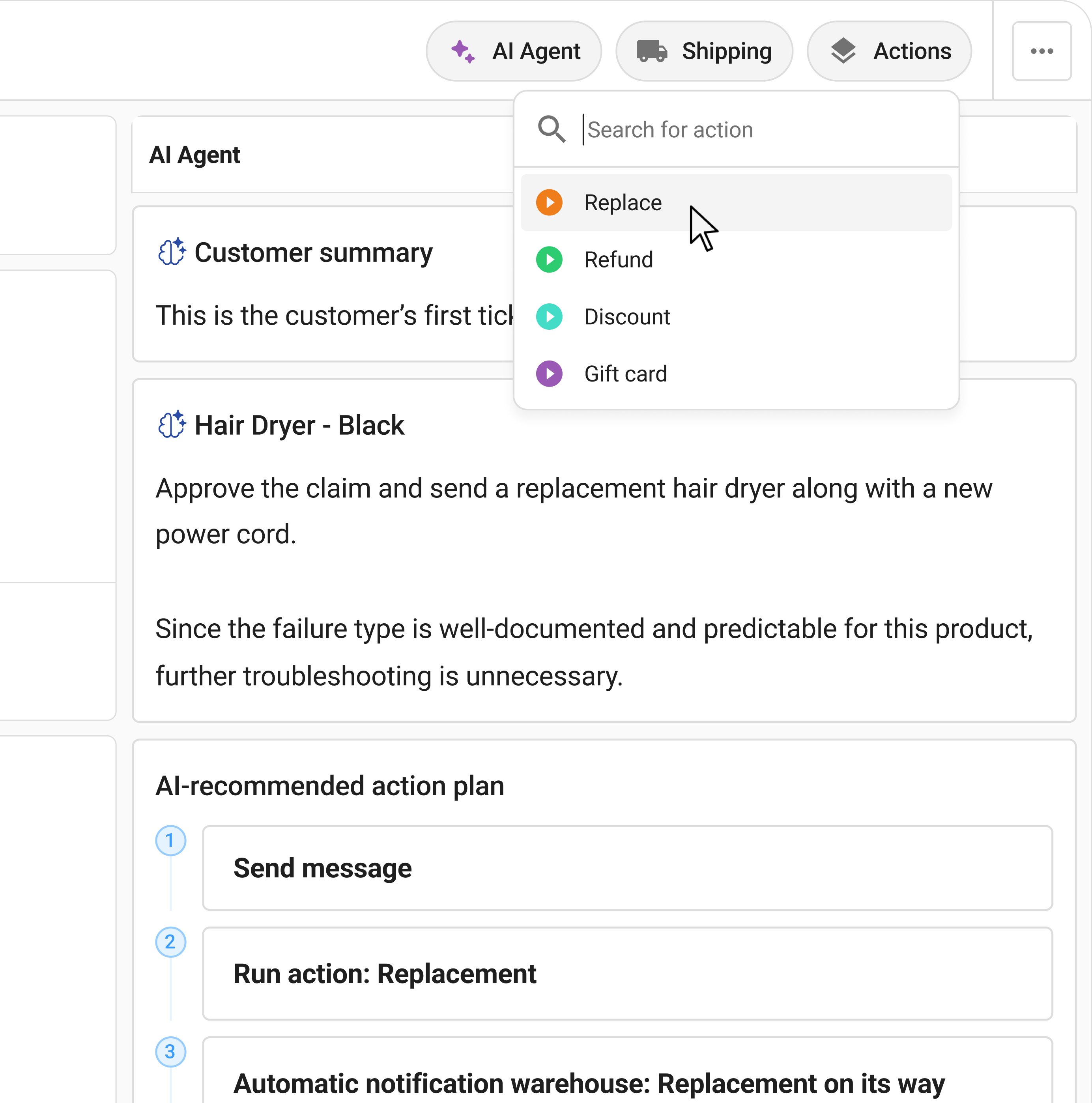
Published capabilities also include refunds, replacement orders and actions across connected business systems. The available actions should be confirmed for the selected setup.
Issuing refunds and replacements without switching between systems has been a huge time saver for our team.
Patrick Zangenberg, Head of Customer Service
A structured case record can support investigation, but it does not establish fraudulent intent. Evaluate any specialised fraud-detection requirement separately rather than assuming the workflow platform supplies it.
A useful demonstration follows a product discrepancy from receipt through clarification, review and a confirmed action. Check that unresolved cases remain assigned and that authorised teams can see previous adjustments.
Frequently asked questions
Build the decision around the evidence
Handling fraudulent returns well requires a clear distinction between a discrepancy and a substantiated finding. Connected purchase, product and payment records give reviewers a better basis for that decision.
Start with one recurring gap, such as missing service history or disconnected store refunds. Improve the record and review path, then check whether both confirmed outcomes and legitimate-customer handling improve.
Book a Claimlane demo to explore documented returns workflows across customer service, stores, warehouses and business partners.