Why fishing tackle retailers need better warranty management
A broken fishing rod, a defective reel or a damaged bivvy can quickly turn into a complicated warranty claim. For fishing tackle retailers selling products from many different suppliers, resolving these issues often involves far more than offering a refund or replacement.
Every supplier has its own warranty conditions, documentation requirements and approval processes. Meanwhile, store employees and customer service teams must manage customer expectations, physical returns and supplier communication.
A connected warranty management process helps fishing tackle and outdoor retailers resolve product issues faster, reduce pressure on store employees and recover more of their warranty costs from suppliers.
- Fishing tackle retailers need supplier-specific warranty workflows for rods, reels, bivvies and other technical outdoor equipment.
- Collecting photos, videos and purchase documentation upfront reduces unnecessary communication with customers and suppliers.
- Digital claims and supplier cost recovery help retailers reduce storage requirements and protect their margins.
- Claimlane connects stores, webshops, customer service teams and suppliers in one warranty and returns management platform.
Is there a warranty on fishing rods?
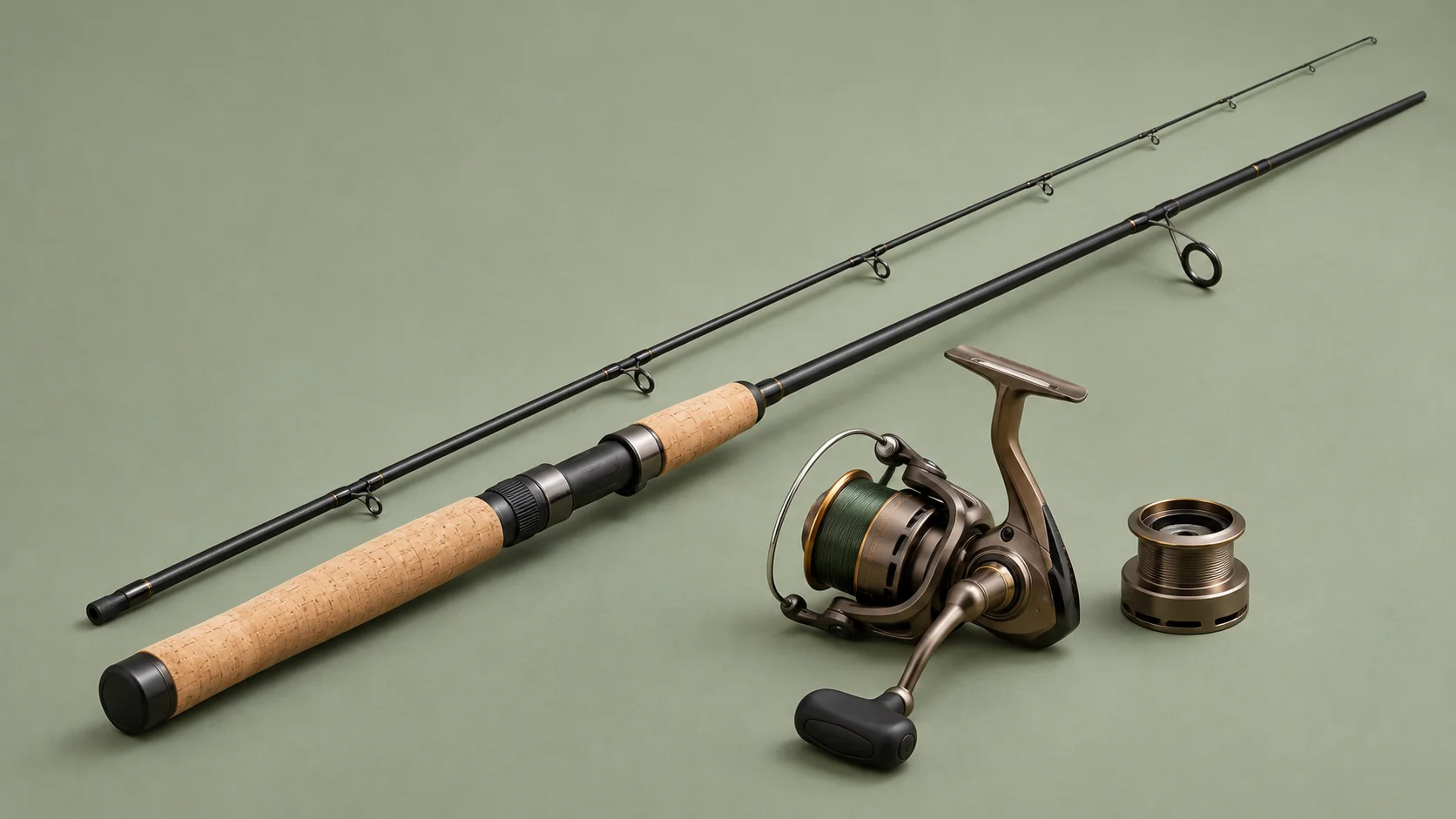
Many fishing rod manufacturers offer commercial warranties covering defects in materials and manufacturing. The duration and conditions of a fishing rod warranty vary depending on the manufacturer, product and market.
Shimano, for example, offers a two-year limited commercial warranty on fishing rods and reels in its EMEA market. DAIWA Germany also publishes a two-year warranty covering eligible manufacturing and material defects.
These warranties generally distinguish between manufacturing defects and damage resulting from accidents, misuse or normal wear and tear.
A fishing rod warranty claim may involve issues such as:
- Defective rod blanks.
- Manufacturing defects in rod sections.
- Faulty guides or guide attachments.
- Defective reel seats.
- Issues with factory-installed fittings.
- Premature component failure potentially caused by a manufacturing defect.
Retailers need access to the relevant manufacturer's warranty conditions when assessing each claim. Commercial warranty exclusions should not be used to override applicable statutory consumer rights.
How fishing reel warranty claims differ from rod claims

Fishing reels contain mechanical components that can make warranty assessments more complicated. While some faults are immediately visible, others only become apparent when the reel is operated.
A fishing reel warranty claim involving an inconsistent drag system, for example, may require video documentation or physical inspection rather than photographs alone.
| Product | Reported issue | Potential documentation |
|---|---|---|
| Fishing rod | Damaged rod blank | Photos of the affected area and full rod |
| Fishing reel | Faulty drag system | Video demonstrating the issue, where safe |
| Fishing reel | Grinding or unusual mechanical noise | Video, issue description and service history |
| Bivvy | Damaged fabric or defective seams | Photos of the affected area |
| Bite alarm | Electronic malfunction | Video and relevant product information |
| Fishing chair | Faulty adjustment mechanism | Photos and a description of the defect |
These are illustrative documentation requirements. Retailers should configure their actual warranty forms according to individual supplier policies and safety considerations.
How do fishing tackle retailers handle warranty claims from many suppliers?
Unlike manufacturers managing their own product ranges, fishing tackle retailers often sell equipment from many different brands and distributors.
Each supplier may have different requirements for approving a warranty claim. Some accept photographic evidence, while others require a physical product inspection, an authorization number or a specific claim form.
When this information is stored in spreadsheets, email conversations or individual employees' notes, it becomes difficult to maintain a consistent warranty process.
Retailers need a central system that connects each product with its responsible supplier and the applicable claim requirements.
What supplier-specific warranty workflows should include
- Supplier contact information and claim submission methods.
- Product-specific documentation requirements.
- Commercial warranty conditions.
- Physical return and inspection requirements.
- Repair and replacement options.
- Return merchandise authorization procedures.
- Supplier reimbursement and credit note agreements.
- Response deadlines and follow-up procedures.
With supplier requirements connected to product records, store employees and customer service agents don't need to memorize the individual warranty procedures of every brand they sell.
What do suppliers need for a fishing rod or reel warranty claim?
Incomplete documentation is one of the main reasons warranty claims require additional communication between retailers, customers and suppliers.
Shimano's published warranty policy, for example, asks customers to provide the affected rod or reel, dated purchase documentation and a description of the issue through an authorized dealer.
Other manufacturers may require warranty registration details, photographs or additional product information.
| Documentation | Why suppliers may need it |
|---|---|
| Proof of purchase | Establishes purchase details and helps assess warranty eligibility. |
| Product model or SKU | Identifies the exact product and configuration. |
| Serial number | Identifies an individual product where applicable. |
| Clear photographs | Shows visible damage or reported manufacturing defects. |
| Video documentation | Demonstrates functional issues where safe and appropriate. |
| Issue description | Explains what happened and when the fault appeared. |
| Service history | Provides context about previous maintenance or repairs. |
| Physical product | Allows technical inspection when remote assessment is insufficient. |
A digital warranty portal can collect the relevant documentation before the claim reaches the customer service team.
Requirements should remain proportionate to the issue. Customers should not be prevented from exercising statutory rights simply because they cannot provide documentation requested under a separate commercial warranty policy.
Collecting warranty documentation directly from customers
When a customer walks into a fishing tackle store with a faulty product, an employee may need to photograph the item, record the problem and contact the central warranty team.
If the supplier later requests additional evidence, the process starts again. This creates unnecessary work for employees whose primary responsibility is serving customers in the store.
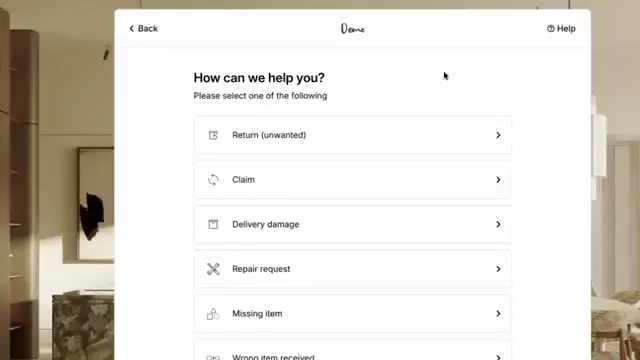
A self-service warranty portal allows customers to submit documentation before visiting a store or arranging a product return.
Depending on the product and supplier, the portal can request:
- Order or purchase information.
- Product selection from a connected catalog.
- The reason for the warranty claim.
- Photographs of the reported defect.
- Video documentation where appropriate.
- Additional supplier-specific information.
Customer service teams can review the documentation and determine whether the product needs to be returned, inspected or repaired.
Customers who need assistance can still have a claim created on their behalf by a store employee or service agent.
How can stores handle claims for bulky items like bivvies without storing them?

Fishing tackle retailers sell products that can be difficult to transport, photograph and store. Large bivvies, bedchairs, rod holdalls and fishing barrows can take up valuable retail and warehouse space.
When these products are returned before the supplier has reviewed the claim, stores can become temporary storage locations for unresolved warranty cases.
A digital-first warranty process helps retailers avoid unnecessary physical product handling.
Example workflow for a defective bivvy
- The customer submits a warranty claim online or with assistance from a store employee.
- The claim form collects photographs, purchase details and a description of the issue.
- The customer service team reviews the documentation.
- The claim is forwarded to the responsible supplier.
- The supplier confirms whether remote assessment is sufficient or a physical inspection is necessary.
- The retailer arranges an appropriate repair, replacement, refund or collection.
If the supplier accepts photographic evidence, the product may not need to enter the retailer's warehouse or store at all.
Where physical inspection is required, retailers can arrange collection, delivery to an authorized repair center or another suitable return method.
Remote assessment must not create unreasonable delays or prevent customers from obtaining remedies they are legally entitled to receive.
Reducing unnecessary transportation and storage costs
Every physical warranty return creates additional operational work. Products may need to be collected, transported, unpacked, photographed, inspected, stored and eventually shipped to a supplier.
For large or awkwardly shaped fishing equipment, the cost of these activities can become significant relative to the value of the defective component.
| Traditional warranty process | Digital-first warranty process |
|---|---|
| Customer brings the product into a store before assessment. | Customer submits documentation before transportation is arranged. |
| Store employees photograph and document the product. | Customers provide evidence directly or receive assistance when needed. |
| Products occupy storage space while awaiting decisions. | Physical returns are arranged when necessary. |
| Employees manually coordinate with suppliers. | Structured claims are forwarded through supplier-specific workflows. |
| Products may travel through multiple locations. | Collection or direct supplier delivery can be arranged where appropriate. |
The objective isn't to eliminate physical returns entirely. It's to avoid unnecessary product movements while preserving appropriate inspection, safety and customer service procedures.
How do retailers handle claims for products bought online and in store?

Many fishing tackle retailers operate physical stores alongside ecommerce websites. Customers may purchase products online but prefer to visit a local store when something goes wrong.
When online and in-store warranty processes operate separately, employees may struggle to access purchase information, previous communication and existing supplier claims.
A centralized warranty management platform connects claims from different sales channels without requiring every customer to follow an identical process.
| Purchase channel | Potential claim entry point |
|---|---|
| Ecommerce purchase | Customer-facing warranty portal connected to online order information. |
| Physical store purchase | Warranty portal or assisted claim submission by a store employee. |
| Online purchase reported in store | Store employee accesses the existing online purchase record. |
| Telephone or email request | Customer service agent creates a claim on the customer's behalf. |
All claims can then be managed through the same operational system, giving customer service teams visibility into warranty activity across the retail network.
Separating fishing tackle returns from warranty claims
Not every returned fishing product is defective. Customers may return unused equipment because they ordered the wrong model, changed their mind or purchased an incompatible accessory.
Fishing tackle returns and warranty claims need different workflows because they involve different eligibility requirements, costs and operational outcomes.
| Case type | Typical process |
|---|---|
| Change-of-mind return | Return eligibility, condition assessment and refund or exchange. |
| Incorrect item delivered | Order verification and correction. |
| Damaged item on arrival | Damage documentation and appropriate customer remedy. |
| Manufacturing defect | Warranty assessment and potential supplier claim. |
| Wear or accidental damage | Assessment of applicable rights, warranty coverage and repair options. |
| Paid repair request | Repair eligibility, quotation and customer approval. |
For UK retailers, the Consumer Rights Act 2015 provides statutory protections for faulty goods. Distance purchases also generally carry cancellation rights that don't automatically apply to change-of-mind purchases made in physical stores.
Commercial manufacturer warranties, statutory consumer rights and voluntary retailer return policies must be managed separately.
A supplier rejecting a commercial warranty claim doesn't automatically remove the retailer's obligations towards the customer.
Forwarding warranty claims directly to suppliers
Once a warranty claim has been documented, the next challenge is getting the relevant information to the correct supplier.
In an email-based process, customer service agents often copy product information, download photographs, create new email conversations and manually record supplier responses.
This creates additional administrative work and makes outstanding supplier claims difficult to track.
A connected supplier claims workflow allows retailers to:
- Identify the correct supplier based on product information.
- Apply the supplier's individual documentation requirements.
- Forward relevant photographs, videos and claim details.
- Track supplier responses and decisions.
- Request additional documentation when required.
- Record approved replacements, repairs and reimbursements.
- Follow up on outstanding claims.
Claimlane's Forward to Supplier functionality connects the original customer claim with supplier communication, allowing retailers to manage both processes without maintaining separate records.
Recovering warranty costs and supplier credit notes
Resolving a customer warranty claim doesn't necessarily mean the retailer has completed the financial side of the case.
When a retailer refunds or replaces a defective product, it may be eligible for reimbursement from the responsible supplier under its commercial agreements.
However, submitting and following up on supplier claims can take so much time that smaller claims are sometimes written off entirely.
This creates avoidable losses, especially when similar product defects occur repeatedly.
What an effective supplier recovery process tracks
- The value of the defective product.
- The cost of the customer remedy.
- Eligible transportation and repair costs.
- The amount recoverable under the supplier agreement.
- Supplier approval or rejection.
- Expected reimbursement or replacement.
- Credit notes received.
- Outstanding supplier balances.
Customer resolution and supplier reimbursement should be tracked as separate stages. This allows retailers to provide timely customer remedies while continuing to recover eligible costs afterward.
Illustrative example of missed supplier recovery
Consider a fishing tackle retailer that refunds 200 eligible defective products per month but doesn't submit the corresponding supplier claims. If the average recoverable amount is £25, the missed reimbursement would total £5,000 per month.
| Supplier recovery metric | Illustrative value |
|---|---|
| Unsubmitted eligible claims per month | 200 |
| Average recoverable amount | £25 |
| Potential monthly recovery | £5,000 |
| Potential annual recovery | £60,000 |
This is an illustrative calculation, not an industry benchmark or reported customer result. Actual recoverable amounts depend on supplier agreements, claim eligibility and approved reimbursements.
Repairing fishing equipment instead of replacing it

Not every defective fishing product requires a complete replacement. Depending on the issue, an approved repair or replacement component may resolve the problem at a lower cost.
A fishing reel may require professional servicing, while a bivvy with a defective pole may only require a compatible replacement section.
Retailers should have access to supplier-approved repair options and spare parts before deciding on an appropriate resolution.
| Product | Potential repair or replacement component |
|---|---|
| Fishing rod | Approved replacement rod section or professional guide repair. |
| Fishing reel | Compatible spool, handle or professional mechanical servicing. |
| Bivvy | Replacement pole section or approved fabric repair. |
| Fishing chair | Compatible adjustment component or foot assembly. |
| Fishing barrow | Replacement wheel or approved hardware. |
| Bite alarm | Manufacturer-approved servicing or replacement accessories. |
Repair and replacement decisions should account for product safety, component compatibility, supplier instructions, applicable consumer rights and the customer's circumstances.
How Angling Direct manages complex fishing tackle warranties

Angling Direct is a specialist fishing tackle retailer operating physical stores and ecommerce websites across the UK and Europe.
According to Claimlane's published Angling Direct webinar recap, the retailer was managing tens of thousands of warranty claims annually across a network of 58 stores at the time of the interview.
Its previous process relied on spreadsheets, emails and Power Automate. Staff repeatedly had to request documentation, contact suppliers and coordinate the handling of large fishing products.
For the first time, we can see every warranty claim across all our stores and webshops in one place.
Cameron Darnell, Warranty Manager, Angling DirectAfter introducing Claimlane, Angling Direct gained a central system for managing warranty activity across its retail channels.
The new process allows customers to provide photographic evidence directly, reduces the need for stores to handle products before supplier assessment and gives the warranty team greater visibility into outstanding cases.
It also addresses a financial challenge identified in the previous workflow: smaller refunds that weren't followed by supplier claims because of the administrative effort involved.
Angling Direct's experience illustrates why specialist fishing retailers need more than traditional ecommerce returns software.
Using warranty data to evaluate supplier performance
Warranty claims provide valuable information about the quality of products sold by fishing tackle retailers.
When claim information is distributed across spreadsheets and email inboxes, purchasing teams may struggle to identify products that repeatedly generate customer complaints.
Centralized warranty data helps retailers evaluate both product quality and supplier performance.
Useful metrics to collect include:
- Warranty claim rates relative to units sold.
- Claim volumes by product category and supplier.
- Frequently reported product defects.
- Average supplier response time.
- Average customer resolution time.
- Supplier claim approval rates.
- Recoverable warranty costs.
- Credit notes received and outstanding.
- Repair versus replacement rates.
Purchasing teams can use this information when reviewing product ranges, discussing quality concerns with suppliers and negotiating commercial agreements.
Finance teams also gain a clearer understanding of the actual cost of warranty claims after supplier reimbursements.
Choosing warranty management software for fishing tackle retailers
Fishing tackle and outdoor retailers need warranty management software that connects customer service, physical stores, ecommerce operations, suppliers and finance teams.
Standard returns software may cover refunds and exchanges, but complex fishing equipment claims require additional capabilities.
| Capability | Why it matters for fishing tackle retailers |
|---|---|
| Customer self-service portal | Collects product-specific documentation before assessment. |
| In-store claim submission | Allows store employees to assist customers. |
| Photo and video uploads | Supports remote assessment of visible and functional defects. |
| Supplier-specific workflows | Accounts for individual supplier documentation and claim requirements. |
| Supplier communication | Keeps warranty decisions and outstanding supplier requests connected. |
| Credit note tracking | Helps monitor eligible warranty cost recovery. |
| Repair and spare parts management | Supports alternatives to complete product replacement. |
| ERP and ecommerce integrations | Connects purchase records, product information and operational workflows. |
| Warranty analytics | Provides visibility into product quality and supplier performance. |
Claimlane's supplier warranty claims management software helps retailers connect customer claims with supplier decisions, documentation and financial recovery in one platform.
Claimlane has a 4.8/5 rating on G2.
Frequently asked questions about fishing tackle warranties
Better warranty management for fishing tackle retailers
Fishing tackle retailers shouldn't have to choose between providing customers with fast warranty resolutions and protecting their margins through supplier cost recovery.
Claimlane connects physical stores, webshops, customer service teams and suppliers through one warranty and returns management platform.
With supplier-specific workflows, digital claim documentation and centralized warranty management, retailers can spend less time sending emails, reduce unnecessary product handling and recover more eligible warranty costs.
Book a personalized demo to see how Claimlane can support warranty claims and supplier management for fishing tackle and outdoor retailers.