.webp)
Returns automation sounds simple until the first exception hits.
A customer wants an exchange, but the product is damaged. Another customer wants a refund, but the item is outside the return window. A third customer reports a faulty product and needs a replacement, repair, or warranty review instead of a normal return.
That’s where basic return rules stop being enough.
The best returns automation software in 2026 doesn’t just create labels or approve simple returns. It helps teams collect the right information, route each case, trigger refunds or replacements, update customers, flag exceptions, and give operations teams a clearer view of what’s happening.
For ecommerce brands, automation often means faster refunds and exchanges.
For retailers and brands selling complex products, automation has to go further. It needs to support warranty claims, repairs, supplier approvals, B2B claims, and product issue data.
Claimlane fits that second category. It helps businesses automate returns, warranty claims, replacements, supplier workflows, and aftersales communication from one place.
Quick note: Returns automation is not only about approving requests faster. The real value is knowing which cases can move automatically and which ones need review.
TL;DR: Best Returns Automation Software by Use Case
The best returns automation software depends on what a business needs to automate.
If the goal is exchange retention, Loop Returns and ReturnGO are strong options. If the business wants a customer-facing return portal with automated approvals and labels, AfterShip Returns is a natural fit. If the team needs enterprise post-purchase workflows, Narvar fits that category.
If the business needs to automate warranty claims, returns, replacements, repairs, supplier communication, and aftersales workflows, Claimlane is the strongest fit.
| Platform | Best for | Strongest fit |
|---|---|---|
| Claimlane | Returns, warranty claims, replacements, repairs, and supplier workflows | Retailers and brands where automation needs to cover more than simple returns |
| Loop Returns | Exchange automation and retention | Shopify and ecommerce brands focused on keeping revenue inside the store |
| ReturnGO | Automated returns and exchange flows | Brands that want rule-based return outcomes and self-service flows |
| AfterShip Returns | Return portal, auto-approval, labels, and tracking | Ecommerce teams that want a lighter returns automation setup |
| Narvar | Enterprise post-purchase returns | Larger retailers that want return policies, exchanges, and customer updates |
| PostCo | Returns, exchanges, and upsell flows | Brands that want to turn returns into exchanges or new revenue |
| Returnly | Legacy returns software | Not an active 2026 pick because Returnly has shut down |
Returns Automation Software Comparison Table
Most returns automation tools cover the same basic tasks.
They help customers submit return requests, apply return rules, create labels, send status updates, and trigger refunds or exchanges.
The difference appears when the return is not standard.
A product may be damaged. A warranty may need review. A supplier may need to approve the claim. A warehouse may need inspection instructions. A replacement may need to be created in Shopify, an ERP, or another system.
That is where the depth of automation matters.
| Platform | Primary automation layer | Refunds and exchanges | Warranty claims | Supplier workflows | Best fit |
|---|---|---|---|---|---|
| Claimlane | Returns, claims, replacements, repairs, and aftersales workflows | Yes | Yes | Yes | Brands with complex products and claim flows |
| Loop Returns | Exchange and retention automation | Yes | Limited | No | Ecommerce brands focused on exchanges |
| ReturnGO | Return rules and outcome automation | Yes | Basic | Limited | Shopify brands with return rule needs |
| AfterShip Returns | Return portal, labels, approvals, and tracking | Yes | Basic | No | Ecommerce returns and exchanges |
| Narvar | Enterprise returns and post-purchase experience | Yes | Limited | Limited | Larger retail teams |
| PostCo | Returns, exchanges, and upsell flows | Yes | Basic | Limited | Brands focused on exchange revenue |
Why Returns Automation Matters in 2026
Returns create hidden work everywhere.
Customer service answers the same questions. Warehouse teams receive items without clear instructions. Finance waits for the correct refund decision. Operations lacks data on why products come back. Suppliers may never receive the evidence needed to approve a claim.
Automation can reduce that work, but only if it matches the type of return.
For a simple return, automation might mean auto-approval, instant labels, refund triggers, exchange suggestions, and status updates.
For a warranty claim, automation needs to handle more steps. The system must collect documentation, check the product type, route the case, trigger the right outcome, and keep every team updated.
That is the gap many businesses discover after installing a basic returns app.
They remove some manual work from standard returns, but the difficult cases still end up in email.
Used by retailers and brands to automate warranty claims, returns, replacements, repairs, and supplier workflows.
1. Claimlane
Best for: Retailers and brands that need to automate returns, warranty claims, replacements, repairs, supplier communication, and aftersales workflows.
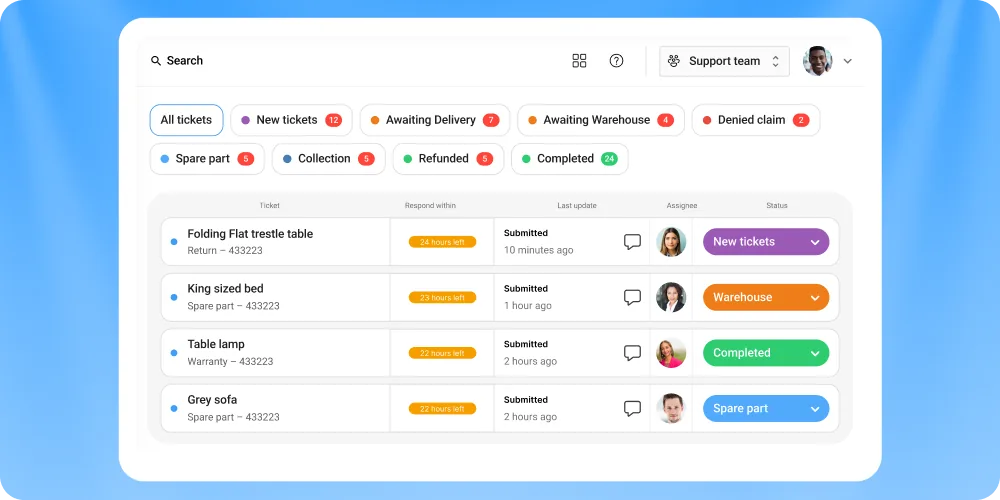
Claimlane is built for businesses where returns are not always simple.
A customer might need a refund. Another customer might need a replacement. A retailer might submit a B2B claim. A supplier might need proof before approving a credit. A warehouse might need to inspect the product before finance takes action.
Claimlane helps automate those flows from one place.
Instead of forcing agents to copy information between email, Shopify, ERP systems, supplier inboxes, and spreadsheets, Claimlane gives teams one structured workflow for each case.
That makes it a strong fit for complex product categories such as furniture, baby products, electronics, appliances, outdoor gear, sporting goods, kitchenware, tools, and other products where returns often overlap with warranty claims.
Why Claimlane stands out
Most returns automation platforms focus on the customer-facing return request.
Claimlane automates the work around the request.
That includes intake, documentation collection, routing, approvals, customer updates, replacements, refunds, repairs, supplier communication, and reporting.
For businesses with simple returns, that may sound like more than they need.
For businesses with warranty claims, B2B claims, repairs, spare parts, or supplier reimbursement, that structure becomes important fast.
Key automation features
Claimlane can help automate:
- Customer self-service claim and return intake
- Product-specific forms
- Photo and video collection
- Serial number collection
- Required documentation by product type
- Claim routing
- Status updates
- Refund and replacement actions
- Repair flows
- Spare part flows
- Supplier claim forwarding
- Internal handovers
- Claim analytics
- Product issue tracking
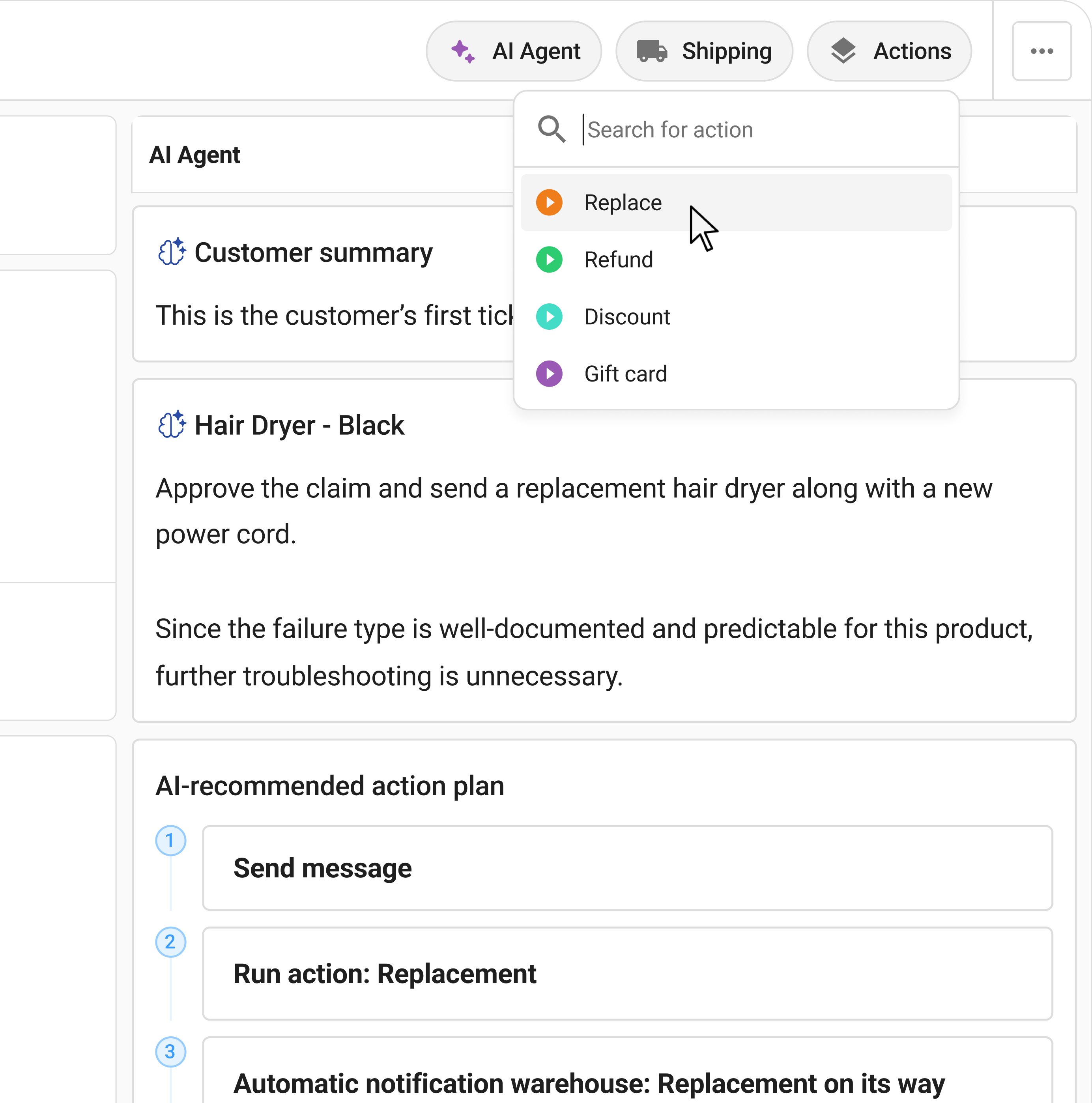
Claimlane also includes Claimlane's AI Agent, the first AI agent purpose-built for warranty claims and returns.
The AI Agent can review claim information, customer-submitted images, and videos, then help classify the issue and suggest the right next step based on the company’s rules.
Pros
- Strong fit for complex returns and warranty claims
- Built for B2B and B2C workflows
- Helps reduce back-and-forth with customers
- Supports supplier communication and reimbursement workflows
- Can support refunds, replacements, repairs, and spare parts
- Gives teams structured product issue data
- Useful for brands where several teams touch the same case
Cons
- More advanced than a basic returns app
- Not the lightest setup for very small stores
- Best fit when the business needs to automate more than simple returns
Best fit
Claimlane is best for retailers and brands that want to automate the full aftersales flow, not only the return portal.
It fits teams that need customer service, warehouse, finance, operations, and suppliers to work from the same case.
2. Loop Returns
Best for: Ecommerce brands that want to automate exchanges and keep revenue inside the store.
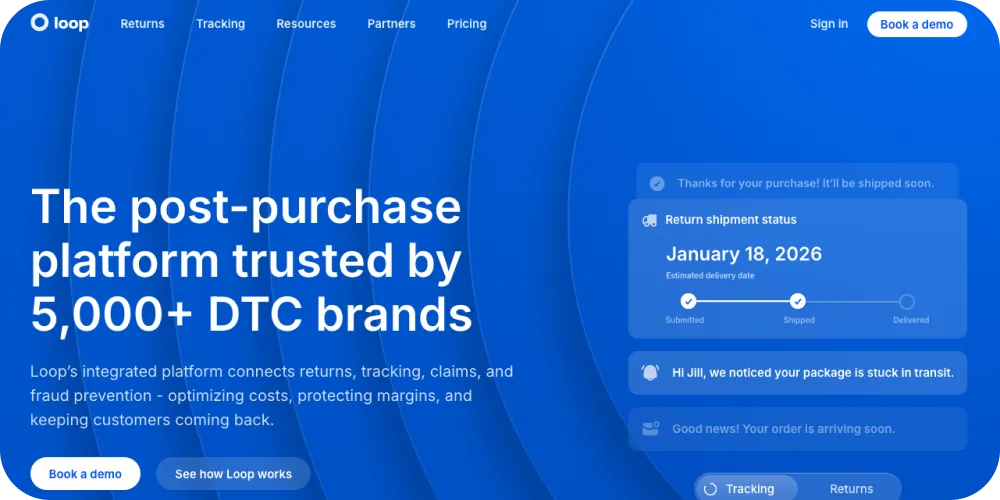
Loop Returns is one of the best-known returns platforms for ecommerce brands.
It is especially strong for exchange automation. The platform helps brands guide customers toward exchanges, store credit, or other outcomes instead of defaulting to refunds.
That makes Loop a strong fit for apparel, footwear, accessories, and other ecommerce categories where many returns are based on size, fit, color, or preference.
Why Loop Returns stands out
Loop focuses heavily on retention.
Instead of treating every return as lost revenue, it helps brands turn return moments into exchange moments. That can reduce refund pressure and keep more value inside the business.
For ecommerce teams, that is a clear benefit.
If the return reason is simple and the customer wants another size or color, automation can make the exchange feel fast and easy.
Pros
- Strong exchange automation
- Good fit for ecommerce and Shopify brands
- Helps protect revenue through store credit and exchanges
- Customer-friendly return flow
- Strong fit for apparel and fashion returns
Cons
- Less focused on warranty claims
- Less suited for repairs and spare parts
- Supplier workflows are not the main focus
- Complex product claims may still need extra handling outside the main return flow
Best fit
Loop Returns is best for ecommerce brands that want automated exchanges and revenue retention.
It is less suited for teams where the hardest cases involve product faults, warranty rules, supplier responsibility, or repair decisions.
3. ReturnGO
Best for: Ecommerce teams that want flexible return rules and automated outcomes.
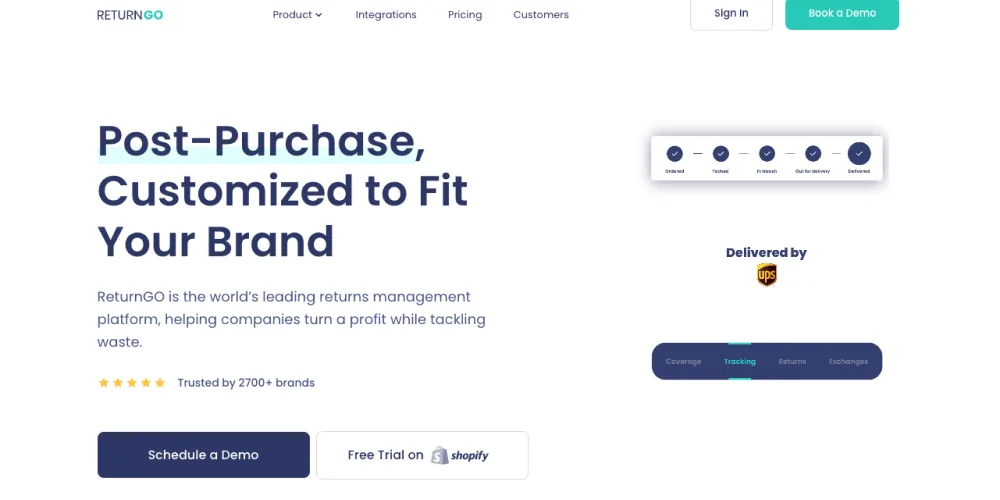
ReturnGO focuses on automated returns and exchange management.
The platform helps merchants create return rules that decide what options a customer sees. That could include refunds, exchanges, store credit, donations, or other outcomes depending on the product, return reason, customer history, or order details.
That rule-based setup can be useful for stores that want more control over their return flow.
Why ReturnGO stands out
ReturnGO is strong for brands that want to customize return outcomes without building everything manually.
For example, a merchant might want to auto-approve low-risk returns, offer exchanges for certain products, block final-sale items, or require review for damaged products.
That type of automation can reduce manual work for customer service teams.
Pros
- Good return rule setup
- Strong self-service return portal
- Useful for refunds, exchanges, and store credit
- Good fit for Shopify merchants
- Helps reduce manual return handling
Cons
- Warranty claim workflows are more basic
- Supplier claims are not the main focus
- Repair and spare part flows may need extra tools
- Less suited for complex B2B and supplier-heavy workflows
Best fit
ReturnGO is a good fit for ecommerce brands that want automated return decisions and exchange flows.
It is less of a fit if the team needs deeper warranty claim automation, supplier communication, or repair workflows.
4. AfterShip Returns
Best for: Ecommerce teams that need return automation, label creation, status tracking, and a customer-facing portal.
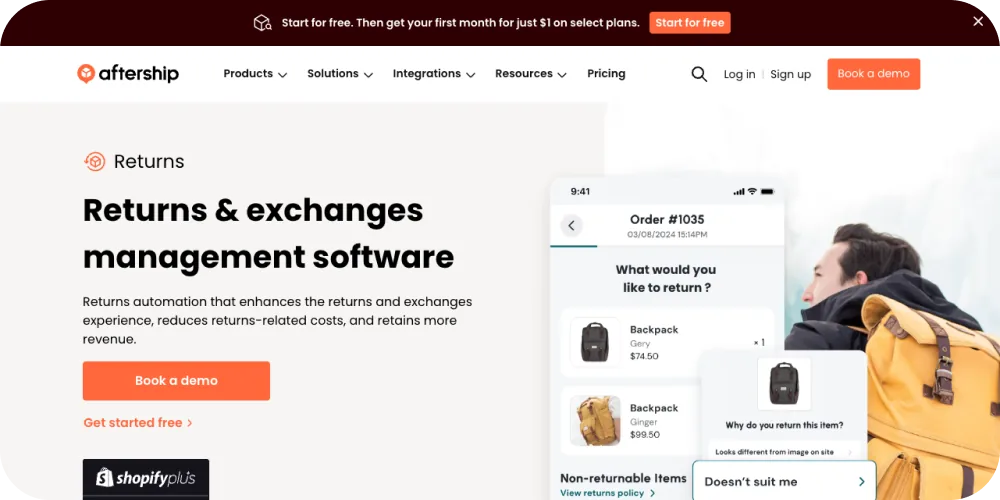
AfterShip Returns is a strong option for ecommerce businesses that want to automate standard return workflows.
It helps merchants handle return requests, approvals, return labels, tracking, customer notifications, and exchanges. The platform also connects with a wider post-purchase ecosystem from AfterShip.
For many ecommerce brands, that is a practical setup.
Why AfterShip Returns stands out
AfterShip Returns is strong when the goal is to make standard returns easier to handle.
Teams can create return rules, automate approvals, generate labels, and give customers visibility into return status.
That can reduce the number of “where is my return?” messages and speed up common return cases.
Pros
- Good fit for standard ecommerce returns
- Supports automation rules
- Can create return labels automatically
- Useful return tracking
- Works well as part of a broader post-purchase setup
Cons
- Warranty claim handling is more basic
- Supplier workflows are not the main focus
- Less suited for repair-heavy product categories
- Complex claims may still require manual review
Best fit
AfterShip Returns is best for ecommerce teams that need return automation, return labels, and tracking without building a heavy operational workflow.
It is less suited for brands where many returns are actually warranty claims or supplier-related product issues.
5. Narvar
Best for: Enterprise retailers that want post-purchase returns automation and customer communication.
Narvar is built for larger retailers and brands with broad post-purchase needs.
Its returns product helps retailers manage return policies, customer return flows, exchanges, repurchases, return reasons, and analytics.
Narvar is often a better fit for teams that need a larger post-purchase platform rather than a simple returns app.
Why Narvar stands out
Narvar is strong in the broader customer experience around delivery, returns, and post-purchase communication.
For enterprise retailers, that matters because returns are not isolated from the rest of the customer journey.
Customers expect clear policies, quick updates, and easy next steps. Narvar helps retailers manage that experience at scale.
Pros
- Strong enterprise post-purchase fit
- Supports return policies and customer return flows
- Can help convert returns into exchanges or repurchases
- Useful return reasons and analytics
- Good fit for larger retail teams
Cons
- May be more than smaller brands need
- Warranty claim automation is not the main focus
- Supplier workflows are limited
- May not fit teams looking for a dedicated claims and repair workflow
Best fit
Narvar is best for larger retailers that need post-purchase returns automation and customer communication.
It is less suited for businesses where the main challenge is warranty claims, repairs, and supplier approvals.

6. PostCo
Best for: Brands that want to automate returns and exchanges while protecting revenue.
PostCo focuses on returns, exchanges, and revenue retention.
It helps brands turn returns into exchanges, store credit, or new purchases. For ecommerce teams, that can be valuable because the return moment becomes a chance to keep the customer buying.
PostCo is also a natural fit for brands that want a clean customer portal and a simple way to manage returns.
Why PostCo stands out
PostCo focuses on the commercial side of returns automation.
Instead of only processing the return, it helps brands guide customers toward exchange and upsell options. That makes it relevant for fashion, lifestyle, and ecommerce brands where customers often return because of fit, size, color, or preference.
Pros
- Good fit for exchanges and upsells
- Strong customer-facing return flow
- Useful for ecommerce brands
- Helps protect revenue during returns
- Simple fit for standard return workflows
Cons
- Warranty claim handling is more basic
- Not built primarily for supplier workflows
- Less suited for repair and spare part cases
- Complex product claims may require another process
Best fit
PostCo is best for ecommerce brands that want to automate standard returns and encourage exchanges or upsells.
It is less suited for teams that need deeper warranty claim automation or supplier reimbursement workflows.
7. Returnly
Best for: Legacy context, not an active 2026 pick.
Returnly used to be a well-known returns platform.
It appeared often in returns automation comparisons because it helped ecommerce brands create self-service return experiences and refund flows.
However, Returnly is not an active choice for 2026 because the product shut down in 2023.
That means buyers should treat Returnly as historical context, not as a platform to evaluate today.
Pros
- Previously known in ecommerce returns
- Still appears in older search results and comparison lists
Cons
- Not active as a 2026 software option
- Not relevant for new vendor selection
- Buyers should compare current alternatives instead
Best fit
Returnly should not be included as a current buying option.
If a comparison article still ranks Returnly as a live platform, the article may be outdated.
How to Choose the Right Returns Automation Software
The right returns automation software depends on what kind of work needs to disappear from the team’s day.
Some teams want fewer refund requests.
Some want more exchanges.
Some want fewer emails.
Some want faster labels.
Some want better rules.
Some need to automate warranty claims, replacements, repairs, supplier claims, and internal handovers.
Those are different problems.
1. If the goal is faster standard returns
Look for automated approvals, label generation, return tracking, refund rules, and customer notifications.
AfterShip Returns, ReturnGO, Loop Returns, PostCo, and Narvar can all support parts of this workflow.
2. If the goal is more exchanges
Look for exchange-first flows, store credit, instant exchange options, product recommendations, and revenue retention tools.
Loop Returns, ReturnGO, and PostCo are strong in this category.
3. If the goal is fewer manual reviews
Look for rules that separate low-risk cases from exceptions.
For example, the system should be able to auto-approve certain returns, block others, and send damaged products or high-value items to manual review.
This matters because full automation without control can create margin problems.
4. If the goal is warranty claim automation
Look beyond standard returns features.
The system should collect photos, videos, serial numbers, order data, product issue categories, and policy details upfront.
It should also support replacements, repairs, spare parts, supplier reviews, and internal team handovers.
Claimlane is the strongest fit for this use case.
5. If the goal is supplier recovery
Look for software that connects the customer claim to supplier communication.
Retailers often lose money because supplier reimbursement happens in a separate email process. The customer gets a refund or replacement, but the supplier claim is delayed, forgotten, or poorly documented.
Claimlane helps structure that supplier workflow.
6. If the goal is better operations data
Look for reporting that shows more than return volume.
The team should be able to see return reasons, claim reasons, product issues, resolution time, supplier acceptance, refund rates, replacement rates, and repeat product problems.
That data helps the business reduce future returns instead of only processing the current ones.
Returns automation should cover the hard cases too
For retailers handling warranty claims, replacements, repairs, and supplier claims, Claimlane helps teams automate the aftersales workflow from one place.
Book a Claimlane demoFrequently Asked Questions
Returns automation software helps businesses automate return requests, approvals, labels, refunds, exchanges, customer updates, and related aftersales workflows.
The best returns automation software depends on the use case. Claimlane is best for complex returns, warranty claims, repairs, replacements, and supplier workflows. Loop Returns, ReturnGO, AfterShip Returns, Narvar, and PostCo are strong options for standard ecommerce returns and exchanges.
Some returns automation tools can handle basic claim flows, but warranty claims often need more structure. Claimlane is built for warranty claims because it can collect documentation, route cases, manage repairs, trigger replacements, and support supplier communication.
Returns automation software should automate return intake, eligibility checks, approvals, labels, refunds, exchanges, customer updates, routing, reporting, and exception handling. For complex products, it should also support warranty claims, repairs, replacements, and supplier workflows.
No. Returnly shut down in 2023, so it should not be treated as an active returns automation software option for 2026.
Final Thoughts
Returns automation software should remove manual work without removing control.
That balance matters.
Simple returns can often be approved, labeled, and refunded automatically. Complex cases need more care. Damaged products, warranty claims, repairs, high-value items, B2B claims, and supplier responsibility all need the right workflow before automation makes sense.
For ecommerce brands focused on exchanges, tools like Loop Returns, ReturnGO, AfterShip Returns, Narvar, and PostCo can be strong options.
For retailers and brands where returns automation needs to cover warranty claims, repairs, replacements, and supplier workflows, Claimlane is the better fit.
It helps teams collect the right information upfront, automate the next step, and keep every case moving without losing the details that matter.