
A warranty promise needs a working service process
A customer reports that a recliner has stopped working. Support confirms the purchase, a technician needs photos of the mechanism, and the supplier needs a part number before approving a replacement component.
Each team has a job to do. But if the photos sit in an inbox, the product details live in the ERP and the supplier conversation happens elsewhere, the customer can wait while everyone searches for the same information.
Warranty service connects those steps. For retailers and manufacturers, the challenge is to turn a reported problem into an assessed claim and a completed outcome, with a clear owner throughout.
- Warranty service is the work involved in assessing and fulfilling requests under a product warranty.
- A clear process connects customer intake, coverage checks, diagnosis, an authorised remedy and confirmation of completion.
- Repair logistics, spare parts and supplier reimbursement need visible owners and records linked to the original case.
- Claimlane helps teams organise warranty service through case ownership, routing, automations and connected system actions.
What is warranty service?
Warranty service is the process a business uses to assess a reported product problem and provide the support or remedy required by the applicable warranty. It may involve troubleshooting, inspection, repair, spare parts, replacement or a refund.
The available remedy depends on the product, the issue, the warranty terms and applicable customer rights. A request does not automatically qualify for every possible outcome.
A warranty policy describes the promise and its conditions. Warranty service is the operational work that follows when a customer asks the business to act on that promise.
That work can involve several parties, even when the customer deals with only one contact.
Warranty service, returns and service contracts
A change-of-mind return and a warranty claim begin with different questions. The former asks whether an unwanted purchase can be returned. The latter requires an assessment of a reported problem and the protection that applies.
A paid service contract is another distinct arrangement. The US Federal Trade Commission's guidance on warranties distinguishes warranties from separately purchased service contracts and explains why coverage terms matter.
Terminology and rights vary by market. Teams should identify the relevant purchase, location and protection before selecting the appropriate workflow.
An expired commercial warranty should not automatically end every route for reviewing a product complaint. Other applicable rights or an approved goodwill policy may need separate consideration.
Who is responsible for warranty service?
The seller, manufacturer, distributor and authorised service partner may each perform part of the work. The arrangement depends on the warranty, commercial agreements and applicable obligations.
Operational responsibility needs to be explicit. The team collecting the request may differ from the team authorising a repair or issuing a supplier credit.
Assign a case owner who can coordinate the next action and keep the customer informed. A handoff to a technician should not leave the customer unsure whom to contact.
Where a retailer submits a claim to a manufacturer, the record should distinguish the business submitting the case from the end customer and the location of the product.
The warranty service process at a glance
A practical process follows the claim from initial contact to confirmed completion. The stages below are a suggested operating model, with responsibilities adapted to the business.
| Stage | Main question | Required output |
|---|---|---|
| Intake | Which product and problem are involved? | A case linked to purchase and product details |
| Coverage assessment | Which terms and rights apply? | A documented decision or request for more information |
| Diagnosis | What has failed, and what is needed to assess it? | Findings, evidence and any inspection requirement |
| Authorisation | Which remedy is appropriate and permitted? | An approved action with a named owner |
| Execution | What needs to be repaired, shipped or refunded? | Completed service and relevant system records |
| Closure and recovery | Is the customer outcome complete, and are costs reconciled? | A closed service task and tracked financial follow-up |
Some stages can overlap. A straightforward case may need little diagnosis, while a technical fault may require inspection before a final decision.
Collect the details needed for the first decision
Useful intake information includes the product, purchase reference, reported fault and relevant supporting evidence. Serial numbers or component references may be needed for certain categories.
The questions should match the issue. A damaged cabinet door may require photos of the hinge and surrounding area. An intermittent electrical fault may need a description of when the problem occurs.
Avoid requiring customers to provide information already available from the order. Equally, a short form that omits essential details can move the work into a longer email conversation.
For dealer or retailer claims, include the business account and its reference. This helps the receiving team connect later messages, shipments and credits to the same case.
Check coverage without losing the case history
The assessment should use the relevant terms, purchase details and available evidence. Record which rules informed the decision and whether any information remains missing.
Keep an ordinary approval separate from a discretionary exception. A goodwill replacement may be sensible in a particular case, but it should not silently become the standard rule for every similar request.
A declined request needs an understandable explanation and a route for reviewing new information. Agents should be able to see the original reasoning when a customer follows up.
For multi-market businesses, rules should be maintained with the appropriate local review. Copying one market's conditions into every workflow can lead to inconsistent handling.
Diagnose before arranging unnecessary transport
Initial troubleshooting can establish whether the product needs physical inspection. Useful steps should be relevant to the reported issue and appropriate for the customer to carry out.
For example, confirming the affected component may be enough to select the correct next assessment. In other cases, a technician needs the product to reproduce the fault.
The case record should distinguish what the customer reported from what the technician confirmed. “Will not charge” describes a symptom; it does not establish which component has failed.
Where a report indicates a potential safety issue, route it to the designated product-safety process. Routine troubleshooting should not continue by default.
Choose and authorise the right remedy
A repair, replacement part, complete replacement and refund each create different work. The selected remedy should reflect the applicable obligations, confirmed fault and practical options.
Before promising a spare part, check compatibility and availability. Before confirming a repair, establish whether the relevant service capability exists and whether the product must travel.
Customer preferences should remain visible during the assessment. They are useful context, but the record should distinguish a requested outcome from an authorised one.
Approval should identify exactly what the business will do. “Replace” is too vague when it could mean a motor, a seat unit or the entire recliner.
Coordinate repairs, collections and spare parts
Once a remedy is authorised, the service team needs an executable instruction. That includes the product or part reference, destination, required accessories and any collection arrangements.
For bulky goods, access details and packing expectations should be confirmed before collection. For workshop repairs, the receiving team needs a reference that connects the arriving item to the case.
Track parts ordered, parts received, appointments and completed repair work as distinct events. An order placed with a supplier is not confirmation that the customer has received the component.
If a part becomes unavailable, assign the reassessment to an owner. The case should not remain indefinitely in a generic waiting status.
Keep the customer informed during the waiting time
A prompt acknowledgement helps, but warranty service often includes periods when another team or partner is working on the case. Customers need useful updates during those periods too.
Messages should explain the current stage, any action required from the customer and the next expected update. If a completion date is not confirmed, say what is still being checked.
Customer-facing language should describe actual events. “Repair booked”, “Awaiting inspection” and “Replacement dispatched” each give more useful information than “In progress”.
If the plan changes, update the case and customer together. A new promise in an email should also be visible to the next person handling the request.
Track supplier recovery separately from customer completion
A customer can receive a replacement while the retailer is still waiting for a supplier credit. These are related tasks with different completion conditions.
Link the supplier claim to the original case and retain the evidence required under the supplier agreement. Record the amount requested, the supplier's response and any credit received.
Disputed amounts need their own owner and follow-up date. Closing the customer conversation should not hide unfinished reimbursement work.
Likewise, a pending supplier response should not automatically suspend a remedy the business is already required or authorised to provide. Customer obligations and commercial recovery need separate assessment.
Measure warranty service quality and cost
Case volume alone does not show where the service process is struggling. Teams need measures that explain waiting time, repeated work and the final customer outcome.
A suggested scorecard includes:
- Time to first meaningful action after submission.
- Total time to complete the authorised customer outcome.
- Cases requiring additional intake information.
- Cases reopened because the original issue remains unresolved.
- Service cost per resolved case, with labour, parts and transport defined consistently.
- Outstanding supplier recovery, grouped by age and responsible supplier.
These are proposed measures rather than industry benchmarks. Compare similar products and outcomes, since a workshop repair and a simple part shipment have different requirements.
Record failure reasons alongside outcomes. Repeated claims involving the same component can justify a product or supplier investigation, even when individual cases are handled quickly.
What warranty service software should support
Warranty service management software should help the team maintain a complete case record and carry out the agreed work. A buyer's demonstration should follow a real service scenario through to completion.
Useful checks include structured intake, policy-based routing, evidence storage, ownership, partner communication and connections with order, ERP, warehouse and shipping systems.
The test should include an exception. An unavailable part or failed replacement order shows whether the team can identify the problem and recover without losing the customer context.
Confirm which system owns each financial and inventory action. A retry should not issue a duplicate refund, create another replacement order or count the same stock movement twice.
How Claimlane supports warranty service teams
Claimlane's warranty workflows support case ownership, routing, custom statuses and automated customer updates. Teams can organise different case types and keep the next action visible.
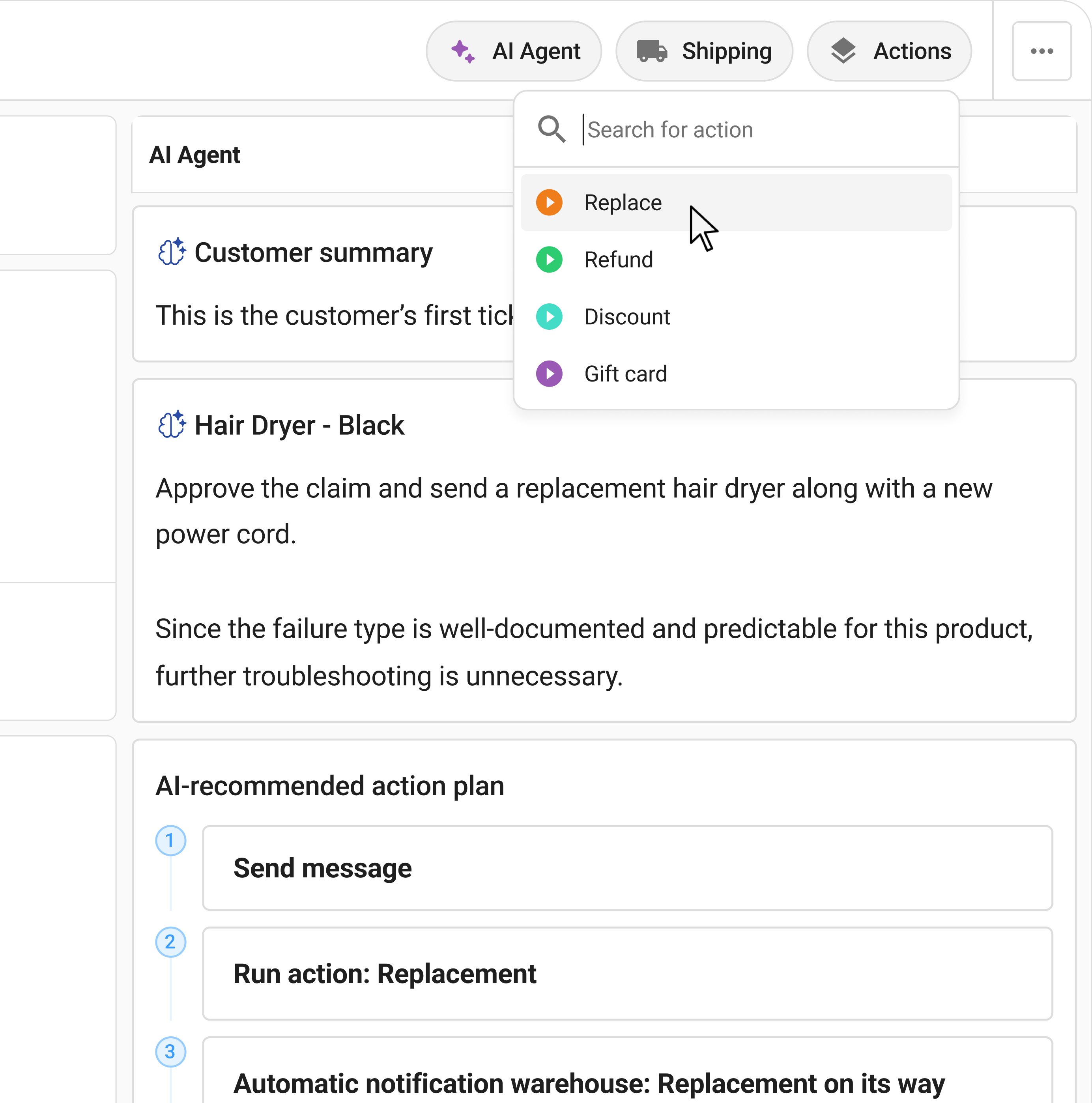
Its published workflow capabilities also include actions such as refunds and replacements, with connections to ecommerce, ERP, shipping, warehouse and helpdesk systems. The available actions should be confirmed against the business's specific setup.
Claimlane helps us resolve customer issues faster and with less friction, which makes a real difference for both our team and our customers.
Anne Schmidt, Project Manager, ErgobabyA useful demonstration follows a representative claim from intake through assessment and an executed action. The team can then see which handoffs are covered and what still requires human review.
Frequently asked questions about warranty service
Make every warranty case easier to complete
Reliable warranty service depends on clear decisions and completed actions. The evidence, authorisation and service history should remain connected as the case moves between teams.
That gives support a basis for answering the customer, technicians the context needed to act and finance visibility into outstanding recovery.
Book a Claimlane demo to explore how warranty service can connect customer requests, internal teams and operational systems.