Sofa returns start with the reason, not the collection
A sofa arrives with a torn armrest. Another feels firmer than expected. A boxed sofa hasn't taken its intended shape after unpacking. Each customer asks for a return, but each case needs a different assessment.
For furniture brands and retailers, sofa returns can involve customer service, carriers, repair partners, warehouses and suppliers. Booking a collection before understanding the problem can add handling and transport that the case doesn't need.
A clear process separates change-of-mind returns from faults, gathers useful evidence and records what happens next. It also keeps sofa warranty claims visible after the initial conversation ends.
- Separate preference returns, delivery damage and product faults before applying fees or arranging collection.
- Explain return windows, packaging requirements, collection charges and warranty coverage before purchase.
- Measure boxed-sofa returns from actual delivered orders rather than relying on an unsupported category average.
- Claimlane connects furniture claim evidence, workflows, supplier communication and customer updates.
What counts as a sofa return?
A sofa return is the physical movement of a sofa back from a customer. The request behind it might be a change of mind, a delivery problem or a defect. A warranty claim is a request for help under warranty terms, and it doesn't always require a return.
That distinction matters in reporting. A replacement cushion can resolve a claim without the sofa leaving the home, while an undamaged sofa returned because it doesn't fit is a return without a product fault.
| Case type | Example | Assessment needed |
|---|---|---|
| Change of mind | The customer dislikes the colour or seat feel. | Check the applicable cancellation rights and voluntary return policy. |
| Delivery damage | The armrest arrives torn. | Record product condition, packaging and delivery evidence. |
| Product fault | A frame joint fails during normal use. | Check the evidence, statutory rights and relevant warranty terms. |
| Missing or incorrect component | A sectional arrives with the wrong connector. | Identify the affected module and correct replacement component. |
| Boxed-sofa concern | A cushion remains misshapen after unpacking. | Compare the condition with the manufacturer's recovery instructions. |
Why sofa returns need a product-specific process
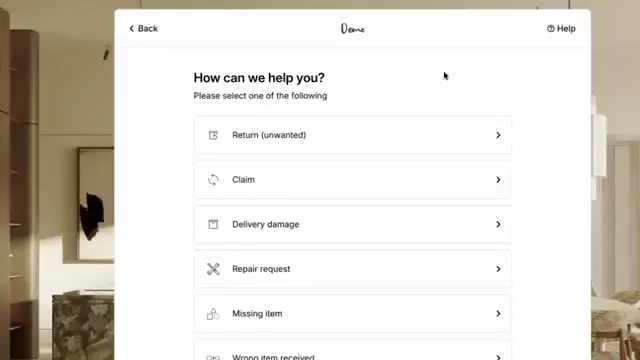
A generic returns form might capture an order number and a reason. That leaves a furniture team without the details needed to arrange a repair, identify a module or book suitable transport.
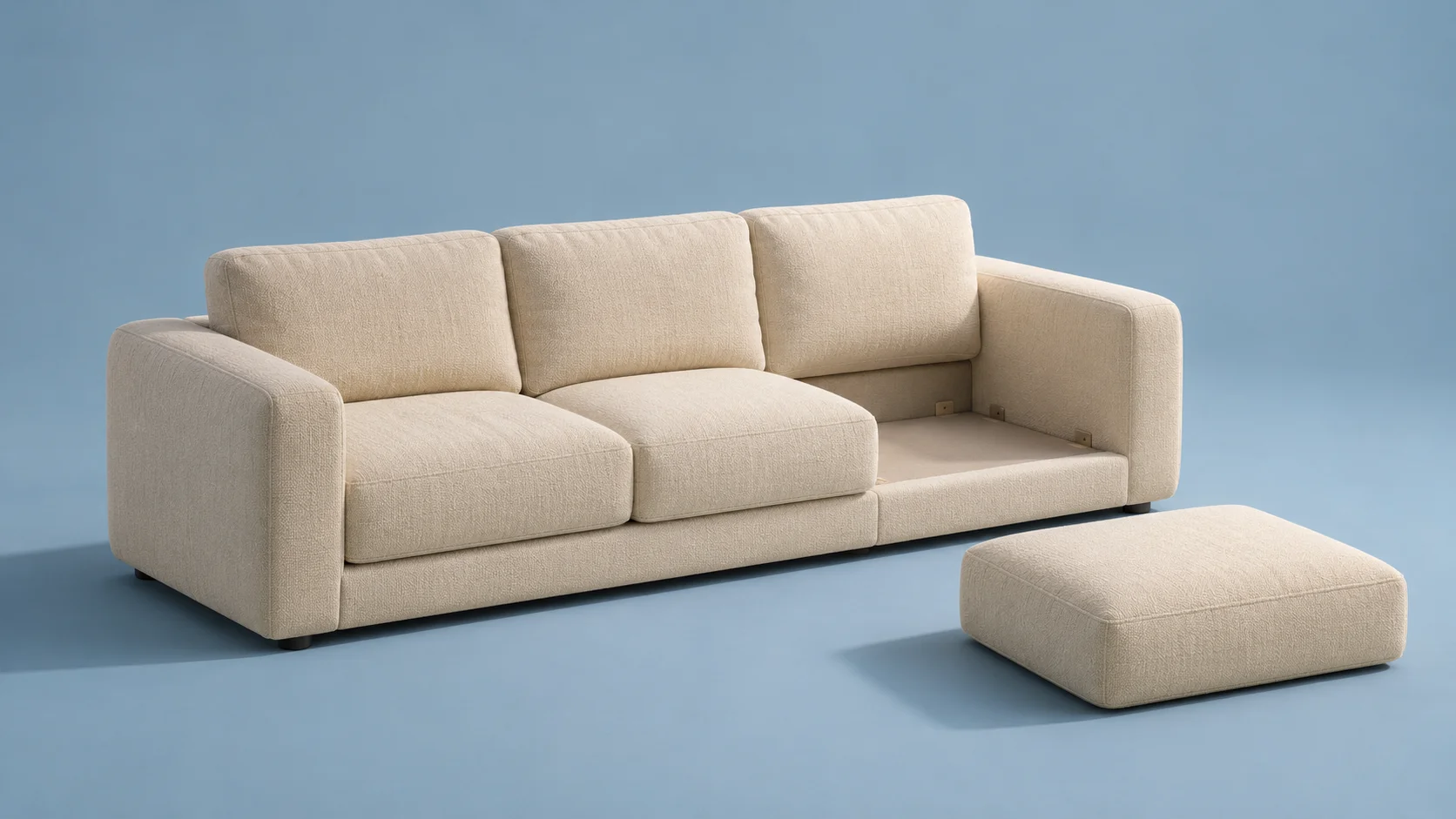
Sofa cases can depend on configuration, upholstery, access to the property and the location of the fault. A chaise on the wrong side calls for a different response from a damaged recliner mechanism.
The intake should reflect those differences. Conditional questions can ask about the affected component without sending every customer through irrelevant steps.
How should a faulty sofa claim be assessed?
A faulty sofa claim should start with the reported symptom and supporting evidence. A description such as “the seat has collapsed” needs clarification before the team decides whether the issue concerns foam, suspension, assembly or the frame.
Record the issue before choosing an outcome
The case record should include the model, delivery date, affected area, when the problem appeared and how it affects use. Staff should distinguish the customer's description from the team's confirmed assessment.
Escalate possible safety concerns
A report involving exposed sharp parts, an unstable frame or a malfunctioning powered mechanism needs an appropriate safety review. Routine troubleshooting shouldn't require a customer to recreate a potentially dangerous failure.
A cosmetic mark and a structural concern shouldn't enter the same approval path simply because both were submitted as damage.
What evidence helps resolve sofa warranty claims?
Evidence should answer a decision, rather than create work for its own sake. A close-up can show a torn seam, but an overview helps identify its location and the affected sofa section.
- Order details and the exact sofa model or configuration.
- A full-product photo showing the affected area in context.
- A close-up showing the reported fault.
- A product label, batch reference or component code where available.
- Packaging and delivery photos where transport damage is suspected.
- A short video for a movement or mechanism issue, where safe and necessary.
A living room furniture warranty claim should retain this evidence alongside decisions and messages. If a supplier or repair partner joins later, the customer shouldn't have to explain the entire issue again.
What are usual restocking or return fees for sectional sofas bought online?
There's no universal sectional sofa return fee. Policies can use a percentage charge, return shipping, collection charges or packaging-related fees. A published fee is an example of that seller's terms, not an industry benchmark or proof that the fee applies in every market.
Burrow's published US policy provides a concrete example. It lists a return shipping fee of 10% of the paid product value with original packaging, or 20% without it, capped at $250 per returned item. It treats damaged or defective orders separately under its warranty.
Article's published North American policy takes another approach. It offers a 30-day return window for furniture in as-new condition, with applicable outbound and return shipping deducted. Its FAQ states that it doesn't charge restocking fees.
These are brand-specific examples checked in November 2026. For a sectional, staff should confirm whether a charge applies to the complete configuration or individual returned items, then explain the refund calculation before collection is agreed.
Keep consumer rights separate from voluntary sofa policies
A brand's return policy and warranty sit alongside applicable consumer rights. A preference-return fee shouldn't automatically be applied to a faulty sofa, and an expired commercial warranty doesn't by itself settle whether a customer has a legal remedy.
For example, GOV.UK's guidance, “Accepting returns and giving refunds: the law”, explains that eligible UK distance-sale customers normally have 14 days after receipt to notify cancellation and another 14 days to return the goods. It also explains that statutory rights can apply independently of a warranty.
Those UK rules shouldn't be presented as a global sofa policy. Teams need market-specific guidance on cancellation, faults, return costs and exceptions, including genuinely custom-made products.
Policy wording should distinguish a voluntary restocking charge from any legally permitted return cost or deduction for diminished value. A standard “custom orders cannot be returned” message shouldn't be used to dismiss a defect claim.
What return policy should customers expect from a premium sofa brand?
A premium price doesn't establish a standard return window or guarantee free collection. A useful policy makes the terms understandable before purchase and explains how the brand handles problems after delivery.
The policy should state when the return window begins, which products qualify, what condition is required and how a customer starts a request. It should also explain who arranges transport and which charges may apply.
Separate return terms from warranty coverage
Warranty wording should identify the covered components, exclusions and available remedies. The frame, upholstery, cushions and powered mechanisms may have different terms, so a single headline promise can leave important questions unanswered.
Explain packaging and modular returns
Sectional owners need to know whether individual modules can be returned and whether the original packaging must be retained for a voluntary return. Fault claims need their own assessment rather than an automatic rejection because a box has been discarded.
When can a spare part or repair resolve the issue?
A whole-sofa collection shouldn't be the default when an assessed fault affects a replaceable component. A replacement foot, connector or cushion may address the problem while leaving the usable sofa in place.
That route depends on compatibility, stock, safe installation and the customer's applicable rights. A spare part isn't an appropriate offer if it can't restore the product or requires work the customer can't reasonably carry out.
Repair decisions should record the agreed work, responsible partner and next update. If a repair fails or isn't suitable, the case needs a clear route back to the team for another assessment.
What is a normal return rate for compressed (boxed) sofas?
A reliable category-wide benchmark for compressed sofa returns wasn't established from the public sources reviewed for this guide. Broad furniture averages and unsupported manufacturer claims shouldn't be presented as a measured compressed sofa return rate.
“Boxed sofa” also needs a clear definition. A modular sofa shipped in separate cartons isn't necessarily a vacuum-compressed foam sofa. Combining them can hide different product, packaging and collection problems.
Build a comparable internal measure
A brand can calculate its compressed sofa return rate as delivered sofa units from a defined cohort that are physically returned, divided by all delivered sofa units in that same cohort. Expressing that ratio as a percentage gives a consistent starting point.
The cohort should have had time to complete the applicable return window. Recent deliveries shouldn't be compared directly with older orders that have had longer to generate returns.
Return requests, approved returns, physical returns and warranty claims resolved at home should be reported separately. These are proposed measures, not industry benchmarks.
Why compressed sofas need different return instructions
A compressed sofa may change shape after unpacking. The assessment should use that model's published recovery instructions, rather than a generic waiting period applied to every foam product.
The intake can record when the sofa was unpacked, what hasn't recovered and whether the supplied instructions were followed. A team shouldn't dismiss a visible tear or other clear damage as a normal recovery issue.
Return transport needs the expanded product dimensions. Staff shouldn't assume that an unpacked sofa can be put back into its original vacuum-packed form at home.
Where specialist packing or collection is required, the instructions should be agreed before the customer starts preparing the sofa.
How to arrange sofa collections without repeated handoffs
An approved return needs a collection brief that the carrier can use. For a sectional, that includes the modules being collected, their condition, access restrictions and any agreed packing responsibilities.
- Confirm the collection address and contact details.
- Record the expanded dimensions and relevant access information.
- Confirm whether disassembly or specialist handling is required.
- Explain the booking process and how appointment changes are handled.
- Record collection confirmation and the next refund or assessment step.
The customer needs a clear owner for the case while transport is arranged. A carrier booking shouldn't leave support unable to explain the next step.
What should happen when a returned sofa reaches the warehouse?
The warehouse should match the returned product to the approved case before deciding its destination. For modular furniture, the record needs to show which sections arrived and whether any components are missing.
Inspection should compare arrival condition with the pre-collection evidence. That helps distinguish the original complaint from damage that may have occurred during return transport.
The next action might be restocking, cleaning, repair, resale through an appropriate channel or disposal. The decision should reflect actual condition, applicable safety requirements and the cost of preparing the sofa for its next use.
Refund handling should follow the applicable policy and legal deadlines. An internal grading queue shouldn't become an unexplained delay for the customer.
How sofa claim data supports supplier discussions
A supplier needs more than a message saying that a sofa was returned. Useful evidence connects the model, affected component, fault category, photos and agreed outcome.
Claimlane's published Swoon case study describes how the furniture retailer captures customer issues and uses that information in supplier discussions. The value is broader than counting returns, because a repaired product can reveal a recurring fault even when it never returns to the warehouse.
Claimlane helps us capture every customer issue, resolve it for the customer, and feed that back to the supply chain to drive continuous improvement.
Henry Currer, Head of Operations, Swoon FurnitureTeams should record whether a supplier has accepted responsibility, issued a credit or supplied a replacement part. Closing the customer case shouldn't make an outstanding supplier claim disappear.
Which measures help reduce repeat sofa problems?
Return volume alone doesn't explain whether the process is working. A team can reduce physical collections while still receiving more complaints about the same cushion or connector.
Useful measures include physical return rate by model, claim reasons by component, time waiting for customer evidence, repair completion time and supplier credits received. Each needs a clear definition and a consistent reporting period.
Cost reporting should use actual recorded charges for collection, repair, replacement parts and warehouse handling. Recovered resale value and supplier credits should remain visible alongside those costs.
A case resolved with a spare part should count as a resolved claim, rather than vanish from product-quality reporting. These are proposed measures, not industry benchmarks.
How Claimlane supports furniture aftersales teams
Claimlane's furniture returns and warranty platform brings customer evidence, case progress and supplier communication into the same process. Its furniture workflows support returns, repairs, spare parts and warranty claims.
Customers can submit product information, photos and videos through a self-service portal. Conditional workflows can route cases by product and issue, while customer updates keep the next step visible.
For sofa teams, the practical aim is a usable case record: the reported problem, the evidence, the responsible person and the agreed outcome. Collection details and supplier decisions can then stay connected to the original request.
Claimlane has a 4.8/5 rating on G2.
Frequently asked questions about sofa returns
Give every sofa case a clear next step
A good sofa returns process starts by understanding the issue and ends with a recorded outcome. Between those points, customers, support teams, carriers and suppliers need access to the information relevant to their part of the case.
Furniture brands and retailers can book a Claimlane demo to see how product-specific intake, workflows and supplier communication fit together.