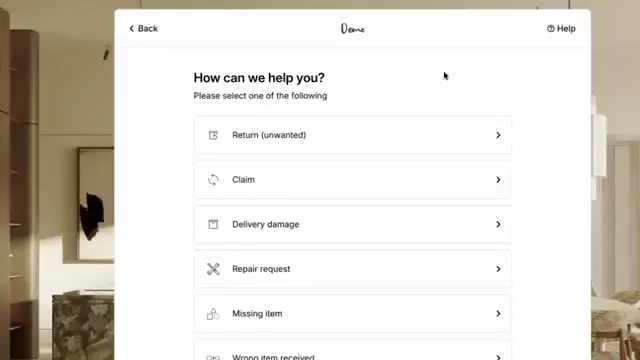

Managing Returns and RMAs Across Multiple Dealers
For manufacturers selling through multiple dealers, managing returns and RMA requests can quickly become complicated. Every dealer has different processes, communication methods, and expectations for how product issues should be resolved.
Some dealers send warranty claims by email. Others use spreadsheets, phone calls, or their own return forms. Manufacturers are left collecting missing information, checking warranty coverage, authorizing returns, and coordinating replacements across different channels.
A centralized RMA management process gives manufacturers one place to receive, evaluate, and resolve dealer requests. With the right software and automation, teams can reduce manual work, make better decisions, and give every dealer a consistent experience.
- Manufacturers can manage dealer returns more effectively by bringing every RMA and warranty claim into one system.
- A B2B dealer portal collects the right documentation upfront, reducing missing information and repeated emails.
- Automated workflows help manufacturers validate warranties, approve returns, coordinate repairs, and track replacements across dealers.
- Claimlane helps manufacturers manage dealer warranty claims, RMAs, spare parts, and communication in one platform.
1. Why Managing Dealer Returns Becomes Complicated
A manufacturer selling directly to consumers has a relatively clear path for handling product returns. The customer contacts the brand, submits a request, and receives a resolution.
With a dealer network, the process involves additional businesses and different responsibilities.
For example, a bicycle manufacturer may sell through independent bike shops, online retailers, distributors, and its own ecommerce store. A warranty issue could reach the manufacturer through any of these channels.
Common challenges include:
- Dealers submitting claims through different channels.
- Missing serial numbers, photographs, and purchase information.
- Different warranty requirements for different products and markets.
- Manual approvals for repairs, replacements, and credit notes.
- Limited visibility into outstanding dealer requests.
- Repeated questions about claim status.
- Difficulty identifying recurring defects across the dealer network.
The challenge isn't simply the number of returns. It's the lack of a consistent process for handling them.
2. What Is RMA Management for Manufacturers?
RMA stands for Return Merchandise Authorization, sometimes called Return Material Authorization. It refers to the process of requesting and approving a product return before the goods are sent back.
For manufacturers, RMA management can cover warranty claims, defective products, repair requests, replacements, and authorized commercial returns.
How a typical dealer RMA process works
- A dealer receives a customer complaint or identifies a product defect.
- The dealer submits an RMA request to the manufacturer.
- The manufacturer reviews product information, purchase details, and supporting evidence.
- The request is approved, rejected, or sent for further inspection.
- The manufacturer authorizes a repair, replacement, credit, or physical return.
- The dealer receives the decision and any necessary instructions.
- The case is closed once the agreed outcome has been completed.
Not every RMA requires the physical product to be returned. Some issues can be resolved by shipping a spare part, arranging a local repair, or approving a replacement based on the documentation already provided.
3. Why Email and Spreadsheets Create Problems
Email can work when a manufacturer has a small dealer network and receives only occasional warranty requests.
As the number of dealers and product categories grows, keeping track of requests becomes more difficult.
An employee might receive a claim through a shared inbox, ask the dealer for photographs, check warranty details in an ERP system, and record the decision in a spreadsheet.
If the dealer follows up several days later, another employee may need to reconstruct the entire conversation.
The hidden costs of manual RMA management
- Repeated communication: Dealers and manufacturers exchange emails to collect missing details.
- Slow decisions: Employees manually check product information and warranty conditions.
- Limited tracking: Outstanding cases become difficult to monitor across shared inboxes.
- Duplicate work: The same information is entered into multiple systems.
- Inconsistent handling: Different employees may follow different processes for similar requests.
- Missing insights: Product defects and return reasons remain scattered across separate files.
Centralizing RMA management removes the need to rely on individual email threads as the primary record of a warranty claim.
4. Give Every Dealer One Place to Submit Requests
One of the most effective improvements manufacturers can make is introducing a B2B dealer portal.
Instead of asking dealers to email their account manager or contact customer service, manufacturers can provide a dedicated place to submit warranty claims, returns, and repair requests.
What a dealer RMA portal should include
- Dealer identification and account information.
- Product names, SKUs, and serial numbers.
- Original purchase or invoice details.
- Warranty claim or return reason.
- Photograph and video uploads.
- Product-specific troubleshooting questions.
- Available resolution options.
- Real-time claim status and communication.
For example, a dealer reporting a faulty electric bicycle could submit the serial number, photographs of the affected component, and a description of the issue through the same portal used by every other dealer.
The manufacturer receives a structured case rather than an unorganized email.
5. Standardize RMA Documentation Across Dealers
Different product categories require different documentation. A damaged office chair may need photographs of the broken component, while an electronic product might require a serial number and a description of the technical fault.
A good RMA management system should collect the necessary evidence based on the product and claim type.
Examples of product-specific requirements
| Product category | Required information | Possible resolution |
|---|---|---|
| Bicycles | Frame serial number, defect photos, component details | Spare part, repair, replacement |
| Electronics | Purchase date, serial number, fault description, troubleshooting results | Repair, replacement, further inspection |
| Furniture | Product SKU, damage photos, affected component | Replacement part, repair, credit |
| Appliances | Model number, serial number, error code, fault documentation | Repair visit, spare part, replacement |
| Outdoor equipment | Product model, defect photos, usage and purchase details | Repair, component replacement, product replacement |
These are illustrative documentation requirements. Manufacturers should configure the fields according to their products, warranty policies, and technical assessment needs.
Collecting complete information upfront allows the manufacturer to assess the issue without repeatedly contacting the dealer.
6. Automate Warranty Validation and RMA Approvals
Not every dealer request needs to be reviewed manually from start to finish.
With automated warranty claims management, manufacturers can configure rules that check claim information and determine the appropriate next step.
Examples of RMA automation
- Check whether the submitted serial number matches a registered product.
- Compare the purchase date against the relevant warranty period.
- Identify missing documentation before the claim is reviewed.
- Automatically route technical issues to a specialist.
- Approve predefined low-risk requests within configured limits.
- Escalate unusual or expensive claims for manual review.
- Notify the dealer when a decision has been made.
For example, a manufacturer could configure a workflow that approves an eligible low-cost spare part request when the dealer has provided all required information.
More complicated issues, including unclear defects or disputed coverage, can remain subject to human approval.
Keep warranty rules separate from return policies
Manufacturers should distinguish between commercial warranty coverage, statutory consumer rights, and voluntary return arrangements.
Consumer rights depend on the applicable jurisdiction and the relationship between the parties. A dealer's commercial agreement with the manufacturer may also have different requirements from the dealer's obligations to the end customer.
Automation should support these distinctions rather than apply one approval rule to every request.
7. Connect Dealer Returns With the Manufacturer's ERP
RMA management becomes more difficult when warranty information, product records, stock levels, and financial transactions are stored in separate systems.
Manufacturers often rely on an ERP system for inventory, orders, invoices, and financial operations.
Connecting the RMA platform with the ERP helps reduce duplicate data entry and keeps relevant information available throughout the claim.
What an ERP integration should support
- Retrieve dealer and customer account information.
- Check product, SKU, and serial number records.
- Access order and invoice information.
- Check spare part availability.
- Create replacement orders after approval.
- Trigger credit note workflows.
- Update case and fulfillment statuses.
The exact actions depend on the ERP system, available integration, and configured workflows.
Manufacturers evaluating RMA management software should test whether a completed approval actually triggers the required action in their ERP, rather than simply updating the claim status.
8. Manage Repairs and Spare Parts Without Full Returns
One of the biggest opportunities for manufacturers is resolving product issues without requiring every faulty item to be shipped back.
For durable products, a repair or spare part replacement may be more appropriate than replacing the complete product.
Consider a dealer reporting a broken bicycle derailleur, a damaged cabinet hinge, or a faulty appliance component.
If the issue can be verified remotely, the manufacturer may be able to approve a compatible spare part or repair instead of authorizing a full return.
What to look for in RMA software
- Product-specific spare part catalogs.
- Compatibility checks using models or serial numbers.
- Assembly and component references.
- Repair authorization workflows.
- Tracking of replacement parts and repair status.
- Separate handling for covered and paid repairs.
These capabilities can reduce unnecessary product movements and make it easier for dealers to resolve customer issues locally.
9. Track Every Dealer RMA From Submission to Resolution
Once an RMA has been submitted, both the manufacturer and dealer need to know what happens next.
Without centralized tracking, dealers may repeatedly contact their account manager to ask whether a claim has been approved, whether a replacement has shipped, or when a credit note will be issued.
Useful RMA statuses
- Submitted.
- Awaiting documentation.
- Under review.
- Awaiting technical assessment.
- Approved or rejected.
- Awaiting product return.
- In repair.
- Replacement dispatched.
- Credit pending.
- Resolved.
A shared RMA management platform can show the current status, responsible team, outstanding actions, and communication history.
Automated notifications can keep dealers informed without requiring employees to send individual status emails.
10. Coordinate Returns With Warehouses and Repair Partners
Some returns require a physical inspection before the manufacturer can decide what happens to the product.
In these cases, the RMA process needs to connect dealer communication with warehouse receiving, technical inspection, and repair operations.
How a connected warehouse process works
- The manufacturer authorizes the physical return.
- The dealer receives shipping instructions and a return reference.
- The warehouse receives the product and identifies the corresponding RMA.
- An employee inspects and records the product's condition.
- The case is updated with inspection results.
- The manufacturer approves the appropriate disposition.
- The dealer receives the final resolution.
A clear RMA reference helps prevent returned products from arriving without enough information to identify the original claim.
For manufacturers working with third-party logistics providers or external repair partners, the software should support access to the relevant case details and status updates.
11. Handle Different Dealer Agreements and Warranty Rules
Not every dealer in a manufacturer's network operates under the same commercial terms.
Some dealers may be authorized to perform repairs. Others must return products for inspection or obtain approval before replacing an item.
A manufacturer may also have different warranty arrangements across countries, product categories, and distribution agreements.
Examples of dealer-specific workflows
- Authorized service dealers can request approved replacement parts.
- Retail-only dealers must submit technical issues for manufacturer review.
- Distributors can submit consolidated commercial return requests.
- International dealers follow their applicable regional policies and logistics arrangements.
- High-value products require additional approval before replacement.
RMA software should make these differences configurable without requiring completely separate systems for each dealer.
This allows manufacturers to maintain central oversight while respecting the terms of individual dealer relationships.
12. Use Return Data to Identify Product Quality Issues
Dealer returns are more than individual support requests. They can reveal recurring manufacturing defects, component failures, and product quality problems.
When claims are spread across emails and spreadsheets, identifying these patterns requires manual reporting.
Centralized RMA management makes it possible to analyze the same information across dealers, products, and markets.
Important metrics for manufacturers
- RMA volume by dealer and product category.
- Return and warranty claim reasons by SKU.
- Recurring failures by product component.
- Average time to approve an RMA.
- Average time to resolve a dealer claim.
- Repair versus replacement outcomes.
- Outstanding requests by dealer and status.
- Credit notes and warranty-related costs.
- Percentage of cases requiring additional documentation.
Manufacturers can use these measures to investigate recurring issues and share evidence with product development, engineering, and quality assurance teams.
Dealer-level comparisons should also consider sales volume and product mix. A dealer submitting more claims isn't necessarily selling less reliable products.
13. Give Dealers a Better Aftersales Experience
Dealer relationships don't end when products are delivered.
Retailers depend on manufacturers to provide clear warranty guidance, reliable support, replacement parts, and timely decisions when products fail.
A slow RMA process can leave the dealer unable to resolve the end customer's issue.
What a better dealer experience looks like
- One clear process for submitting warranty claims and returns.
- Product-specific guidance on the documentation required.
- Visibility into claim status and next steps.
- Fewer repeated requests for the same information.
- Clear repair and replacement instructions.
- Direct communication linked to the original case.
- A complete history of previous dealer requests.
Manufacturers should also make it easy for dealers to request human assistance when a case doesn't fit the standard process.
The goal is to reduce administrative work for both businesses while helping dealers serve their customers more effectively.
14. How Manufacturers Can Introduce Centralized RMA Management
Moving away from manual dealer returns management doesn't require every process to change at once.
Manufacturers can introduce a shared RMA platform in stages, beginning with the highest-volume claim types and the dealers most willing to adopt the new process.
A practical implementation plan
- Map existing processes: Document how dealers currently submit claims, which systems are involved, and where delays occur.
- Define required information: Establish the documentation needed for each product category and request type.
- Configure dealer workflows: Set up different approval paths based on warranty policies and dealer agreements.
- Connect existing systems: Integrate relevant ERP, inventory, shipping, and customer service tools.
- Test with selected dealers: Run representative warranty claims, returns, and spare part requests before expanding the rollout.
- Introduce automation: Automate repetitive tasks after confirming that the underlying rules produce accurate outcomes.
- Measure results: Compare processing times, manual actions, missing documentation, and dealer feedback.
A phased rollout gives manufacturers time to identify exceptions before extending the system across their dealer network.
15. How Claimlane Helps Manufacturers Manage Dealer RMAs
Claimlane is a returns and warranty claims management platform that helps manufacturers, brands, and retailers handle post-purchase issues across multiple sales channels.
For manufacturers working with dealer networks, Claimlane brings claim submissions, supporting documentation, approvals, communication, and resolution workflows into one platform.
Key capabilities for manufacturers
- B2B dealer portals: Allow dealers to submit warranty claims and return requests through structured forms.
- Product-specific requirements: Collect serial numbers, photographs, videos, purchase details, and other necessary documentation.
- Warranty workflows: Configure claim routing, eligibility checks, approvals, and escalations.
- ERP integrations: Connect claim decisions with product information, orders, inventory, and supported financial workflows.
- Spare parts and repairs: Support alternative resolutions without requiring complete product returns.
- Dealer communication: Keep conversations, supporting evidence, and claim decisions connected to each case.
- Analytics: Track warranty claim reasons, product faults, dealer activity, and resolution performance.
Claimlane also supports structured collaboration between retailers and suppliers, allowing businesses to forward warranty claims to suppliers with the relevant documentation and track the resulting decisions.
Claimlane has created the best RMA process we've ever had. We no longer have any outstandings with suppliers and have an overview at all times.
Jesper Andersen, CCO, GEJSER16. What Manufacturers Can Learn From Existing Aftersales Teams
The value of centralized RMA management becomes clearer when looking at businesses that previously relied on manual processes.
For example, Claimlane customer Davidsen has described the challenges of managing supplier guidelines, claim documentation, and communication across its business.
With 500 suppliers who all have their own guidelines it has been impossible to keep track. Claimlane has simplified the processes for both customers and suppliers and removed a major stress factor in the whole organization.
Andreas Bang Nielsen, Marketing & Ecommerce Director, DavidsenAlthough Davidsen operates on the retail side of the relationship, the underlying issue is relevant for manufacturers too. Every separate email process, documentation requirement, and approval path adds work for both parties.
Manufacturers can reduce this complexity by introducing shared documentation standards, consistent communication, and a central record of dealer requests.
Claimlane's published Rocky Mountain customer story also describes how a bicycle manufacturer connects dealer warranty claims with serial-number validation, spare parts, and ERP service workflows.
17. What to Look for in Manufacturer RMA Management Software
Before selecting an RMA management platform, manufacturers should compare providers against their actual dealer operations.
A simple checklist can help identify which platform is best suited to the business.
| Capability | What manufacturers should verify |
|---|---|
| B2B dealer portal | Dealers can submit and follow requests without separate email chains |
| Product-specific forms | Required evidence changes based on SKU, product category, or claim type |
| Warranty validation | Rules can use available purchase, serial number, and warranty information |
| Automated approvals | Routine cases can follow configured rules with appropriate review controls |
| ERP integration | Approved claims can trigger supported inventory, order, or credit processes |
| Repair management | Claims can result in repairs or spare parts instead of complete returns |
| Dealer-specific rules | Different agreements and authorization requirements can be configured |
| Warehouse tracking | Physical returns can be matched to RMAs and inspection outcomes |
| Reporting | Teams can analyze claim reasons, dealer activity, costs, and processing times |
| Implementation | The provider can document integration requirements, training, and rollout steps |
The best RMA management software isn't necessarily the system with the longest feature list. It's the one that gives manufacturers reliable control over their dealer returns process while reducing unnecessary work.
Claimlane has a 4.8/5 rating on G2.
Frequently Asked Questions About Dealer RMA Management
Manage Dealer Returns and RMAs With Claimlane
Managing returns across a dealer network doesn't need to mean managing separate inboxes, spreadsheets, and approval processes for every retail partner.
By bringing dealer requests, warranty documentation, repairs, replacements, and communication into one platform, manufacturers can reduce manual work and gain better visibility into post-purchase operations.
Manufacturers looking to improve their dealer RMA management can book a demo of Claimlane to see how the platform supports their products, dealers, and warranty workflows.