
Choosing Warranty Claims Software for Omnichannel Ecommerce
For ecommerce brands selling through multiple channels, managing warranty claims can quickly become complicated. A customer might purchase a product online, report a defect in a physical store, and expect the brand's customer service team to have all the information available.
When warranty claims are managed through separate systems, employees spend time searching for orders, requesting documentation, and moving information between departments. Customers may need to explain the same issue multiple times.
The right warranty claims management platform connects these processes. It gives brands one place to manage warranty claims across their sales channels while automating repetitive tasks and keeping customers informed.
- Omnichannel ecommerce brands should choose warranty claims software that connects online stores, physical locations, marketplaces, and retail partners.
- Prioritize centralized claim tracking, product-specific intake, automated workflows, and integrations with existing business systems.
- Evaluate platforms using real customer scenarios, including cross-channel returns, repairs, replacements, and supplier approvals.
- Claimlane helps brands manage B2C and B2B warranty claims across multiple sales channels from one platform.
1. What Is Omnichannel Warranty Claims Management?
Omnichannel warranty claims management means handling warranty requests through a connected process, regardless of where customers originally purchased their products or where they report an issue.
For example, a furniture brand might sell through its own ecommerce website, physical showrooms, online marketplaces, and independent retailers.
Customers may contact any of these channels when something goes wrong.
An omnichannel warranty claims management platform helps the brand collect and process these requests through a shared system.
What an omnichannel platform should support
- Warranty claims submitted through ecommerce websites.
- Claims created by employees in physical stores.
- Requests originating from marketplace purchases.
- B2B warranty claims submitted by retail partners and dealers.
- Customer service cases received through helpdesk systems.
- Repairs, replacements, refunds, and spare parts.
- Centralized tracking and reporting across sales channels.
The objective is to give employees a consistent view of warranty claims without forcing every customer to follow an identical process.
2. Why Traditional Warranty Management Struggles Across Channels
Many brands develop their warranty processes separately as they grow.
The ecommerce team might handle warranty claims through a helpdesk, stores may use internal forms, and retail partners may send requests through email.
Each process can work independently, but problems arise when information needs to move between them.
Common operational challenges
- Different teams use separate systems to track warranty claims.
- Store employees can't easily access online order information.
- Customers must repeat information when contacting another channel.
- Warranty policies are applied inconsistently.
- Supplier communication happens outside the original claim.
- Replacements and refunds require manual updates in other systems.
- Reporting doesn't provide a complete view across channels.
These problems become more visible as brands expand into additional markets, stores, and retail partnerships.
Choosing a centralized platform can help prevent each new sales channel from creating another disconnected warranty process.
3. Start by Mapping Every Warranty Claim Channel
Before comparing warranty claims management software, brands should identify where warranty requests originate and how they are currently processed.
This creates a clearer picture of which capabilities the new platform actually needs.
Questions to answer before evaluating software
- Can customers submit claims directly through the ecommerce website?
- Do store employees create claims on behalf of customers?
- How are marketplace purchases handled?
- Can retail partners submit claims directly to the brand?
- Which teams approve repairs, replacements, and refunds?
- Which systems contain order, product, and warranty information?
- How are suppliers involved in the resolution process?
Brands should also identify whether their existing warranty policies allow customers to receive support through a channel different from the original purchase channel.
These findings can be used to create a consistent evaluation framework for software providers.
4. Compare Platforms Based on Omnichannel Capabilities
Not every warranty claims management platform supports the same processes.
Some focus primarily on online returns. Others support more complex warranty workflows involving stores, suppliers, repairs, and B2B partners.
The following criteria can help brands compare their options.
| Capability | What to evaluate | Priority |
|---|---|---|
| Centralized case management | All warranty claims visible across sales channels | High |
| Self-service portal | Customers can submit claims with product-specific documentation | High |
| Physical store support | Store employees can create and track claims | High |
| B2B partner claims | Retailers and dealers can submit and follow warranty requests | High when applicable |
| System integrations | Connections with ecommerce, ERP, POS, and helpdesk systems | High |
| Workflow automation | Configurable approvals, routing, and resolution actions | High |
| Warranty validation | Eligibility checks using product and purchase information | High |
| Repairs and spare parts | Alternative resolutions beyond refunds and replacements | High for durable products |
| Supplier management | Documented supplier approvals and reimbursement tracking | Medium to high |
| Reporting | Warranty performance and product issues across channels | High |
The final priorities should reflect the brand's sales channels, product categories, and warranty processes.
5. Look for Centralized Warranty Claim Tracking
A central dashboard is one of the most important features of omnichannel warranty management.
Without it, employees may need to open different systems to understand whether a claim was submitted online, registered in-store, or forwarded by a retail partner.
With centralized tracking, every case can follow a shared structure while retaining its original sales channel and relevant customer information.
Information that should be visible in each claim
- Customer information and contact history.
- Original purchase channel.
- Order number, invoice, or receipt.
- Product details, SKU, and serial number.
- Reported issue and supporting documentation.
- Warranty eligibility information.
- Assigned employee or department.
- Current claim status and next steps.
- Repair, replacement, or refund outcome.
Brands should verify whether the platform can identify a claim consistently across systems without creating duplicate records.
6. Evaluate Customer Self-Service Across Channels
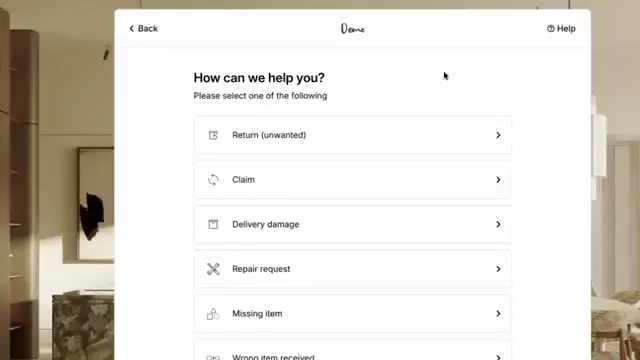
A customer self-service portal allows customers to submit warranty claims without contacting customer service first.
For omnichannel brands, the portal should accommodate customers who purchased products through different channels.
A customer who bought a product directly from the brand may have an order number available. Someone who purchased the same product from an independent retailer may only have a receipt.
The portal should be able to collect the appropriate information in either situation.
Important self-service features
- Order lookup for connected ecommerce purchases.
- Receipt uploads for in-store and third-party purchases.
- Product searches and serial number collection.
- Photograph and video uploads.
- Different questions based on the product or reported issue.
- Mobile-friendly claim submission.
- Automatic status updates.
- Clear options for contacting support.
Claimlane's self-service portal supports configurable claim flows for different channels and issue types, including warranty claims, returns, repairs, and spare parts.
7. Make Sure Physical Stores Can Handle Warranty Claims
Physical stores introduce additional requirements that online-only warranty platforms may not support.
A customer might bring a defective product into a store, even if the original purchase was made online.
Store employees need a way to record the issue, collect documentation, and send the case to the appropriate team without creating disconnected email conversations.
Questions to ask software providers
- Can store employees create claims on behalf of customers?
- Can they find existing online claims?
- Can a case be transferred from a store to a central warranty team?
- Can stores upload photographs and product information?
- Can employees record whether the physical product has been received?
- Can approved replacements or refunds trigger actions in connected systems?
- Can the platform identify which store handled a claim?
These capabilities help brands maintain a consistent warranty process between ecommerce operations and retail locations.
8. Check Support for Marketplaces and Retail Partners
Omnichannel ecommerce often extends beyond a brand's own website and stores.
Brands may also sell through online marketplaces, distributors, and independent retailers.
Each channel can create different requirements for verifying purchases and determining who is responsible for resolving a customer issue.
What the platform should handle
- Warranty requests without a directly connected ecommerce order.
- Proof of purchase from external retailers.
- Dealer or retailer identification.
- B2B claim submission and communication.
- Different workflows depending on the sales channel.
- Supplier or manufacturer approval where required.
- Tracking of the final resolution across businesses.
For marketplace orders, brands should also verify whether the platform can access the necessary order data and whether the proposed workflow is compatible with marketplace requirements.
Marketplace integrations shouldn't be assumed simply because a provider supports common ecommerce systems.
9. Compare Integrations With Existing Business Systems
A warranty platform becomes significantly more useful when it connects with the systems employees already use.
Without integrations, a centralized dashboard can still leave teams manually transferring information between platforms.
Important integrations for omnichannel ecommerce
- Ecommerce platforms: Retrieve order information and support replacement or refund workflows.
- ERP systems: Connect inventory, product records, orders, and financial processes.
- POS systems: Support access to relevant in-store transaction information.
- Helpdesk software: Connect warranty cases with customer conversations.
- Shipping providers: Generate labels and track returned products.
- Warehouse systems: Record product arrivals, inspections, and dispositions.
- CRM systems: Keep relevant customer information available to support teams.
Brands should verify the exact actions available through each connection. An integration that retrieves order data may not also support creating replacements or processing refunds.
Claimlane publishes integrations with ecommerce platforms such as Shopify, Magento, and WooCommerce, alongside ERP, shipping, and customer service systems.
10. Prioritize Warranty Claims Automation
One of the biggest reasons to introduce warranty claims management software is to reduce repetitive administrative tasks.
However, automation capabilities vary significantly between platforms.
Some systems only automate notifications or ticket assignments. Others can also trigger operational actions based on warranty rules and case decisions.
Examples of useful automation
- Check available purchase and warranty information.
- Identify missing photographs or documentation.
- Route claims based on product category or issue type.
- Automatically approve eligible low-risk cases within defined limits.
- Assign technical claims to the appropriate team.
- Forward claims to suppliers with supporting evidence.
- Create replacement orders after approval.
- Send customer notifications when claim statuses change.
- Escalate unresolved or unusual cases.
Brands should ask providers to demonstrate these workflows using actual operating requirements rather than generic examples.
Automation should also include clear controls for cases that need human review.
11. Evaluate Warranty Rules Across Countries and Products
Omnichannel brands may sell products across different countries, retail channels, and customer groups.
Warranty requirements can vary depending on product type, purchase location, commercial warranty terms, and applicable consumer protection laws.
A suitable platform should support different eligibility rules rather than applying the same warranty period to every claim.
Important warranty configuration options
- Different warranty periods by product or category.
- Country-specific warranty rules.
- Product registration information.
- Purchase date and proof-of-purchase checks.
- Separate handling for B2B and consumer claims.
- Escalation when coverage is uncertain.
Statutory consumer rights, commercial warranties, and voluntary return policies must be treated separately.
For example, customers in the European Union have statutory rights against sellers under applicable national rules implementing EU consumer sales legislation. A manufacturer's commercial warranty may provide additional coverage but doesn't replace those statutory rights.
Software can help teams apply configured rules consistently, but it doesn't guarantee legal compliance.
12. Make Repairs and Spare Parts Part of the Evaluation
For brands selling durable products, warranty claims don't always need to end with a refund or complete replacement.
Sometimes a repair or replacement component is the most appropriate outcome.
A furniture brand might replace a damaged chair leg. An electronics manufacturer might arrange a technical repair. A bicycle brand might send a compatible component through its dealer network.
Features to evaluate
- Repair authorization and tracking.
- Spare part selection.
- Product and component compatibility information.
- Communication with repair partners.
- Collection and delivery arrangements.
- Different workflows for covered and paid repairs.
- Notifications during the repair process.
These options are particularly valuable when the brand sells products that are expensive or impractical to transport.
Brands should confirm that repair and spare part workflows can operate across the relevant sales channels.
13. Evaluate Supplier and Manufacturer Collaboration
Retailers handling multiple brands often depend on suppliers to approve warranty claims or reimburse product-related costs.
Without a connected process, employees may need to copy documentation into emails and follow up manually with individual suppliers.
Warranty claims management software should make it possible to keep the customer case and supplier communication connected.
Capabilities worth comparing
- Forwarding claims with relevant documentation.
- Supplier-specific evidence requirements.
- Approval and rejection tracking.
- Supplier communication history.
- Credit note and reimbursement tracking.
- Reminders for outstanding decisions.
- Reporting on recurring supplier-related defects.
This provides customer service, purchasing, and supplier management teams with a shared view of the same product issue.
14. Compare Reporting Across Every Sales Channel
One major benefit of centralized warranty claims management is having comparable data across ecommerce, stores, marketplaces, and retail partners.
When all warranty claims are recorded consistently, brands can investigate product defects and identify operational bottlenecks.
Metrics worth tracking
- Claim volume by channel.
- Warranty claims by product and SKU.
- Average resolution time.
- Manual handling time per claim.
- Percentage of cases handled through automation.
- Repair, replacement, and refund outcomes.
- Supplier approval and reimbursement status.
- Claims requiring additional information.
- Customer satisfaction after resolution.
These are suggested metrics to collect, not industry performance benchmarks.
Brands should also consider sales volume when comparing channels. A store generating more warranty claims may simply sell more products than another location.
Reporting should help teams distinguish between operational issues and recurring product quality problems.
15. Test the Full Omnichannel Customer Journey
Feature comparisons alone aren't enough to determine whether a warranty claims management platform will work for a business.
Brands should ask shortlisted providers to demonstrate representative warranty cases from start to finish.
Five scenarios to test
- Online purchase, online claim: A customer reports a faulty product through the ecommerce website.
- Online purchase, store claim: A customer visits a physical store with a defective product purchased online.
- Retail partner purchase: A customer reports an issue with a product purchased from an independent retailer.
- Repair instead of replacement: A product requires a spare part or technical repair.
- Complex warranty exception: A claim involves unclear coverage, missing documentation, or supplier approval.
During each test, teams should record how many manual actions employees perform, which systems require separate logins, and how easily the customer receives an update.
The strongest platform is the one that handles the brand's actual processes without requiring unnecessary workarounds.
16. Consider Implementation and Long-Term Costs
Implementing omnichannel warranty management software requires more than connecting an ecommerce store.
Brands may need to configure different workflows for physical stores, retail partners, marketplaces, and internal departments.
Questions to ask before purchasing
- Which integrations are available without custom development?
- How are physical stores and retail partners onboarded?
- Can employees configure workflows themselves?
- What training is included?
- How are new countries and sales channels added?
- Are there additional fees for integrations or external users?
- How is software usage priced?
- What support is available after implementation?
Brands should compare the total cost of ownership, including subscriptions, integrations, implementation, employee training, and ongoing maintenance.
The expected financial impact should be measured using existing claim volumes, employee handling time, and actual operational expenses.
17. How Claimlane Supports Omnichannel Warranty Management
Claimlane is a warranty claims and returns management platform built for brands and retailers handling post-purchase product issues.
It connects warranty claims from online stores, physical retail locations, and B2B partners through configurable intake flows, case management, and automation.
Key capabilities for omnichannel brands
- Centralized claim management: Manage warranty requests across different sales channels.
- Self-service portals: Collect relevant information from customers with different purchase histories.
- Store and B2B workflows: Support claims created by retail employees and business partners.
- Automated processes: Configure routing, approval rules, notifications, and supported resolution actions.
- System integrations: Connect warranty handling with ecommerce, ERP, helpdesk, and shipping systems.
- Repairs and spare parts: Handle different case outcomes without requiring every product to be returned.
- Supplier collaboration: Keep supplier decisions connected to customer cases.
- Warranty analytics: Identify product issues and monitor claim performance across channels.
For omnichannel brands, the main benefit is having one shared process without losing the flexibility needed for different customer and business relationships.
For the first time, we can see every warranty claim across all our stores and webshops in one place.
Cameron Darnell, Warranty Manager, Angling DirectAngling Direct's experience illustrates the importance of visibility across physical stores and ecommerce operations. A shared view allows teams to follow warranty cases without relying on separate channel-specific records.
18. Final Checklist for Choosing a Warranty Platform
Before making a final decision, omnichannel ecommerce brands should confirm that the selected software can support their existing sales channels and future growth plans.
The evaluation should cover the following areas:
- One central dashboard for warranty claims from every channel.
- Self-service submissions for customers with different purchase histories.
- Support for physical stores and retail partners.
- Integration with ecommerce, ERP, POS, and customer service systems where required.
- Configurable warranty eligibility rules.
- Automated approvals, assignments, and customer notifications.
- Repairs, replacements, refunds, and spare parts.
- Supplier communication and reimbursement tracking.
- Reporting that distinguishes between sales channels.
- Transparent implementation requirements and total costs.
A warranty claims management platform should do more than collect tickets. It should connect people, systems, and decisions so product issues can be resolved consistently across the business.
Claimlane has a 4.8/5 rating on G2.
Frequently Asked Questions About Omnichannel Warranty Claims Management
Manage Omnichannel Warranty Claims With Claimlane
As ecommerce brands expand across stores, marketplaces, and retail partnerships, warranty claims shouldn't become harder to manage.
Claimlane brings warranty claims, returns, repairs, supplier communication, and automation into one platform, helping teams reduce manual work and maintain visibility across their sales channels.
Brands looking to connect their omnichannel warranty operations can book a personalized Claimlane demo to see how the platform works with their products, channels, and existing systems.