
A warranty promise needs a working claims process
A manufacturer warranty is a commitment from a product's maker to address specified problems under stated conditions. The terms explain the coverage, duration and available remedies.
For the customer, the immediate question is whether a broken product can be fixed or replaced. For the team handling the claim, the answer depends on the product, the reported fault, the applicable terms and any separate legal rights.
Clear warranty wording helps, but it isn't enough on its own. The business also needs a reliable way to collect evidence, assess the request and carry out the agreed action.
- A manufacturer warranty sets out the maker's commitment to address covered product problems.
- Coverage, duration, exclusions and claim instructions depend on the warranty and applicable law.
- A manufacturer's warranty is separate from statutory rights and shouldn't be used to dismiss them.
- Claimlane helps brands organise warranty cases, assign work and connect approved decisions to the actions that follow.
What is a manufacturer warranty?
A manufacturer warranty is a warranty offered by the company that makes the product. It can promise repair, replacement or another specified remedy when a covered problem occurs.
The written terms matter more than the label. They should identify the warrantor, covered products, duration, exclusions and claim route.
Operationally, the team should be able to find the terms that applied to the customer's purchase. Checking only the current website policy can create mistakes if the wording has changed.
What does a manufacturer warranty cover?
Coverage must be checked against the actual warranty. A promise covering defects in materials or workmanship doesn't necessarily include accidental damage or every type of performance issue.
The assessment should also separate product coverage from service costs. Parts, labour, inspection and transport may have different conditions.
The following is a proposed review checklist for a claims team. It describes questions to answer, not standard coverage shared by every manufacturer.
| Coverage question | What the team should establish |
|---|---|
| Which product is involved? | The model, variant and relevant component |
| What happened? | The reported symptoms and supporting evidence |
| Which terms apply? | The warranty version and market associated with the purchase |
| What action is available? | The appropriate repair, part, replacement or other remedy |
| Who carries out the work? | The responsible team, retailer or service provider |
| Who pays each cost? | The treatment of parts, labour, inspection and transport under the applicable rules |
How should exclusions be assessed?
An exclusion should be assessed against the reported fault and evidence. A description such as misuse or wear needs a reason that relates to the actual product condition.
In the US, FTC guidance explains that warranty coverage generally can't be conditioned on using specified paid parts or services, subject to exceptions. Damage caused by an outside repair or replacement part can be treated differently from merely using an independent repairer.
For the claims team, the practical requirement is a reviewable decision. The case should show the observed issue, the relevant term and why the evidence supports the conclusion.
A doubtful case should reach a reviewer who can assess it. A dropdown selection shouldn't become a denial without that connection.
How long does a manufacturer warranty last?
There isn't a universal manufacturer warranty period. The written terms establish the duration and starting point, subject to applicable law.
A lifetime warranty also needs a definition of whose or what lifetime is covered. The FTC's business guidance specifically addresses the need to clarify that meaning.
The case record should retain the relevant purchase or delivery evidence and the date the issue was reported. Different dates answer different questions, so the team shouldn't substitute the claim submission date for the purchase date.
Expiry of the manufacturer's stated coverage doesn't, by itself, establish that every legal right has ended.
Manufacturer warranty versus retailer obligations
A manufacturer's promise and a retailer's legal obligations are separate. Identifying the warranty provider doesn't settle every question about who must help the customer.
EU consumer purchases
The EU's Your Europe guidance distinguishes commercial guarantees from the legal guarantee owed by the seller. An additional manufacturer's guarantee can't remove or reduce the consumer's statutory protection.
US consumer purchases
The FTC distinguishes express warranties from implied warranties arising under state law. The Magnuson-Moss Warranty Act governs written consumer product warranties, and state-law differences also matter.
For businesses selling across markets, claim routing should record the country, seller and basis of the request. A manufacturer warranty workflow shouldn't automatically redirect a statutory claim away from the responsible seller.
Manufacturer warranty versus extended warranty
An extended warranty may be a separately sold service contract. Its provider and conditions can differ from the original manufacturer's warranty.
The FTC recommends checking what a service contract adds beyond existing coverage. The name alone doesn't establish whether it covers more faults or simply offers a different service period.
Support should record the applicable agreement instead of grouping every request under the product's standard warranty. A case might need to reach a different administrator or follow another approval process.
The customer should receive a clear explanation of that handoff, including which organisation is handling the request and what information has already been shared.
What role does warranty registration play?
Registration can connect a product to its owner, serial number and purchase details. That record can make it easier for a team to locate the right product when a claim arrives.
Whether registration affects particular warranty benefits requires checking the terms and applicable law. For US full warranties, FTC guidance says returning a registration card can't be made a condition of coverage.
The workflow should distinguish missing registration from missing purchase evidence. A customer may have an order confirmation even when no registration record exists.
A useful intake process provides a review route when the automatic lookup fails. It shouldn't assume the absence of a database record proves the absence of coverage.
How does a manufacturer warranty claim start?
The customer follows the warranty's claim instructions, which may direct the request to the manufacturer or an appointed service route. The FTC advises retaining warranty terms and purchase records.
For brands designing that intake, the requested information should help identify the product and understand the fault. A suggested set of fields includes:
- Customer contact details and purchase reference.
- Product model, variant and serial number where relevant.
- Seller and purchase date.
- A description of the problem and when it appeared.
- Relevant photos, video or error messages.
- Details of any earlier case involving the same issue.
Questions should change with the product and fault. A loose furniture fitting needs different evidence from an appliance displaying an error code.
How should the team review the claim?
A practical review starts by matching the request to the product and applicable terms. The reviewer then checks whether the evidence is sufficient to assess the reported issue.
Missing information should produce a specific request. Asking for a photo of the affected connector is more useful than asking for more details without explaining what is missing.
Some cases need technical inspection or a specialist opinion. The case should identify who owns that assessment and what finding is needed before the next decision.
The review record should preserve the evidence available at the time. If later information changes the decision, the team can explain the change without rewriting the original assessment.
Connect approval to repair or replacement
An approved claim still needs someone to carry out the agreed action. The workflow should name that action and track it through to a confirmed result.
Repairs and spare parts
A repair task should include the fault, assigned provider and work required. A spare part request needs an exact component reference, compatibility check and dispatch destination.
Replacements and financial actions
A replacement needs the correct variant, availability and order confirmation. Where a refund or credit is the agreed outcome, the financial action should return a visible result to the case.
If an item must come back, the return instructions should identify what to send and how collection or shipping will work. Sending an approval message doesn't confirm that those arrangements are complete.
Explain denials and requests for review
A denial should explain the decision in language the customer can understand. The message should connect the reported fault, relevant evidence and applicable coverage condition.
A useful internal record separates cases declined after assessment from cases still awaiting information. Those states shouldn't share the same outcome code.
The customer should also receive the appropriate route for providing additional evidence or requesting another review. The team needs to know who owns that follow-up and where the original assessment can be found.
Reviewing disputed cases can reveal unclear product guidance or inconsistent decisions. The reason for a changed decision should be recorded rather than lost in the message history.
Handle retailer and direct customer claims together
A manufacturer may receive requests through its own webshop, dealers, retail partners and distributors. The intake route should remain visible throughout the case.
A retailer-submitted claim should retain the retailer's reference alongside the manufacturer's product details. The record should also show who is communicating with the end customer.
For an approved replacement, the destination matters: the item may need to reach the customer, a store or a service centre. That instruction should be confirmed before fulfilment starts.
Any reimbursement between businesses should remain connected to the case. Completion of the customer-facing action and settlement between partners can happen at different times.
Keep a useful warranty claim history
The claim history should explain what happened to the product, what the team decided and what action was completed. Keeping only the final status loses information that a later case may need.
Suggested records include the product identifier, issue category, evidence, decision reason, repair findings, dispatched parts and confirmed financial actions. The team should also retain the relationship between original and replacement products.
For reporting, useful measures include handling time, time waiting for information, repair completion and reopened cases. These are proposed measures to collect, not industry benchmarks.
Consistent fault categories can help the product team investigate repeat issues. A general defective label rarely explains whether the problem concerns a fitting, material, component or assembly step.
Manage manufacturer warranty workflows in Claimlane
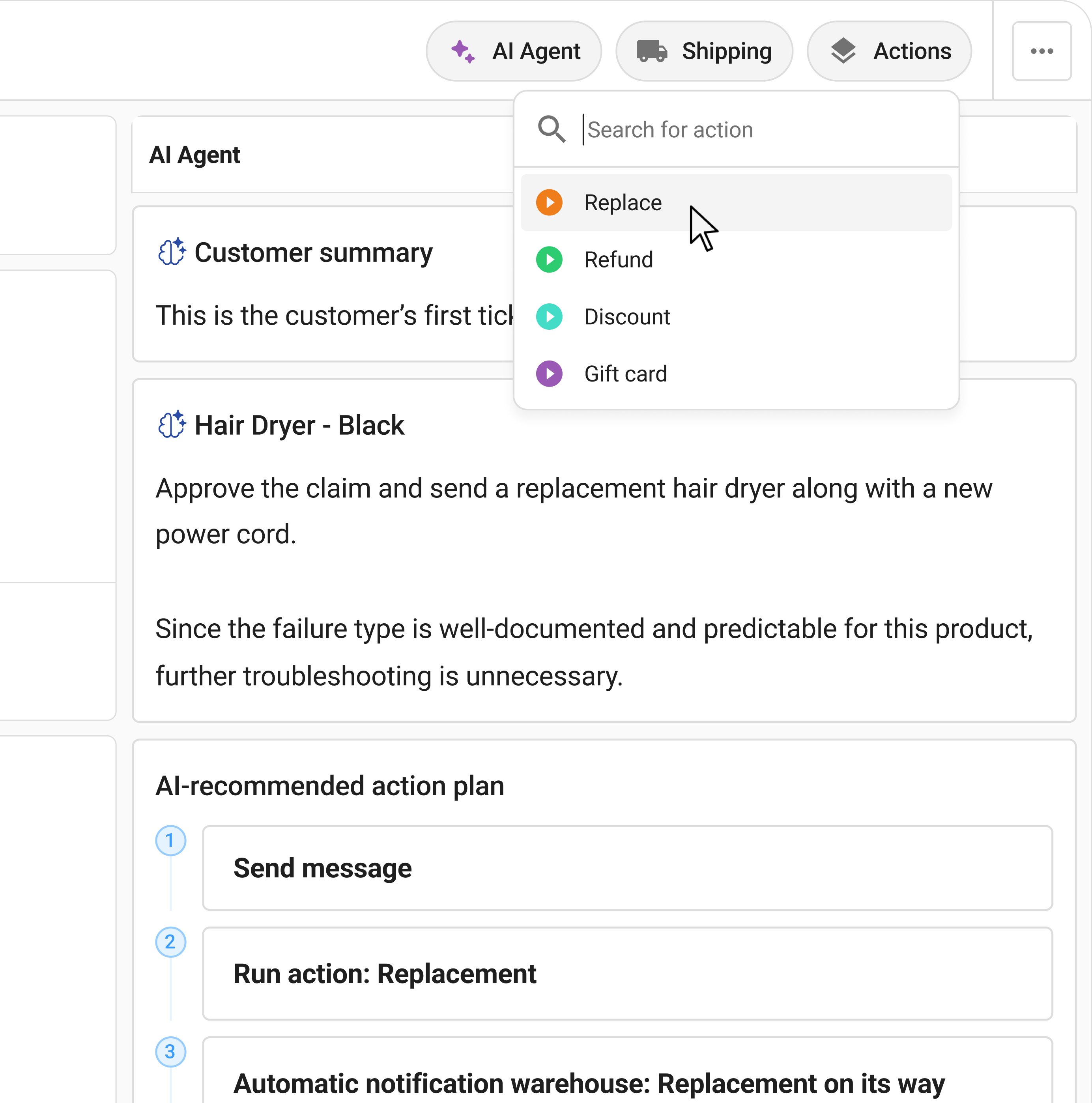
Claimlane's warranty and returns workflows support case routing and actions across connected systems. Its published workflow capabilities include replacement orders, refunds and ERP updates.
For a manufacturer, the practical value is keeping the decision and follow-up work connected. The team can evaluate the setup using its own product claims, retailer handoffs and repair requirements.
Cameron Darnell describes the difference in day-to-day claims handling:
Claims that once meant days of back-and-forth get resolved in a fraction of the time.
Cameron Darnell, Warranty Manager, Angling DirectA useful demonstration should follow an actual case from submission to the completed action. It should also show what happens when evidence is missing, a part is unavailable or a connected system rejects an update.
Claimlane has a 4.8/5 rating on G2.
Frequently asked questions about manufacturer warranties
Make the warranty promise easier to deliver
A manufacturer warranty should give customers a clear understanding of the manufacturer's commitment. Delivering that commitment requires accurate product records, consistent assessments and visible follow-up work.
When the case connects those steps, the team can spend less time reconstructing the history and more time completing the appropriate action.
Brands and retailers can book a Claimlane demo to review how their manufacturer warranty claims could move from intake to repair, replacement or another agreed outcome.