How to Choose a Warranty Claims Management Platform
For ecommerce brands, choosing a warranty claims management platform isn't just about keeping track of customer complaints. It's about finding software that can automate repetitive tasks, connect existing systems, and help teams resolve product issues faster.
Many platforms offer ticket management, customer portals, and basic automation. But not every platform can handle the complexity of warranty claims involving product defects, suppliers, repairs, spare parts, and different warranty policies.
The best way to compare warranty claims management platforms is to look beyond feature lists. Brands should evaluate how much manual work each platform removes, which processes can be automated, and how easily it fits into existing operations.
- Compare warranty platforms based on actual automation capabilities, not the number of features advertised.
- Prioritize automated claim intake, warranty validation, workflows, integrations, and supplier management.
- Test each platform using real warranty scenarios and measure how much manual work remains.
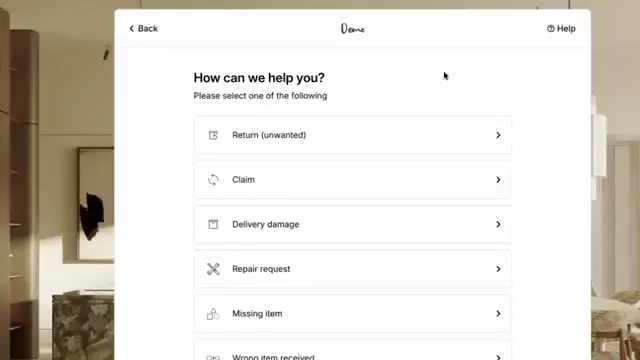
- Claimlane connects warranty claims, returns, repairs, suppliers, and automation in one platform.
1. What Is a Warranty Claims Management Platform?
A warranty claims management platform is software that helps brands and retailers receive, evaluate, track, and resolve warranty claims.
Instead of managing product complaints through email, spreadsheets, and separate systems, teams can handle the entire process in one place.
Modern warranty management software can support:
- Customer self-service warranty submissions.
- Automated warranty eligibility checks.
- Product-specific claim workflows.
- AI-assisted claim assessment.
- Refunds, replacements, and repairs.
- Supplier communication and reimbursement tracking.
- Integrations with ecommerce, ERP, and customer service systems.
- Reporting on warranty claims and recurring product defects.
The biggest difference between platforms is how much of this work happens automatically and how much still requires an employee.
2. Why Automation Should Be the Main Comparison Criteria
A platform that organizes warranty claims isn't necessarily a platform that automates them.
Some systems provide a dashboard where agents can track tickets but still require employees to manually verify orders, request documentation, contact suppliers, and process refunds.
Other platforms connect these steps through rules, workflows, and integrations.
What effective warranty claims automation looks like
Consider a customer reporting a faulty electronic product.
- The customer submits the claim through a self-service portal.
- The platform retrieves the original order and product information.
- The customer uploads the required photos or videos.
- Warranty rules determine whether the case is eligible for further processing.
- An automated workflow routes the case to the appropriate team or supplier.
- The approved resolution triggers a replacement, repair, or refund.
- The customer receives automatic status updates.
In a well-configured system, many administrative steps can happen without an agent switching between tools. Complex or uncertain cases can still be reviewed manually.
3. Compare Platforms Using the Same Evaluation Criteria
Brands should create a consistent comparison framework before speaking with software providers. This prevents a polished demonstration from hiding important operational gaps.
| Evaluation criteria | What to look for | Priority |
|---|---|---|
| Automated claim intake | Self-service forms with required evidence and product-specific questions | High |
| Warranty validation | Checks using purchase dates, serial numbers, policies, and product data | High |
| Workflow automation | Configurable rules for routing, approvals, and case outcomes | High |
| System integrations | Connections to ecommerce, ERP, helpdesk, shipping, and warehouse systems | High |
| AI capabilities | Evidence assessment, recommended actions, and controlled execution | Medium to high |
| Supplier management | Supplier communication, approvals, and reimbursement tracking | High when suppliers are involved |
| Customer communication | Automated notifications and case status tracking | Medium |
| Reporting | Resolution times, claim reasons, product faults, and automation outcomes | Medium |
| Implementation | Configuration effort, integration requirements, and ongoing maintenance | High |
The priorities should reflect the brand's product categories, sales channels, supplier relationships, and current workload.
4. Evaluate Automated Warranty Claim Intake
One of the most time-consuming parts of warranty claims processing is collecting the information needed to make a decision.
Customers may forget to include their order number, photographs, serial number, or a clear description of the problem. Agents then spend time requesting missing information.
Questions to ask software providers
- Can customers submit warranty claims without contacting support?
- Can the portal ask different questions depending on the product?
- Can photo and video uploads be mandatory?
- Can order information be retrieved automatically?
- Can the system identify which product component is affected?
- Can customers check the status of their claim?
For brands selling electronics, furniture, sporting equipment, or other complex products, product-specific intake is especially valuable.
A damaged sofa and a faulty laptop require different documentation. The platform should account for those differences.
5. Check How Warranty Eligibility Is Validated
Warranty validation is another important area for automation.
Without reliable product and purchase information, employees may need to check several systems before determining whether a claim qualifies for warranty handling.
A suitable platform should support eligibility checks using available order data, warranty periods, serial numbers, product registrations, and configured policies.
Separate eligibility from the final decision
A product being within its warranty period doesn't automatically mean every reported issue is covered.
Brands must distinguish between statutory consumer rights, commercial warranties, and voluntary return policies. The applicable rules depend on the jurisdiction, product, circumstances, and warranty terms.
Automated checks should support consistent decisions without incorrectly rejecting valid consumer claims.
6. Compare Workflow Automation Capabilities
Workflow automation determines what happens after a warranty claim has been submitted.
Platforms should allow teams to configure different processes based on the product, issue, supplier, customer type, or sales channel.
Examples of workflows worth testing
- Automatically route damaged furniture claims to a specialist team.
- Request additional evidence when required information is missing.
- Approve predefined low-risk claims within configured limits.
- Send supplier-specific claims to the correct contact.
- Create a replacement order after approval.
- Generate a shipping label when a physical return is necessary.
- Notify customers when their claim changes status.
- Escalate cases that require technical inspection.
Brands should also check whether employees can change workflows themselves or need developer assistance for every adjustment.
Claimlane's published workflow documentation describes configurable routing, status-based automation, customer notifications, and actions across connected business systems.
7. Assess AI-Powered Warranty Claims Automation
Artificial intelligence is becoming another factor in warranty management software comparisons.
However, brands should distinguish between AI that simply generates text and AI that can actually assist with warranty decisions and actions.
What to evaluate in an AI warranty platform
- Can AI analyze product descriptions, images, and videos?
- Can it reference product-specific warranty rules?
- Can it identify missing documentation?
- Can it recommend a repair, replacement, refund, or escalation?
- Can agents review the reasoning behind recommendations?
- Can teams control which actions AI may execute automatically?
- Does the platform retain an auditable record of decisions?
For example, Claimlane's AI Agent, the first AI agent purpose-built for warranty claims and returns, can assess ticket information, apply configured business rules, recommend next steps, and perform permitted actions depending on the account setup.
Brands should start with AI-assisted recommendations and expand automatic execution only after testing accuracy, exception handling, and escalation rules.
8. Test Integrations With Existing Ecommerce Systems
Warranty claims automation becomes much less useful when employees still need to copy information between systems.
For example, a platform might approve a replacement but require an agent to open the ecommerce backend and manually create the order.
That isn't complete process automation.
Important integrations to investigate
- Ecommerce platforms: Retrieve orders, create replacements, and update order information.
- ERP systems: Connect inventory, credit notes, product records, and financial processes.
- Helpdesk software: Synchronize tickets, customer communication, and case statuses.
- Shipping providers: Generate labels and track returned products.
- Warehouse systems: Record inspections, product conditions, and dispositions.
- Supplier systems: Exchange documentation and track claim decisions.
Brands should verify the exact supported actions for each integration, rather than assuming that a listed connection supports every workflow.
9. Evaluate Supplier Warranty Claims Management
Supplier involvement adds another layer of complexity to warranty claims.
A retailer might need approval from the manufacturer before issuing a replacement, while a brand may need to coordinate repairs with an external service partner.
Without a shared process, communication can become scattered across email threads and spreadsheets.
Supplier management capabilities to compare
- Automatically forward claims with supporting documentation.
- Apply different evidence requirements for different suppliers.
- Track supplier approvals, rejections, and outstanding responses.
- Maintain a history of supplier communication.
- Track credit notes and reimbursement requests.
- Connect supplier decisions to the original customer claim.
This is particularly important for multibrand retailers that handle claims across many manufacturers.
10. Compare Repair and Spare Parts Workflows
Not every warranty claim should result in a refund or full product replacement.
For durable products, replacing a damaged component or arranging a repair may be a more suitable outcome.
A platform should make it possible to manage different resolution paths without forcing every claim through a standard return process.
Questions to include in the evaluation
- Can the customer identify the damaged component?
- Can agents check compatible spare parts?
- Can a claim trigger a repair workflow?
- Can cases be assigned to external repair partners?
- Can the system track repair progress and customer updates?
- Can paid repairs be managed separately from covered warranty repairs?
These capabilities are particularly relevant for furniture, electronics, bicycles, appliances, and outdoor equipment.
11. Measure the Customer Experience
Warranty claims management software shouldn't be evaluated only by internal productivity.
The customer experience matters too. A faster internal workflow provides limited value if customers struggle to submit claims or never receive updates.
Brands should test the complete customer journey, from reporting an issue to receiving the final resolution.
What to examine
- How easy is it to submit a claim on mobile?
- Does the customer need to repeat information already provided?
- Can the customer upload documentation without contacting support?
- Are status updates sent automatically?
- Can customers reach a person when their issue is complicated?
- Does the process support the brand's languages and sales channels?
The goal is to remove unnecessary steps without removing human support where it matters.
12. Compare Reporting and Warranty Analytics
Warranty claims contain valuable information about product quality, customer issues, and supplier performance.
Brands should look for reporting that goes beyond counting open and closed tickets.
Useful metrics to track
- Average warranty claim resolution time.
- Manual handling time per claim.
- Percentage of claims resolved without manual intervention.
- Claims requiring additional customer documentation.
- Most common defect types by product or SKU.
- Supplier response times and outstanding reimbursements.
- Repair, replacement, and refund outcomes.
- Customer satisfaction following claim resolution.
These are suggested measures for comparing platforms, not industry benchmarks.
Brands should confirm that the software can report the same metrics before and after automation is introduced.
13. Review Implementation and Ongoing Maintenance
A platform can offer extensive automation capabilities and still be difficult to operate.
Implementation requirements matter because warranty processes often depend on several systems, different departments, and supplier-specific rules.
Questions to ask before choosing a platform
- How long does implementation typically take for a comparable business?
- Which integrations are available without custom development?
- Who configures warranty rules and workflows?
- Can internal teams make changes after launch?
- How are new suppliers and product categories added?
- What training and ongoing support are included?
- What happens when an integration fails?
Brands should request an implementation plan based on their actual systems and processes rather than relying on a generic launch estimate.
With the integration to Business Central, resolving a claim in Claimlane automatically triggers all the necessary processes in our ERP. This means the customer service agent’s work is complete the moment the claim is resolved in Claimlane.
Kasper Andersen, IT Director, Konges Sløjd14. Calculate the Total Cost of Warranty Claims Automation
Software subscription pricing is only one part of the investment.
Brands should compare the total cost of ownership, including implementation, integrations, employee training, maintenance, and any usage-based fees.
Measure the potential operational impact
A simple starting point is to estimate the current cost of manually processing warranty claims.
Monthly manual handling cost = Monthly claim volume × Average handling time in hours × Hourly labor cost
For an illustrative example, consider an ecommerce brand handling 1,000 warranty claims per month. If each claim requires 15 minutes of manual work at an assumed labor cost of €25 per hour, the monthly handling cost is €6,250.
If a platform reduces manual handling time to 5 minutes per claim, the equivalent labor cost becomes approximately €2,083 per month.
That represents an illustrative capacity saving of approximately €4,167 per month before software costs, implementation expenses, and other operational factors. It isn't a guaranteed financial saving.
Brands should calculate these figures using their own claim volumes, labor costs, and measured processing times.
15. Run a Practical Automation Test Before Buying
Product demonstrations often focus on ideal scenarios. Real warranty claims are rarely that predictable.
Brands should ask each shortlisted provider to demonstrate the same cases using representative product information and workflow requirements.
Suggested test scenarios
- Simple warranty claim: A customer reports a faulty product with complete documentation.
- Missing information: A customer submits a claim without the required photographs.
- Supplier approval: A product defect requires a manufacturer's decision.
- Spare part replacement: A single component needs replacing rather than the entire product.
- Complex exception: A claim involves unclear warranty coverage or conflicting information.
During each test, teams should record how many manual actions were needed, whether information moved correctly between systems, and how exceptions were handled.
A platform that performs well in these scenarios is more likely to fit the brand's actual operating requirements.
16. How Claimlane Supports Warranty Claims Automation
Claimlane is a warranty claims and returns management platform built for brands and retailers handling post-purchase product issues.
It connects customer claim submissions, configurable workflows, supplier collaboration, AI-assisted decisions, and actions across connected systems.
Key capabilities
- Self-service portal: Collect product information, photographs, videos, and issue details from customers.
- Automated workflows: Route claims, trigger status updates, and process configured case outcomes.
- AI Agent: Analyze claim documentation and recommend or execute permitted next steps.
- Integrations: Connect warranty workflows with ecommerce, ERP, helpdesk, shipping, and warehouse systems.
- Supplier collaboration: Forward documented cases and track supplier decisions.
- Repair and replacement workflows: Manage different outcomes depending on the product and issue.
- Analytics: Track warranty claims, recurring product faults, and operational performance.
These capabilities can help brands reduce administrative work while keeping employees involved in complex warranty decisions.
Claimlane helps us resolve customer issues faster and with less friction, which makes a real difference for both our team and our customers.
Anne Schmidt, Project Manager, Ergobaby17. Final Checklist for Comparing Warranty Claims Platforms
Before selecting a warranty claims management platform, brands should confirm that the software supports their actual products, customer channels, and operational requirements.
A practical evaluation should answer the following questions:
- Does the platform collect complete warranty claim information upfront?
- Can it validate relevant warranty information automatically?
- Can workflows be configured without constant developer involvement?
- Does AI operate within defined business rules and approval limits?
- Can the platform perform actions in connected ecommerce and ERP systems?
- Does it support supplier claims, repairs, and spare parts?
- Can customers track their claims and receive automatic updates?
- Can teams measure automation outcomes and handling time?
- Are implementation requirements and total costs clearly documented?
The strongest choice is the platform that removes the most unnecessary manual work while preserving accurate decisions, clear customer communication, and appropriate human oversight.
Claimlane has a 4.8/5 rating on G2.
Frequently Asked Questions About Warranty Claims Management Platforms
See How Claimlane Automates Warranty Claims
Choosing warranty claims management software starts with understanding where manual work happens and which steps can be automated safely.
Claimlane helps ecommerce brands connect warranty claims, returns, repairs, suppliers, and existing business systems in one place.
Brands looking to reduce repetitive claim handling and improve customer experience can book a personalized Claimlane demo to see how the platform works with their products and warranty processes.