Why camera gear warranty and returns management is complex
A defective camera sensor, a malfunctioning autofocus system or a damaged lens can be particularly frustrating for photographers who depend on their equipment for work or personal projects.
For camera retailers, resolving these product issues often involves manufacturer warranties, authorized repair centers, serial number verification and transportation of high-value electronic equipment.
A connected warranty and returns management process helps camera retailers reduce unnecessary administration, protect their margins and make aftersales less frustrating for customers.
- Camera equipment warranty claims require product-specific documentation, serial number verification and technical assessments.
- Connected return logistics reduce unnecessary transportation and improve visibility into high-value equipment returns.
- Retailers need dedicated workflows for authorized repairs, manufacturer warranties and supplier reimbursements.
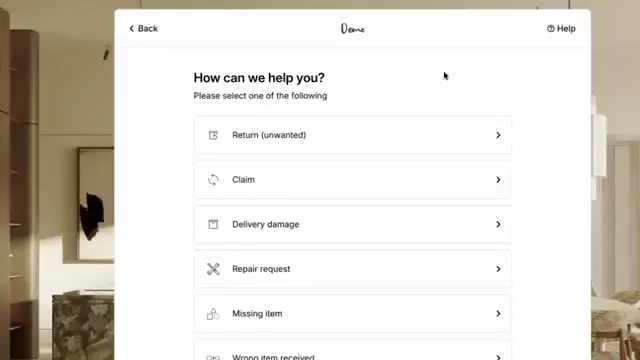
- Claimlane connects camera equipment returns, warranty claims, repairs and suppliers in one aftersales platform.
How do camera equipment warranties work?
Camera manufacturers typically offer commercial warranties covering eligible manufacturing and material defects. Coverage varies depending on the manufacturer, product, geographic market and purchase conditions.
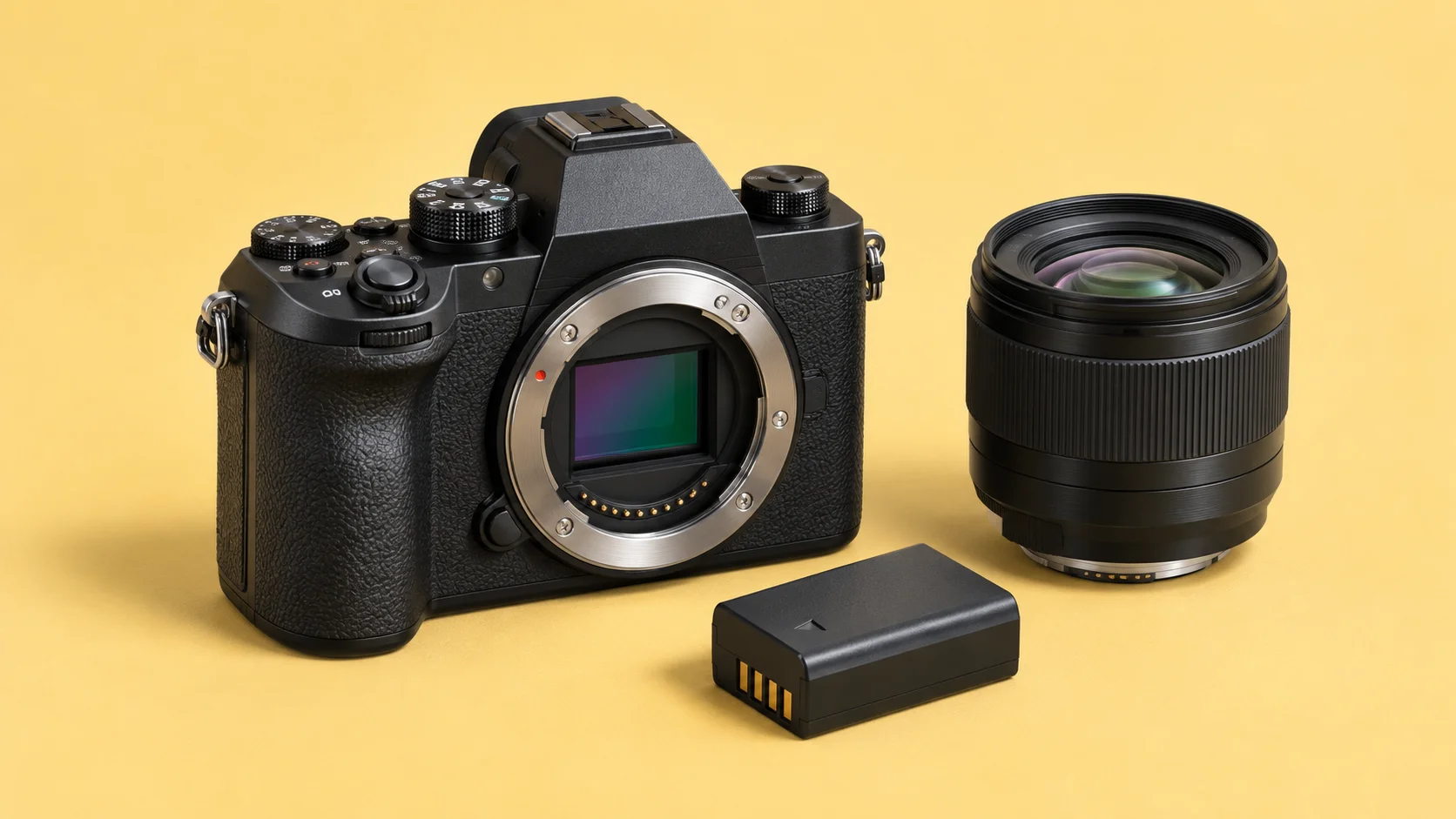
Camera equipment can include several independently warrantied components, particularly when customers purchase camera bodies, lenses and accessories together.
Retailers may need to manage commercial warranty requests for:
- Mirrorless and DSLR camera bodies.
- Interchangeable camera lenses.
- Rechargeable batteries and chargers.
- External flashes and lighting equipment.
- Gimbals and camera stabilization systems.
- Tripods and supporting equipment.
- Microphones and recording accessories.
Nikon's European warranty guidance, for example, describes an authorized service network for eligible product defects, subject to the conditions of its commercial guarantee.
Retailers must distinguish manufacturer warranties from statutory consumer rights, voluntary return policies and additional protection plans. A manufacturer's commercial warranty doesn't necessarily define the full extent of the retailer's obligations.
Managing camera body and lens warranty claims
Camera bodies and lenses contain different electronic, optical and mechanical components. Consequently, their warranty claims often require different documentation and technical expertise.
A camera reporting an electronic error may need a different assessment from a lens experiencing autofocus or image stabilization problems.
| Product category | Reported issue | Potential next step |
|---|---|---|
| Camera body | Sensor or electronic malfunction | Technical diagnostics and authorized service assessment. |
| Camera lens | Autofocus or stabilization issue | Optical and electronic assessment. |
| Camera battery | Charging or performance problem | Battery assessment and potential replacement. |
| External flash | Electronic failure | Manufacturer-directed technical assessment. |
| Gimbal | Motor or stabilization problem | Approved diagnostics or authorized repair. |
| Tripod | Defective locking mechanism | Spare part or repair assessment. |
These are illustrative workflows. Each product must be assessed using the relevant manufacturer's technical procedures and warranty conditions.
What documentation is needed for a camera warranty claim?
Manufacturers and repair centers often require more information than a simple description of a faulty camera.
Collecting the appropriate documentation upfront helps retailers avoid unnecessary communication before the technical assessment begins.
A camera warranty claim form should collect relevant information such as:
- Order number and purchase documentation.
- Camera or lens model.
- Product serial number.
- Description of the reported issue.
- Photographs of visible damage.
- Sample images demonstrating optical problems, where appropriate.
- Video documentation of functional issues, where safe.
- Relevant firmware version and error messages.
- Previous repair or service history.
Customer images may contain personal information. Retailers should only request evidence that is necessary for assessing the reported defect and provide appropriate instructions for protecting personal data.
Fujifilm's Danish repair guidance illustrates the importance of purchase documentation and contact information when submitting cameras and lenses for warranty service.
Using serial number validation for high-value camera equipment
Two cameras of the same model can have different purchase histories, warranty eligibility and repair records.
Serial number validation allows retailers and manufacturers to connect individual units with the relevant product and order information when those records are available.
This can help service teams identify:
- The original product and purchase record.
- Applicable manufacturer warranty conditions.
- Previous repairs and warranty claims.
- Potential mismatches between purchased and returned products.
- Product batches requiring additional investigation.
- Potential duplicate warranty requests.
Camera retailers can also record serial numbers during warehouse inspections to help confirm that the returned item corresponds to the original purchase.
A serial number mismatch should trigger further investigation rather than automatic rejection. Data entry mistakes, previous replacements and other legitimate explanations may need to be considered.
Managing camera gear purchased as bundles
Camera retailers frequently offer bundles containing a camera body, interchangeable lens, memory card, battery and additional accessories.
When one component becomes defective, returning the entire bundle may create unnecessary inconvenience and operational costs.
A component-level warranty process allows retailers to identify which item requires assessment and whether it can be repaired or replaced independently.
| Bundle-related issue | Potential resolution |
|---|---|
| Defective kit lens | Lens assessment or individual replacement. |
| Faulty battery | Battery assessment and eligible replacement. |
| Missing accessory | Fulfillment of the missing component. |
| Defective camera body | Camera-specific warranty assessment. |
| Change-of-mind bundle return | Assessment under the applicable return policy and consumer rights. |
Component-level resolution should reflect bundle pricing, manufacturer warranty conditions, compatibility and applicable consumer rights.
This approach can prevent customers from losing access to equipment that remains fully functional while another component is being serviced.
What are the best warranty and returns logistics for camera gear purchases?
The most convenient camera gear returns process is one that minimizes unnecessary product transportation while providing reliable handling, tracking and communication.
For conventional parcel returns, retailers can often generate shipping labels immediately following approval. Camera equipment, however, may require additional handling because of its value, fragility or battery configuration.
An effective camera returns logistics process should include:
- Digital return and warranty request submission.
- Remote assessment before physical transportation where appropriate.
- Clear packaging and shipping instructions.
- Suitable tracked and insured shipping options.
- Product serial number and condition records.
- Direct routing to authorized service centers when appropriate.
- Shipment and repair status notifications.
Nikon's US store, for example, recommends tracked and insured transportation for merchandise returns.
Retailers should also establish who is responsible for arranging and paying for transportation under the applicable policy and consumer rights.
Handling camera batteries and transportation restrictions
Many digital cameras and accessories contain rechargeable lithium batteries. These batteries can be subject to special transportation requirements, particularly when damaged or defective.
According to the US Pipeline and Hazardous Materials Safety Administration, damaged or defective lithium batteries present additional transportation risks.
Camera retailers should include battery condition checks in relevant warranty and return forms.
Reports of swelling, overheating, physical battery damage or other potential safety concerns should be escalated through a dedicated product safety process instead of automatically generating standard return shipping labels.
Transportation arrangements must follow applicable dangerous goods regulations, carrier requirements and qualified specialist guidance for the relevant jurisdiction.
Connecting camera retailers with authorized repair centers
Retailers don't always have the equipment or expertise required to conduct camera repairs internally.
Sensor replacements, optical alignment and electronic diagnostics may need to be handled by the manufacturer or an authorized service partner.
Retailers such as Wilkinson Cameras publicly describe arrangements with authorized repair centers for major camera brands.
A connected repair management workflow allows retailers to coordinate these external services while keeping customer communication and case information together.
What an authorized camera repair workflow should include
- The customer submits a warranty or repair request.
- The retailer verifies the product and purchase information.
- The appropriate manufacturer or repair center is identified.
- The necessary documentation is forwarded.
- Transportation is arranged where required.
- The service center assesses the equipment.
- Warranty coverage or a paid repair quotation is confirmed.
- The customer receives updates until the equipment is returned.
Keeping repair communication connected to the original customer case helps service agents answer questions without contacting the repair center for every status update.
Managing repairs outside the camera manufacturer warranty
Professional photographers and enthusiasts may continue using cameras and lenses long after the original commercial warranty expires.
Paid repair services give customers an alternative to replacing otherwise serviceable equipment.
Camera retailers can support this process through separate workflows for warranty-covered repairs and paid service requests.
| Warranty repair | Paid repair |
|---|---|
| Assessment of applicable warranty coverage. | Assessment of repair availability and feasibility. |
| Documentation of eligible product defects. | Preparation of a repair quotation. |
| Authorized repair or another appropriate remedy. | Customer approval before chargeable work begins. |
| Potential manufacturer reimbursement. | Recording repair revenue and associated costs. |
A paid repair option should never replace a free remedy to which a customer is legally or contractually entitled.
Separating camera equipment returns from warranty claims
Not every camera gear return involves a defective product. Customers may order an incompatible lens, change their minds or purchase equipment that doesn't suit their requirements.
These requests require different operational workflows from technical warranty assessments.
| Return reason | Recommended workflow |
|---|---|
| Change of mind | Return eligibility and product condition assessment. |
| Incompatible accessory | Compatibility review and suitable exchange or return. |
| Incorrect item delivered | Order verification and correction. |
| Damaged equipment on arrival | Evidence collection and appropriate customer remedy. |
| Manufacturing defect | Warranty assessment and technical resolution. |
| Accidental damage | Assessment of applicable rights, coverage and repair options. |
Product-specific workflows allow retailers to process straightforward returns without delaying cases that require specialized technical assessments.
Managing grey-market and pre-owned camera equipment warranties
Camera retailers may sell equipment acquired through different distribution arrangements, including imported products and pre-owned camera gear.
Manufacturer warranty conditions may differ depending on the original sales region or distribution channel.
B&H Photo Video, for example, distinguishes manufacturer-warranted products from certain imported products that carry a retailer-provided warranty.
Retailers should clearly record which organization provides the commercial warranty and which service arrangements apply to each product.
Relevant product records may include:
- Original manufacturer and product model.
- Serial number and condition at sale.
- Distribution channel and sales region.
- Commercial warranty provider.
- Applicable warranty terms and duration.
- Authorized repair arrangements.
- Previous repairs or refurbishment history.
These distinctions should be communicated clearly to customers before purchase and during aftersales service. They do not remove applicable statutory consumer protections.
Recovering camera warranty costs from suppliers
Camera retailers selling products from multiple manufacturers and distributors often need to recover eligible repair, replacement or refund costs from suppliers.
When these requests are managed separately from customer warranty claims, it becomes difficult to track outstanding reimbursements.
A connected supplier claims process allows retailers to share relevant product information, proof of purchase, technical evidence and repair documentation with the responsible supplier.
Retailers can then track supplier decisions, approved reimbursement amounts and outstanding credit notes.
Customer resolutions should remain separate from supplier reimbursement timelines so that customers aren't unnecessarily delayed while retailers settle commercial claims.
Preventing fraud in high-value camera equipment returns
The value of professional camera equipment makes product identity and condition verification particularly important.
Retailers should establish consistent assessment procedures for unusual or conflicting return information.
| Potential risk signal | Appropriate assessment |
|---|---|
| Returned serial number doesn't match the purchase | Verify product and order records. |
| Unexpected missing bundle components | Review purchase details and the applicable return conditions. |
| Inconsistent descriptions of product damage | Request relevant clarification or technical assessment. |
| Repeated refund requests for the same order | Review existing case and payment records. |
| Returned equipment differs from documented condition | Compare the product with available intake and sales records. |
These signals aren't proof of fraud. Retailers should investigate legitimate explanations and ensure that verification procedures don't unfairly prevent customers from exercising their rights.
How electronics retailers benefit from connected RMA workflows
Camera retailers face many of the same operational challenges as other specialist electronics retailers, including complex product catalogs, technical warranty decisions and extensive supplier relationships.
Coolshop, a Nordic multi-category retailer, previously managed post-purchase requests across several disconnected systems.
According to its published Claimlane case study, the business connected its RMA operations with SAP and Homerunner to coordinate order information, shipping and internal workflows.
Instead of juggling multiple tools, everything from ticket intake to supplier collaboration is handled in one place.
Simone Andersen, Customer Service Director, CoolshopCoolshop sells far more than cameras, but its experience highlights the importance of connecting internal teams and systems as part of aftersales management.
For camera retailers, the same operational principle applies to customer service, suppliers, warehouses and authorized repair centers.
Choosing warranty and returns software for camera retailers
Traditional ecommerce returns platforms commonly focus on generating shipping labels and processing refunds. Specialist camera retailers need additional capabilities for technical product issues and manufacturer service arrangements.
| Software capability | Why it matters for camera retailers |
|---|---|
| Self-service warranty portal | Collects product information and defect documentation upfront. |
| Serial number validation | Connects individual camera units with relevant records. |
| Product-specific workflows | Supports different processes for cameras, lenses and accessories. |
| Repair management | Coordinates service requests and external repair partners. |
| Spare parts management | Supports suitable component replacements. |
| Shipping integrations | Connects eligible returns with transportation providers. |
| Supplier claims management | Tracks manufacturer and distributor reimbursements. |
| ERP and ecommerce integrations | Connects return decisions with operational systems. |
| Warranty analytics | Helps identify recurring defects and service costs. |
Claimlane provides returns and warranty management software for electronics retailers, supporting complex product assessments, repairs, supplier claims and connected aftersales operations.
Claimlane has a 4.8/5 rating on G2.
Frequently asked questions about camera gear warranties and returns
Make camera gear aftersales less complicated
Photographers depend on their equipment, and camera retailers need warranty processes that reflect the technical complexity and value of the products they sell.
Claimlane connects customer warranty claims, returns, repairs, spare parts and supplier communication through one platform.
Book a personalized demo to see how Claimlane can help camera and electronics retailers resolve complex product issues with less manual work.